
If you run a moving company, you’ve probably been pitched both a PEO and a payroll service at some point. The sales pitch for each sounds compelling. But they’re solving very different problems, and picking the wrong one can cost you more than you’d expect.
Moving companies deal with a specific mix of challenges: high workers’ comp exposure, seasonal headcount swings, DOT compliance, and a workforce that’s genuinely hard to retain. Whether a PEO or a standalone payroll company is the right call depends on where your real pain points are. This guide breaks down the tools that can help you compare your options before you sign anything.
1. PEO Metrics
Best for: Moving company owners who’ve received PEO quotes and need unbiased side-by-side analysis before committing
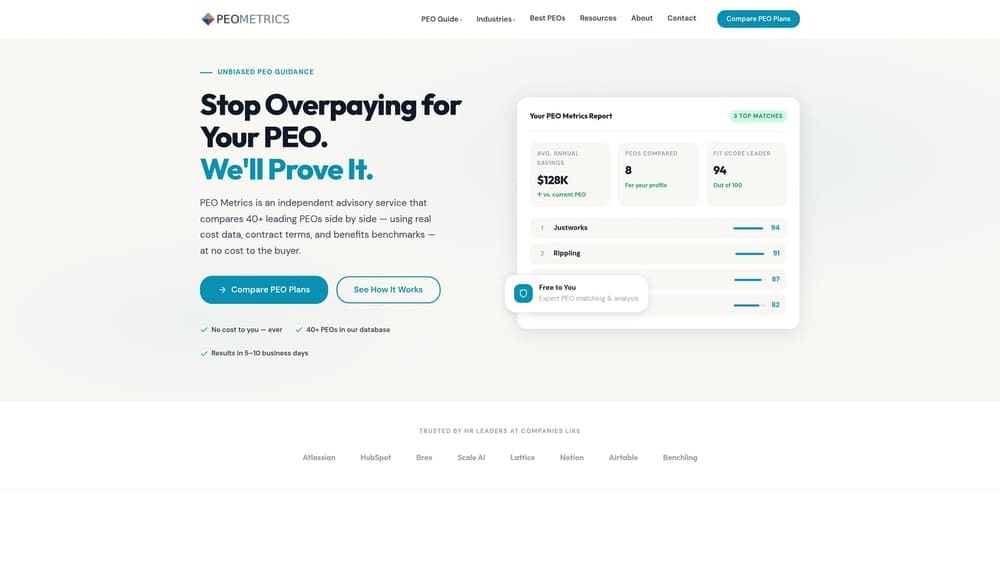
PEO Metrics is an independent PEO comparison platform that gives business owners a clear view of what different providers are actually offering — pricing, features, and fit — without being affiliated with any of them.
Where This Tool Shines
For moving companies specifically, the workers’ comp component of a PEO deal is where things get complicated fast. Some PEOs bundle comp coverage into their fee structure in ways that look attractive on the surface but may not be the best deal for your risk profile. PEO Metrics helps you cut through that by putting multiple providers side-by-side so you can see what you’re actually comparing.
It’s also useful if you’re genuinely unsure whether a PEO is the right structure for your business at all. Rather than relying on a sales rep’s pitch, you get a more grounded view of whether the economics make sense for your headcount, your seasonality, and your current comp situation.
Key Features
Side-by-Side Provider Comparisons: Detailed breakdowns of PEO providers across pricing structures, service tiers, and contract terms.
Unbiased Analysis: Not affiliated with any PEO provider, which matters when you’re trying to evaluate options without a built-in sales agenda.
Workers’ Comp Evaluation Support: Helps moving companies assess whether bundled comp coverage through a PEO makes more financial sense than sourcing coverage independently.
PEO vs. Payroll Fit Assessment: Useful for businesses still deciding whether a PEO structure or a payroll-only setup is the right call given their headcount and risk profile.
Best For
Moving company owners who’ve collected multiple PEO quotes and can’t tell whether they’re being overcharged, undersold on benefits, or steered toward a structure that doesn’t fit their workforce model. Also useful for operators who want a second opinion before renewing an existing PEO contract.
Pricing
Contact for details. Given that PEO contracts can run into significant annual costs, the upfront research investment typically pays for itself quickly.
2. Peocompare
Best for: Early-stage research when you’re building a shortlist of PEO providers before getting into pricing conversations
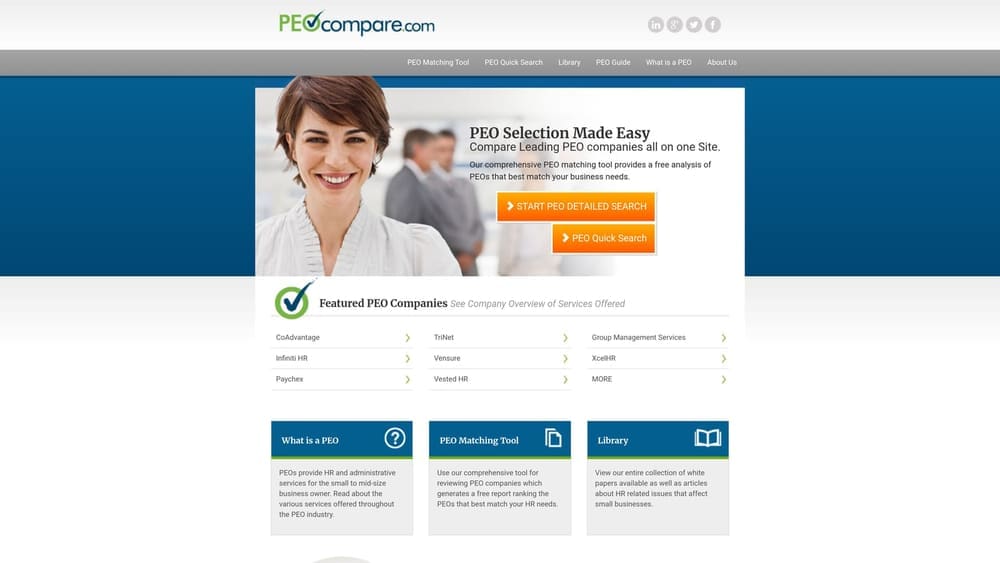
Peocompare is a PEO aggregator platform that pulls together multiple providers in one place, giving you a starting point for comparison without having to cold-call a dozen vendors.
Where This Tool Shines
If you’re at the beginning of your PEO research and don’t yet have a clear sense of which providers are even worth talking to, Peocompare gives you a useful starting map. You can see which PEOs operate in your area, get a basic sense of what they cover, and start narrowing your list before you commit time to sales conversations.
For moving companies, this is most valuable in the shortlisting phase. You’re not going to get deep workers’ comp analysis or seasonal payroll nuance from an aggregator tool, but you will get enough orientation to know who to call first.
Key Features
Multi-Provider Aggregation: Brings together a range of PEO options in one view rather than requiring you to research each provider separately.
Shortlisting Support: Useful for filtering down to a manageable list of providers before requesting detailed quotes.
Basic Feature Comparisons: Covers service categories and general coverage areas across providers.
Best For
Moving company owners who are new to the PEO space and want a quick orientation before diving into detailed vendor conversations. Think of it as a first-pass research tool rather than a decision-making tool.
Pricing
Free to use.
3. HR Guide
Best for: Understanding the legal and structural differences between PEO co-employment and standard payroll before you commit to either
HR Guide is a reference resource covering HR fundamentals, employment law, and workforce management in plain language.
Where This Tool Shines
One of the most common mistakes moving company owners make when evaluating PEOs is not fully understanding what co-employment actually means. It’s not just a payroll arrangement. Under a PEO, the provider becomes a co-employer of record for your W-2 employees, which changes how liability, benefits, and compliance responsibilities are shared. HR Guide explains these concepts clearly, without trying to sell you anything.
For moving companies navigating a mix of full-time employees, part-time seasonal workers, and potentially independent contractors, understanding where co-employment starts and stops is genuinely important. Misclassification risk is real in this industry, and knowing the structural difference between a PEO and a payroll company helps you ask better questions before you sign.
Key Features
Plain-Language Employment Law Coverage: Explains HR and legal concepts in terms a business owner can actually use without a law degree.
Co-Employment Fundamentals: Covers what co-employment means in practice, which is essential context for any PEO evaluation.
Compliance Obligation Overviews: Helps you understand what you’re responsible for under different workforce arrangements.
Pre-Decision Reference: Useful for building the foundational knowledge you need before talking to PEO or payroll providers.
Best For
Moving company owners who feel like they’re walking into PEO or payroll sales conversations without enough background knowledge. Using HR Guide before those conversations means you’re not learning the basics from someone who has a financial interest in what you decide.
Pricing
Free to access.
Which Option Actually Fits a Moving Company?
For most moving companies, the decision between a PEO and a payroll company comes down to two things: your workers’ comp situation and how much HR weight you’re carrying internally.
If you’re spending too much on comp coverage, dealing with seasonal hiring chaos, or getting hit with compliance issues you don’t have time to manage, a PEO is worth a serious look. PEOs that pool workers’ comp across their client base can sometimes offer better rates than a small moving company can negotiate independently. They also bring benefits access, OSHA support, and HR infrastructure that a payroll-only provider simply doesn’t touch.
That said, a PEO isn’t always the right answer. Very small operations may not find the economics favorable. Moving companies with strong in-house HR and already-favorable comp rates may not need the bundled services. And if your workforce includes a significant independent contractor component, the co-employment structure may not fit cleanly.
If your operation is lean, stable, and you just need payroll handled cleanly, a standalone payroll service may be all you need. The key is knowing the difference before someone else makes the decision for you.
One thing worth flagging: DOT compliance and physical safety programs are areas where PEOs vary significantly. Some have real experience managing DOT-regulated workforces and offer OSHA training and claims management support. Others treat moving companies like any other labor-heavy business. That distinction matters, and it’s not always obvious from a sales pitch.
Before you commit to either path, use a comparison tool. PEO Metrics gives you an unbiased side-by-side view of PEO providers so you’re not relying solely on what a sales rep tells you. Peocompare is worth bookmarking for early-stage shortlisting. HR Guide helps you build the foundational knowledge to ask better questions throughout the process.
The worst outcome is signing a multi-year PEO contract that doesn’t fit your business model, or staying with a payroll-only setup while your workers’ comp costs quietly eat into margins. Neither mistake is obvious until it’s already expensive.
Don’t auto-renew. Make an informed, confident decision.
Before you sign that PEO renewal, make sure you’re not leaving money on the table.
Many businesses unknowingly overpay because of bundled fees, hidden administrative markups, and contracts designed to limit flexibility. We give you a clear, side-by-side breakdown of pricing, services, and contract terms—so you can see exactly what you’re paying for and choose the option that truly fits your business.
