

Workers compensation insurance is one of the most financially significant reasons businesses turn to a PEO. Under a co-employment arrangement, your employees join the PEO’s master workers comp policy, which can mean access to group rates, claims management support, and relief from the administrative burden of maintaining your own policy. For high-risk industries especially, the difference between PEOs on this dimension is substantial.
The challenge is that most PEOs present their workers comp programs in marketing language that makes comparison difficult. Class code management, loss-sensitive rating structures, and carrier relationships vary considerably across providers, and those details matter more than any headline promise about “comprehensive coverage.”
This guide covers nine providers worth evaluating, starting with a comparison platform that helps you see what each PEO actually delivers on workers comp rather than relying on a single vendor’s pitch. Note: pricing and program details change frequently. Always verify current terms directly with each provider. This content is informational only and does not constitute legal, tax, or insurance advice.
1. PEO Metrics
Best for: Businesses that want unbiased, side-by-side PEO comparisons before committing to a provider
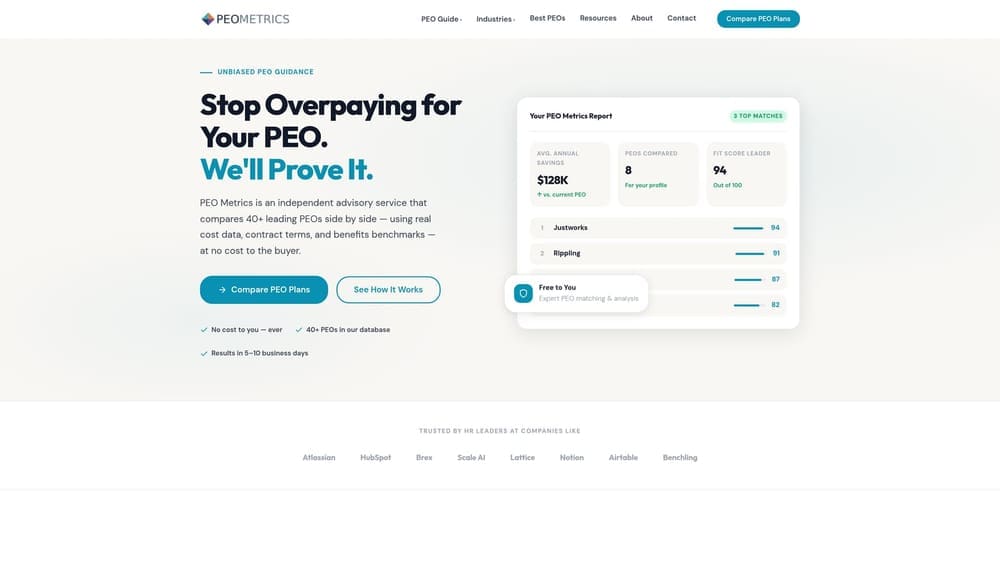
PEO Metrics is a PEO comparison platform that helps businesses evaluate and select providers side-by-side, including workers comp program structure, pricing, and service depth.
Where This Tool Shines
Most businesses approach PEO selection by collecting proposals from two or three vendors and comparing them manually. The problem is that each proposal uses different terminology, different bundling structures, and different ways of presenting workers comp costs. PEO Metrics gives you a consistent framework for comparison so you’re actually evaluating the same dimensions across providers.
This is particularly useful for businesses in higher-hazard industries, where workers comp program details, carrier relationships, and class code handling can swing costs significantly. Rather than taking any single vendor’s claims at face value, you get a structured view of what each PEO actually offers on workers comp alongside the rest of the service package.
Key Features
Side-by-Side Provider Comparisons: Evaluate multiple PEOs using consistent metrics rather than each vendor’s custom proposal format.
Workers Comp Program Analysis: Review how each provider structures their workers comp offering, including program type and carrier relationships.
Pricing Transparency: Understand what you’re paying for and identify where bundled fees or administrative markups may be adding unnecessary cost.
Industry and Risk Profile Matching: Get guidance tailored to your class codes, claims history, and the states where you operate.
Consultative Support: Useful for businesses evaluating PEOs for the first time and for those considering switching providers mid-contract.
Best For
HR leaders and business owners who are mid-funnel in their PEO search and want a structured, data-driven way to narrow their shortlist. Especially valuable for companies in industries where workers comp is a primary cost driver and where choosing the wrong PEO could mean overpaying for years.
Pricing
Contact PEO Metrics directly for service details and pricing. Verify current terms at peometrics.com.
2. Insperity
Best for: Mid-market companies that want workers comp bundled with full-service HR and safety consulting
Insperity is a publicly traded, full-service PEO that targets mid-market companies, with workers comp integrated into a broader HR, benefits, and safety consulting package.

Where This Tool Shines
Insperity’s workers comp offering goes beyond simply placing your employees on a master policy. The company has built out safety consulting and loss control programs that are designed to reduce claim frequency over time, not just manage claims after they happen. For businesses that have struggled with rising experience modification rates, that proactive approach can matter.
Their return-to-work program support is another differentiator. Claims duration is one of the biggest drivers of workers comp cost, and having structured support for getting injured employees back to work faster can reduce total claim cost. Insperity is also CPEO-certified, which carries additional federal tax liability protections for client businesses.
Key Features
Integrated Safety Consulting: Loss control programs designed to reduce claim frequency, not just manage claims reactively.
Return-to-Work Program Support: Structured approach to managing claims duration and reducing total claim cost.
CPEO Certification: IRS-certified status that provides federal tax liability protections under the co-employment arrangement.
Dedicated HR Specialists: HR support alongside workers comp coverage, rather than a purely transactional relationship.
Bundled PEO Service: Workers comp is part of a comprehensive offering that includes benefits, payroll, and compliance.
Best For
Mid-market companies with enough headcount to benefit from Insperity’s full-service model and those in industries where safety program investment can meaningfully reduce workers comp costs over time.
Pricing
Custom pricing based on employee count and industry. Contact Insperity directly for a quote and verify current program terms at insperity.com.
3. TriNet
Best for: Technology and professional services companies with lower-hazard workforces and multi-state footprints
TriNet is a publicly traded PEO with industry-specific programs built for technology, professional services, and similar sectors, with workers comp bundled into the offering.
Where This Tool Shines
TriNet’s model is organized around industry verticals rather than a one-size-fits-all approach. That means the workers comp class code management and overall HR program are designed with your specific industry in mind. For a software company with employees spread across multiple states, that vertical focus translates into more relevant coverage and fewer misclassification headaches.
The multi-state capability is worth noting for companies that hire across state lines. Workers comp requirements vary significantly by state, and managing that complexity through a single PEO relationship simplifies administration considerably.
Key Features
Industry-Specific PEO Programs: Vertical programs built for tech, professional services, and similar sectors rather than a generic offering.
Class Code Management: Tailored handling of workers comp class codes appropriate to knowledge-worker industries.
Multi-State Coverage: Supports employers with employees in multiple states under a single PEO arrangement.
Bundled HR Administration: Workers comp is part of a package that includes benefits, payroll, and compliance support.
Industry-Vertical Support Teams: Dedicated support organized by industry rather than general customer service queues.
Best For
Technology and professional services companies with primarily office-based or remote workforces, particularly those with multi-state hiring needs and lower-hazard class codes.
Pricing
Per-employee pricing varies by industry program and headcount. Verify current pricing directly with TriNet at trinet.com.
4. ADP TotalSource
Best for: Multi-state employers that want CPEO-certified co-employment with broad carrier access
ADP TotalSource is ADP’s CPEO-certified PEO division, operating across all 50 states with workers comp included in a comprehensive HR and compliance offering backed by ADP’s carrier relationships.
Where This Tool Shines
ADP’s scale gives TotalSource access to a large carrier network, which matters when you’re trying to place workers comp for a business with diverse class codes or multi-state operations. The CPEO certification also provides federal tax liability protections that standard PEO arrangements do not, which is a meaningful distinction for companies with significant payroll tax exposure.
The integration between payroll, HR, and compliance within ADP’s existing infrastructure is a practical advantage for businesses already familiar with ADP’s platform. Onboarding is more straightforward when your payroll data doesn’t need to migrate to an entirely new system.
Key Features
CPEO Certification: IRS-certified status providing federal tax liability protections under the co-employment structure.
Nationwide Coverage: Workers comp program available across all 50 states through a single PEO relationship.
Large Carrier Network: Access to multiple carriers for competitive workers comp program placement.
Integrated Platform: Payroll, HR, benefits, and compliance managed within ADP’s existing technology infrastructure.
Multi-State Compliance Support: Regulatory compliance management across state-specific workers comp requirements.
Best For
Mid-size to larger employers operating across multiple states who need consistent workers comp coverage and compliance support under a single PEO arrangement, particularly those already using ADP systems.
Pricing
Custom pricing. Verify current terms and program details directly with ADP TotalSource at adp.com.
5. Oasis (a Paychex Company)
Best for: Smaller businesses looking for PEO co-employment with workers comp and Paychex’s payroll infrastructure
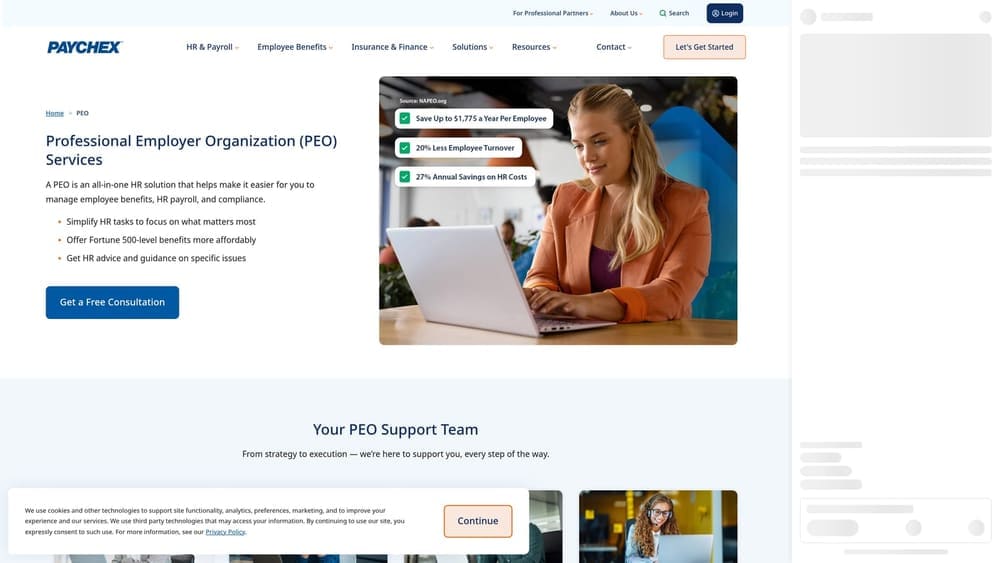
Oasis, operating as a PEO brand under Paychex, offers co-employment services including workers comp coverage, with accessibility for businesses with smaller employee counts.
Where This Tool Shines
Paychex acquired Oasis in 2018, and the brand has continued operating as the PEO-specific offering within Paychex’s broader service portfolio. For smaller businesses that find some of the larger full-service PEOs difficult to access or too complex to onboard with, Oasis offers a more accessible entry point into PEO co-employment.
The Paychex payroll integration is a practical benefit. Workers comp under the co-employment arrangement ties directly to payroll data, which reduces administrative friction and makes sure coverage stays current as headcount changes. Multi-state compliance support is also part of the offering for businesses that operate across state lines.
Key Features
Co-Employment Workers Comp: Employees covered under the PEO master policy as part of the co-employment arrangement.
Paychex Payroll Integration: Workers comp and HR administration connected directly to Paychex’s payroll technology.
Accessible for Smaller Headcounts: PEO services available to businesses that may not meet minimums at larger providers.
Multi-State Compliance Support: State-specific workers comp compliance management for employers in multiple states.
Straightforward Onboarding: Structured process for transitioning employees into the co-employment arrangement.
Best For
Smaller businesses looking to access PEO workers comp benefits without the complexity or headcount minimums that some larger PEOs require. Also a natural fit for companies already using Paychex for payroll.
Pricing
Custom pricing based on headcount and services selected. Verify current Oasis/Paychex PEO pricing directly at paychex.com/peo.
6. Justworks
Best for: Startups and early-stage companies that want workers comp bundled into transparent, flat per-employee pricing
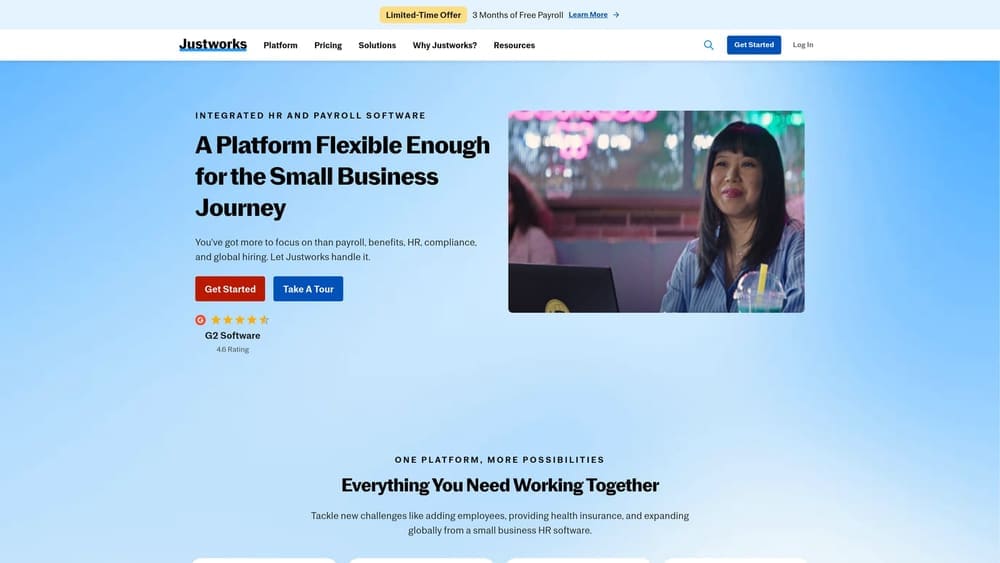
Justworks is a PEO known for transparent, flat per-employee pricing with workers comp included in the plan, popular with startups and companies with office-based or remote workforces.
Where This Tool Shines
Most PEOs present workers comp as a separate line item that varies by class code, payroll, and claims history. Justworks bundles it into their flat per-employee monthly pricing, which makes budgeting more predictable. For early-stage companies that don’t have dedicated HR staff to manage a separate policy, that simplicity has real operational value.
The self-service platform is built for companies that want to handle HR administration without a lot of hand-holding. That’s a fit for startups moving quickly, but it also means Justworks is less suited for businesses that need hands-on support or have complex workers comp situations involving multiple class codes or elevated claim histories.
Key Features
Bundled Workers Comp: Coverage included in the flat per-employee monthly price with no separate policy to manage or renew.
Transparent Pricing Structure: Pricing published on their website, which is uncommon among PEOs and useful for early-stage budget planning.
Self-Service HR Platform: Technology-forward platform designed for companies that prefer to manage HR administration independently.
No Separate Policy Renewal: Workers comp coverage continues as part of the PEO relationship without annual policy negotiations.
Low-Hazard Industry Focus: Program structure is best suited for office-based and remote workforces with lower workers comp risk.
Best For
Startups, early-stage companies, and technology businesses with primarily office-based or remote employees, where workers comp risk is low and predictable pricing matters more than specialized claims management.
Pricing
Flat per-employee monthly pricing. Verify current plan tiers and rates at justworks.com.
7. Acrisure PEO (formerly Prestige PEO)
Best for: High-hazard industries and businesses with difficult workers comp placement needs
Acrisure PEO, the PEO division of Acrisure, brings insurance brokerage roots and specialty carrier relationships to businesses that need workers comp placement for high-hazard or difficult-to-insure class codes.
Where This Tool Shines
Most generalist PEOs are structured around lower-hazard workforces and may decline or price out businesses in trades, logistics, construction, or field services. Acrisure PEO’s insurance brokerage background gives them access to specialty workers comp carriers that can accommodate elevated risk profiles and challenging claims histories.
For businesses that have been placed in the assigned risk pool, or that have been turned away by other PEOs, Acrisure’s carrier relationships represent a meaningful alternative. The co-employment structure means your employees still join a master policy, but the underlying carrier access is broader than what most standard PEOs can offer. Verify current brand name, division structure, and program availability directly with Acrisure before proceeding.
Key Features
Specialty Carrier Access: Insurance brokerage relationships with carriers that can place high-hazard and difficult-to-insure workers comp risks.
High-Hazard Class Code Experience: Program designed for trades, logistics, and field-service industries that generalist PEOs often decline.
Master Policy Co-Employment Structure: Employees covered under the PEO master policy despite elevated risk profiles.
Challenging Claims History Accommodation: Experience working with businesses that have histories that disqualify them from standard PEO programs.
Industry Focus: Particular strength in construction, trades, and field-service sectors.
Best For
Businesses in high-hazard industries or with difficult claims histories that have been declined by or priced out of standard PEO workers comp programs. Verify current program structure and availability at acrisure.com.
Pricing
Custom pricing based on class codes, risk profile, and headcount. Verify current program availability and terms directly with Acrisure.
8. CoAdvantage
Best for: Southeast and Sun Belt businesses with moderate to high workers comp exposure
CoAdvantage is a regional PEO with concentration in Florida, Texas, and the Southeast US, offering workers comp program management and loss control services as part of its co-employment offering.
Where This Tool Shines
Regional PEOs often have deeper expertise in the states they concentrate on, and CoAdvantage’s focus on Florida, Texas, and the broader Southeast reflects that. State-specific workers comp regulations, rate filings, and carrier relationships differ considerably, and a PEO with genuine regional depth can navigate those nuances more effectively than a national provider treating your state like any other geography.
CoAdvantage serves businesses with moderate to high workers comp exposure, which distinguishes them from PEOs that primarily target low-hazard knowledge-worker industries. The loss control support within their offering is designed to help reduce claim frequency over time, which matters for businesses where workers comp is a recurring cost pressure.
Key Features
Regional Expertise: Concentrated knowledge of Florida, Texas, and Southeast US workers comp regulations and carrier markets.
Loss Control Support: Programs designed to reduce claim frequency as part of the workers comp management offering.
Group Policy Access: Co-employment structure provides access to group policy rates through the PEO master policy.
Dedicated Account Management: Relationship-based service model rather than a purely self-service approach.
Moderate to High Exposure Industries: Program built to accommodate businesses beyond the low-hazard office-worker profile.
Best For
Businesses based in Florida, Texas, or the broader Southeast US with moderate to higher workers comp exposure who want a regionally focused PEO rather than a national provider with less local depth.
Pricing
Custom pricing. Verify current program details and availability directly with CoAdvantage at coadvantage.com.
9. Employers Holdings PEO Partners
Best for: Small businesses in blue-collar and trade industries with high-hazard class codes
Employers Holdings PEO Partners is a carrier-backed workers comp program specifically designed for PEOs serving small businesses in blue-collar and trade industries, with a focus on high-hazard class codes that many generalist PEOs avoid.
Where This Tool Shines
Most workers comp programs within PEOs are built around the assumption that your workforce is relatively low-risk. Employers Holdings approaches the problem from the carrier side: they are a specialty workers comp insurer that has built a PEO-compatible program specifically for the class codes that create placement problems elsewhere. That distinction matters if you’re in roofing, tree service, concrete work, or similar trades.
The small business focus is also meaningful. Many PEOs serving high-hazard industries are structured for larger accounts. Employers Holdings PEO Partners is designed to make specialty workers comp accessible to smaller businesses in blue-collar trades that would otherwise struggle to find coverage at workable rates. Verify current PEO Partners program structure and availability before proceeding, as program details can change.
Key Features
Carrier-Backed Specialty Coverage: Workers comp program built by a specialty insurer rather than a generalist PEO layering on standard coverage.
High-Hazard Class Code Experience: Designed specifically for blue-collar and trade class codes that generalist PEOs may decline.
Small Business Accessibility: Program structured to serve smaller businesses in high-hazard industries within the co-employment model.
Specialty Risk Placement: Ability to place risks that fall outside standard PEO workers comp eligibility criteria.
PEO Co-Employment Structure: Employees covered under the co-employment arrangement with access to the carrier’s group program.
Best For
Small businesses in roofing, tree service, landscaping, concrete, and similar trades that have difficulty obtaining workers comp in the voluntary market or that are currently in an assigned risk pool. Verify current program structure at employersholdings.com.
Pricing
Program pricing varies by class code and risk profile. Verify current terms directly with Employers Holdings or PEO Partners.
Choosing the Right PEO for Your Workers Comp Situation
The right PEO for workers compensation depends heavily on your industry, employee count, claims history, and the states where you operate. A construction company with a history of claims has very different needs than a software firm with a low-hazard workforce. Most providers on this list handle both ends of that spectrum, but not equally well.
Before requesting proposals, know your current experience modification rate, your dominant class codes, and whether you’re currently in an assigned risk pool. Those details determine which PEOs can actually help you and at what cost. Walking into a PEO conversation without that information puts you at a disadvantage.
Here’s a quick way to think about fit by situation:
Low-hazard, office-based workforce: Justworks or TriNet are worth evaluating for their pricing clarity and industry-vertical focus.
Mid-market company wanting full-service HR alongside workers comp: Insperity and ADP TotalSource are the natural starting points, particularly if CPEO certification matters to your tax situation.
High-hazard industry or difficult claims history: Acrisure PEO and Employers Holdings PEO Partners are specifically built for situations where generalist PEOs fall short.
Southeast or Sun Belt geography with moderate exposure: CoAdvantage’s regional depth is worth considering before defaulting to a national provider.
Smaller business needing accessible entry into PEO co-employment: Oasis under Paychex offers a more accessible structure for companies that don’t meet minimums elsewhere.
Before committing to any of these providers, use PEO Metrics to compare them side-by-side on workers comp program structure, pricing, and service depth. Many businesses unknowingly overpay because of bundled fees, hidden administrative markups, and contracts designed to limit flexibility. A clear, structured comparison before you sign protects you from that outcome.
Don’t auto-renew. Make an informed, confident decision.
Before you sign that PEO renewal, make sure you’re not leaving money on the table.
Many businesses unknowingly overpay because of bundled fees, hidden administrative markups, and contracts designed to limit flexibility. We give you a clear, side-by-side breakdown of pricing, services, and contract terms, so you can see exactly what you’re paying for and choose the option that truly fits your business.
