

Oilfield services companies face a workforce management challenge that most industries never encounter. Your crews move across state lines mid-project. Your workers’ comp class codes carry some of the highest manual rates in the country. And your compliance exposure touches DOT, OSHA, and state-level energy regulations all at once.
When it comes time to choose between a Professional Employer Organization and a standalone payroll company, the decision carries real financial and operational weight. A payroll company processes wages and files taxes. A PEO does that plus co-employment, benefits pooling, workers’ comp coverage, and HR compliance support. Those are meaningfully different things, and the gap matters more in oilfield services than in most industries.
This guide covers the leading PEO providers and payroll platforms that serve oilfield services companies, explains what each actually covers, and helps you identify which model fits your headcount, risk profile, and budget. PEO Metrics is listed first because it helps you compare PEO providers side by side before you commit to any of them.
1. PEO Metrics
Best for: Oilfield services companies that want to compare PEO providers before signing anything
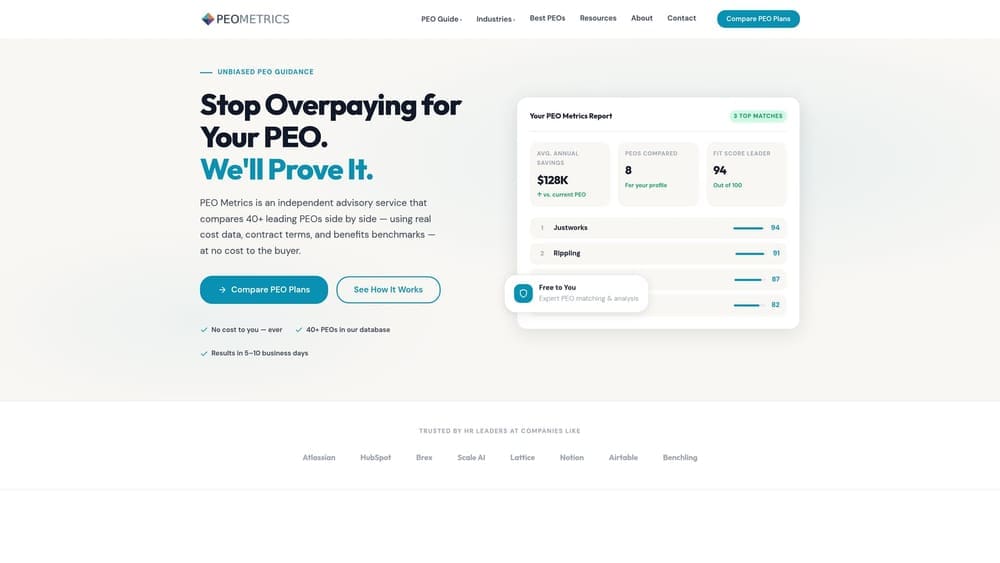
PEO Metrics is a PEO comparison platform that helps oilfield services companies evaluate providers side by side, with detailed pricing analysis and unbiased guidance before you commit to a contract.
Where This Tool Shines
Most oilfield services companies approach PEO selection the same way they’d approach any vendor relationship: get a quote, compare two options, pick one. The problem is that PEO contracts are complex, pricing structures vary widely, and the differences between providers on workers’ comp coverage and multi-state compliance support are not always obvious from a sales conversation.
PEO Metrics gives you a structured way to see those differences before you sign. For an industry where workers’ comp rates and multi-state registration requirements can significantly affect total cost, that kind of pre-commitment visibility is genuinely useful. You’re not relying on a PEO’s sales rep to tell you how they compare to competitors.
Key Features
Side-by-side PEO comparisons: Compare multiple PEO providers on pricing, services, and contract terms in a structured format rather than juggling separate sales pitches.
Pricing analysis: Helps companies identify whether they’re being quoted a fair rate or paying bundled fees that inflate the actual cost.
High-risk industry guidance: Provides context on PEO fit for industries like oilfield services, where workers’ comp class codes and compliance complexity are above average.
No commitment required: You can compare providers without being locked into a relationship with any of them.
Best For
Any oilfield services company actively evaluating PEO options, especially those renewing an existing PEO contract or switching providers. Also useful for companies that have received PEO quotes but aren’t sure whether the pricing and coverage terms are competitive for their class codes and states of operation.
Pricing
Contact PEO Metrics directly for details on comparison services at peometrics.com.
2. Employer Flexible
Best for: Texas-based and Gulf Coast oilfield services employers seeking a regional PEO with energy sector familiarity
Employer Flexible is a regional PEO based in Texas with stated experience serving energy and oilfield services employers in the Gulf Coast region.
Where This Tool Shines
Regional PEOs often understand local compliance nuances better than national providers. For oilfield services companies operating primarily in Texas, Louisiana, and surrounding Gulf Coast states, Employer Flexible’s regional focus means their team is more likely to be familiar with the specific class codes, regulatory context, and workforce patterns common to energy employers in that geography.
If your operations are concentrated in the Gulf Coast corridor rather than spread across a dozen states, a regionally focused PEO may offer more relevant support than a large national provider whose energy experience is diluted across many industries and geographies.
Key Features
Regional energy sector focus: Stated experience with Texas and Gulf Coast energy employers, which is relevant for oilfield services class code handling and compliance.
Workers’ comp access for high-hazard class codes: PEO master policy access for elevated-risk oilfield classifications, though you should verify specific class code coverage directly.
HR administration and compliance support: Field operations HR support including onboarding, documentation, and regulatory compliance assistance.
Multi-state payroll capability: Payroll processing with multi-state tax filing for crews operating across state lines.
Best For
Oilfield services companies with primary operations in Texas and the Gulf Coast region that want a PEO with regional energy industry familiarity rather than a large national generalist. Verify current service area and offerings at employerflexible.com before making any decisions.
Pricing
Verify current pricing directly at employerflexible.com. No pricing is claimed here.
3. Oasis (a Paychex Company)
Best for: Multi-state oilfield operations that need IRS CPEO certification and broad geographic coverage
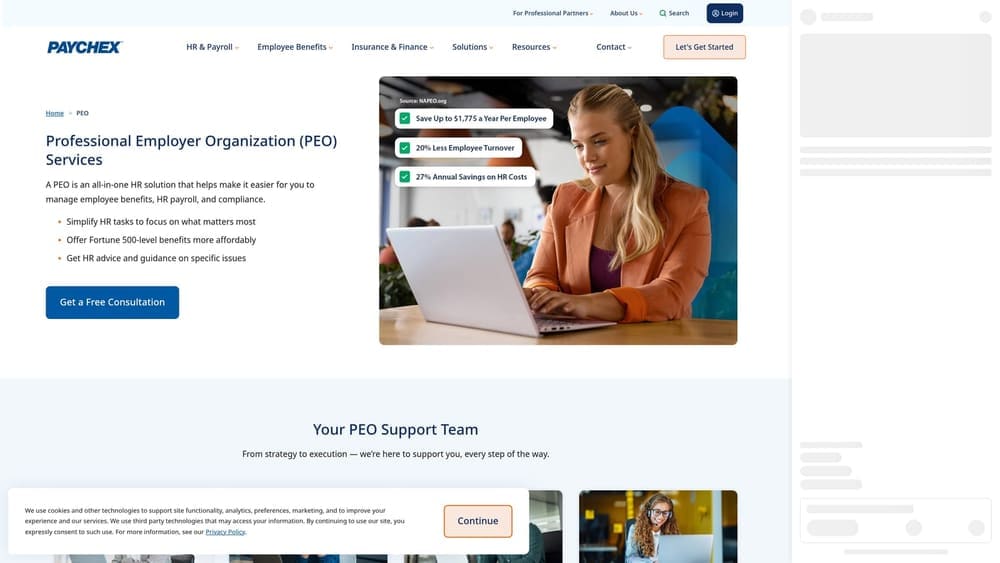
Oasis is a nationally recognized PEO operating under the Paychex umbrella, holding IRS Certified PEO status, with broad state coverage and access to group benefits programs.
Where This Tool Shines
IRS CPEO certification matters for oilfield services companies because it clarifies how federal tax liability is allocated between the PEO and the client company. For employers managing payroll across multiple states with complex compliance obligations, that clarity reduces ambiguity around federal employment tax responsibility. You can verify CPEO status through the IRS CPEO public registry.
Oasis benefits from being backed by Paychex’s payroll infrastructure, which means the underlying payroll processing engine is well-established. For companies that want a PEO with national reach and a recognizable parent company, this combination of CPEO certification and Paychex backing is worth evaluating.
Key Features
IRS CPEO certification: Verifiable via the IRS CPEO public registry, providing clarity on federal tax liability allocation between PEO and client.
Multi-state employer registration and compliance: Support for companies operating crews across multiple states, including employer registration and unemployment insurance compliance.
Group benefits access: Health and benefits programs available through PEO co-employment pooling.
Paychex payroll infrastructure: Backed by an established national payroll processing platform.
Best For
Oilfield services companies with multi-state operations that want IRS CPEO certification, broad geographic coverage, and the stability of a large parent company. Verify current product branding, as Paychex has integrated Oasis over time, and confirm service details at paychex.com/peo.
Pricing
Verify current pricing at paychex.com. No pricing is claimed here.
4. TriNet
Best for: Oilfield services companies with a mix of field crews and office employees that need industry-specific HR packages
TriNet is a full-service PEO with industry-specific HR packages and a self-service technology platform, serving companies that manage both field and office workforces.
Where This Tool Shines
Oilfield services companies often have two distinct employee populations: field crews with high-hazard classifications and administrative or management staff with standard office classifications. TriNet’s industry-specific HR packages are designed to address those workforce differences within a single platform, though you should verify whether an energy or oilfield vertical is currently available on their site.
The self-service technology platform is worth noting for companies where field supervisors and employees need to access HR information independently, without routing every request through a central HR contact.
Key Features
Industry-specific HR packages: Tailored HR support by industry vertical. Verify whether energy or oilfield services is a named vertical at trinet.com before assuming coverage.
Self-service HR technology: Employee and manager-facing platform for benefits, payroll information, and HR documentation.
Benefits administration: Health, dental, vision, and other benefits through PEO co-employment pooling.
Payroll, tax filing, and compliance: Full payroll processing with multi-state tax filing and compliance support.
Best For
Oilfield services companies with both field and office employees that want a technology-forward PEO with industry-specific HR packaging. Better suited to companies with established HR needs across multiple employee types than to single-classification field crews.
Pricing
Verify current pricing at trinet.com. No pricing is claimed here.
5. Insperity
Best for: Established oilfield services companies with 25 or more employees that prioritize benefits quality and dedicated HR support
Insperity is one of the largest PEOs in the United States, known for benefits quality and a dedicated HR specialist model suited to oilfield services companies with a stable, larger workforce.

Where This Tool Shines
Insperity’s dedicated HR specialist model means your company is assigned a specific HR contact rather than working through a call center or ticket queue. For oilfield services companies navigating complex compliance questions, workers’ comp claims, or multi-state employment issues, having a consistent HR point of contact who knows your account is a practical advantage.
The large-group benefits access that comes with Insperity’s co-employment structure is also relevant for companies trying to attract and retain skilled field workers in a competitive labor market. Verify current employee minimums at insperity.com, as Insperity has historically been better suited to companies above a certain headcount threshold.
Key Features
Dedicated HR specialist: A named HR contact assigned to your account rather than a shared service model.
Large-group benefits access: Co-employment structure provides access to benefits rates typically available only to larger employers.
Workers’ comp coverage and claims management: Workers’ comp through the PEO’s program with claims management support, relevant for high-hazard oilfield class codes.
Multi-state compliance support: Employer compliance assistance for companies operating across multiple states.
Best For
Oilfield services companies with 25 or more employees that want high-quality benefits, a dedicated HR specialist, and a well-established PEO with a strong track record. Less suited to very small crews or companies with highly variable headcount. Verify current minimums at insperity.com.
Pricing
Verify current pricing and minimum employee requirements at insperity.com. No pricing is claimed here.
6. Gusto
Best for: Small oilfield services companies or administrative offices that need payroll processing without co-employment
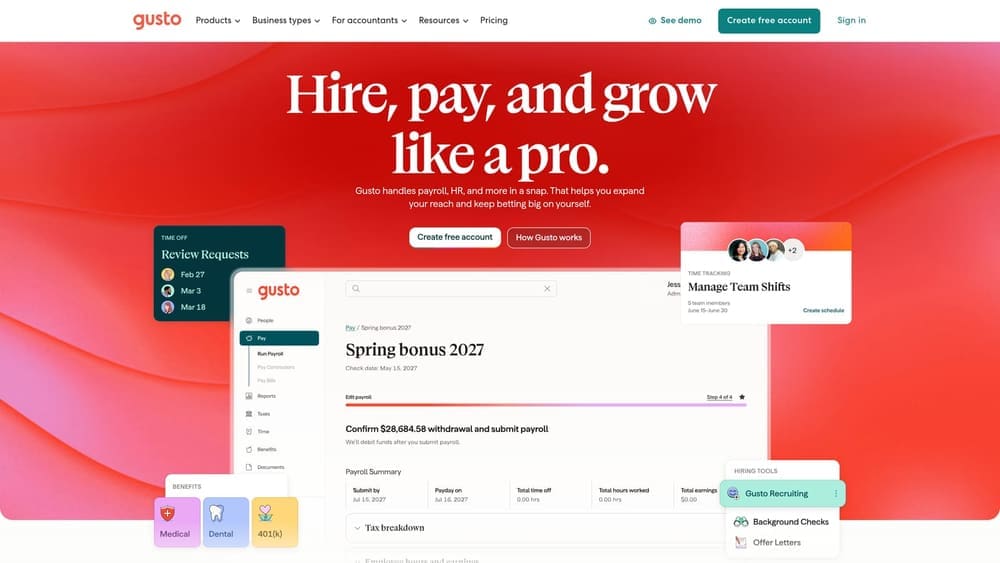
Gusto is a payroll-only platform, not a PEO, suited to small operations or administrative offices that need reliable payroll processing without entering a co-employment relationship.
Where This Tool Shines
Not every oilfield services company needs a PEO. If you have a small administrative team, your field work is handled through subcontractors, or you already have experienced in-house HR managing compliance and workers’ comp, a straightforward payroll platform may be all you need. Gusto fits that scenario well.
It’s worth being direct about what Gusto is and isn’t: it processes payroll and files taxes, but it does not enter a co-employment relationship, does not provide workers’ comp coverage through a master policy, and does not take on employer liability. For a field crew with high-hazard class codes, those limitations matter. For an office of five people, they probably don’t.
Key Features
Automated payroll processing: Payroll runs with direct deposit, automated calculations, and tax withholding.
Federal, state, and local tax filing: Tax filings handled automatically across jurisdictions where you have employees.
Basic HR tools: Onboarding workflows, document storage, and employee self-service features included at higher tiers.
No co-employment: Gusto is a payroll processor. You retain full employer status and all associated liability.
Best For
Small oilfield services companies with administrative-only employees, or companies with experienced in-house HR that simply need a reliable payroll processing platform. Not appropriate as the primary HR solution for field crews with high-hazard workers’ comp classifications.
Pricing
Verify current plan pricing at gusto.com. No pricing is claimed here.
7. ADP TotalSource
Best for: Larger oilfield services operations needing IRS CPEO certification and deep multi-state payroll infrastructure
ADP TotalSource is the PEO division of ADP, holding IRS CPEO certification, with broad multi-state coverage and deep integration with ADP’s payroll infrastructure.
Where This Tool Shines
ADP TotalSource carries the weight of ADP’s national payroll infrastructure, which means the underlying compliance and tax filing systems are built for scale. For larger oilfield services companies with crews registered in many states, that infrastructure depth matters. Multi-state employer registration, unemployment insurance compliance, and payroll tax filing across jurisdictions are areas where ADP has invested heavily over decades.
The IRS CPEO certification is verifiable through the IRS CPEO public registry and provides the same federal tax liability clarity described under Oasis. For companies where that certification is a procurement or risk management requirement, ADP TotalSource checks that box alongside its scale advantages.
Key Features
IRS CPEO certification: Verifiable via the IRS CPEO public registry, clarifying federal tax liability allocation between PEO and client employer.
Multi-state payroll and compliance: Employer registration and payroll tax compliance across a broad range of states, suited to crews that move frequently.
Workers’ comp coverage and risk management: Workers’ comp through the PEO program with risk management support, relevant for oilfield class codes.
ADP technology integration: Access to ADP’s broader HR and payroll technology ecosystem for reporting, time tracking, and workforce management.
Best For
Mid-size to larger oilfield services companies with multi-state operations, elevated compliance requirements, and a preference for a nationally recognized PEO with deep payroll infrastructure. Verify current offerings and pricing at adp.com.
Pricing
Verify current pricing at adp.com. No pricing is claimed here.
8. Paychex Flex
Best for: Oilfield services companies with in-house HR that need scalable payroll processing without co-employment
Paychex Flex is a scalable payroll platform from Paychex, distinct from the Oasis PEO product, designed for companies that want payroll processing and optional HR tools without entering a co-employment arrangement.
Where This Tool Shines
Paychex Flex and Oasis both carry the Paychex name, but they serve different needs. Paychex Flex is a payroll platform. Oasis is a PEO. If you have capable in-house HR, handle your own workers’ comp through a standalone policy, and simply need a reliable multi-state payroll processor with optional HR add-ons, Paychex Flex is the relevant product.
The scalable tier structure means you can start with core payroll and add time tracking, onboarding tools, or other HR features as your needs grow, without committing to the full co-employment model that a PEO requires.
Key Features
Multi-state payroll processing: Payroll with multi-state tax filing, relevant for oilfield crews operating across state lines.
Optional HR add-ons: Time tracking, onboarding, and additional HR tools available as add-ons rather than bundled requirements.
No co-employment: You retain full employer status. Paychex Flex processes payroll and provides HR tools but does not assume co-employer liability.
Scalable tiers: Plan options designed to grow with your company from small to mid-size operations.
Best For
Oilfield services companies with experienced in-house HR teams that want a well-supported payroll processing platform without the co-employment structure of a PEO. Also appropriate for companies that manage workers’ comp independently and don’t need PEO-based benefits pooling. Verify current product naming and tiers at paychex.com.
Which Model Actually Fits Your Operation
For most oilfield services companies with field crews, high workers’ comp exposure, and multi-state operations, a PEO will typically offer more coverage than a payroll company alone. The co-employment structure gives you access to group benefits rates, shared compliance infrastructure, and workers’ comp through the PEO’s master policy. That last point matters when your class codes carry elevated rates and your experience modification factor is still developing.
A standalone payroll company makes more sense if you already have experienced in-house HR, your workforce is concentrated in one state, and your risk management needs are handled separately through your own workers’ comp policy and compliance team. Gusto and Paychex Flex both serve that scenario well.
The right answer depends on four things: your headcount, the states where you operate, your current workers’ comp situation, and how much HR infrastructure you want to manage internally. A 12-person crew working across Texas and New Mexico has different needs than a 60-person company with a dedicated HR manager and an established safety program.
If DOT compliance is part of your picture, ask any PEO you’re evaluating whether they have specific experience supporting DOT-regulated employers. Not all PEOs do, and the answer will tell you something useful about how well they understand your industry.
Understanding the structural difference between a PEO and a payroll company is foundational to this decision. If you want a deeper explanation of what co-employment actually means in practice, this overview of what a PEO is covers the basics clearly. For context on how PEO workers’ comp programs work with high-hazard class codes specifically, this piece on class code restructuring under a PEO is worth reading before you start comparing quotes.
Before you sign with any PEO, compare multiple providers on pricing, contract terms, and what their workers’ comp program actually covers for your specific class codes. PEO Metrics provides side-by-side comparisons of PEO providers so you can see the differences in pricing and coverage before committing.
Don’t auto-renew. Make an informed, confident decision.
Before you sign that PEO renewal, make sure you’re not leaving money on the table.
Many businesses unknowingly overpay because of bundled fees, hidden administrative markups, and contracts designed to limit flexibility. We give you a clear, side-by-side breakdown of pricing, services, and contract terms, so you can see exactly what you’re paying for and choose the option that truly fits your business.
