

Industrial maintenance companies carry HR complexity that most generic software wasn’t designed to handle. When your workforce includes HVAC technicians, millwrights, industrial electricians, and facilities crews, you’re dealing with elevated workers comp class codes, OSHA recordkeeping obligations, and technicians spread across multiple client sites. A standard payroll company processes your wages and files your taxes. A PEO does something structurally different: it enters a co-employment relationship, pools your workers comp risk into a master policy, and takes on employer-of-record responsibilities for benefits and compliance.
The cost and liability difference between those two models can be meaningful for a maintenance operation. But the right choice depends on your headcount, your state footprint, your current workers comp situation, and how much HR infrastructure you actually need. This guide walks through the leading options on both sides of that comparison, starting with a tool that helps you evaluate them before you commit to anything.
1. PEO Metrics
Best for: Industrial maintenance businesses evaluating PEO providers before signing any contract
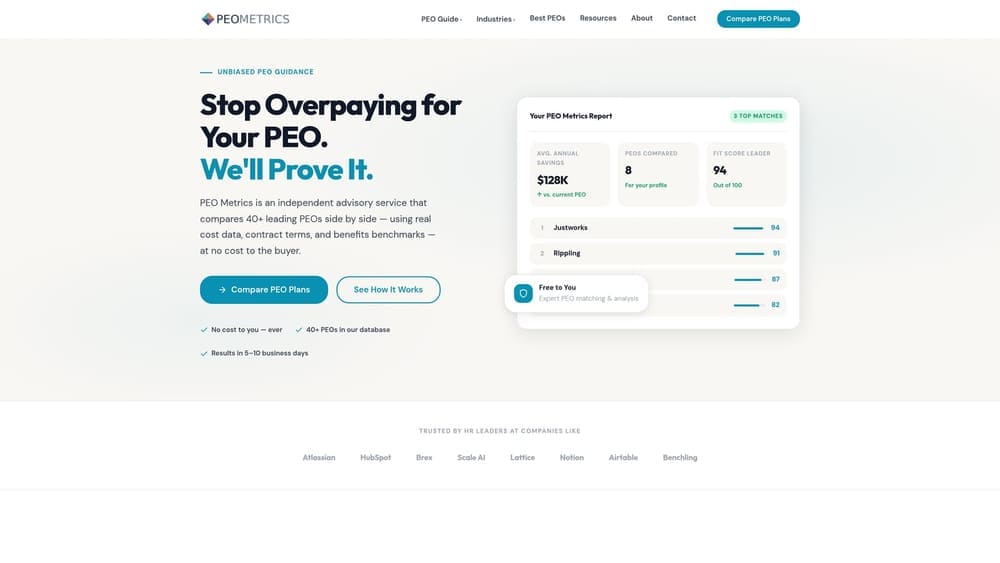
PEO Metrics is a comparison and advisory platform that helps businesses evaluate PEO providers side by side using detailed metrics and pricing analysis.
Where This Tool Shines
Most industrial maintenance companies shopping for a PEO end up comparing providers one at a time, relying on sales calls and proposals that aren’t structured for easy comparison. PEO Metrics changes that dynamic by putting multiple providers in the same frame, with pricing analysis designed to surface where you might be overpaying.
This is particularly useful for maintenance contractors who aren’t sure whether co-employment is warranted at all. Before you commit to a PEO contract, understanding what each provider actually delivers on workers comp pooling, compliance support, and fee structure gives you a much stronger negotiating position and a clearer decision.
Key Features
Side-by-Side Provider Comparisons: Evaluate multiple PEO options against the same criteria rather than juggling separate sales proposals.
Pricing Analysis: Structured to help businesses identify overpayment risks, bundled fee markups, and contract terms that limit flexibility.
Unbiased Guidance: Covers multiple PEO options rather than steering toward a single vendor.
PEO vs. Payroll Clarity: Helps industrial maintenance employers understand what co-employment actually changes about their obligations before signing.
Relevant for First-Time PEO Buyers: Especially useful for maintenance contractors evaluating co-employment for the first time without internal HR expertise to interpret complex proposals.
Best For
HR managers, operations directors, and business owners at industrial maintenance companies who are actively deciding between PEO providers and want a structured comparison rather than relying solely on vendor sales presentations. Also useful for companies unsure whether a PEO is the right fit at all.
Pricing
Contact PEO Metrics directly for details. This is an advisory and comparison service, not a payroll or PEO product itself.
2. Employers PEO
Best for: Small industrial maintenance businesses with higher-risk worker classifications
Employers PEO is a co-employment PEO offering from Employers Holdings with a background in serving small businesses in higher-risk industries.

Where This Tool Shines
Workers comp is often the central cost driver for small maintenance shops, and Employers PEO’s background in higher-risk industries makes it worth evaluating if your class codes are pushing your open-market premiums up. The co-employment structure means your employees are covered under the PEO’s master workers comp policy, which can change the risk calculation for a small employer that wouldn’t otherwise have the scale to negotiate favorable rates.
For small businesses that are just starting to outgrow DIY payroll but aren’t ready for an enterprise HR platform, the combination of co-employment and compliance support in one package addresses multiple problems at once.
Key Features
Co-Employment with Workers Comp Coverage: Employees are covered under the PEO master policy rather than a standalone open-market policy.
Higher-Risk Classification Experience: Background serving industries with elevated workers comp class codes.
Payroll Processing and Tax Filing: Handled under the co-employment structure, with the PEO as employer of record for tax purposes.
HR Compliance Support: Guidance on employment law and HR obligations for small business clients.
Best For
Small industrial maintenance businesses with a handful of employees in elevated workers comp classifications who need co-employment benefits without the scale requirements some larger PEOs impose. Verify current product availability and structure directly with Employers PEO before proceeding.
Pricing
Verify current pricing directly with Employers PEO. Specific figures were not available for verification at the time of publication.
3. Insperity
Best for: Growing maintenance contractors who want full-service HR with dedicated support teams
Insperity is a publicly traded full-service PEO providing co-employment, benefits administration, HR support, and compliance guidance for businesses with field and office workforces.

Where This Tool Shines
Insperity’s model leans toward comprehensive service delivery rather than self-service technology. For industrial maintenance companies where the owner or operations director is also handling HR, having a dedicated HR service team rather than a help desk ticket system can make a real difference. That hands-on support extends to OSHA compliance guidance, which is directly relevant for maintenance contractors with recordkeeping obligations.
The benefits packages available through Insperity’s co-employment structure can also help smaller maintenance contractors compete for skilled trades workers who might otherwise gravitate toward larger employers with better benefits.
Key Features
Full Co-Employment: Insperity serves as employer of record for payroll taxes and benefits, with workers comp coverage through the PEO master policy.
Comprehensive Benefits Administration: Access to benefits packages that smaller employers typically can’t offer independently.
Dedicated HR Service Teams: Assigned HR professionals rather than self-service only, relevant for businesses without internal HR staff.
OSHA and Employment Law Compliance Support: Guidance on compliance obligations relevant to industrial maintenance operations.
Workforce Management Technology: Platform covering time tracking and workforce management for field employees.
Best For
Mid-size maintenance contractors with established operations who want full-service HR support, strong benefits offerings to attract skilled trades workers, and compliance guidance without building an internal HR department. Verify current minimums and pricing directly with Insperity.
Pricing
Typically quoted on a per-employee-per-month basis. Verify current pricing directly with Insperity, as rates depend on workforce size and services selected.
4. Oasis (a Paychex Company)
Best for: Maintenance businesses already using Paychex that want to add co-employment benefits
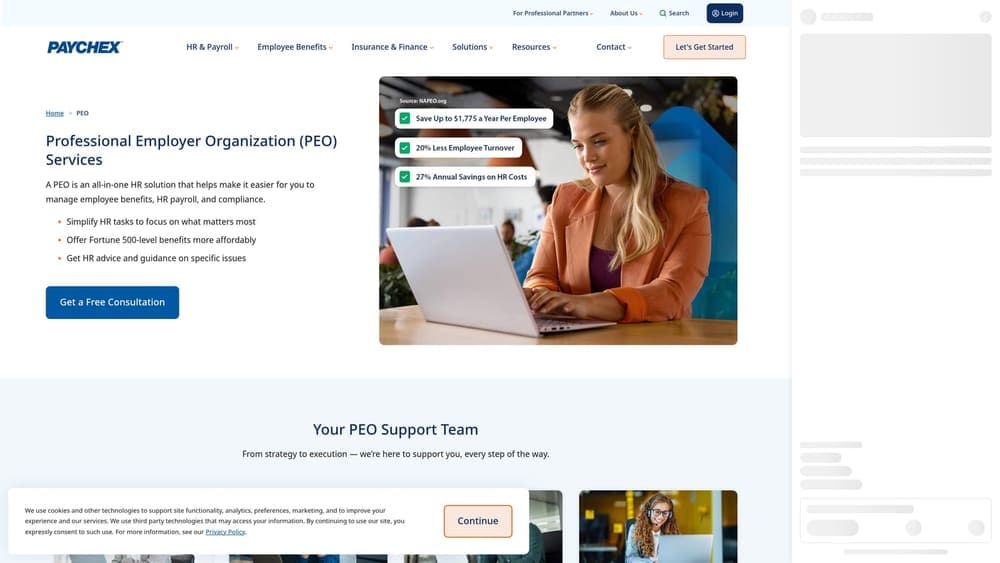
Oasis is Paychex’s PEO division, offering co-employment services built on Paychex’s established payroll and HR infrastructure.
Where This Tool Shines
If your maintenance business is already running payroll through Paychex, transitioning to Oasis for co-employment is a more natural path than switching to a completely different PEO platform. The underlying payroll infrastructure stays familiar, and you gain the co-employment benefits, including workers comp master policy coverage and benefits administration, without a full platform migration.
For businesses that are growing and starting to feel the strain of managing workers comp independently, Oasis offers a clear upgrade path within an ecosystem many maintenance contractors already know.
Key Features
Co-Employment Backed by Paychex Infrastructure: PEO services layered on top of Paychex’s established payroll and compliance systems.
Workers Comp Master Policy Coverage: Employees covered under the PEO master policy rather than a standalone employer policy.
Benefits Administration and HR Compliance: Full benefits administration alongside employment law compliance support.
Paychex Platform Integration: Relevant for businesses already operating within the Paychex ecosystem.
Scalable Structure: Designed for businesses that may outgrow payroll-only arrangements as they add headcount or complexity.
Best For
Industrial maintenance companies currently using Paychex Flex or other Paychex products who want to add co-employment without switching platforms. Also relevant for businesses evaluating Paychex as a single-vendor solution across payroll and PEO. Verify current product naming and structure directly with Paychex, as the Oasis branding has evolved since acquisition.
Pricing
Verify current pricing directly with Paychex. Pricing structure varies based on workforce size and services included.
5. ADP TotalSource
Best for: Multi-state industrial maintenance contractors who need CPEO-certified co-employment
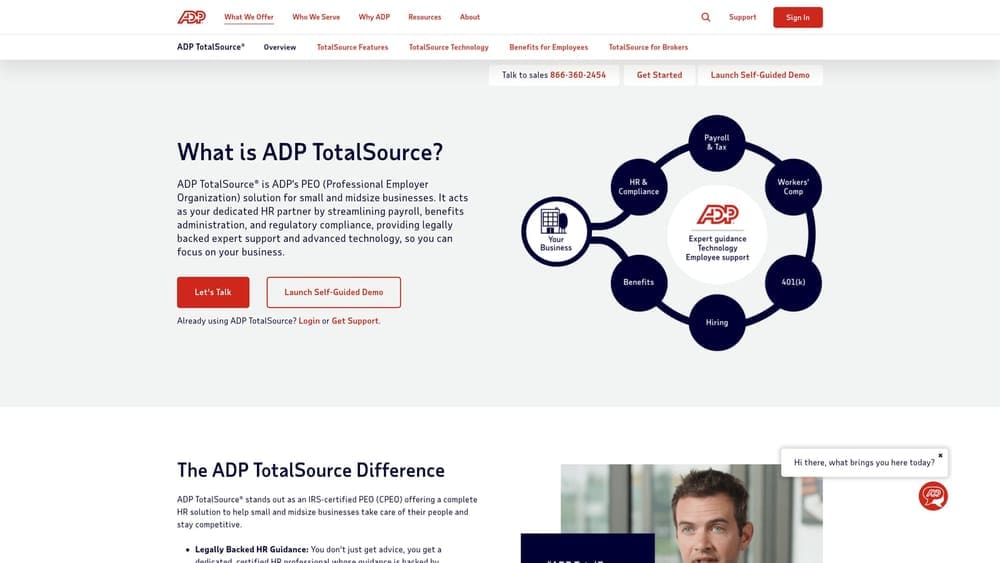
ADP TotalSource is ADP’s CPEO-certified PEO division, offering nationally scaled co-employment with deep compliance infrastructure.
Where This Tool Shines
The IRS Certified PEO designation matters more than many maintenance contractors realize. CPEO certification clarifies the allocation of payroll tax liability between the PEO and the client, which reduces ambiguity when you’re operating across multiple states with different tax and compliance requirements. ADP TotalSource’s national footprint makes it one of the stronger options for maintenance contractors running crews in multiple jurisdictions.
ADP’s compliance infrastructure is also relevant for industrial maintenance businesses dealing with multi-state employment law variation, where staying current without dedicated HR staff is genuinely difficult.
Key Features
IRS Certified PEO (CPEO) Status: Clarifies payroll tax liability allocation between ADP and the client employer, reducing multi-state compliance risk.
National Coverage: Relevant for maintenance contractors operating across multiple states with varying employment law requirements.
Full Co-Employment Package: Workers comp coverage, benefits administration, and HR compliance under one co-employment structure.
ADP Ecosystem Integration: Connects with ADP’s broader payroll, workforce management, and analytics tools.
Multi-Jurisdiction Compliance Support: Guidance on employment law across multiple states, relevant for contractors with distributed field workforces.
Best For
Industrial maintenance contractors operating in multiple states who need CPEO-certified co-employment and want the compliance depth that comes with a nationally scaled PEO. Verify current state availability, minimums, and pricing directly with ADP TotalSource before making any decisions.
Pricing
Verify current pricing directly with ADP TotalSource. Pricing is typically customized based on workforce size, location, and services selected.
6. TriNet
Best for: Maintenance companies with mixed field and office workforces needing industry-specific HR packages
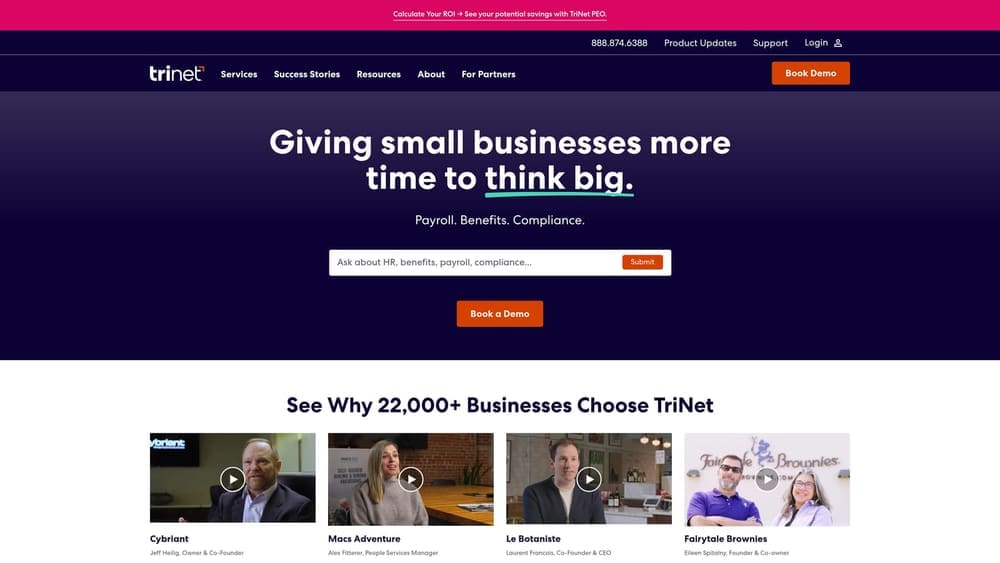
TriNet is a publicly traded PEO offering industry-specific HR packages with co-employment, benefits, and a technology platform suited to companies with varied workforce types.
Where This Tool Shines
Industrial maintenance operations often have a split workforce: field technicians with elevated workers comp classifications alongside administrative, dispatch, or estimating staff with lower-risk profiles. TriNet’s industry-specific packaging is designed to address that kind of mixed workforce rather than applying a one-size approach across different employee types.
The benefits administration component can also be a real differentiator for maintenance contractors trying to attract and retain skilled trades workers in a competitive labor market. Access to competitive benefits through a PEO’s pooled purchasing power is often one of the more tangible co-employment advantages for smaller employers.
Key Features
Industry-Specific HR Packages: Co-employment packages structured around specific workforce types rather than generic configurations.
Competitive Benefits Administration: Access to benefits options that help smaller maintenance contractors compete for skilled trades talent.
Workforce and Time Management Technology: Platform tools for managing field technician schedules and time data.
Payroll Tax Filing Under Co-Employment: TriNet handles payroll tax obligations as part of the co-employment structure.
Support for Mixed Workforces: Relevant for maintenance companies with both field technicians and office or administrative staff.
Best For
Industrial maintenance businesses with a mix of field and office employees who want industry-relevant HR packaging and strong benefits options. Verify current offerings for industrial and field workforces directly with TriNet, as product configurations can vary.
Pricing
Typically structured on a per-employee-per-month basis. Verify current pricing directly with TriNet, as rates depend on workforce composition and selected services.
7. Gusto
Best for: Small maintenance businesses that need straightforward payroll without co-employment
Gusto is a payroll and HR platform (not a PEO) offering payroll processing, tax filing, and benefits administration for small businesses without entering a co-employment arrangement.
Where This Tool Shines
Gusto is the clearest representative of what the payroll-company side of this comparison actually looks like in practice. You get automated payroll, federal and state tax filing, and basic benefits administration in a clean interface at a transparent price. For a small maintenance shop with a handful of employees and manageable workers comp exposure, that may be all you need.
The important distinction is what Gusto doesn’t do: it doesn’t provide co-employment, workers comp coverage, or OSHA compliance support. You remain the employer of record for all purposes, which means your workers comp policy stays on your own loss history. For lower-risk operations or very small crews, that trade-off is often acceptable. For maintenance contractors with significant workers comp exposure, it’s worth understanding what you’re keeping on your own books.
Key Features
Automated Payroll and Tax Filing: Handles federal and state payroll tax filing without co-employment or employer-of-record transfer.
Benefits Administration: Health insurance connections and benefits management for small business teams.
Simple Onboarding: Designed for small teams without dedicated HR staff, with a straightforward setup process.
Time Tracking and PTO Management: Built-in tools for tracking hours and managing time-off requests.
Transparent Pricing: Publicly listed pricing tiers, making it easier to evaluate cost without a sales call.
Best For
Small maintenance businesses with lower workers comp complexity, limited multi-state exposure, and straightforward payroll needs. Not a replacement for co-employment if your class codes, OSHA obligations, or workforce scale make a PEO structure more appropriate.
Pricing
Pricing tiers are publicly listed at gusto.com. Verify current rates directly, as pricing structures are updated periodically.
8. Paychex Flex
Best for: Mid-size maintenance businesses that want modular HR tools without co-employment
Paychex Flex is Paychex’s modular payroll and HR platform, distinct from Oasis PEO, allowing maintenance businesses to add HR capabilities incrementally without entering a co-employment arrangement.
Where This Tool Shines
Paychex Flex sits in a useful middle ground: more scalable and feature-rich than basic payroll software, but without the co-employment commitment of a PEO. For maintenance contractors who need time tracking across multiple job sites, mobile access for field crews, and the option to layer in benefits or retirement administration over time, the modular structure lets you build out HR capabilities at your own pace.
The mobile access component is particularly relevant for industrial maintenance operations where supervisors or technicians need to log time from client sites rather than a central office. Managing that accurately without a field-capable platform creates payroll errors and compliance gaps that compound over time.
Key Features
Modular Payroll with Optional HR Add-Ons: Start with payroll and add time tracking, benefits administration, or compliance tools as needed.
Scalable for Growing Workforces: Designed to handle small crews through larger maintenance operations without a platform change.
No Co-Employment: The employer retains all liability, including workers comp and compliance obligations. This is a feature for some businesses and a limitation for others.
Paychex Ecosystem Integration: Connects with Paychex’s broader HR, retirement, and insurance products if you need to expand later.
Mobile Access for Field Workforces: App-based time management relevant for technicians working across multiple client sites.
Best For
Mid-size industrial maintenance businesses that want more HR capability than basic payroll software offers, but aren’t ready for co-employment or don’t need the workers comp pooling and compliance support a PEO provides. Also a natural starting point for businesses considering Oasis PEO later.
Pricing
Modular pricing varies based on features selected and workforce size. Verify current rates directly with Paychex, as pricing depends on which modules are included.
Choosing the Right Fit for Your Maintenance Business
The PEO versus payroll decision for industrial maintenance isn’t a generic choice, and it shouldn’t be treated as one. Your workers comp class codes, headcount, state footprint, and current HR infrastructure all shape which model makes sense.
Small shops with straightforward payroll needs and manageable workers comp exposure will often find that Gusto or Paychex Flex covers the basics without adding unnecessary cost or contractual complexity. The employer stays in full control, and the platform handles the administrative burden of payroll and tax filing efficiently.
Maintenance contractors dealing with high-risk classifications, OSHA compliance obligations, or multi-state operations are more likely to benefit from the co-employment structure a PEO provides. Workers comp pooling through a PEO master policy can change the cost picture meaningfully for a small employer that wouldn’t otherwise have the scale to negotiate favorable rates on an open-market policy. The compliance support that comes with co-employment addresses OSHA recordkeeping and multi-jurisdiction employment law at the same time.
Among the PEO options, ADP TotalSource’s CPEO certification is worth noting for multi-state contractors because it clarifies payroll tax liability in a way that non-certified PEOs don’t. Insperity’s dedicated service model suits businesses that want hands-on HR support rather than a self-service platform. TriNet’s industry-specific packaging is relevant if your workforce spans field and office roles. Oasis makes sense if you’re already in the Paychex ecosystem and want a clear upgrade path to co-employment.
Before you commit to any provider, compare the actual cost model carefully. PEO pricing typically comes as a per-employee-per-month fee or a percentage of payroll, and the difference between providers on those terms can be significant for a maintenance workforce. Bundled fees and administrative markups aren’t always visible in a headline rate.
PEO Metrics exists to help businesses run that comparison with real data across multiple providers at once, so you’re not relying solely on what each vendor’s sales team tells you. If you’re still working through whether co-employment is the right move at all, a structured side-by-side breakdown of what each model actually changes about your obligations is a useful place to start. [LINK CHECK: PEO vs payroll comparison guide on peometrics.com]
Many businesses unknowingly overpay because of bundled fees, hidden administrative markups, and contracts designed to limit flexibility. Getting a clear view of pricing, services, and contract terms across multiple providers before you sign anything is how you avoid that outcome. Don’t auto-renew. Make an informed, confident decision.
Before you sign that PEO renewal, make sure you’re not leaving money on the table.
Many businesses unknowingly overpay because of bundled fees, hidden administrative markups, and contracts designed to limit flexibility. We give you a clear, side-by-side breakdown of pricing, services, and contract terms, so you can see exactly what you’re paying for and choose the option that truly fits your business.
