
If you run a franchise group, you already know the PEO conversation sounds different for you: several locations, hourly staff who turn over often, payroll in more than one state, and a franchise agreement that makes joint-employer questions part of the picture. This list is for franchisors, multi-unit franchisees, and the HR leads who support them.
The picks were chosen on multi-location support, state coverage, workers’ comp handling, benefits scale, and how clearly each vendor publishes its information. Order reflects editorial fit for franchise groups, not a claim that one vendor is better than another. Minimums, states served, and pricing change often, so confirm every detail with the vendor before you rely on it. PEO Metrics may receive vendor placement fees from providers.
Quick Comparison of the Franchise Group PEO Options
- PEO Metrics: franchise groups that want to compare providers before issuing RFPs; pricing on request via the website; compares multiple PEOs on your own census, states, and fee structure (it is not a PEO).
- Insperity: mid-size and larger multi-unit operators; quote-based; hands-on HR representative model.
- Paychex PEO: franchisees already on Paychex payroll; quote-based; single-vendor stack with Paychex payroll.
- TriNet: groups whose industry matches a TriNet vertical; see website for pricing; public SEC filings let you verify company information.
- ADP TotalSource: hourly-heavy groups already on ADP; quote-based; time and attendance tooling for large hourly workforces.
- Justworks: small franchisees with a handful of locations; see website for pricing; published pricing structure and self-service platform.
- Vensure HR: small to mid-size service-industry franchisees; quote-based; multiple PEO brands under one parent company.
- Oasis Outsourcing: hospitality or service franchisees in its core markets; quote-based; experience with hospitality-type hourly workforces.
1. PEO Metrics
PEO Metrics is our own service, so read this entry with that in mind. It is a PEO comparison and consulting service, not a PEO. It does not run payroll, administer benefits, or act as a co-employer. What it does is help a franchise group compare PEO providers side by side with metrics and pricing analysis before anyone signs a contract.
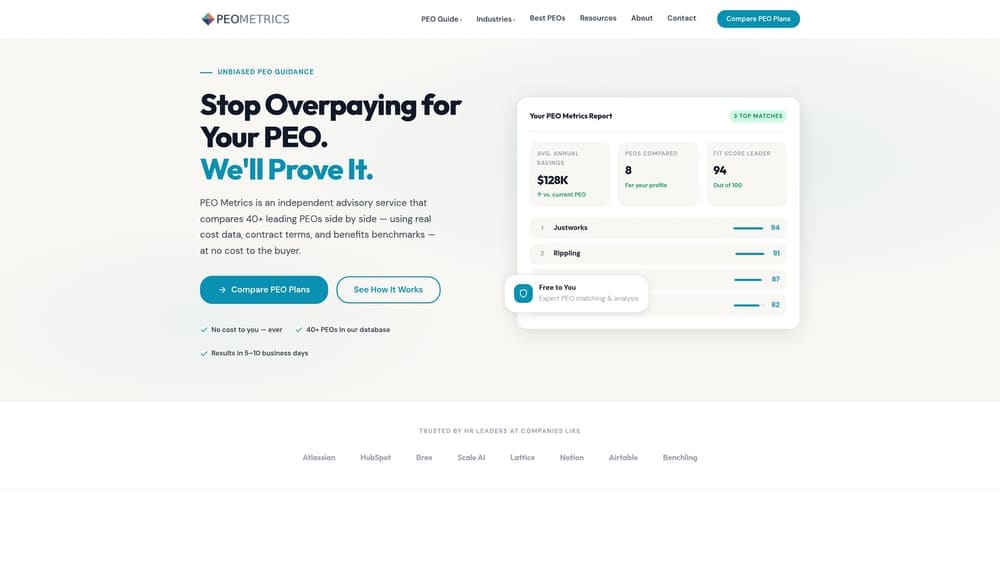
The distinctive part is the starting point. Instead of reading each vendor’s marketing, you compare multiple PEOs against your group’s own census, state footprint, and fee structure. For a franchise group that matters, because the cheapest-looking administrative fee often says little about total cost. Workers’ compensation, state unemployment tax, and benefits design tend to move the number more, and a comparison built on your actual headcount shows that.
- Side-by-side PEO comparisons, so you can weigh vendors on the same terms rather than on differently formatted proposals.
- Pricing analysis that helps you see how per-employee-per-month fees and percentage-of-payroll fees play out for your payroll size.
- Guidance on provider selection, useful when you have not issued an RFP before or want to tighten one.
- Detailed provider metrics, so questions about fit are answered with data instead of sales claims.
Integrations do not apply, since it is not a payroll or HR platform. Setup is a conversation about your locations, states, and current costs, and usually one HR lead or owner handles it.
The limits are plain. It will not process a single paycheck, and it cannot tell you what a PEO will do about joint-employer exposure; that question belongs with your attorney. It may also receive vendor placement fees, so you should ask how that works when you engage. Pricing: see the website.
Best for: Franchise groups that want to compare providers before issuing RFPs.
2. Insperity
Insperity is a national PEO known for assigning HR representatives to client companies. For multi-location operators, that hands-on model is the main draw: someone who learns your locations and staffing patterns rather than a purely self-service portal.
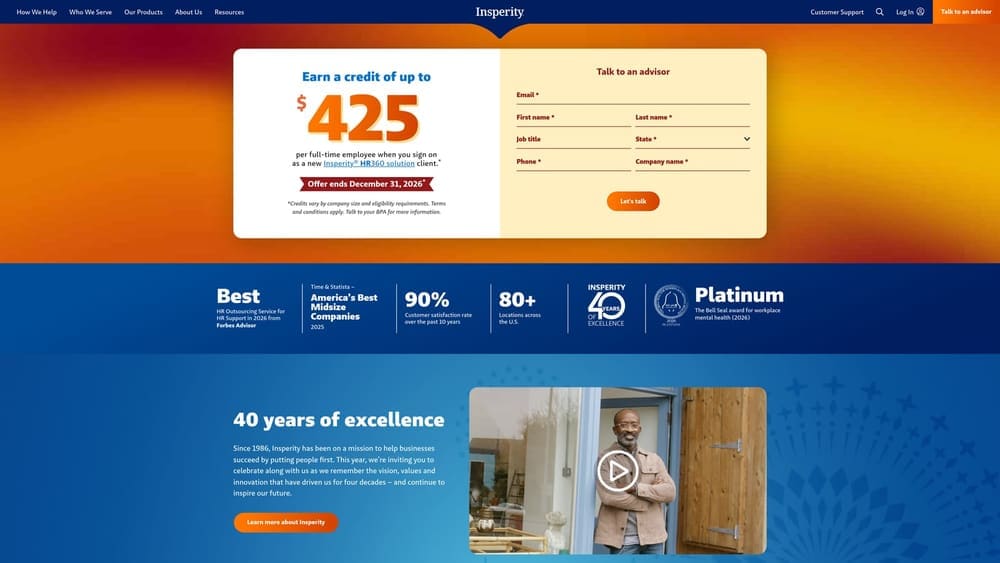
Where it stands out on this list is service intensity. If your general managers lean on a human contact for hiring, discipline, and leave questions, that support structure can matter more than software polish. It tends to be aimed at mid-size and larger employers.
- HR representatives who give managers a point of contact for employee relations questions.
- Benefits administration that consolidates plan enrollment and management across locations.
- Payroll processing for your employees across the states where you operate.
- A workers’ compensation program, which you should verify for your classifications and states, particularly for high-turnover hourly roles.
Integration details should be confirmed on the vendor’s site, especially how it connects with your point-of-sale or scheduling tools. Expect a structured onboarding, with HR or finance leads on your side coordinating the transition.
The limitation is fit at the small end. Minimum requirements and suitability for a franchisee with a few employees need verification directly with Insperity. Pricing is quote-based and typically depends on headcount, payroll, states, and the benefits you choose.
Best for: Mid-size and larger multi-unit operators wanting hands-on HR support.
3. Paychex PEO
Paychex PEO is the PEO offering inside the Paychex ecosystem. Its logic is simple: if your locations already run Paychex payroll, moving to the PEO keeps payroll, benefits, and HR support under one vendor rather than introducing a new system.
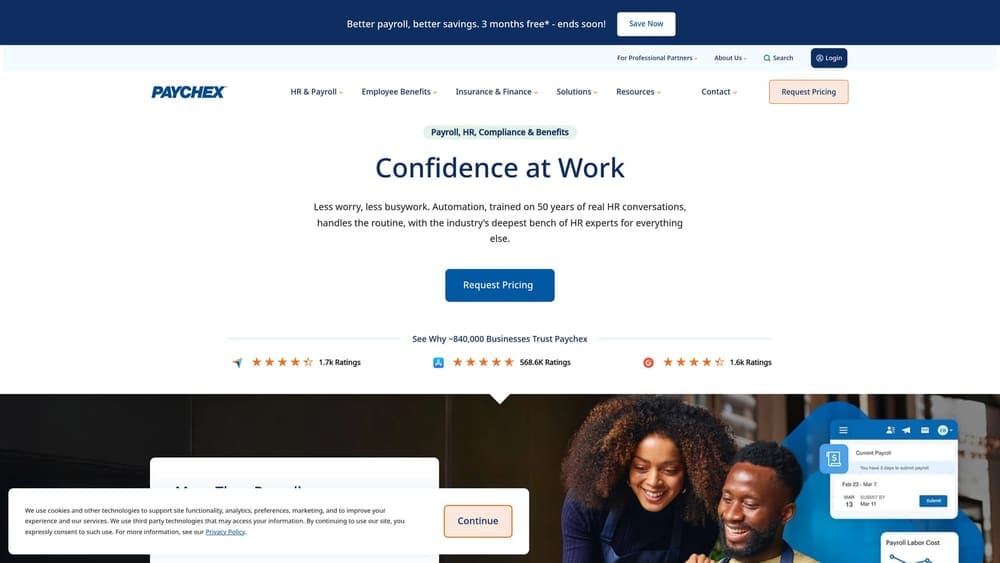
That single-vendor stack is what separates it here. Franchisees who dislike switching payroll platforms may find the transition lighter than moving to an unrelated PEO, though you should confirm exactly what changes.
- Payroll that continues in a familiar environment for current Paychex clients.
- Benefits offerings you can compare against what you buy today.
- HR support for day-to-day employee questions at each location.
- Compliance services, the scope of which you should verify for the states you operate in.
Integrations center on Paychex payroll and HR tools; verify how time tracking and other systems connect. Setup is usually lighter for existing clients, with a payroll or HR administrator managing it.
The weak points to check are franchise-specific reporting, such as handling several entities or locations in one view, and minimum requirements. Neither is confirmed here. If you are not already on Paychex, the main advantage largely disappears. Pricing is quote-based and varies with headcount, payroll, and plan choices.
Best for: Franchisees already running Paychex payroll.
4. TriNet
TriNet is a publicly traded national PEO. That status is useful to a buyer doing diligence: its SEC filings are public, so you can read about the company’s financial condition and risk disclosures rather than relying solely on a sales deck.
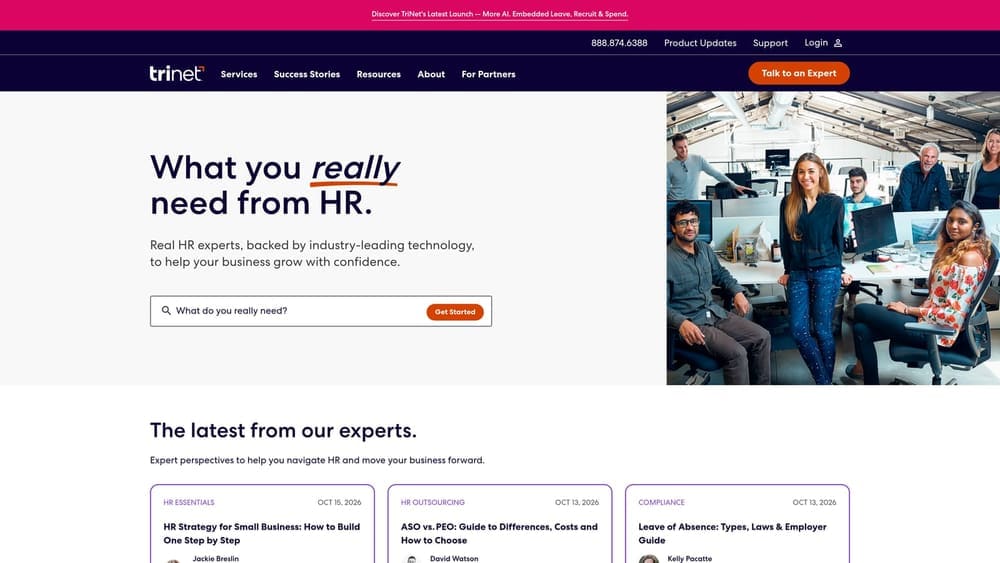
TriNet also organizes parts of its offering around industries. For a franchise group, the question is whether your concept lines up with one of those verticals, since that is where tailored plans and expertise would apply.
- Benefits plans that can be matched to workforce type and budget.
- Payroll that covers employees across multiple states.
- Compliance support that gives managers guidance on employment rules.
- Industry-specific plans, which you should verify for your category before assuming they apply.
Confirm integrations on the vendor site. Setup effort will depend on your size and complexity, and someone in HR or finance should own the project.
Fit varies by industry and company size, and franchise suitability should be verified rather than assumed. If your concept falls outside TriNet’s focus areas, the industry advantage disappears. Pricing details are on the website, and costs generally move with headcount, payroll, and benefits selections.
Best for: Franchise groups whose industry matches a TriNet vertical offering.
5. ADP TotalSource
ADP TotalSource is ADP’s PEO. It is a natural candidate for franchise groups that already use ADP payroll and time tracking, particularly operators with large hourly workforces spread across many sites.
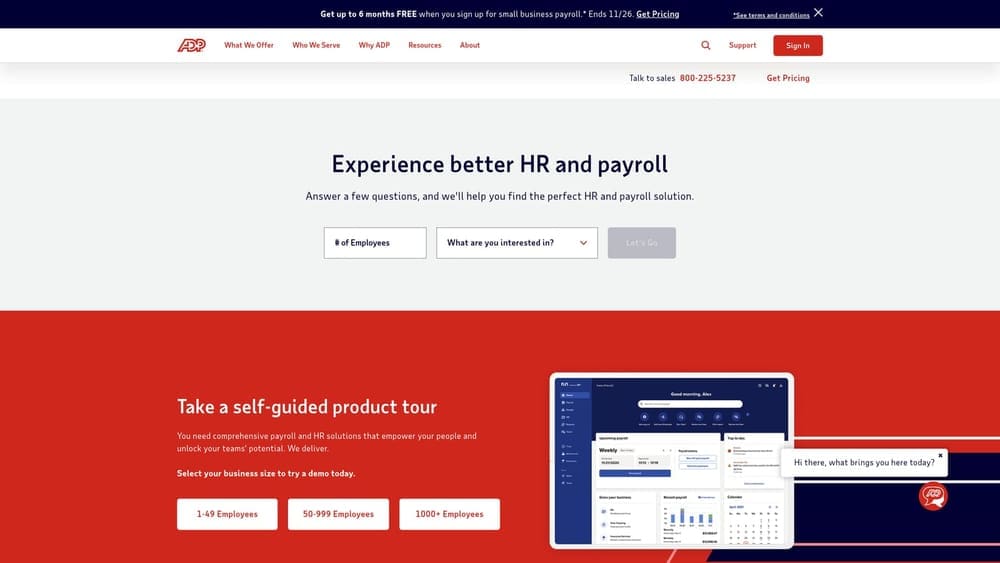
Its distinguishing angle on this list is the time and attendance tooling. When scheduling, clock-ins, and overtime drive your labor costs, having timekeeping and payroll under one vendor reduces the handoffs where errors creep in. Verify the exact time products included with the PEO.
- Payroll that handles large hourly populations across locations.
- Time and attendance tools (verify scope) that tie hours worked directly to pay.
- Benefits offerings to compare against your current plans.
- Risk and compliance services that support managers at each unit.
Integrations run through ADP platform products; confirm what connects to your existing systems. Setup is typically a project with HR and payroll owners on your side, and it is smoother if you already run ADP.
Check minimums and flexibility before you get far, because they may not suit a very small franchisee. If you are not on ADP and have a modest workforce, other options may be a better fit. Pricing is quote-based and depends on headcount, payroll, and the services you add.
Best for: Hourly-heavy franchise groups already on ADP.
6. Justworks
Justworks is a technology-focused PEO that suits small businesses, which makes it relevant to franchisees running a handful of locations with a lean back office.
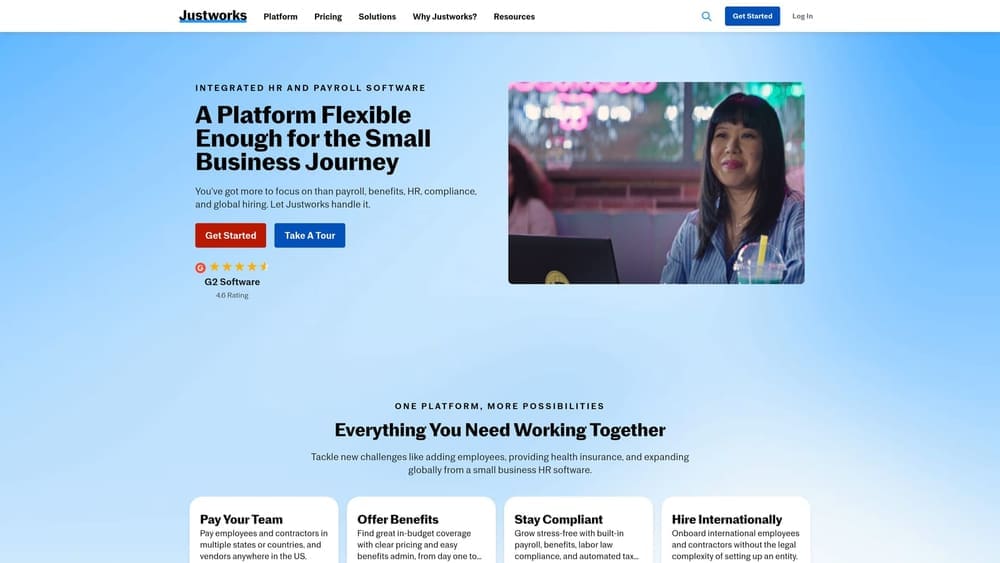
Its strongest points are a published pricing structure and a self-service platform. For a small operator who wants to understand costs without a long sales process, and who is comfortable managing HR tasks online, that transparency is useful. Review the pricing page directly, since structure and rates can change.
- An online platform where owners and managers handle onboarding and employee records themselves.
- Payroll that runs through the same system as HR tasks.
- Benefits that small employers can offer without building a program from scratch.
- Compliance support that helps a small team meet employment obligations.
Confirm integrations on the vendor site, including any connection to scheduling or POS tools. Setup is generally something an owner or office manager can run without a dedicated HR team.
It may not suit large or complex multi-state operators, so a growing group should test whether it will still work in a few years. High-turnover, many-location structures may need more hands-on service than a self-serve model provides. Pricing details are on the website, and cost generally scales with the number of employees and plan choices.
Best for: Small franchisees with a handful of locations.
7. Vensure HR
Vensure HR is an HR services company that operates PEO brands. That structure means the name on the website may not be the entity that serves you, so verify which PEO entities are current before you start.
The one thing it offers that others here do not is choice within a single parent. A franchisee comparing options can look at several brands and approaches without starting with entirely separate corporate relationships. The trade-off is that you have to understand which brand is your actual employer of record.
- PEO services that cover co-employment, HR support, and administration.
- Payroll processing across the states where you have employees.
- Benefits access that a smaller group may not obtain on its own.
- Workers’ compensation coverage, which you should verify for your classifications and states.
Confirm integrations on the vendor site. Setup effort depends on which brand and service model you land in, and an owner or HR lead should be prepared to ask detailed questions during onboarding.
The main caution is clarity: ask which brand will be the employer of record, who holds the contract, and who is responsible for workers’ comp and unemployment accounts. Pricing is quote-based and varies by brand, headcount, payroll, and plan structure.
Best for: Small to mid-size service-industry franchisees comparing multiple brand options.
8. Oasis Outsourcing
Oasis Outsourcing is a national PEO with Florida roots. Its relevance to franchise groups comes from its history with hourly service workforces, though you should verify how deep that experience goes for your concept.
Where it may stand out is hospitality-type operations: restaurants, hotels, and similar businesses with shift-based staff and frequent turnover. If your locations look like that and sit in its home markets, local familiarity can be an advantage.
- Payroll for hourly teams with varying schedules.
- Benefits packages you can offer to attract and keep staff.
- HR support for managers handling hiring, discipline, and leave.
- Risk management services (verify scope) aimed at workplace safety and claims.
Confirm integrations on the vendor site. Setup typically involves an owner or HR contact coordinating the transition, and onboarding goes better when your location list and payroll history are ready.
Availability and fit outside its core regions need verification, so a group with units in many states should ask early which of them it serves. Pricing is quote-based and moves with headcount, payroll, state, and benefits selections.
Best for: Hospitality or service franchisees in its core markets.
Matching a PEO to Your Franchise Situation
A few use cases stand out. A single-state small franchisee with a few locations should look first at Justworks for its published pricing and self-service model, and at any vendor already tied to the payroll system in place, such as Paychex. A growing multi-unit operator will likely care more about HR support and hourly workforce tools, which points to Insperity or ADP TotalSource, with Oasis worth a look for hospitality concepts in its markets. Franchisor-affiliated groups should weigh TriNet’s industry focus and public filings, and should put contract structure and employer-of-record clarity near the top of their questions.
Whichever you favor, compare quotes side by side on the same census and states. A low administrative fee can hide higher workers’ comp, unemployment tax, or benefits costs, so look at total cost. And a PEO does not remove franchise joint-employer risk, so confirm those implications with employment counsel before you sign.
Before you sign that PEO renewal, make sure you’re not leaving money on the table. Many businesses unknowingly overpay because of bundled fees, hidden administrative markups, and contracts designed to limit flexibility. We give you a clear, side-by-side breakdown of pricing, services, and contract terms, so you can see exactly what you’re paying for and choose the option that truly fits your business.
