

If you run HR or the business itself at a company of about 50 people, you are probably past the point where spreadsheets and a basic payroll app hold up, and short of the point where a full HR department makes sense. These seven options are the ones worth weighing for that headcount. They were judged on technology experience, service model, pricing transparency, benefits access, and compliance support. Prices, plans, state availability, and minimums change often, so confirm every detail on each vendor’s site before you decide.
At this size, the useful differences are rarely brand names. They are whether you get a self-serve platform or an assigned advisor, whether the fee is charged per employee per month (PEPM) or as a percentage of payroll, and how much benefits choice you actually get. For more on how those fee structures compare, see [LINK CHECK: PEO pricing guide].
Quick Comparison of the Seven Options
- PEO Metrics: best for teams that want to compare PEO quotes before choosing; pricing on its website; the only entry here that compares multiple PEOs on a common basis rather than selling a PEO.
- Justworks: best for small tech teams that want transparent pricing; publicly listed per-employee plans, confirm current rates; self-serve experience with publicly posted pricing.
- Rippling PEO: best for SaaS companies that want HR and IT workflows connected; quote-based; ties HR actions to device and app provisioning in one system.
- TriNet: best for growth companies that want broad benefits choice; quote-based; industry-tailored packages with wide benefits plan variety.
- Insperity: best for companies without an HR department that need hands-on support; quote-based; a personal HR advisor model.
- ADP TotalSource: best for companies that value a large payroll provider’s scale; quote-based; payroll and compliance infrastructure from one of the biggest payroll providers.
- Paychex PEO: best for existing Paychex customers considering a PEO; quote-based; a natural upgrade path from Paychex payroll.
1. PEO Metrics
PEO Metrics is a PEO comparison and consulting service, and it is not a PEO itself. It sits ahead of the six providers below because it answers a question that comes before any of them: which PEO, if any, deserves your signature. It is designed for HR leads and founders who have received, or are about to request, several quotes and want them lined up on the same terms.
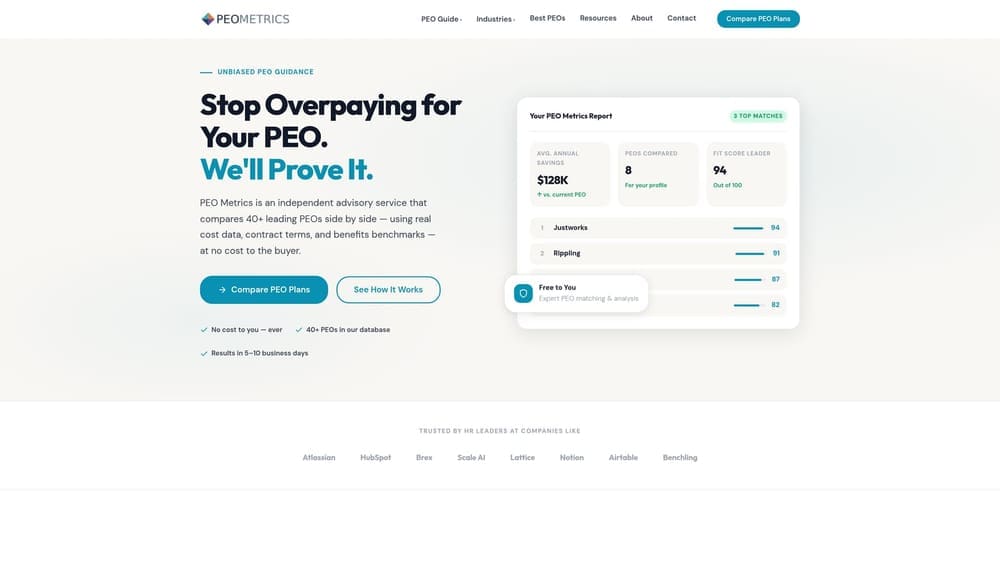
Its distinctive strength is the common basis. PEO quotes arrive in different shapes: one charges PEPM, another a percentage of payroll, a third bundles admin fees into benefits rates. Putting them side by side is where a lot of the real cost differences surface, and that is the work this service does.
- Side-by-side PEO comparisons show how providers stack up on the same criteria, so you are not comparing a brochure to a quote.
- Pricing analysis helps you see what you would pay in total, not just the headline admin fee.
- Detailed provider metrics give you data to weigh service model, benefits access, and contract terms.
- Guidance on selecting providers helps you narrow the field based on your headcount and priorities.
There is nothing to integrate and nothing to implement, because it is an advisory service rather than a payroll platform. Someone on your team, usually the HR lead or a founder, shares the quotes and priorities and reviews the comparison.
The limits are plain. It does not run payroll or administer benefits, so you still need a PEO or other provider to do that. PEO Metrics may also receive vendor placement fees, which you should factor in as you would with any referral-based service. Pricing is not listed here, so check the website for current terms.
Best for: Teams that want to compare PEO quotes before choosing a provider.
2. Justworks
Justworks is a technology-led PEO that packages payroll, benefits, compliance support, and HR tools into a single employee-facing platform. It is built for small and mid-sized companies, which makes a 50-person team a natural fit.
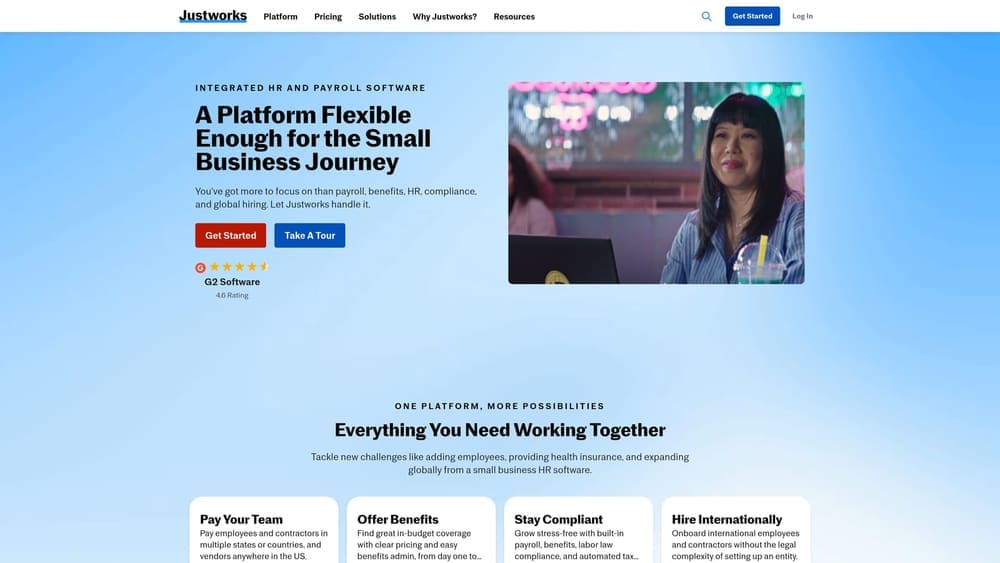
What sets it apart on this list is pricing posted publicly and a self-serve experience. Most PEOs here require a sales conversation before you see a number. With Justworks you can look at per-employee plans up front and get a rough sense of cost before talking to anyone. As of this writing, confirm current rates and tier names on its site, since they change.
- Payroll and tax filing run through the same system your employees use for everything else, so there is less reconciling between tools.
- Benefits administration lets employees enroll and manage coverage in the platform instead of through emailed forms.
- The employee self-service app puts pay stubs, time off, and benefit details in people’s hands without an HR ticket.
- Compliance support gives a small team backup on filings and requirements without a dedicated compliance hire.
It offers accounting and HR integrations, but verify the current list on the website against the tools you already use. Setup is generally something an HR lead or office manager can own, and the day-to-day load is light because most tasks are self-serve.
The trade-off is the flip side of that self-serve model. It is less suited to companies that want a dedicated on-site HR advisor, or that expect a named person to call about every employee relations question. Check what level of support is included in the plan you are quoted.
Best for: Small tech teams that want transparent pricing and a modern interface.
3. Rippling PEO
Rippling offers PEO services inside its broader HR, IT, and finance platform. That structure matters for a SaaS company, where onboarding a new engineer means payroll, benefits, a laptop, and a dozen app accounts.
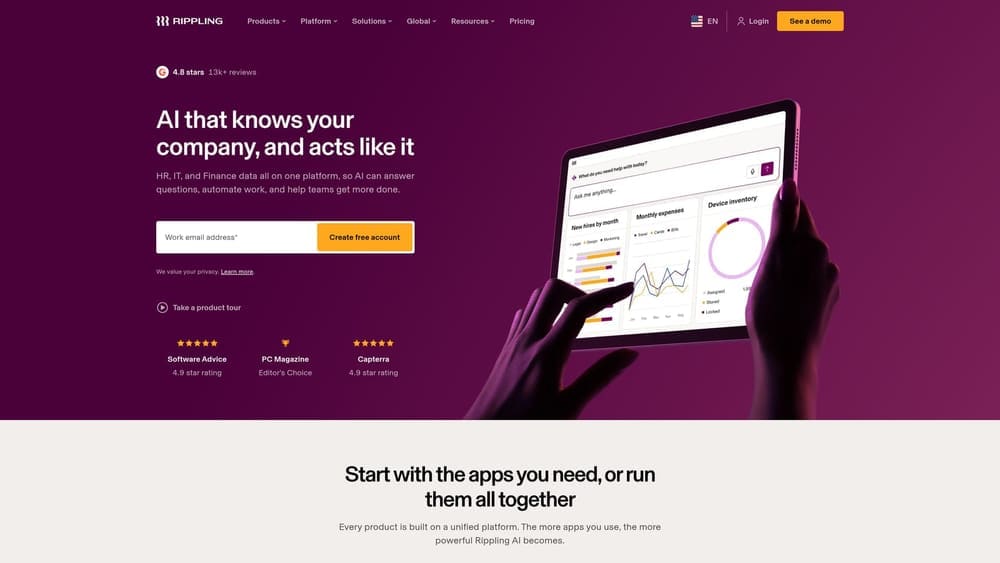
Its distinctive strength is linking HR actions with IT provisioning in one system. A hire, a role change, or a departure in the HR record can trigger device and app access changes rather than relying on a separate IT checklist someone has to remember.
What you get
- PEO services cover the co-employment basics: benefits, compliance support, and HR administration.
- Payroll runs on the same employee record as everything else, which cuts duplicate data entry.
- Device and app management lets IT and HR work from one source of truth on who has access to what.
- Onboarding and offboarding workflows standardize the steps that otherwise vary by manager.
Where it gets complicated
Pricing is quote-based and modular. Modules can add up, so ask exactly which are included in your quote and which are priced separately. A 50-person company that only wants PEO basics may be paying for breadth it does not use.
The app ecosystem is large, but verify the current integration list against your stack. Setup effort is higher than a payroll-only tool because you are adopting a broader system, and it usually needs both an HR owner and someone from IT or operations involved.
Best for: SaaS companies wanting HR and IT workflows connected.
4. TriNet
TriNet is a long-established PEO with industry-oriented offerings and a wide range of benefits options. It has been in the market a long time, and product names and packaging have shifted over the years, so confirm the current offering and naming with the vendor.
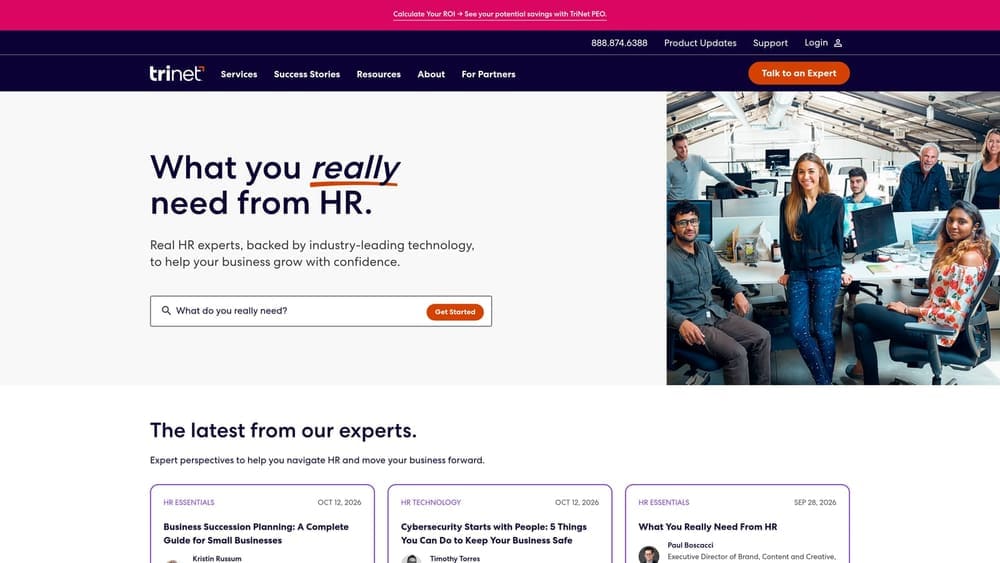
Where it stands out here is industry-tailored packages paired with deep benefits plan variety. If your 50-person team has a mix of ages, locations, and coverage expectations, more plan choice gives you room to design a benefits program that competes for hires.
- Industry-specific plans shape the offering around the compliance and benefits needs of sectors like technology.
- Benefits options give you more choice in medical and other coverage than a narrow menu would.
- Payroll and compliance services handle filings and regulatory requirements under the PEO arrangement.
- HR support gives your team someone to ask when questions come up.
Pricing is quote-based, so expect a sales process and compare the quote’s structure carefully. It is potentially less self-serve than the software-first options above, so confirm the service model you would actually get at 50 employees: who you contact, how fast, and through what channel. Check integrations on the website before assuming your accounting or HRIS tools connect.
It suits companies that value choice over simplicity. If you want a quick, light platform and minimal sales involvement, it may feel heavier than you need.
Best for: Growth companies wanting broad benefits choice.
5. Insperity
Insperity is known for a high-touch model built around assigned HR representatives. It answers the misconception that a PEO at this size means talking to a help desk: here you get a named person who learns your business.
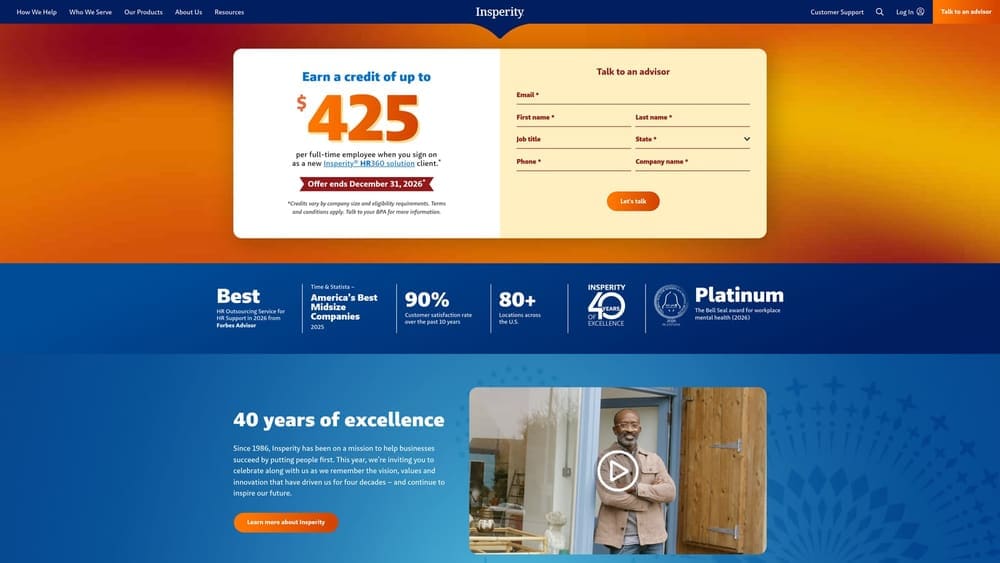
That personal HR advisor model is the distinguishing feature among the seven. If a manager has a performance problem, a leave request, or an employee relations issue, you have someone to call who knows your company, rather than opening a ticket.
- An assigned HR representative gives you a consistent point of contact for day-to-day people questions.
- Payroll and benefits are bundled into the service, reducing the number of vendors you manage.
- Employee relations support helps with situations that carry legal and morale risk.
- Compliance guidance helps a team without in-house expertise stay on the right side of requirements.
Pricing is quote-based, and it is worth understanding whether the fee is PEPM or a percentage of payroll, since that affects what you pay as salaries grow. Verify current integrations on the website, and ask what the onboarding timeline looks like.
It is not ideal for teams that want minimal human interaction. If your people are comfortable handling almost everything through an app, you may be paying for service you will not use. For a 50-person company with no HR department, though, the hands-on support can be the point of the whole purchase.
Best for: Companies with no HR department needing hands-on support.
6. ADP TotalSource
ADP TotalSource is ADP’s PEO offering, built on the payroll and compliance infrastructure of a very large payroll provider. Within ADP’s product line, TotalSource is the co-employment option, distinct from its payroll-only products, so be sure you are looking at the PEO and not a different service.
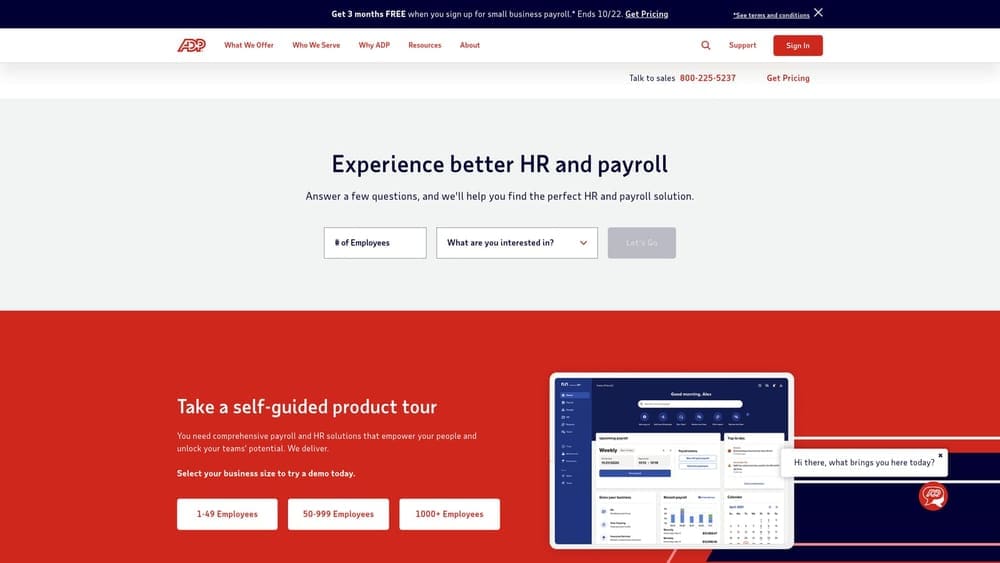
Its distinctive angle is scale. Payroll and tax compliance is the foundation of ADP’s business, and a PEO built on top of that can appeal to companies that care most about the reliability of filings and the depth of the underlying systems.
- Payroll and tax filing run on ADP infrastructure, which matters if payroll accuracy is your top concern.
- Benefits access gives employees coverage options through the PEO arrangement.
- Risk and compliance support helps manage the regulatory side of employing people across states.
- HR resources give your team reference material and guidance for common issues.
It works best if you already use or are comfortable with the ADP ecosystem; verify how it connects with tools outside it. Pricing is quote-based. Ask about minimums, state availability, and the structure of fees.
The main caution is flexibility. It may be less customizable than a smaller, software-first PEO, so ask what you can adjust. Also verify the provider’s CPEO status against the IRS list of certified PEOs rather than assuming it. A CPEO is a PEO certified by the IRS, which changes how it handles certain federal employment tax responsibilities, and not every PEO holds that certification.
Best for: Companies valuing a large payroll provider’s scale.
7. Paychex PEO
Paychex offers a PEO on the Paychex Flex platform. It is the logical step for companies already running payroll with Paychex, since employee data, payroll history, and the interface carry over rather than starting from scratch.
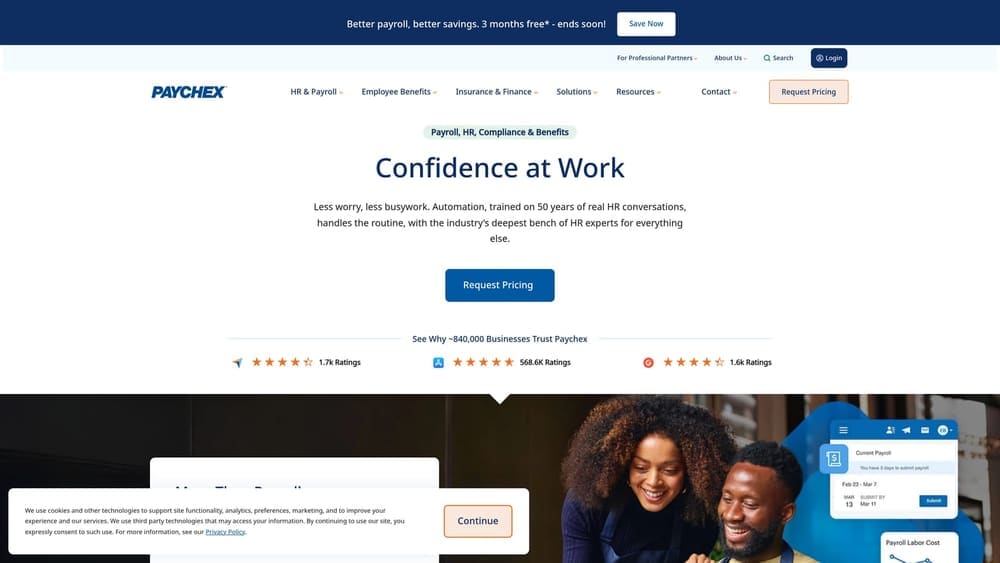
That upgrade path is its distinguishing feature here. Moving from payroll-only to co-employment usually means a migration project; staying inside one vendor’s platform can reduce the disruption for your team.
- Payroll through Paychex Flex keeps pay processing in a system your team may already know.
- Benefits administration brings enrollment and management into the same relationship.
- HR support gives you guidance for day-to-day people questions.
- Compliance assistance helps cover filings and regulatory requirements under the PEO model.
Pricing is quote-based, and it is worth confirming current product names and what is bundled, since offerings get repackaged. Verify the Paychex Flex integration list against your accounting and HR tools, and confirm state availability and any minimums.
The limitation is how you arrive at it. If you choose a PEO because your payroll vendor offers one, you may skip the independent evaluation that a 50-person company should do. That does not make it a poor option, only one worth testing against two or three others before you commit.
Best for: Existing Paychex customers considering a PEO.
Matching a Provider to Your Situation
A few terms are worth keeping straight while you decide. A PEO shares employer responsibilities with you through co-employment. An ASO handles administration without that co-employment relationship, and an EOR employs workers on your behalf in a market where you have no entity. They are not interchangeable. Also, the lowest admin fee does not guarantee the lowest total cost, because benefits rates and fee structure can outweigh it.
Here is how the picks break down by situation:
- Self-serve software experience: Justworks, particularly if public pricing matters to you.
- Connected IT and HR stack: Rippling PEO, for SaaS teams that want onboarding and device access in one workflow.
- Hands-on HR support: Insperity, if nobody in-house owns HR.
- Large payroll backbone: ADP TotalSource, or Paychex PEO if you already run Paychex payroll.
- Broad benefits choice: TriNet.
- Comparing before committing: PEO Metrics, which can line up quotes from the providers above.
Before you sign anything, verify current pricing, state availability, minimums, and each provider’s PEO versus CPEO status. PEO Metrics may receive vendor placement fees, so weigh its guidance with that in mind.
Before you sign that PEO renewal, make sure you’re not leaving money on the table.
Many businesses unknowingly overpay because of bundled fees, hidden administrative markups, and contracts designed to limit flexibility. We give you a clear, side-by-side breakdown of pricing, services, and contract terms, so you can see exactly what you’re paying for and choose the option that truly fits your business.
