
Food manufacturing is one of the trickier industries to find a PEO for. Not because PEOs don’t serve it, but because most weren’t built with it in mind. You’ve got OSHA-heavy work environments, high workers’ comp exposure, seasonal headcount swings, multi-shift payroll complexity, and food safety compliance layered on top of standard HR obligations.
A generic PEO that handles white-collar office workers well may fall apart when you need help managing a 150-person production floor with a 0.85 EMR and a union grievance in process.
This list focuses on PEOs that can genuinely handle the operational and compliance realities of food manufacturing. We evaluated each provider on workers’ comp capabilities, safety program depth, industry experience, benefits quality, and pricing transparency. PEO Metrics is listed first because our comparison service is specifically designed to help food manufacturers evaluate these providers side-by-side without the sales pitch.
1. PEO Metrics
Best for: Food manufacturers who want unbiased, side-by-side PEO comparisons before committing to a provider.
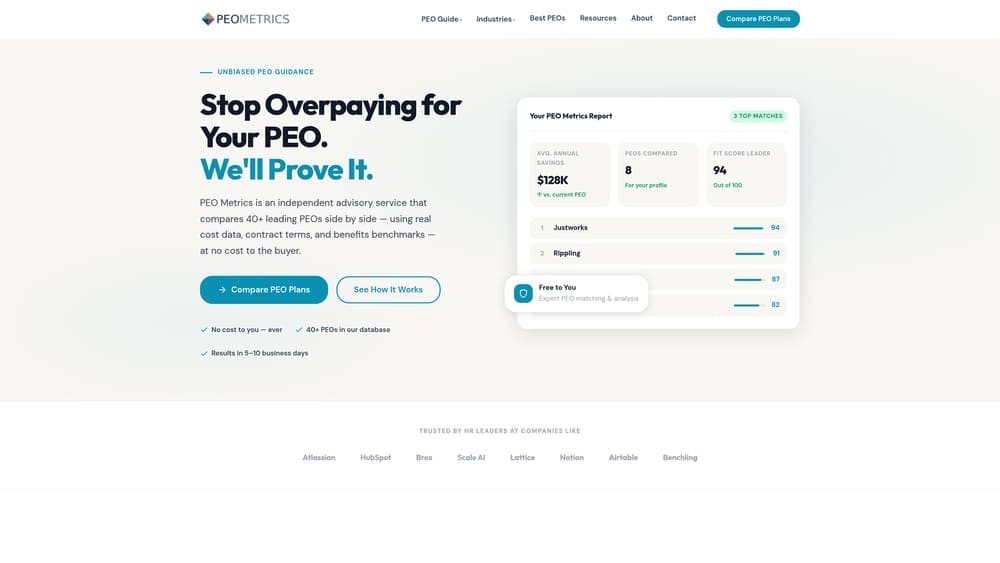
PEO Metrics is a PEO comparison service, not a PEO itself, built to help businesses evaluate providers using real pricing, workers’ comp, and capability data.
Where This Tool Shines
The core problem with selecting a PEO in food manufacturing is that most providers quote you without you having any real basis for comparison. You don’t know if the workers’ comp bundling is competitive for your class codes, whether the admin fee is inflated, or whether the provider has actually handled a production floor workforce before. PEO Metrics gives you that context before you sit down with a sales rep.
It’s particularly useful for food manufacturers because the evaluation criteria that matter most — workers’ comp rate access for manufacturing class codes, safety program depth, shift-based payroll capability — are exactly what the comparison data is structured around. You’re not comparing generic feature lists. You’re comparing what actually affects your cost and risk exposure.
Key Features
Side-by-Side Provider Comparisons: Actual pricing data and capability breakdowns across multiple PEOs, not just marketing summaries.
Workers’ Comp Rate Analysis: Compares carrier access and rate competitiveness across providers for manufacturing-specific class codes.
Unbiased Guidance: Not affiliated with any single PEO, so the recommendations aren’t shaped by referral fees or preferred partnerships.
Pre-Screening by Profile: Filters providers against your specific headcount, state, and risk profile so you’re not wasting time on providers that aren’t a real fit.
Food Manufacturing Experience Identification: Helps surface providers with genuine production floor experience, not just providers who claim to serve “all industries.”
Best For
Food manufacturers at any size who are evaluating PEOs for the first time, coming off a bad PEO experience, or approaching a renewal and wondering if they’re overpaying. Particularly valuable if workers’ comp complexity or multi-state operations are part of your situation.
Pricing
Free comparison service — no cost to the business. Revenue comes from providers, not from the companies doing the evaluating.
2. Employer Flexible
Best for: Food manufacturers in Texas and the South that need genuine blue-collar workforce experience and strong risk management.
Employer Flexible is a regional PEO with a strong track record in manufacturing and blue-collar industries, particularly across Texas and the broader South.
Where This Tool Shines
Employer Flexible stands out because manufacturing isn’t a side business for them — it’s a core client base. That matters when you’re trying to get competitive workers’ comp rates for food processing class codes, or when you need someone on-site to help you build out a lockout/tagout program before an OSHA inspection.
Their loss control and risk management services are more developed than what you’d find at a generalist PEO. For a food manufacturer with a history of workers’ comp claims or an EMR above 1.0, that proactive safety infrastructure can directly affect what you’re paying into the workers’ comp program.
Key Features
Dedicated Risk Management Programs: Structured loss control services built for manufacturing environments, not retrofitted from office-based templates.
Competitive Workers’ Comp Access: Carrier relationships that support high-risk class codes common in food manufacturing.
On-Site Safety Consulting: OSHA compliance support including safety audits, written program development, and injury recordkeeping.
ESAC Accreditation: Provides financial assurance and operational standards verification — important for long-term stability.
Shift-Based Workforce Experience: Practical familiarity with production floor HR, multi-shift payroll, and hourly workforce management.
Best For
Food manufacturers in Texas, Louisiana, Oklahoma, and surrounding states with 25 to 300 employees, elevated workers’ comp exposure, and a need for hands-on risk management support rather than just HR administration.
Pricing
Typically quoted as a percentage of payroll. Contact directly for a custom quote based on headcount, class codes, and state.
3. Oasis (a Paychex Company)
Best for: Mid-to-large food manufacturers with complex, multi-shift payroll needs and multi-department workforce structures.
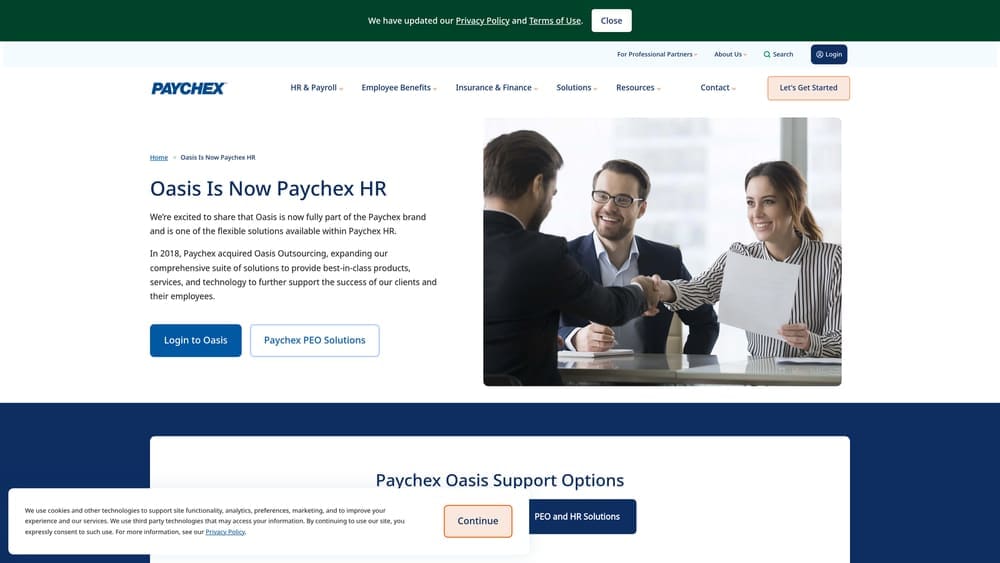
Oasis is a national PEO backed by Paychex’s payroll infrastructure, offering a dedicated service model suited to food manufacturers with real payroll complexity.
Where This Tool Shines
Payroll in food manufacturing isn’t simple. You’re managing shift differentials, overtime calculations across multiple departments, seasonal headcount spikes, and potentially multi-state operations — all at once. Oasis handles that complexity well because it runs on Paychex’s enterprise payroll engine, which is built for exactly this kind of volume and variability.
Unlike some national PEOs that route you through a call center, Oasis uses a dedicated HR team model. For a plant manager dealing with a payroll discrepancy on a Friday afternoon before a double shift, that accessibility matters more than it might seem on paper.
Key Features
Paychex Payroll Engine: Handles multi-shift, multi-department, and multi-state payroll complexity without manual workarounds.
Dedicated HR Teams: Assigned HR support rather than rotating call center staff — more consistent and responsive for ongoing issues.
Benefits Administration: Strong benefits management for larger workforces, including carrier access that improves with headcount.
Multi-State Compliance: Handles state-specific labor law, UI rates, and workers’ comp regulations across all 50 states.
Integrated Platform: HR, payroll, and benefits under one system reduces administrative fragmentation.
Best For
Food manufacturers with 100 or more employees running complex payroll structures across multiple shifts or locations. Less ideal for smaller operations where the platform’s scale may feel like overkill.
Pricing
Percentage of payroll or per-employee pricing depending on configuration. Contact for a quote — pricing varies meaningfully by size and complexity.
4. TriNet
Best for: Food and beverage brands with a mixed workforce of production staff and professional or management roles.
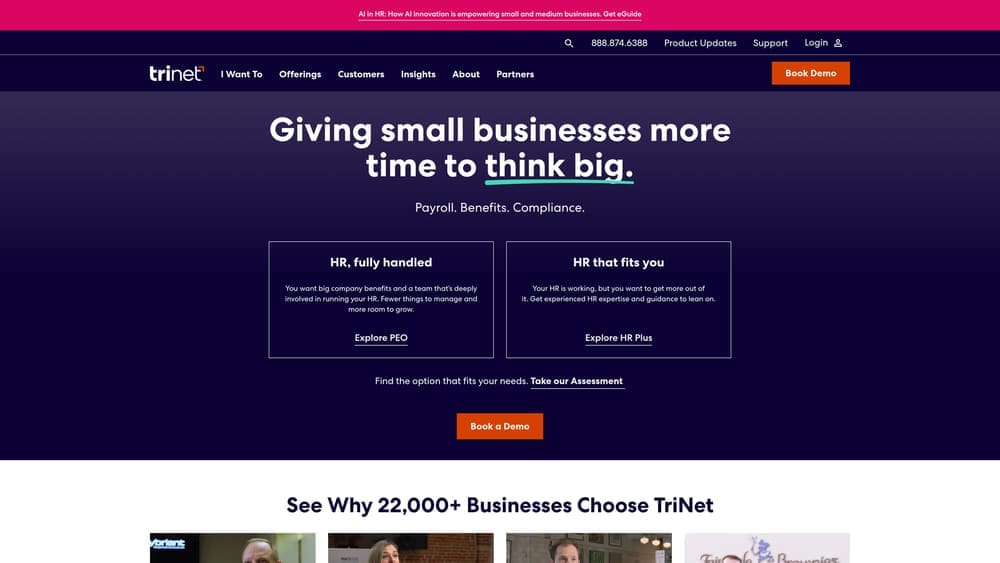
TriNet is a national PEO primarily known for professional services industries, but increasingly relevant for food and beverage companies that employ both production workers and professional talent.
Where This Tool Shines
TriNet’s real strength is benefits quality and HR technology — which matters most when you’re trying to attract and retain management, sales, marketing, and food science talent alongside your production workforce. If you’re a growing food brand where the office side of the business is scaling as fast as the production side, TriNet handles both reasonably well.
That said, TriNet isn’t the first call for a pure production operation with heavy workers’ comp exposure and minimal professional staff. It’s a better fit for companies where workforce complexity runs in both directions.
Key Features
Strong Benefits Packages: Competitive medical, dental, and vision access that helps attract professional and management talent.
Food and Beverage HR Guidance: Industry-specific HR support for companies navigating both production and professional workforce dynamics.
Technology-Forward Platform: Self-service HR tools and a modern interface that reduces administrative overhead for managers.
Multi-State Compliance Support: Handles labor law compliance across multiple states for distributed operations.
Mixed Workforce Fit: Structured to serve companies where not all employees are in the same role type or risk category.
Best For
Food and beverage brands with 20 to 200 employees where professional roles make up a meaningful portion of the headcount. Less ideal for operations that are primarily production floor with minimal office staff.
Pricing
Per-employee-per-month pricing, typically in the $125 to $180 PEPM range depending on configuration and workforce composition. Verify current rates directly.
5. Insperity
Best for: Food manufacturers who want a consultative, high-touch PEO partner with deep compliance and safety program resources.
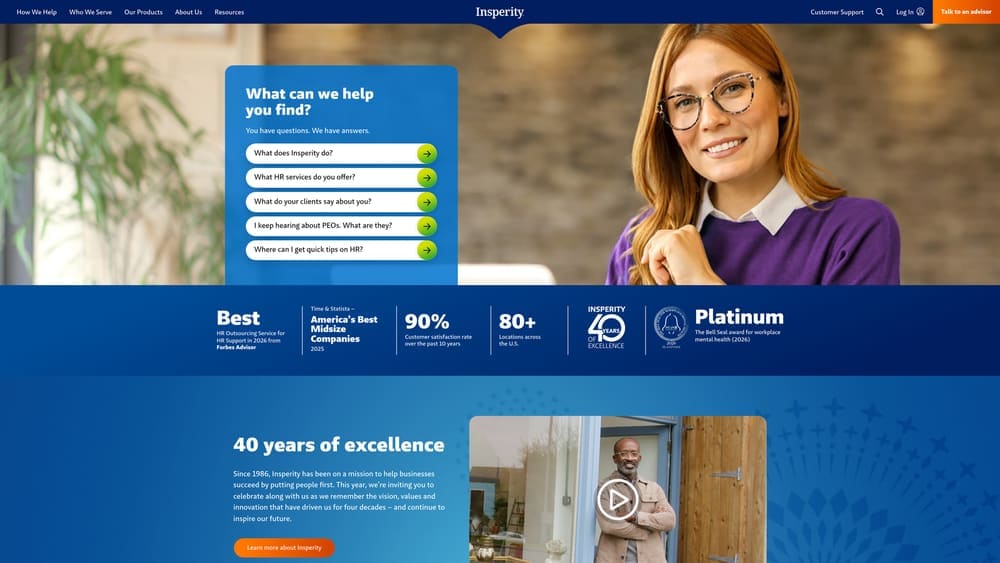
Insperity is one of the largest PEOs in the U.S., known for a hands-on service model, proactive safety support, and compliance depth that goes beyond basic HR administration.
Where This Tool Shines
Insperity’s differentiator isn’t just size — it’s the service model. They assign dedicated HR specialists rather than routing clients through generalist support queues, and their safety resources are more proactive than most. For a food manufacturer that wants help building written safety programs, preparing for OSHA recordkeeping audits, or improving their EMR over time, Insperity has the infrastructure to support that.
They’re also ESAC-accredited and IRS-certified, which matters for financial assurance and tax compliance. For a manufacturer that’s had a bad experience with a smaller, less stable PEO, those credentials carry real weight.
Key Features
Dedicated HR Specialists: Assigned HR support with genuine industry experience — not a rotating call center model.
Proactive OSHA Safety Support: Written safety program development, injury recordkeeping support, and compliance preparation rather than just reactive claims handling.
ESAC and IRS-Certified: Dual accreditation for financial stability and tax compliance verification.
Benefits Access for Mid-Size Manufacturers: Competitive carrier access even for workforces in the 50 to 250 employee range.
Compliance Tracking Platform: HR technology that includes compliance monitoring and documentation management.
Best For
Food manufacturers with 50 to 500 employees who want a consultative partner, not just a payroll processor. Particularly strong for operations where OSHA compliance and safety program development are active priorities.
Pricing
Percentage of payroll model, typically in the 2 to 4% of gross payroll range depending on size and risk profile. Verify current rates directly.
6. CoAdvantage
Best for: Smaller food manufacturers in the Southeast looking for competitive workers’ comp access and responsive, hands-on service.
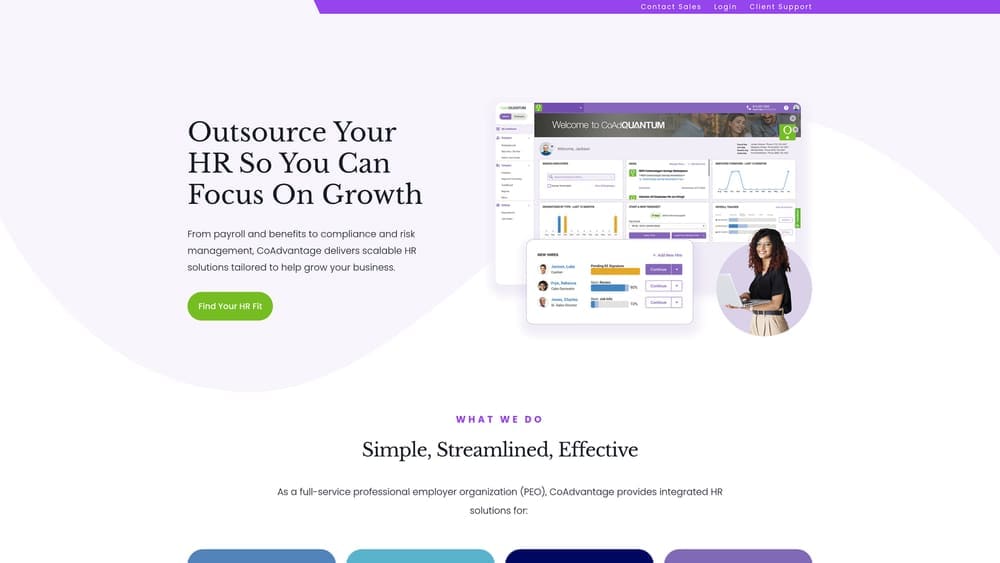
CoAdvantage is a regional PEO with a strong Southeast presence, known for competitive workers’ comp rates and a service model that works well for smaller client accounts.
Where This Tool Shines
Smaller food manufacturers often get deprioritized by large national PEOs — the account isn’t big enough to get dedicated attention, and the workers’ comp complexity makes them less attractive to generalist providers. CoAdvantage fills that gap in the Southeast, where they have regional expertise and carrier relationships that make manufacturing class codes more workable.
Their service model is deliberately hands-on for smaller accounts. If you’re running a 30-person food processing operation in Florida or Georgia and you need someone who actually picks up the phone, CoAdvantage is worth evaluating.
Key Features
Competitive Workers’ Comp Rates: Carrier access and rate competitiveness for manufacturing class codes, particularly in Southeast states.
Regional Labor Market Expertise: Familiarity with Southeast state compliance requirements, UI rates, and labor law nuances.
Responsive Service for Smaller Accounts: Hands-on support model that doesn’t deprioritize clients below a certain headcount threshold.
HR Compliance Support: Onboarding documentation, employee handbooks, and termination guidance for day-to-day HR needs.
Scalable for Growth: Works well for companies in the 10 to 100 employee range with room to scale as the operation grows.
Best For
Food manufacturers with 10 to 100 employees operating primarily in the Southeast who need competitive workers’ comp access and responsive service without the overhead of a large national provider.
Pricing
Percentage of payroll pricing. Contact directly for a quote based on headcount, class codes, and state of operation.
7. ADP TotalSource
Best for: Larger food manufacturers that need enterprise-grade payroll infrastructure, multi-state compliance, and deep HRIS capability.
ADP TotalSource is ADP’s full-service PEO offering, built for organizations that need the scale and technology depth of an enterprise HR system.
Where This Tool Shines
At a certain size and complexity, most PEOs start to strain. Multi-state operations with hundreds of employees, complex reporting requirements, and enterprise-level benefits administration need infrastructure that smaller PEOs simply can’t match. ADP TotalSource brings the full weight of ADP’s technology stack — including Workforce Now — to the PEO model.
For food manufacturers running operations across multiple states with sophisticated HR data needs, the reporting and analytics capability alone can justify the platform. The tradeoff is that ADP’s service model tends to be less hands-on than regional providers, and smaller operations may find the experience impersonal.
Key Features
Enterprise Payroll Processing: Handles complex, multi-shift, multi-department operations at scale without performance issues.
All-50-States Compliance: Multi-state payroll, UI, and labor law compliance infrastructure built for distributed operations.
ADP Workforce Now HRIS: Full-featured HR information system included, with robust reporting and analytics capability.
Broad Benefits Carrier Access: Carrier relationships that support larger workforces with diverse benefit needs.
HR and Payroll Analytics: Data reporting tools that give HR leaders and operators visibility into workforce costs and trends.
Best For
Food manufacturers with 100 or more employees, multi-state operations, and a need for enterprise-level HRIS capability. Less practical for smaller operations where the technology depth exceeds what’s actually needed.
Pricing
Percentage of payroll pricing that varies significantly by size and configuration. Generally most cost-effective for operations above 100 employees. Contact for a current quote.
8. Alcott HR
Best for: Food manufacturers in New York, New Jersey, and Connecticut navigating complex Northeast state compliance requirements.
Alcott HR is a Northeast-focused PEO known for low client-to-specialist ratios and deep regional compliance knowledge — a meaningful advantage in states with some of the most complex labor laws in the country.
Where This Tool Shines
New York in particular is a compliance minefield for manufacturers. Workers’ comp regulations, paid family leave requirements, New York State labor law nuances, and the sheer volume of state-specific HR obligations create real exposure for food manufacturers who don’t have dedicated HR expertise in-house. Alcott HR’s regional focus means their specialists actually know this terrain rather than applying generic national guidance.
The low client-to-specialist ratio is a genuine differentiator. You’re not competing for attention with hundreds of other accounts. For a manufacturer dealing with a workers’ comp claim or a state audit, that responsiveness has direct operational value.
Key Features
Low Client-to-Specialist Ratios: More accessible, responsive HR support compared to high-volume national providers.
Northeast State Compliance Depth: Specific expertise in NY, NJ, and CT labor laws, workers’ comp regulations, and state-specific HR requirements.
Proactive Claims Handling: Workers’ comp management with active claims oversight rather than passive administration.
Hands-On Onboarding Support: Structured onboarding process and ongoing HR guidance for day-to-day operational needs.
Strong Fit for NY Manufacturers: Particularly valuable for operations navigating New York’s complex compliance environment.
Best For
Food manufacturers operating in New York, New Jersey, or Connecticut who need a PEO with genuine regional expertise and accessible, responsive service. Less relevant for operations outside the Northeast footprint.
Pricing
Contact for quote. Pricing is structured based on headcount and industry classification. No published rate schedule.
9. Justworks
Best for: Small food startups and specialty producers who prioritize pricing transparency and benefits access over deep risk management infrastructure.
Justworks is a straightforward PEO with transparent, flat-rate pricing — a practical starting point for early-stage food businesses that need benefits access and basic HR compliance without a complex setup.
Where This Tool Shines
Justworks’ biggest advantage is simplicity. Published pricing, no long-term contracts, and a clean platform make it easy to get started quickly. For a specialty food producer or artisan manufacturer with 10 to 30 employees who needs to offer competitive benefits and stay compliant with standard HR obligations, Justworks removes a lot of friction.
The honest caveat: Justworks isn’t built for heavy workers’ comp complexity. If your operation has elevated injury risk, high-risk class codes, or an EMR you’re actively trying to manage, you’ll likely outgrow Justworks quickly — or find that its risk management depth doesn’t match your exposure.
Key Features
Transparent Flat-Rate Pricing: Published per-employee-per-month pricing with no hidden fees or bundled surprises.
Month-to-Month Flexibility: No long-term contract commitment — useful for early-stage businesses managing cash flow uncertainty.
Benefits Access for Small Headcounts: Competitive medical, dental, and vision access even for operations under 50 employees.
Simple HR and Payroll Platform: User-friendly interface that doesn’t require dedicated HR staff to operate effectively.
Standard Compliance Support: Covers core HR compliance obligations including onboarding, documentation, and basic regulatory guidance.
Best For
Early-stage food manufacturers, specialty producers, and food startups with fewer than 50 employees and relatively straightforward workers’ comp exposure. Not the right fit for production-heavy operations with elevated injury risk or complex multi-shift payroll needs.
Pricing
Starts around $59 to $99 per employee per month depending on plan tier. Pricing is published on their website — one of the few PEOs where you can get a real number without a sales call.
Matching the Right Provider to Your Operation
The wrong PEO choice in food manufacturing is genuinely costly. It shows up in workers’ comp rates that don’t reflect your actual risk profile, in gaps during an OSHA audit, and in claims that don’t get managed aggressively enough to protect your EMR. That’s not a hypothetical — it’s the pattern that plays out when a food manufacturer signs with a PEO that wasn’t built for their environment.
Here’s how to think about the options on this list based on your actual situation:
High workers’ comp complexity or elevated EMR: Start with Employer Flexible or CoAdvantage. Both have the carrier relationships and loss control infrastructure to address risk directly.
Multi-state operations at scale: ADP TotalSource or Oasis are the practical choices. The compliance infrastructure and payroll engine justify the investment at 100-plus employees across multiple states.
Mixed workforce of production and professional staff: TriNet or Insperity. Both handle workforce diversity well, and Insperity adds the safety program depth that production environments need.
Northeast operations: Alcott HR is the clear regional fit for New York, New Jersey, and Connecticut manufacturers dealing with complex state compliance.
Early-stage or specialty producer: Justworks gets you started cleanly. Just be honest about whether your workers’ comp exposure will outpace what they can handle.
Before you commit to any of these providers — or before you auto-renew with your current one — it’s worth running an actual comparison. Many food manufacturers are overpaying because of bundled fees, opaque workers’ comp markups, and contracts that weren’t negotiated with any real benchmarking data. Don’t auto-renew. Make an informed, confident decision.
Before you sign that PEO renewal, make sure you’re not leaving money on the table.
Many businesses unknowingly overpay because of bundled fees, hidden administrative markups, and contracts designed to limit flexibility. We give you a clear, side-by-side breakdown of pricing, services, and contract terms—so you can see exactly what you’re paying for and choose the option that truly fits your business.
