
Restoration companies sit in a weird middle ground when it comes to HR. You’re not quite construction, not quite janitorial services, and your workforce looks nothing like a standard office employer. Your crew sizes swing hard based on storm seasons and disaster events. Your workers’ comp exposure is real and varied — mold remediation, structural tear-outs, asbestos abatement, and fire damage cleanup all carry different risk profiles. And when a major weather event hits three states over, you may need to double your headcount in two weeks and deploy those crews across jurisdictions you’ve never operated in before.
A generic PEO isn’t built for that. Most are optimized for stable, single-state employers with predictable headcounts. Restoration companies need something different: a provider that understands high-risk trade classifications, handles seasonal workforce swings without friction, and has carrier relationships that actually work for your industry.
We evaluated providers based on workers’ comp handling for high-risk classifications, multi-state compliance capability, workforce flexibility, and overall fit for restoration companies in the 10-150 employee range. Here are the options worth your time.
1. PEO Metrics
Best for: Restoration companies that want to compare multiple PEOs side by side before committing
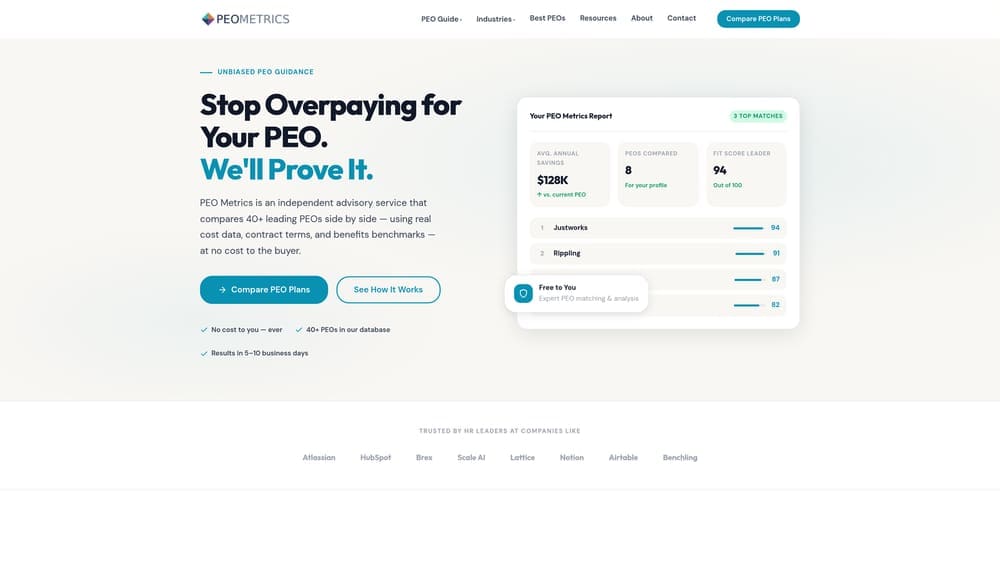
PEO Metrics is an unbiased comparison platform that helps restoration companies evaluate multiple PEO providers simultaneously using real pricing data, service-level breakdowns, and workers’ comp benchmarks.
Where This Tool Shines
The core problem with evaluating PEOs is that you’re usually doing it one sales call at a time. Each provider controls the narrative, and it’s hard to know whether you’re getting a competitive rate or getting taken for a ride. PEO Metrics solves that by putting multiple providers side by side with consistent data points — so you’re comparing apples to apples instead of trusting a rep’s pitch deck.
For restoration companies specifically, the workers’ comp benchmarking piece is valuable. Restoration work spans multiple NCCI classification codes depending on the job type, and rates vary significantly by carrier. Having a tool that surfaces workers’ comp data for high-risk trade classifications means you’re not guessing at whether a PEO’s comp program is actually competitive for your risk profile.
Key Features
Side-by-Side PEO Comparisons: Evaluate multiple providers simultaneously with standardized pricing and service data rather than relying on individual sales presentations.
Workers’ Comp Rate Benchmarking: See how PEOs stack up on workers’ comp for high-risk trade classifications — particularly relevant for restoration’s mixed code environment.
Completely Unbiased: PEO Metrics isn’t affiliated with or paid by any single PEO provider, which means the comparisons aren’t skewed toward a particular outcome.
Detailed Service-Level Breakdowns: Goes beyond cost comparisons to surface differences in HR support, compliance infrastructure, and contract terms.
Best For
Any restoration company that’s about to sign or renew a PEO contract and wants to validate they’re getting a fair deal. Particularly useful if you’ve only ever worked with one PEO and don’t have a benchmark for what competitive pricing looks like in your industry.
Pricing
Free for businesses evaluating PEOs. There’s no cost to use the comparison service — it’s designed to help you make a better-informed decision before committing to a provider.
2. Oasis (Paychex PEO)
Best for: Mid-size restoration firms looking to compete for talent with stronger benefits packages
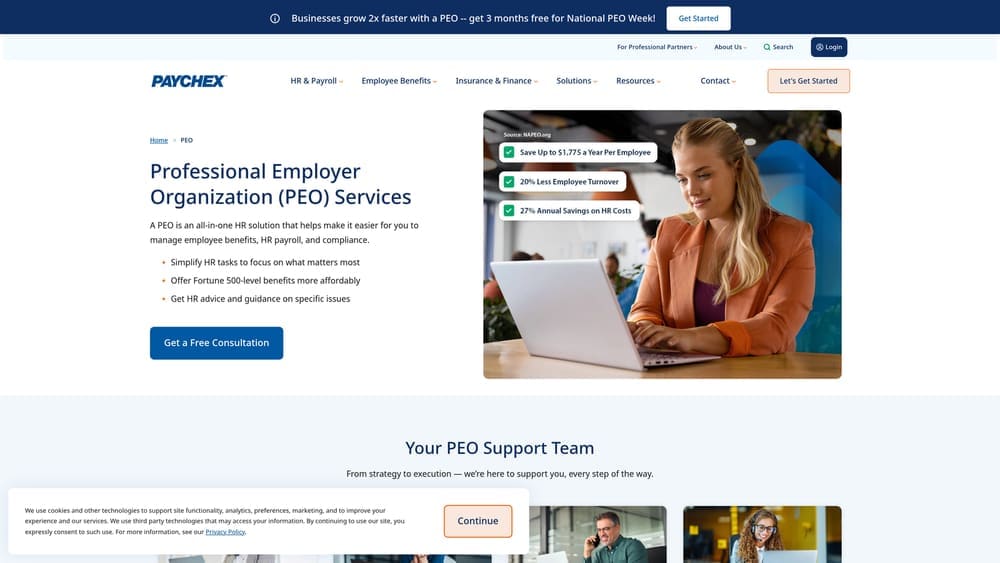
Oasis is Paychex’s full-service PEO offering, combining national benefits access with dedicated HR support and payroll infrastructure built on Paychex’s existing platform.
Where This Tool Shines
Restoration companies that are trying to recruit and retain skilled technicians — IICRC-certified water damage specialists, licensed asbestos abatement workers — often struggle to compete on benefits. Oasis gives smaller restoration firms access to Fortune 500-level health and benefits packages that would be out of reach if you were purchasing coverage independently.
The dedicated HR professional model also helps when you’re scaling fast after a major event. Having a named contact who knows your account means you’re not starting from scratch every time you need to onboard a wave of seasonal workers or handle a workers’ comp claim.
Key Features
Fortune 500-Level Benefits: Access to large group health, dental, vision, and retirement plans that give smaller restoration companies a competitive recruiting edge.
Dedicated HR Professional: A single assigned HR contact who gets to know your business rather than a rotating support queue.
Payroll Integration: Built on Paychex’s existing payroll infrastructure, which is well-established and handles multi-state payroll processing.
Pay-As-You-Go Workers’ Comp: Workers’ comp premiums tied to actual payroll rather than annual estimates — helpful when your headcount fluctuates significantly.
Best For
Restoration companies with 15-100 employees that are stable enough to benefit from enhanced benefits offerings and want a dedicated HR contact rather than a self-service platform. Less ideal if your workforce fluctuates dramatically or you need very fast onboarding at scale.
Pricing
Custom pricing based on headcount and services selected. Typically requires a minimum of 5 employees to qualify. Expect per-employee-per-month fees — request a quote for specifics based on your classification mix.
3. Insperity
Best for: Restoration companies with significant OSHA exposure and hazardous materials work
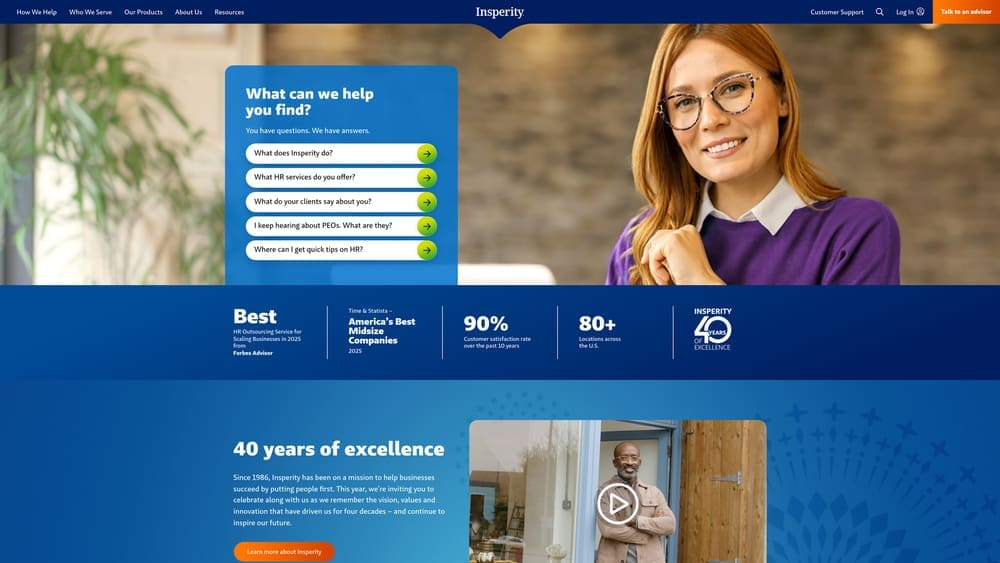
Insperity is one of the larger national PEOs with a particularly strong emphasis on risk management, safety program development, and compliance support for industries with real injury exposure.
Where This Tool Shines
If your crews are doing mold remediation, asbestos abatement, or lead paint removal, you’re operating under some of the most demanding OSHA standards in the trades. Insperity’s safety and risk management consulting is more developed than most PEOs — they can help you build and maintain safety programs that hold up under inspection, not just check a compliance box.
Their performance management and employee development tools are also worth noting for restoration companies trying to build a more professional workforce. IICRC certifications and ongoing training matter in this industry, and having HR infrastructure that supports structured development programs helps with both retention and compliance documentation.
Key Features
Safety and Risk Management Consulting: Dedicated support for building OSHA-compliant safety programs, particularly relevant for hazardous materials work and high-injury-rate environments.
OSHA Compliance Support: Practical guidance on 29 CFR 1926 construction standards and 29 CFR 1910.1001 asbestos regulations that restoration companies regularly encounter.
Performance Management Tools: Structured systems for employee development, goal-setting, and documentation — useful for building a more professional trade workforce.
Scalable Service Model: Designed to serve companies from 5 employees up to several thousand, with service levels that adjust as you grow.
Best For
Restoration companies that do significant hazardous materials work and need a PEO that takes safety program development seriously. Also a strong fit if you’re trying to reduce workers’ comp claims through proactive safety infrastructure rather than just managing claims after the fact.
Pricing
Custom pricing — Insperity generally targets companies with 5 to 150+ employees. Tends to be priced at a premium relative to smaller PEOs, reflecting the depth of service. Worth comparing against others using a tool like PEO Metrics before committing.
4. ADP TotalSource
Best for: Restoration companies deploying crews across multiple states
ADP TotalSource is ADP’s full-service PEO, built with multi-state compliance infrastructure that handles the regulatory complexity restoration companies face when disaster response takes crews across state lines.
Where This Tool Shines
Multi-state deployment is one of the most underestimated HR headaches in restoration. When you send a crew from Texas to Louisiana after a hurricane, you’re suddenly dealing with different workers’ comp requirements, different payroll tax obligations, and potentially different licensing requirements — all at once, under time pressure. ADP TotalSource’s compliance infrastructure is built for exactly this kind of operational complexity.
The reporting and analytics dashboard is also useful for restoration companies managing multiple concurrent projects. When you’re running five job sites across three states with different crew compositions, having visibility into labor costs, compliance status, and benefits enrollment by location matters more than it does for a single-location business.
Key Features
Multi-State Payroll and Tax Compliance: Automated handling of different state tax requirements, withholding rules, and compliance obligations as crews move across jurisdictions.
Large Carrier Network: Access to a broad range of workers’ comp and benefits carriers, which helps when you need coverage for high-risk restoration classifications.
Robust Reporting Dashboard: Detailed analytics across payroll, HR, and compliance — useful for project-based businesses tracking labor costs across multiple active sites.
Dedicated HR Business Partner: A named HR contact for strategic support beyond just payroll processing.
Best For
Restoration companies that regularly operate in multiple states or respond to large-scale regional disaster events. The compliance infrastructure is overkill if you’re a single-state operator, but it’s genuinely valuable if cross-state deployment is a regular part of your business model.
Pricing
Custom pricing — generally suited for companies with 10 or more employees. ADP’s size means pricing can vary significantly depending on negotiation and service configuration. Compare against regional alternatives before signing.
5. Justworks
Best for: Smaller restoration companies that want straightforward PEO services without complex contracts
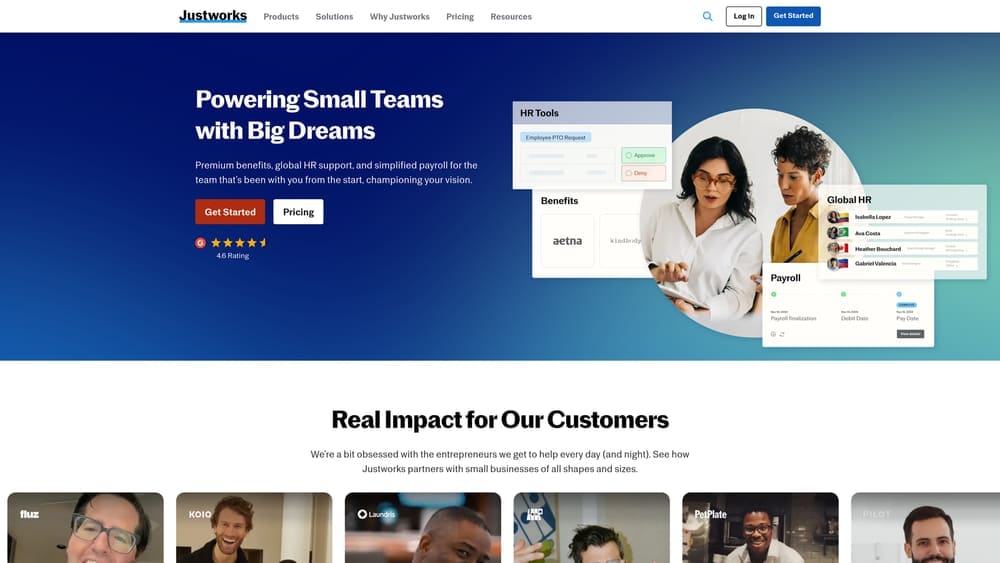
Justworks is a PEO with transparent, publicly listed flat-rate pricing and a clean platform — a reasonable fit for restoration companies in the 10-40 employee range that want core HR, benefits, and compliance support without navigating bundled pricing structures.
Where This Tool Shines
Most PEOs make pricing opaque by design. Justworks is one of the few that publishes its per-employee-per-month rates openly, which makes budgeting predictable and comparison straightforward. For a restoration company owner who’s already managing unpredictable revenue tied to weather events, removing one more variable from the equation has real value.
The onboarding experience is also notably faster and simpler than most enterprise PEOs. If you’re spinning up a small crew for a specific project, the ability to get people enrolled and covered quickly matters more than having a deep bench of HR consultants on call.
Key Features
Transparent Flat-Rate Pricing: Per-employee-per-month pricing that’s publicly listed — no bundled fees or custom quotes required to understand what you’ll pay.
Simple Onboarding: Clean, intuitive platform that reduces the administrative friction of adding and removing employees as project needs change.
Core Benefits Access: Health insurance, 401(k), and compliance tools included — competitive for smaller companies that wouldn’t qualify for good group rates independently.
Multi-State Compliance Support: Built-in tools to handle compliance across state lines, useful for restoration companies that occasionally cross state borders for larger jobs.
Best For
Smaller restoration companies (roughly 10-40 employees) that want predictable PEO costs and a platform that doesn’t require significant training to use. Less suited for companies with complex workers’ comp needs or those that need deep safety program consulting support.
Pricing
Starts at $59 per employee per month for the basic plan, with higher tiers available for expanded benefits access. Pricing is publicly listed on their website — one of the more transparent structures in the PEO market.
6. TriNet
Best for: Restoration companies that want industry-aligned HR guidance rather than generic support
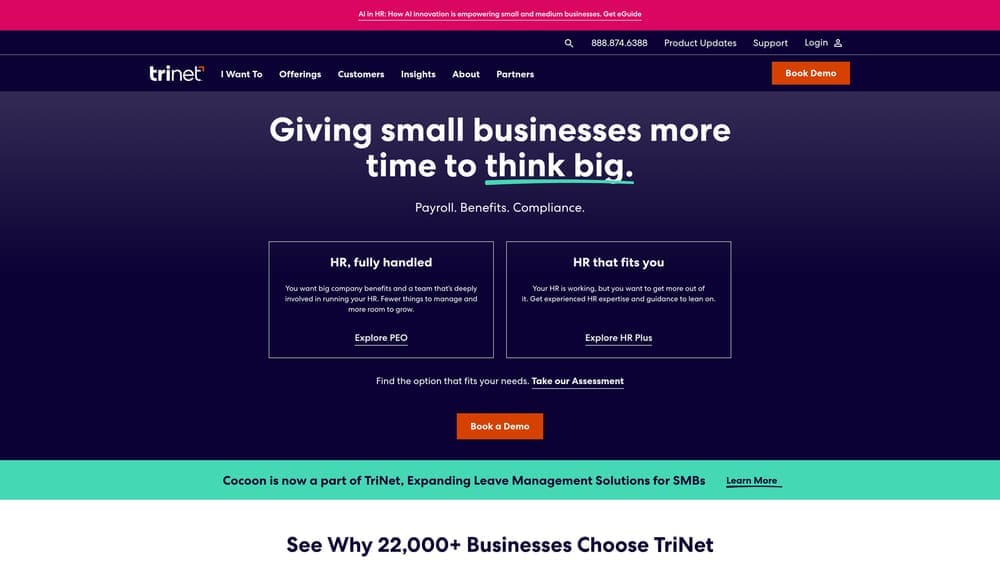
TriNet organizes its clients into industry verticals and assigns HR teams accordingly, which means you’re more likely to get advisors who understand trade-specific workforce challenges rather than HR generalists who’ve never worked with a field-based crew.
Where This Tool Shines
The industry-vertical model is TriNet’s real differentiator. Most PEOs treat a restoration company the same as a marketing agency — same platform, same HR support, same benefits configuration. TriNet’s approach of grouping clients by industry means the HR guidance you receive is at least informed by the sector you operate in, even if restoration isn’t a perfect match for any single vertical.
Their benefits package is comprehensive, including health, retirement, and commuter benefits — useful if you’re trying to attract and retain skilled technicians in a competitive labor market. The mobile-accessible platform also works well for field-based teams where employees aren’t sitting at a desk.
Key Features
Industry-Specific HR Teams: HR advisors grouped by industry vertical rather than generalist support pools — more relevant guidance for trade-based businesses.
Comprehensive Benefits Suite: Health, dental, vision, retirement, and commuter benefits included, with options that compete with larger employers.
Workers’ Comp and Risk Management: Workers’ comp administration and risk mitigation support built into the service model.
Mobile-Accessible Platform: Cloud-based HR tools with mobile access, practical for restoration crews working across job sites rather than from a central office.
Best For
Restoration companies in the 20-100 employee range that want more tailored HR guidance and a strong benefits offering. Most valuable if talent recruitment and retention is a priority and you want HR advisors who understand the dynamics of field-based, trade-skilled workforces.
Pricing
Custom pricing on a per-employee-per-month basis. TriNet tends to be mid-to-upper range in price relative to smaller regional PEOs. Request a detailed quote and compare against alternatives before committing.
7. Regional NAPEO Member PEOs
Best for: Restoration companies that need deep local market knowledge and flexible high-risk coverage
NAPEO (the National Association of Professional Employer Organizations) accredits PEOs that meet baseline operational standards — and the regional members on that list are often the best-kept secret for trade-heavy businesses with complex workers’ comp needs.
Where This Tool Shines
National PEOs have broad infrastructure but limited local depth. A regional PEO operating in Florida, Texas, or the Gulf Coast has carrier relationships built specifically around the risk profiles common in those markets — including restoration, roofing, and other storm-response trades. When a national PEO struggles to place your workers’ comp coverage or quotes you a rate that doesn’t reflect your actual loss history, a regional player often has better options.
Regional PEOs also tend to move faster and work more flexibly on account structure. If you need to rapidly onboard a surge crew after a major event or need a PEO willing to work with your specific classification mix, a regional provider that knows your state’s workers’ comp market intimately is often more accommodating than a national brand with rigid onboarding protocols.
Key Features
State-Specific Workers’ Comp Expertise: Deep knowledge of local carrier markets, state fund options, and classification nuances that national PEOs often handle generically.
Better High-Risk Carrier Access: Regional relationships with carriers who actively write restoration and construction-adjacent risk, rather than forcing you into residual market coverage.
Flexible Service Structure: More willingness to customize account setup, onboarding timelines, and service levels than large national providers.
NAPEO Accreditation as a Baseline: NAPEO membership signals that a PEO meets minimum standards for financial stability, compliance, and operational practices — a useful filter when evaluating unfamiliar regional providers.
Best For
Restoration companies that operate primarily within one or two states and have found that national PEOs either can’t place their workers’ comp coverage competitively or don’t understand the local regulatory environment. Particularly worth exploring if you’re in a high-activity storm market like Florida, Texas, Louisiana, or the Carolinas.
Pricing
Varies widely by provider, region, and service scope. The only way to evaluate regional PEOs is to request quotes from multiple providers in your area — use NAPEO’s member directory as a starting point, and compare results against national options using a benchmarking tool.
Making the Right Call for Your Crew
There’s no single PEO that’s the right fit for every restoration company. The best choice depends on your size, where you operate, how complex your workers’ comp situation is, and whether you’re optimizing for cost, compliance depth, or talent acquisition.
Here’s a rough guide by profile:
Smaller companies (10-30 employees, single state): Start with Justworks for transparent pricing and simple onboarding, or explore regional NAPEO members who understand your local workers’ comp market.
Mid-size companies (30-100 employees, multi-state): ADP TotalSource or Oasis are worth evaluating seriously. Both handle multi-state complexity well and have the infrastructure to support a growing workforce.
Companies with significant hazardous materials exposure: Insperity’s safety program depth makes it worth a closer look, especially if OSHA compliance and workers’ comp claim reduction are priorities.
Companies focused on talent retention: TriNet’s industry-vertical model and strong benefits suite make sense if you’re competing for skilled, certified technicians in a tight labor market.
Whatever direction you’re leaning, don’t evaluate PEOs in isolation. The only way to know if you’re getting a fair deal on pricing, workers’ comp rates, and service levels is to compare providers against each other using consistent data. That’s exactly what PEO Metrics is built to do — and it won’t cost you anything to use it.
Before you sign that PEO renewal, make sure you’re not leaving money on the table. Many restoration companies overpay because of bundled fees, hidden administrative markups, and contracts designed to limit flexibility. Don’t auto-renew. Make an informed, confident decision.
