

Vendor management creates a specific kind of headache for HR teams. You’re not just looking for a PEO that handles payroll and benefits well. You’re looking for one that fits into your existing setup without breaking your software stack, complicating your contractor relationships, or adding compliance risk to an already complex operation.
The two things HR leaders usually mean by “vendor management” in this context are worth separating: first, how well a PEO’s platform connects with your third-party tools (your HRIS, accounting software, ATS, ERP, benefits vendors); and second, how well the PEO handles the HR and payroll side of a business that itself manages many external vendors or contractors. The best options on this list address both, though they do it in different ways.
Co-employment is the underlying structure here. When you work with a PEO, it becomes the employer of record for tax and benefits purposes. That’s different from an EOR arrangement (typically used for international contractors) or an ASO setup (administrative services only, no co-employment). Keeping those distinctions clear matters, especially in vendor-heavy industries where the lines between employees, contractors, and third-party staff can blur. For a full breakdown of how co-employment works, see our overview at what is a professional employer organization.
Pricing, integration depth, and service models vary considerably across providers. Treat this as a starting framework for your evaluation, not a final answer.
1. PEO Metrics
Best for: Businesses that want to compare vendor-management-capable PEOs before committing to one.
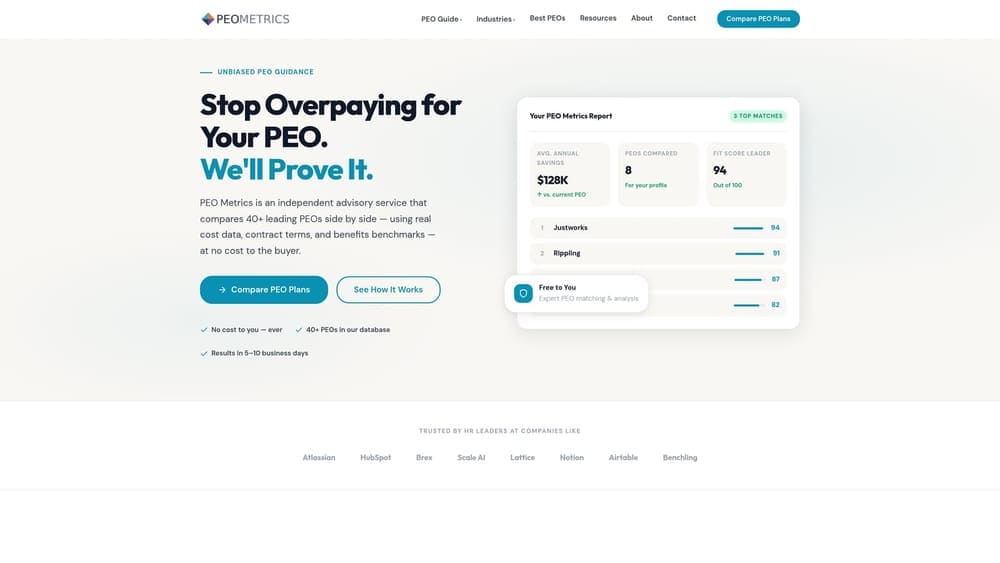
PEO Metrics is an independent PEO comparison service that helps businesses evaluate providers side by side using detailed metrics and pricing analysis.
Where This Tool Shines
PEO Metrics isn’t a PEO itself. It’s the step you take before choosing one. If you’re in a vendor-heavy environment and you’re not sure which PEO’s integration capabilities, compliance depth, or service model actually fits your situation, this is where you start.
The comparison framework covers pricing structures, contract terms, integration capabilities, and service model differences across providers. For businesses that have been auto-renewing with the same PEO for years without checking whether they’re overpaying or underserved, that kind of side-by-side clarity is genuinely useful. Note that PEO Metrics may receive vendor placement fees from providers it covers.
Key Features
Side-by-Side Provider Comparisons: Evaluate multiple PEOs against each other using consistent metrics rather than each provider’s own marketing materials.
Pricing Analysis: Helps identify where businesses may be overpaying due to bundled fees or administrative markups that aren’t always obvious in a standard PEO proposal.
Capability Matching: Guidance on matching PEO features to specific business needs, including vendor-heavy or contractor-heavy environments.
Integration and Compliance Review: Covers how different providers handle third-party software connectivity and compliance depth across industries.
Service Model Transparency: Breaks down differences between full-service, modular, and high-touch PEO models so you can choose based on how your team actually operates.
Best For
HR leaders and operations managers who are selecting a PEO for the first time, switching providers, or coming up on a renewal and want to verify they’re still getting competitive terms. Particularly useful for companies with complex vendor ecosystems that need to confirm integration compatibility before signing.
Pricing
Contact PEO Metrics directly for details. As noted, PEO Metrics may receive vendor placement fees from providers featured in its comparisons.
2. Rippling
Best for: Tech-forward businesses that need HR, IT, and finance connected in one system.
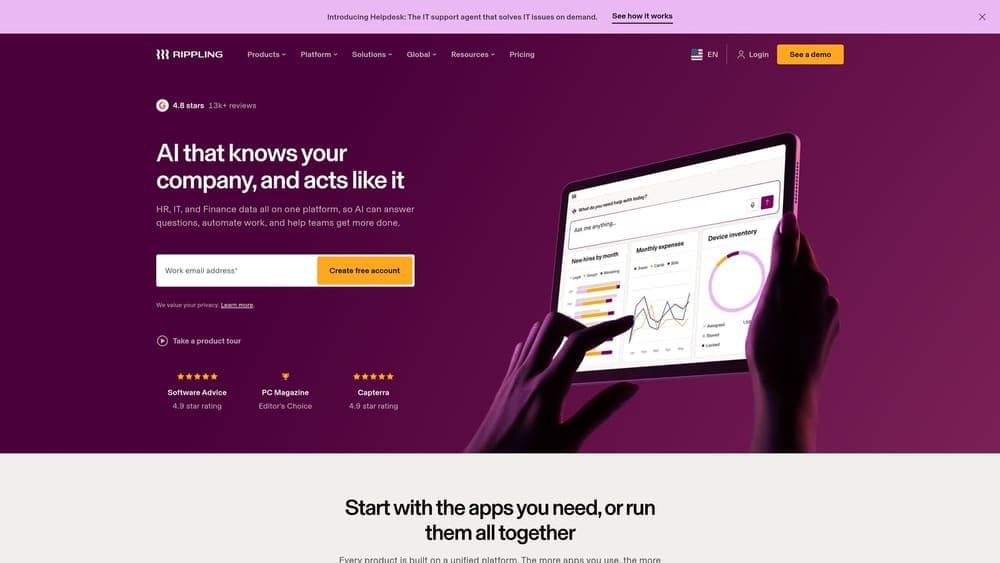
Rippling is a workforce platform that combines PEO services with HR, IT, and finance management in a unified system.
Where This Tool Shines
Rippling’s main differentiator is breadth of integration. For companies that run on a dense stack of SaaS tools, the ability to connect payroll and HR data to vendor systems, device management, and finance software from one platform is a real operational advantage. You’re not just getting a PEO; you’re getting a coordination layer across your entire workforce infrastructure.
The platform also handles both employees and contractors in a single interface, which matters for businesses where headcount includes a mix of W-2 employees and 1099 contractors. That said, Rippling’s depth of features can mean a steeper learning curve and potentially more setup time than simpler PEO options.
Key Features
Unified Workforce Platform: HR, IT, and finance management operate from a single system rather than separate tools that require manual syncing.
Third-Party App Integrations: Broad connectivity with external software relevant to vendor-heavy tech stacks, including common HRIS, accounting, and productivity tools.
PEO Co-Employment Structure: Access to benefits and compliance support under a standard co-employment arrangement.
Contractor and Employee Management: Both worker types managed in one interface, reducing administrative overhead for mixed-workforce companies.
Best For
Growing tech companies or operations-heavy businesses that already manage multiple software vendors and want their PEO to fit into that ecosystem rather than sit alongside it. Less suited to businesses that prefer a high-touch, human-led HR service model.
Pricing
Pricing is not published here without a verified primary source. Contact Rippling directly or use a comparison service to get current figures alongside competing proposals.
3. Justworks
Best for: Startups and small businesses that want predictable costs and straightforward HR administration.
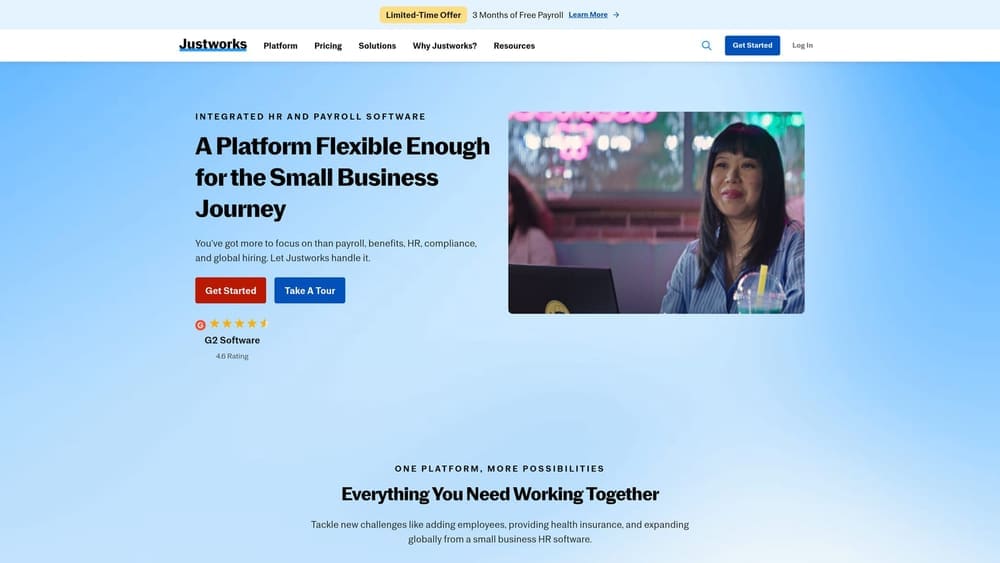
Justworks is a CPEO-certified PEO known for transparent per-employee pricing and a clean, accessible platform.
Where This Tool Shines
Justworks holds IRS CPEO certification, which carries specific legal and tax advantages for client companies, particularly around payroll tax liability. For smaller businesses that have never worked with a PEO before, that certification adds a layer of credibility and regulatory standing that matters.
The flat per-employee-per-month pricing model is a meaningful differentiator for companies that want to budget HR costs without surprises. Vendor-heavy businesses often deal with enough financial complexity in their operations; predictable HR overhead is one fewer variable to manage.
Key Features
CPEO Certification: IRS-certified status that provides specific protections and tax advantages under the co-employment structure.
Flat Per-Employee Pricing: Predictable monthly cost per employee rather than percentage-of-payroll models that scale unpredictably with raises or bonuses.
Benefits Administration: Health, dental, vision, and other benefits bundled into the PEO relationship with access to group rates.
Customer Support: Generally well-regarded for responsiveness, which matters for smaller teams without a dedicated HR department.
Best For
Early-stage companies and small businesses with straightforward HR needs that want compliance coverage and benefits access without building out an internal HR function. Companies with highly complex vendor integration requirements may find Justworks’s platform less extensible than alternatives like Rippling.
Pricing
Specific pricing is not published here without a verified primary source. Contact Justworks directly for current per-employee rates and plan options.
4. TriNet
Best for: Companies in specific industries that want HR support tailored to their sector’s compliance requirements.
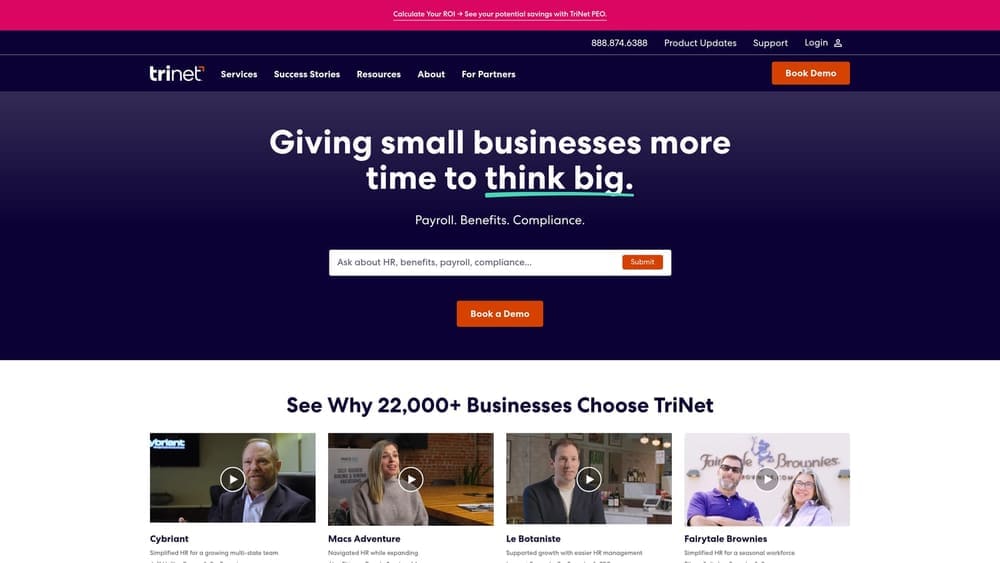
TriNet is a PEO that organizes its services around industry verticals, offering tailored HR packages for tech, professional services, life sciences, and nonprofits.
Where This Tool Shines
Most PEOs offer a generalist HR package. TriNet’s approach is to build around the specific compliance and benefits needs of particular industries. For a life sciences company navigating regulatory complexity or a tech firm competing for talent in a specific market, that vertical focus can mean more relevant guidance than a one-size-fits-all platform provides.
The industry-specific structure also tends to mean more targeted risk management support. Vendor-heavy industries like professional services often carry specific liability and compliance considerations that generalist PEOs may not address with the same depth.
Key Features
Industry-Vertical HR Packages: HR and compliance support structured around the specific needs of tech, life sciences, professional services, and nonprofit sectors.
Benefits Access for Smaller Companies: Group benefits purchasing typically available to larger employers, extended to smaller client companies through the co-employment structure.
Payroll and Risk Management: Payroll processing, HR administration, and risk mitigation under one agreement.
Reporting and Analytics: Technology platform with reporting tools for tracking workforce data and HR metrics.
Best For
Small to mid-sized companies in regulated or talent-competitive industries that want HR support with sector-specific depth. Less ideal for businesses that need broad third-party software integrations as a primary requirement.
Pricing
Specific pricing is not published here without a verified primary source. Reach out to TriNet directly for current rates and package options by industry vertical.
5. ADP TotalSource
Best for: Businesses already embedded in the ADP ecosystem that want PEO services without switching infrastructure.
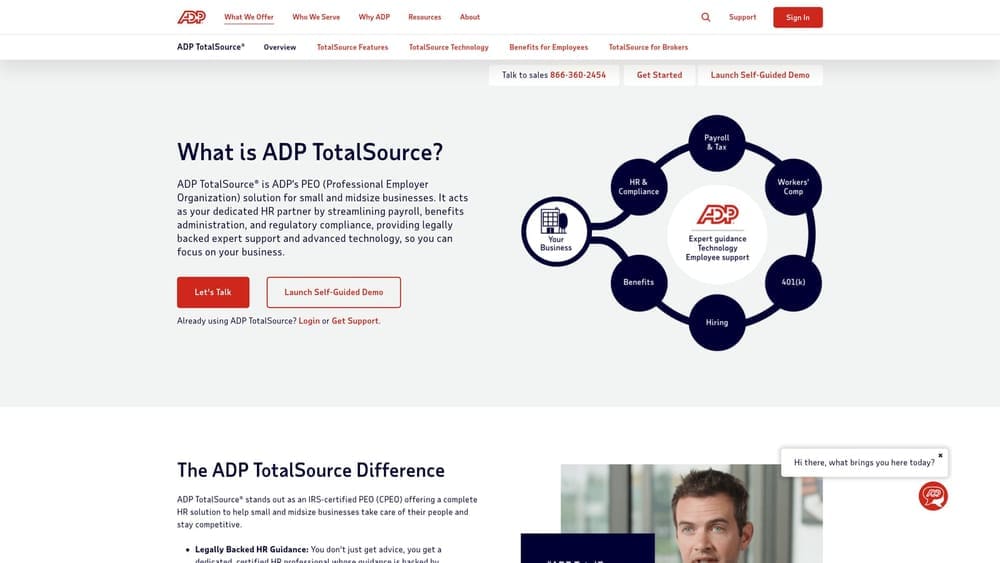
ADP TotalSource is ADP’s PEO division, one of the largest in the country by covered employees, built on ADP’s established payroll and HR infrastructure.
Where This Tool Shines
If your business already runs on ADP Workforce Now, RUN, or other ADP products, TotalSource is the path of least resistance to adding PEO co-employment without migrating to a new platform. The integration between TotalSource and the broader ADP ecosystem is a genuine operational advantage for companies that have invested in ADP infrastructure.
Scale also matters here. ADP’s size means access to a large benefits purchasing pool, which can translate to more competitive plan options for smaller client companies than they could access independently. Geographic coverage across the United States is broad, which helps multi-location businesses avoid coverage gaps.
Key Features
ADP Ecosystem Integration: Deep connectivity with ADP Workforce Now, RUN, and other ADP products for businesses already on that infrastructure.
Enterprise-Grade Compliance Support: Risk management and compliance resources backed by ADP’s scale and legal infrastructure.
Large Benefits Pool: Access to group benefits purchasing at a scale that smaller businesses couldn’t access independently.
National Geographic Coverage: Broad support across U.S. states, relevant for businesses with employees in multiple locations.
Best For
Mid-sized to larger businesses that are already ADP customers and want to add PEO co-employment without changing platforms. Also a reasonable choice for companies that prioritize compliance infrastructure and benefits scale over cutting-edge software integrations.
Pricing
Specific pricing is not published here without a verified primary source. Contact ADP TotalSource directly for current pricing and to understand how it interacts with any existing ADP agreements.
6. Insperity
Best for: Mid-market businesses that want human HR support alongside platform access.
Insperity is a PEO known for a high-touch service model that assigns dedicated HR specialists to each client company.

Where This Tool Shines
Insperity’s defining characteristic is the dedicated HR specialist model. Rather than relying entirely on a self-service platform, client companies get an assigned human contact who understands their specific situation. For businesses managing complex vendor relationships or contractor arrangements, having an HR specialist who knows your setup can prevent the kind of compliance missteps that come from navigating co-employment questions alone.
The trade-off is that this service depth typically comes at a higher cost than more self-directed platforms. For mid-market businesses that have the budget and genuinely value human guidance over platform flexibility, that trade-off often makes sense.
Key Features
Dedicated HR Specialist: Each client account is assigned a specific HR professional rather than a general support queue.
Comprehensive Benefits Portfolio: Health, retirement, and ancillary coverage with access to group rates through the co-employment structure.
HR Technology Platform: Payroll processing, time tracking, and reporting tools alongside the human support layer.
Hands-On Compliance Guidance: Risk management and compliance support delivered with direct specialist involvement rather than documentation alone.
Best For
Mid-market companies, typically in the range of 50 to several hundred employees, that want a PEO relationship with genuine human accountability. Businesses that prefer to manage HR through a self-service platform at lower cost may find Insperity’s model more than they need.
Pricing
Specific pricing is not published here without a verified primary source. Contact Insperity directly for current rates, which typically reflect the higher-touch service model.
7. Paychex PEO
Best for: Businesses with complex payroll cycles, multiple pay schedules, or mixed contractor and employee payment needs.
Paychex PEO is Paychex’s PEO offering, built on the company’s established payroll processing infrastructure.
Where This Tool Shines
Paychex has been processing payroll for decades, and that core strength carries through to its PEO offering. For businesses with payroll complexity, such as multiple pay schedules, varied pay frequencies, or a mix of employee and contractor payments, Paychex PEO’s processing reliability is a meaningful differentiator.
The broader Paychex HR technology suite is available to PEO clients, which adds tools for time tracking, benefits administration, and HR reporting without requiring a separate platform. For businesses that already use Paychex for payroll, moving to the PEO structure is a relatively contained transition.
Key Features
Payroll Processing Reliability: Built on Paychex’s core payroll infrastructure, which handles significant complexity across pay schedules and worker types.
Full PEO Co-Employment Coverage: HR administration, benefits, and compliance under the standard co-employment structure.
Broader HR Technology Suite: Access to Paychex’s time tracking, reporting, and HR management tools within the PEO relationship.
Payroll Complexity Support: Suited for businesses with varied payroll structures that simpler PEO platforms may not handle as cleanly.
Best For
Small to mid-sized businesses with payroll complexity or existing Paychex relationships that want to add co-employment benefits without switching payroll infrastructure. Also worth evaluating for businesses that pay a mix of employees and contractors on different schedules.
8. Oasis (a Paychex Company)
Best for: Growing businesses that want PEO coverage without committing to a full-suite package from day one.
Oasis, which operates under the Paychex umbrella, offers a modular PEO structure that lets businesses select coverage scope rather than defaulting to an all-or-nothing package.
Where This Tool Shines
The modular approach is Oasis’s clearest differentiator. For companies that are scaling their vendor relationships gradually, or that want to add PEO services in stages rather than committing to a comprehensive package upfront, that flexibility reduces the friction of getting started. You’re not locked into services you don’t yet need.
Operating under Paychex means Oasis clients benefit from that infrastructure and compliance backing without necessarily taking on the full Paychex PEO engagement. Verify current brand status and service structure with Oasis directly before committing, as the integration with Paychex has continued to evolve.
Key Features
Modular Service Structure: Businesses can select the scope of PEO coverage rather than committing to a fixed full-suite package.
Core PEO Functions: HR, payroll, and benefits administration under co-employment, backed by Paychex infrastructure.
Compliance Resources: Access to Paychex’s compliance and risk management capabilities through the Oasis relationship.
Flexibility for Growth Phases: Service structure suited to businesses in transition, whether scaling up vendor relationships, adding headcount, or adjusting HR complexity over time.
Best For
Small to mid-sized businesses in growth or transition phases that want PEO benefits without overcommitting to a comprehensive package. Worth evaluating alongside Paychex PEO directly to understand how the two offerings currently differ under the same parent company.
Pricing
Specific pricing is not published here without a verified primary source. Contact Oasis directly for current pricing and to confirm current service scope under the Paychex structure.
Choosing the Right Fit for Your Business
No single PEO on this list is the right answer for every business, and vendor management needs vary more than most listicles acknowledge. A 20-person tech startup managing a dozen SaaS vendors has different requirements than a 200-person professional services firm with complex contractor relationships and multi-state compliance exposure.
A few quick frames for narrowing your options:
If integration breadth is your primary concern: Rippling’s platform-first approach and broad third-party connectivity make it worth a close look, particularly for tech-heavy operations.
If cost predictability matters most: Justworks’s flat per-employee pricing model removes a common source of PEO billing surprises, especially useful for smaller businesses with tight budgets.
If you’re already in the ADP or Paychex ecosystem: TotalSource and Paychex PEO both offer relatively low-friction paths to co-employment without platform migration. Oasis is worth evaluating alongside Paychex PEO if you want modular coverage rather than a full package.
If your industry has specific compliance requirements: TriNet’s vertical approach and Insperity’s dedicated specialist model both address sector-specific complexity in ways that generalist platforms often don’t.
One consistent recommendation: don’t evaluate these providers in isolation using their own marketing materials. Pricing structures, contract terms, and integration capabilities change, and what a PEO advertises isn’t always what ends up in your agreement.
Before you sign that PEO renewal, make sure you’re not leaving money on the table. Many businesses unknowingly overpay because of bundled fees, hidden administrative markups, and contracts designed to limit flexibility. PEO Metrics gives you a clear, side-by-side breakdown of pricing, services, and contract terms so you can see exactly what you’re paying for and choose the option that truly fits your business. Don’t auto-renew. Make an informed, confident decision.
