

Finding a PEO that delivers genuine value is harder than it looks. Many providers charge similar rates on paper but vary widely in what those fees actually cover, how transparent their pricing is, and whether the service level justifies the cost for your specific company size and industry.
This guide focuses on value, not just price. We evaluated providers on pricing structure clarity, breadth of benefits access, HR support quality, compliance capabilities, and contract flexibility. Whether you have 10 employees or 500, the right PEO should save you money relative to building equivalent capabilities in-house, without locking you into terms that hurt when your needs change.
If you’re still early in your research, understanding what a PEO actually is and what to know before selecting one are good starting points. The eight providers below represent a cross-section of the market, each strong in different ways.
1. PEO Metrics
Best for: Businesses that want an unbiased, structured comparison before committing to any provider
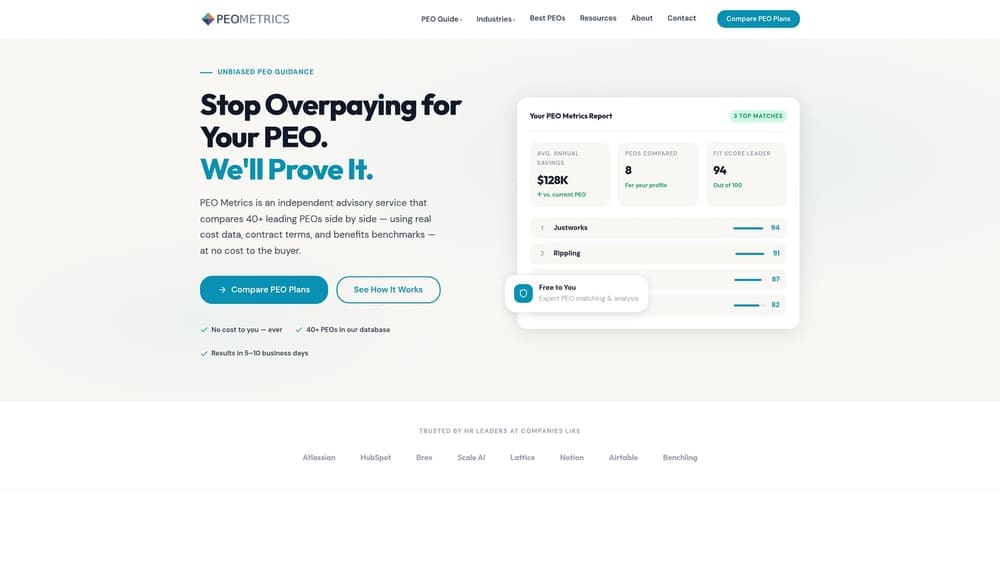
PEO Metrics is a structured comparison service that helps businesses evaluate PEO providers side-by-side using detailed pricing and feature data.
Where This Tool Shines
Most PEO sales conversations are designed to move you toward a signature, not to surface the differences between providers. PEO Metrics flips that dynamic by giving you a structured view of how providers compare on the things that actually affect your total cost: pricing model, benefits markup, contract terms, service level, and compliance capabilities.
The practical value is in what it surfaces before you negotiate. Knowing that one provider charges a flat per-employee-per-month fee while another uses a percentage-of-payroll model, for example, can change your total cost picture significantly as your team grows or salaries rise. That kind of structural difference rarely comes up in a standard sales call.
Key Features
Side-by-Side Comparisons: View multiple PEO providers against each other using consistent, detailed metrics rather than each vendor’s own marketing language.
Pricing Structure Analysis: Identifies differences in fee models, benefits markups, and administrative charges that are easy to miss when reviewing proposals individually.
Contract Term Review: Covers notice periods, termination clauses, and renewal conditions, which are among the most consequential and least-discussed parts of a PEO agreement.
Compliance and Service Level Context: Compares providers on HR support depth, CPEO certification status, and multi-state compliance capabilities.
Unbiased Starting Point: The comparison process is not tied to a single provider’s sales funnel, giving you a cleaner baseline before you enter any vendor conversation.
Best For
Any business actively evaluating PEO providers, particularly those comparing three or more options or renewing an existing contract. It’s especially useful for HR leaders who want to walk into vendor negotiations with independent data rather than relying solely on what each provider chooses to share.
Pricing
Free to use for businesses. PEO Metrics may receive placement fees from some vendors. That relationship is disclosed, and the comparison structure is designed to surface differences rather than steer toward any single provider.
2. Justworks
Best for: Small businesses that want transparent, predictable pricing before talking to a sales rep
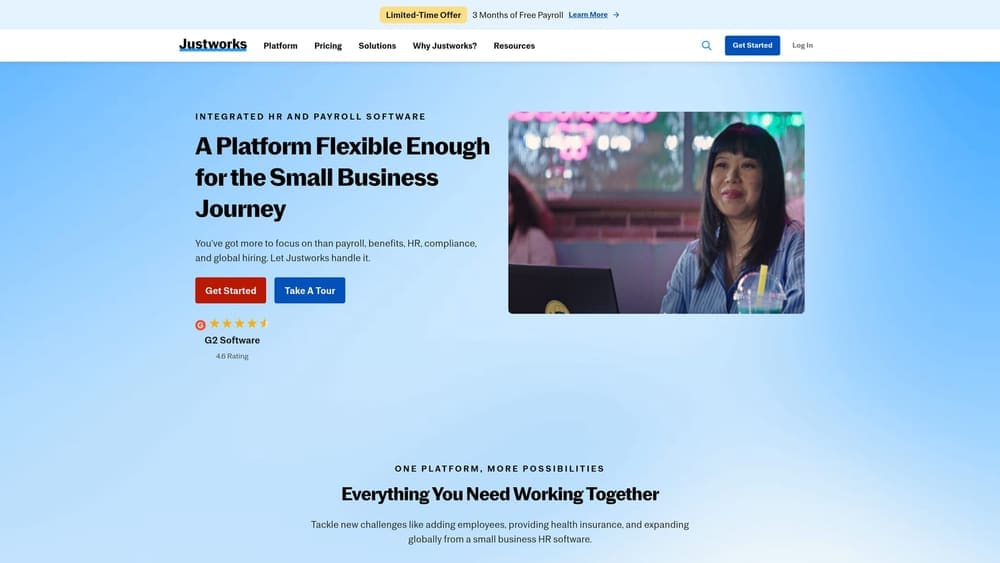
Justworks is a PEO known for publishing its pricing tiers openly, giving small businesses clear cost expectations from the start.
Where This Tool Shines
Transparent pricing is genuinely rare in the PEO market. Most providers require you to go through a sales process before you see any numbers. Justworks publishes its per-employee-per-month tiers on its website, which makes early-stage budgeting much more straightforward and reduces the information asymmetry that typically favors the vendor.
Beyond pricing clarity, Justworks gives small businesses access to large-group health, dental, and vision benefits through its pooled employee base. For a company with 15 or 20 employees, that access can be meaningful, since rates and plan options available through a PEO’s group are typically not available to a small employer purchasing coverage independently.
Key Features
Published Pricing Tiers: Per-employee-per-month pricing is listed publicly, making it easier to model costs before engaging a sales team.
Large-Group Benefits Access: Health, dental, and vision plans available through Justworks’ pooled employee base.
CPEO Certification: Justworks holds CPEO status, which carries certain IRS tax advantages. Verify current certification status at justworks.com.
Integrated Platform: Payroll, compliance, and HR tools are managed within a single platform rather than across separate systems.
24/7 Support: Both employers and employees can access support outside standard business hours, which matters for distributed or non-traditional-schedule teams.
Best For
Small businesses, typically under 100 employees, that prioritize pricing transparency and want a straightforward onboarding experience. Particularly well-suited to founders and HR generalists who don’t want to spend weeks in a sales process before understanding what they’ll pay.
Pricing
Pricing is published in tiers on the Justworks website. Verify current rates and any applicable minimums directly at justworks.com before making any decisions, as tiers and terms can change.
3. TriNet
Best for: Companies in regulated or specialized industries that need sector-specific HR and benefits expertise
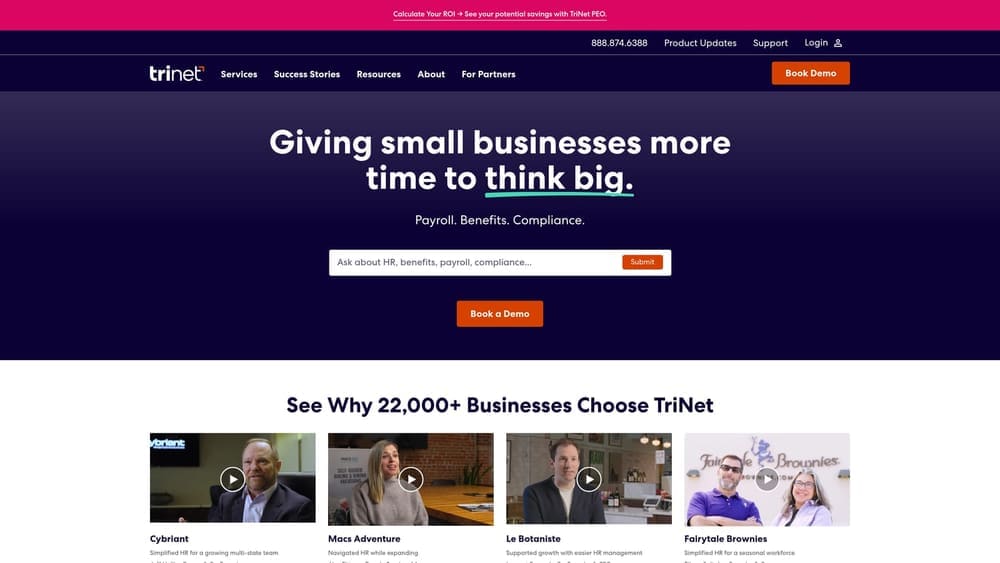
TriNet is a PEO that structures its services around specific industries, offering benefit plans and HR expertise tailored to technology, financial services, life sciences, and professional services firms.
Where This Tool Shines
Most PEOs offer broadly similar benefit menus. TriNet’s differentiation is in how it designs those benefits and HR services around the specific needs of particular industries. A technology company competing for engineering talent has different benefits priorities than a life sciences firm managing complex compliance obligations, and TriNet’s vertical structure attempts to reflect that.
The compliance angle is also worth noting for multi-state employers in regulated sectors. TriNet’s HR teams carry vertical expertise, which means the guidance you receive is more likely to be relevant to your specific regulatory environment rather than generic federal-level advice.
Key Features
Industry-Specific Benefit Plans: Plan designs tailored to the competitive hiring environments of technology, finance, life sciences, and professional services.
Vertical HR Expertise: Dedicated HR support teams with knowledge of sector-specific compliance and employment issues.
Multi-State Compliance Tools: Coverage for companies operating across multiple states with varying employment law requirements.
Integrated HR Platform: Payroll, time tracking, and reporting managed within a single system.
Custom Pricing: Quotes are tailored to company size, industry, and service needs rather than published in standard tiers.
Best For
Mid-size companies in technology, financial services, life sciences, or professional services that need benefits and HR support designed around their specific talent market and compliance environment. Less suited to businesses that want published pricing upfront.
Pricing
Custom-quoted. Pricing is not publicly listed. Contact TriNet directly for current rates, and verify any figures you receive before including them in internal budget models.
4. Paychex PEO
Best for: Businesses that want PEO services backed by one of the country’s largest payroll processing infrastructures
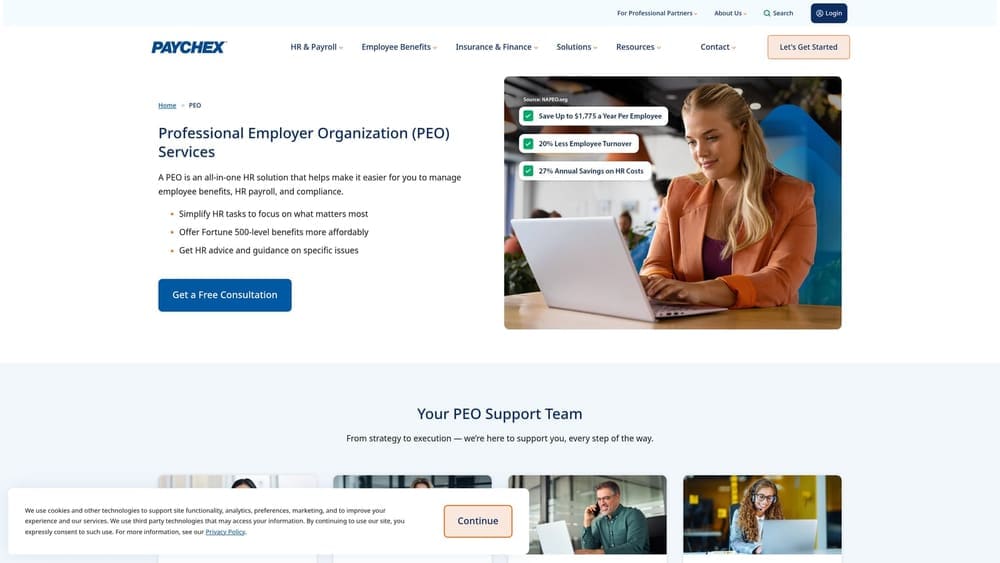
Paychex PEO is the co-employment arm of Paychex, one of the largest U.S. payroll processors, combining deep payroll infrastructure with HR services under a single vendor relationship.
Where This Tool Shines
For companies that already use Paychex for payroll or that want the stability of a large, established payroll processor behind their PEO relationship, Paychex PEO offers a natural consolidation point. The payroll processing infrastructure is mature, and the co-employment layer adds benefits administration, HR compliance support, and a dedicated HR business partner.
The dedicated HR business partner model is worth highlighting. Rather than routing every question through a shared service queue, Paychex PEO assigns a named contact to each client account. That structure can meaningfully reduce the friction of getting answers to complex HR questions.
Key Features
Paychex Payroll Infrastructure: Co-employment built on top of one of the U.S.’s largest payroll processing platforms, with corresponding reliability and scale.
Benefits Administration: Health, retirement, and ancillary benefit plans administered through the co-employment relationship.
Dedicated HR Business Partner: A named HR contact assigned to each client rather than shared service routing.
Federal and State Compliance Support: HR compliance monitoring covering both federal requirements and state-level variations.
Paychex Flex Integration: Access to Paychex’s HR technology platform for payroll, scheduling, and workforce management.
Best For
Companies that prioritize payroll reliability and want their PEO relationship with a provider that has deep infrastructure in that area. Also a logical choice for businesses already in the Paychex ecosystem looking to add co-employment services.
Pricing
Custom-quoted. Pricing is not publicly listed. Verify current pricing structure directly at paychex.com before making any budget projections.
5. ADP TotalSource
Best for: Growing companies that need enterprise-grade compliance coverage and broad multi-state HR support
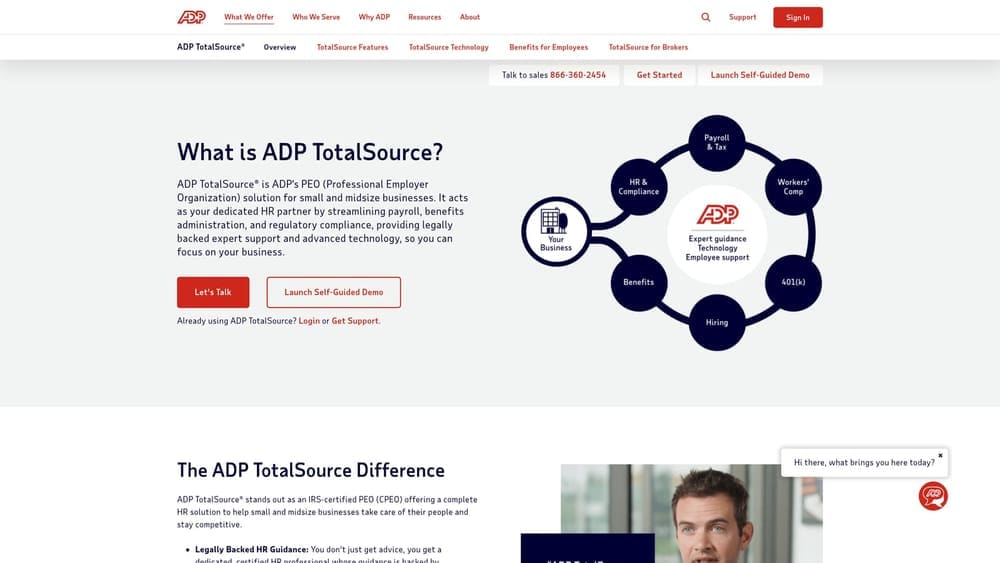
ADP TotalSource is ADP’s full-service PEO offering, CPEO-certified and built for companies that need serious compliance infrastructure and wide geographic reach.
Where This Tool Shines
ADP TotalSource carries the compliance depth you’d expect from one of the largest HR service providers in the world. Its CPEO certification, which you should verify at adp.com or the IRS CPEO registry before citing it, means clients may access certain federal tax advantages tied to that status. For companies with complex compliance needs across multiple states, that combination of scale and certification matters.
The benefits purchasing angle is also relevant here. ADP’s pooled employee base across its PEO clients is substantial, and that scale generally translates to access to competitive large-group benefit rates and plan options that smaller employers cannot access independently.
Key Features
CPEO Certification: Carries IRS CPEO status, which may offer certain tax advantages. Verify current certification status before relying on this in any planning.
Multi-State Compliance Coverage: Broad capability across states with varying employment law requirements, including wage and hour, leave, and benefits mandates.
ADP HR Technology Platform: Access to ADP’s analytics, reporting, and HR management tools.
Large-Group Benefits Access: Benefits purchasing through ADP’s pooled employee base.
Workers Compensation and Risk Management: Integrated workers comp administration and risk management services.
Best For
Companies with 50 or more employees, multi-state workforces, or complex compliance environments where the depth of ADP’s infrastructure justifies the engagement. Also well-suited to companies that value the stability of a large, established vendor relationship.
Pricing
Custom-quoted. Not publicly listed. Verify current pricing directly at adp.com before including any figures in internal planning.
6. Insperity
Best for: Companies that want dedicated HR advisory support rather than shared service center access
Insperity is one of the largest U.S. PEOs by employees served, known for assigning dedicated HR specialists to each client rather than routing support through a generalized queue.

Where This Tool Shines
The difference between a dedicated HR specialist and a shared service queue is significant in practice. With a named contact who knows your company, your industry, and your history, HR questions get answered faster and with more relevant context. Insperity’s model leans into that structure, and it’s a meaningful differentiator for companies that expect to use their HR support regularly rather than treating it as a break-glass resource.
Insperity also covers a broad range of benefit types, including health, dental, vision, life insurance, and 401(k) administration, which means clients are less likely to need supplemental vendors to fill gaps in their benefits offering.
Key Features
Dedicated HR Specialist Model: Named HR contacts assigned per client rather than shared service routing, with continuity across your engagement.
Comprehensive Benefits Suite: Health, dental, vision, life insurance, and 401(k) administration through a single co-employment relationship.
Payroll Processing with Compliance Monitoring: Payroll administration paired with ongoing compliance monitoring for federal and state requirements.
Employee Self-Service Platform: HR technology giving employees direct access to their benefits, pay information, and HR resources.
Risk Management and Workers Compensation: Workers comp administration and risk management services included in the service structure.
Best For
Companies that expect active, ongoing HR advisory support and are willing to pay a premium for a dedicated specialist model. Particularly valuable for businesses navigating growth, compliance complexity, or frequent HR questions that would otherwise consume internal management time.
Pricing
Custom-quoted. Not publicly listed. Verify current pricing and any applicable employee minimums directly at insperity.com before engaging.
7. Oasis (a Paychex Company)
Best for: Smaller businesses that want to select specific PEO services rather than commit to a full-service bundle
Oasis operates under the Paychex umbrella with a modular service structure, allowing businesses to select specific services rather than purchasing a full co-employment package.
Where This Tool Shines
Many PEOs require clients to take the full bundle: payroll, benefits, HR compliance, workers comp, and everything else, whether they need all of it or not. Oasis offers more flexibility in how services are assembled, which can be useful for smaller businesses that already have some HR infrastructure in place and don’t want to pay for redundant capabilities.
Operating under the Paychex umbrella also means Oasis clients benefit from Paychex’s payroll processing infrastructure and vendor relationships without necessarily paying for the full Paychex PEO service stack.
Key Features
Modular Service Selection: Clients can select specific services rather than being required to take a full-service bundle.
Co-Employment Model: Standard PEO co-employment structure covering payroll and HR administration.
Benefits Access: Health insurance and retirement plan access through the co-employment relationship.
Workers Compensation Management: Workers comp administration included as a selectable service.
HR Compliance and Employee Handbook Services: Compliance support and documentation services available within the service structure.
Best For
Small businesses that want co-employment benefits without a mandatory full-service commitment, or companies that already have partial HR infrastructure and want to fill specific gaps through a PEO relationship.
Pricing
Custom-quoted. Verify current pricing and service structure directly at oasisadvantage.com before making any comparisons or budget projections.
8. Resourcing Edge
Best for: Companies that feel underserved by large national PEOs and want more accessible, hands-on account management
Resourcing Edge is a smaller national PEO with a regional service emphasis, often cited for personalized account management and competitive pricing for businesses that want direct access to their HR contacts.
Where This Tool Shines
One of the consistent frustrations with large national PEOs is the service experience as a smaller client. When you’re a 20-person company with a large provider, you’re rarely a priority account. Resourcing Edge’s regional model and smaller client base tend to produce a more accessible service relationship, where account managers are reachable and familiar with your business.
The contract flexibility angle is also worth noting. Some larger PEOs use contract structures with meaningful early termination costs. Resourcing Edge is generally cited for more flexible agreement terms, though you should always review any contract carefully before signing and confirm current terms directly with the provider.
Key Features
Hands-On Account Management: Accessible HR contacts with a regional service emphasis rather than a national shared service model.
Co-Employment Structure: Standard PEO co-employment covering payroll, benefits, and compliance.
Workers Compensation Administration: Workers comp management included in the service offering.
Comprehensive Benefits Access: Health, dental, vision, and 401(k) plans available through the co-employment relationship.
Flexible Service Agreements: Contract terms that are generally cited as more flexible than those offered by some larger national providers. Verify current terms directly before committing.
Best For
Small to mid-size businesses, particularly those with under 100 employees, that want the benefits of a PEO relationship without the impersonal service experience that can come with large national providers. Also worth considering for companies that have had poor service experiences with bigger PEOs and want a more responsive alternative.
Pricing
Custom-quoted. Not publicly listed. Verify current pricing structure directly at resourcingedge.com before making any comparisons.
Which Provider Is Actually Right for You
The best value PEO is not always the cheapest one. A provider with lower per-employee fees but opaque benefits markup, rigid exit terms, or thin compliance support can cost more in the long run than a slightly pricier competitor with transparent pricing and dedicated HR advisory.
For most small businesses under 50 employees, Justworks or Resourcing Edge offer the clearest path in: Justworks for pricing transparency, Resourcing Edge for accessible service. Companies in regulated industries or with multi-state workforces tend to get more from TriNet or ADP TotalSource, where the depth of vertical expertise and compliance infrastructure justifies the custom pricing process.
If dedicated HR advisory is your priority, Insperity’s named specialist model is worth the premium over a shared service alternative. Paychex PEO and Oasis suit businesses that want payroll-first infrastructure with co-employment layered on, particularly those already working within the Paychex ecosystem.
Before you contact any of these providers directly, it’s worth understanding the pricing models in play. Per-employee-per-month structures are easier to budget and don’t grow with salaries. Percentage-of-payroll models can become expensive as compensation rises. Some providers use hybrid structures. Knowing which model a provider uses before you receive a proposal helps you compare quotes on equal terms. Our overview of PEO pricing analysis explains what to look for in more detail.
Contract terms are the other factor that often gets underweighted in the selection process. Standard PEO contracts run 12 months with 30 to 60 days’ notice required for termination. Some providers charge early termination fees that can be substantial. Understanding why PEO relationships fail before you sign is a reasonable step, not a pessimistic one.
Running a structured side-by-side comparison before you enter any vendor negotiation is the most reliable way to surface the pricing differences, contract terms, and service gaps that sales conversations typically gloss over. Many businesses unknowingly overpay because of bundled fees, hidden administrative markups, and contracts designed to limit flexibility. PEO Metrics provides that comparison at no cost to you, with the disclosure that we may receive placement fees from some vendors.
Don’t auto-renew. Make an informed, confident decision.
Before you sign that PEO renewal, make sure you’re not leaving money on the table.
Many businesses unknowingly overpay because of bundled fees, hidden administrative markups, and contracts designed to limit flexibility. We give you a clear, side-by-side breakdown of pricing, services, and contract terms, so you can see exactly what you’re paying for and choose the option that truly fits your business.
