
Water damage restoration is one of those trades where HR complexity sneaks up on you fast. You’re managing crews that respond to emergencies at odd hours, dealing with mold and asbestos exposure risks, navigating workers’ comp claims tied to physically demanding work, and scaling headcount up or down depending on storm seasons or disaster events.
A Professional Employer Organization can take the administrative weight off your plate. But not every PEO understands the specific risk profile and operational rhythm of restoration work. Many will either reject your workers’ comp classifications outright or price them so high it erases any savings.
This list focuses on PEOs that can actually handle the realities of your industry: high-risk NCCI classifications, OSHA compliance for hazardous materials, seasonal workforce surges, and the insurance complexities that come with sending crews into damaged structures. Here’s who does it well and why.
1. PEO Metrics
Best for: Restoration companies comparing multiple PEO options before committing to any single provider
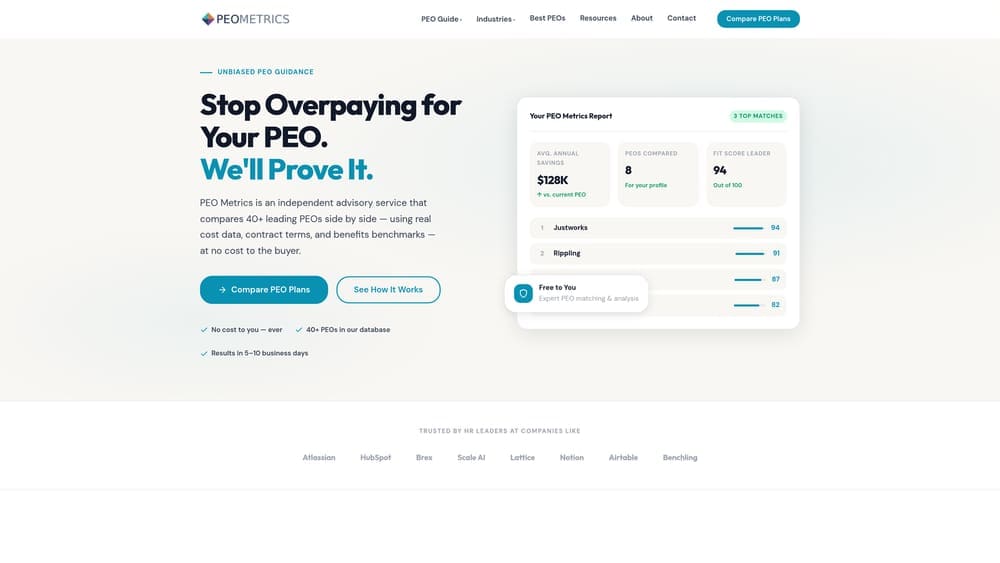
PEO Metrics is an unbiased PEO comparison platform that helps restoration company owners evaluate providers side-by-side using real pricing and coverage data.
Where This Tool Shines
Most business owners pick a PEO based on a sales call. That’s a problem, because PEO pricing is notoriously opaque and contracts are designed to lock you in. PEO Metrics gives you a structured way to see what you’re actually comparing before you sign anything.
For restoration companies specifically, this matters more than in most industries. Your workers’ comp classifications are high-risk, your headcount fluctuates, and your compliance requirements are more demanding than a standard office employer. Not all PEOs will even quote you. PEO Metrics filters by industry risk profile so you’re only looking at providers that will actually work with your business.
Key Features
Side-by-Side Provider Comparisons: Compare actual pricing, service scope, and contract terms across multiple PEOs without having to manage separate sales conversations.
Industry-Aware Filtering: Surfaces PEOs that accept high-risk trade classifications common in restoration and remediation work.
Workers’ Comp Rate Analysis: Breaks down workers’ comp costs, benefits quality, and administrative fees so you can see what you’re really paying for.
Zero Provider Allegiance: Recommendations are based on your specific needs, not commission relationships with particular PEOs.
No Cost to You: The comparison service is completely free for business owners evaluating their options.
Best For
Any restoration company owner who’s been handed a PEO proposal and isn’t sure if the pricing is fair. Also a strong starting point if you’re switching PEOs and want to benchmark your current rates against the market before renewal.
Pricing
Free for business owners. No subscription, no hidden fees, no obligation to select a specific provider through the platform.
2. Insperity
Best for: Mid-market restoration companies with stable, year-round headcount looking for enterprise-grade HR infrastructure
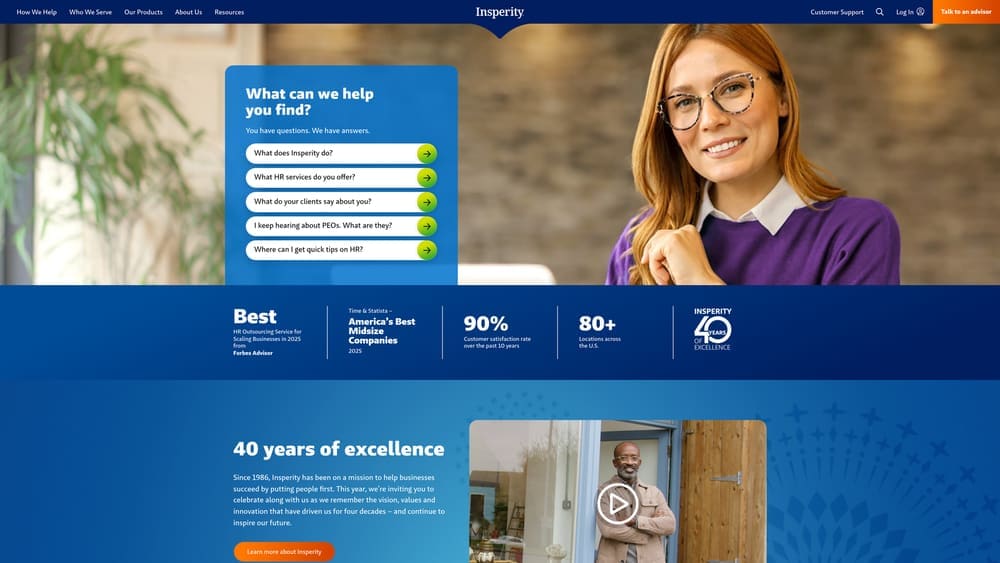
Insperity is one of the most established PEOs in the country, with strong HR infrastructure and a reputation for hands-on client support.
Where This Tool Shines
Insperity’s biggest strength is its HR depth. You get a dedicated HR business partner assigned to your account, not a call center. For restoration companies that have moved past the startup phase and want real HR support, that level of service is genuinely useful.
Their benefits packages are competitive because of their large client base. If you’re trying to attract skilled technicians and project managers in a tight labor market, offering Fortune 500-level health and retirement benefits through Insperity can be a real differentiator.
Key Features
Dedicated HR Business Partner: A named HR professional assigned to your account who understands your business, not a generic support queue.
Comprehensive Benefits: Health, dental, vision, and 401(k) options that are competitive with much larger employers.
Compliance Support: Regulatory monitoring and updates so you’re not caught off guard by changing labor laws.
Performance Management Tools: Employee development and review frameworks that help with retention in a high-turnover industry.
Risk Management Resources: Safety training and workplace risk programs that can support OSHA compliance efforts.
Best For
Restoration companies with 15 to 100 employees who want a full-service PEO relationship and are willing to pay a premium for dedicated HR support and strong benefits. Less ideal if your headcount swings wildly season to season.
Pricing
Custom pricing based on headcount and services selected. Typically requires a minimum of five employees to engage. Contact Insperity directly for a quote.
3. Paychex PEO
Best for: Restoration companies with multi-state operations and complex pay structures including overtime, per diem, and shift differentials
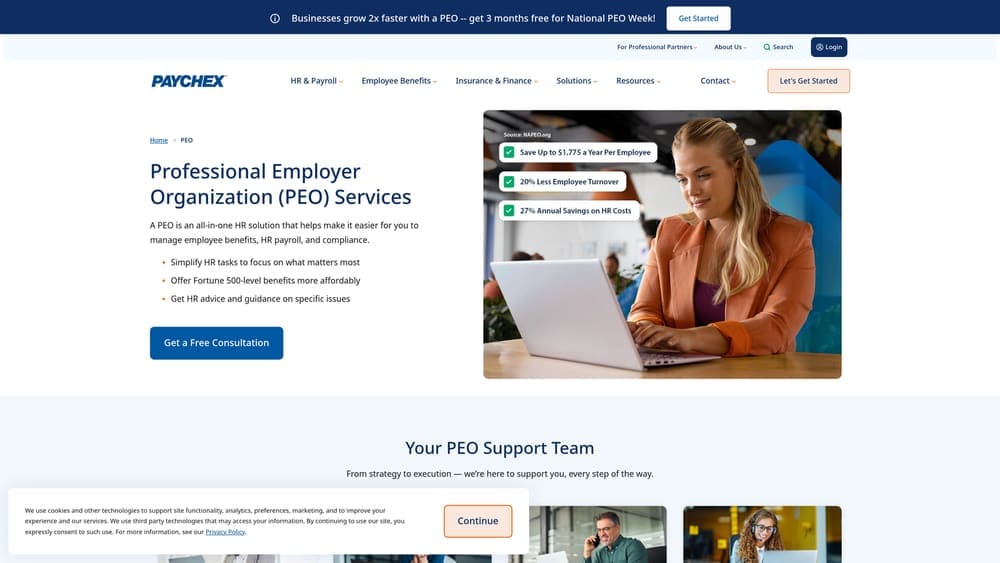
Paychex PEO is built on one of the most capable payroll engines in the market, making it a strong fit for the overtime-heavy, multi-state payroll complexity common in emergency restoration work.
Where This Tool Shines
Restoration payroll isn’t simple. You’ve got standard hourly employees, crews earning overtime on disaster response jobs, per diem for out-of-town deployments, and potentially different pay structures for different roles. Paychex handles this kind of complexity without breaking a sweat.
When your crews cross state lines after a major storm, payroll tax compliance gets complicated fast. Paychex has the infrastructure to manage multi-state filings automatically, which removes a significant operational burden when you’re already managing a disaster response.
Key Features
Multi-State Payroll Tax Compliance: Automatic handling of state tax filings when crews work across state lines.
Flexible Pay Structures: Supports overtime, shift differentials, and per diem without manual workarounds.
Time and Attendance Integration: Tracks hours for field crews and integrates directly with payroll processing.
Risk Management Programs: Workplace safety resources and compliance support for physically demanding work environments.
Scalable Platform: Can grow with your business without requiring a platform migration.
Best For
Restoration companies that regularly deploy crews across multiple states or have complex pay structures that standard payroll systems struggle to handle accurately.
Pricing
Custom quotes based on employee count and service tier. Contact Paychex directly for pricing specific to your business size and operational complexity.
4. TriNet
Best for: Restoration companies that need industry-specific compliance guidance on OSHA, EPA, and environmental regulations
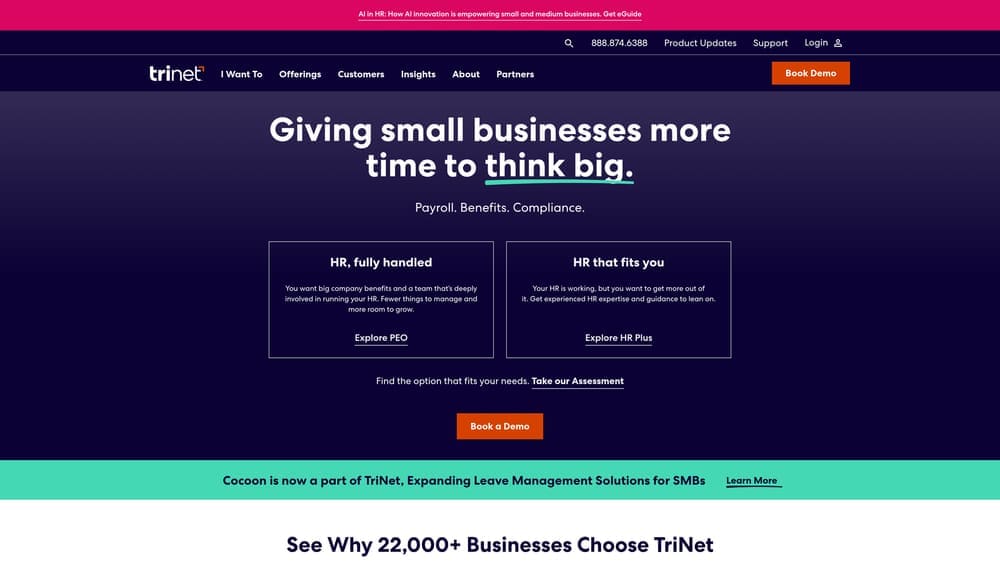
TriNet takes an industry-vertical approach to HR, offering compliance guidance tailored to specific sectors rather than one-size-fits-all programs.
Where This Tool Shines
OSHA’s respiratory protection standard, lead and asbestos regulations, and the EPA’s RRP Rule all apply to restoration work. Generic safety programs don’t address these requirements. TriNet’s sector-specific approach means you’re more likely to get compliance support that’s actually relevant to what your crews do on job sites.
They also offer access to Employment Practices Liability Insurance (EPLI), which is worth noting for restoration companies that deal with high-pressure emergency situations, seasonal hiring, and the employment risk that comes with rapid workforce expansion.
Key Features
Industry-Vertical Compliance: Tailored regulatory guidance based on your sector, not generic HR templates.
EPLI Access: Employment Practices Liability Insurance coverage available through the platform.
Cloud-Based HR Platform: Employee self-service portal that reduces administrative back-and-forth.
Strategic HR Consulting: Goes beyond basic administration to support workforce planning and organizational decisions.
Benefits Administration: Competitive health and retirement options for employees at varying levels.
Best For
Restoration companies where OSHA and environmental compliance is a genuine operational concern and where generic safety programs from a standard PEO would leave real gaps.
Pricing
Per-employee-per-month pricing that varies by industry risk classification and headcount. Contact TriNet for a quote specific to your business profile.
5. ADP TotalSource
Best for: Restoration companies that surge headcount rapidly after catastrophe events and need onboarding infrastructure that can keep up
ADP TotalSource is backed by ADP’s enterprise-grade infrastructure, making it one of the more capable options for handling rapid workforce scaling without administrative bottlenecks.
Where This Tool Shines
After a major hurricane or flood event, restoration companies sometimes need to double or triple their workforce within days. Most PEOs aren’t built for that kind of velocity. ADP TotalSource has the onboarding infrastructure to process high volumes of new employees quickly, which matters when every delayed hire is a delayed job site.
The reporting and analytics capabilities are also worth mentioning. If you’re managing multiple crews across multiple active job sites, having real-time visibility into labor costs, hours, and compliance status helps you run a tighter operation.
Key Features
Scalable Onboarding: Handles rapid headcount increases without slowing down your operational response.
Comprehensive Benefits: Health, retirement, and Employee Assistance Programs (EAP) for your workforce.
Dedicated HR and Compliance Team: Named HR business partner plus compliance specialists.
Robust Analytics Dashboard: Real-time reporting on labor costs, headcount, and HR metrics across your business.
Established Infrastructure: Backed by one of the largest HR technology companies in the market.
Best For
Restoration companies with 5 to 250 employees that experience significant headcount swings tied to disaster events and need a PEO with the operational capacity to scale alongside them.
Pricing
Custom pricing based on headcount and services. Generally suited for companies in the 5 to 250 employee range. Contact ADP for a direct quote.
6. Justworks
Best for: Smaller restoration startups that want transparent pricing and simple onboarding without navigating layers of complexity
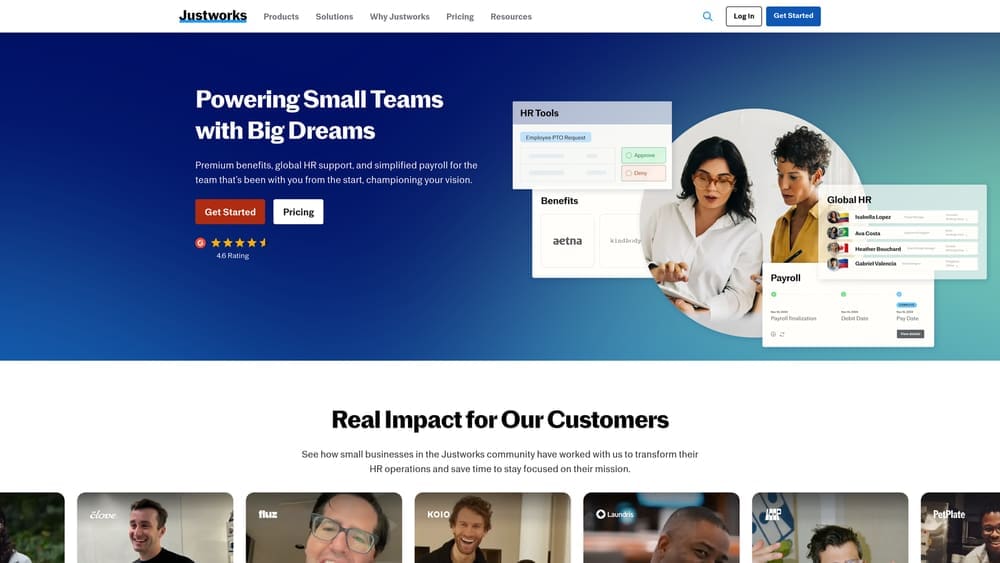
Justworks is a modern PEO built around simplicity and pricing transparency, which makes it a practical option for restoration companies in their earlier stages.
Where This Tool Shines
Most PEO pricing is deliberately opaque. Justworks is one of the few that publishes flat per-employee-per-month rates, which makes it easier to budget and harder to get surprised by fees after you’re already locked in. For a small restoration operation where the owner is handling a lot of administrative work personally, that simplicity has real value.
The onboarding experience is genuinely faster than most PEOs. If you’re bringing on a few new technicians and want them set up and processing payroll within days, Justworks delivers on that without requiring a lot of back-and-forth setup work.
Key Features
Transparent Flat-Rate Pricing: Published per-employee-per-month rates with no hidden administrative markups.
Fast Employee Onboarding: Modern platform designed to get new hires set up quickly.
Large-Group Benefits Access: Health insurance and 401(k) options typically reserved for larger employers.
Built-In Compliance Tools: Labor law compliance and tax filing handled automatically.
Simple, Clean Interface: Designed to be used without an HR background or dedicated HR staff.
Best For
Restoration startups or smaller operations with under 25 employees that prioritize pricing clarity and ease of use over deep HR customization or high-risk workers’ comp specialization.
Pricing
Basic plans start at $59 per employee per month. PEO plan pricing is available on request. One of the more transparent pricing structures in the market.
7. Oasis (a Paychex Company)
Best for: Restoration companies that struggle to get affordable workers’ comp coverage independently due to high-risk NCCI classification codes
Oasis, now a Paychex subsidiary, has built a reputation for working with high-risk trade classifications that many PEOs won’t touch or price competitively.
Where This Tool Shines
Workers’ comp is the core financial challenge for restoration companies. Mold remediation, water extraction, structural drying, and biohazard cleanup all carry NCCI codes with elevated risk ratings. When you’re shopping for workers’ comp independently, you’re often looking at high rates and large upfront deposits that strain cash flow. Oasis’s pay-as-you-go workers’ comp structure eliminates that deposit requirement and ties your premiums directly to actual payroll, which helps significantly with cash management.
Their claims management support is also worth flagging. Controlling your experience modification rate over time is how you reduce workers’ comp costs long-term. Having a PEO that actively helps you manage claims, not just process them, is a real operational advantage.
Key Features
Pay-As-You-Go Workers’ Comp: Eliminates large upfront deposits by tying premiums to actual payroll cycles.
High-Risk Classification Experience: Documented experience with NCCI codes common in restoration and remediation trades.
Claims Management Support: Active support to help manage claims and control experience modification rates over time.
Full HR Administration: Payroll, benefits, and compliance handling alongside workers’ comp.
Paychex Infrastructure: Backed by Paychex’s broader technology and compliance resources.
Best For
Restoration companies where workers’ comp cost and accessibility is the primary driver for evaluating a PEO, particularly those that have been declined or priced out of coverage independently.
Pricing
Custom pricing based on risk classification and headcount. Contact Oasis directly for a quote tailored to your specific workers’ comp profile.
Picking the Right PEO Without Overpaying
There’s no single PEO that’s the right fit for every restoration company. A 10-person operation dealing primarily with residential water damage has different needs than a 75-person firm doing commercial mold remediation and storm response across multiple states.
A few practical ways to think through the decision:
If workers’ comp is your primary problem: Start with Oasis. The pay-as-you-go structure and high-risk classification experience address the most common pain point in this industry directly.
If you scale rapidly after disasters: ADP TotalSource and Paychex PEO both have the infrastructure to handle fast onboarding and multi-state payroll without creating administrative chaos during your busiest periods.
If OSHA and environmental compliance keeps you up at night: TriNet’s industry-vertical approach is worth a closer look, especially if you’re doing any work involving asbestos, lead, or biohazard materials.
If you’re a smaller operation that just wants simplicity: Justworks offers the most transparent pricing and the fastest onboarding in this group. It won’t solve complex workers’ comp challenges, but it handles the basics well.
The honest advice here is to compare before you commit. PEO pricing varies significantly for the same services, and restoration companies in particular often overpay because they assume their high-risk profile means they have limited options. That’s not always true.
Before you sign that PEO renewal, make sure you’re not leaving money on the table. Many businesses unknowingly overpay because of bundled fees, hidden administrative markups, and contracts designed to limit flexibility. Don’t auto-renew. Make an informed, confident decision.
