

Tech companies face a unique scaling challenge: headcount can double in months, but HR infrastructure rarely keeps pace. When you’re hiring engineers across multiple states, managing equity compensation, and trying to offer benefits that compete with FAANG companies, the administrative burden compounds fast.
A Professional Employer Organization (PEO) can absorb that complexity—but not every PEO understands tech company dynamics. Some are built for traditional industries with stable headcount. Others lack the integrations your engineering team expects or can’t handle the nuances of equity compensation.
This guide covers PEO providers that specifically serve technology companies navigating rapid growth, distributed teams, and the compliance headaches that come with scaling. We’ve evaluated each based on tech industry fit, multi-state capabilities, benefits competitiveness, and integration with the tools your team already uses.
1. PEO Metrics
Best for: Companies comparing multiple PEO providers before committing to a contract
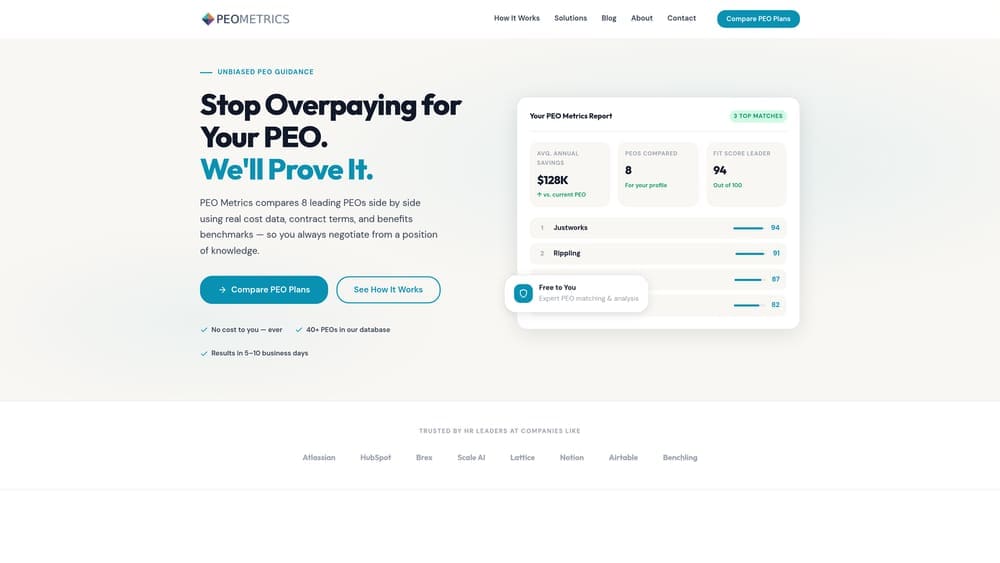
PEO Metrics is a comparison platform that helps technology companies evaluate PEO providers side-by-side with detailed pricing and capability analysis.
Where This Tool Shines
Most tech companies end up talking to three or four PEO providers, collecting proposals, and trying to compare apples to oranges. PEO Metrics removes that friction by providing standardized comparisons across pricing structures, service levels, and integration capabilities.
The platform is particularly valuable for technology companies because it includes tech-specific filtering—you can narrow providers based on their experience with equity compensation, API integrations with your existing stack, and track record with venture-backed companies.
Key Features
Side-by-side provider comparisons: View multiple PEO options in a standardized format that makes differences immediately clear.
Detailed pricing transparency: See the full cost structure including administrative fees, per-employee charges, and hidden markups that aren’t obvious in initial proposals.
Tech industry-specific filtering: Filter providers based on their experience with startup-specific needs like equity compensation and rapid scaling.
Integration capability assessments: Understand which providers connect cleanly with your existing HRIS, accounting software, and other tools.
Unbiased guidance: The service doesn’t favor specific providers, so recommendations are based on fit rather than commission structures.
Best For
Technology companies in the evaluation phase who want to avoid overpaying or selecting a PEO that doesn’t match their growth trajectory. Especially useful if you’re scaling quickly and need to understand how each provider handles multi-state expansion.
Pricing
Free comparison service. No cost to evaluate providers or access detailed breakdowns.
2. Justworks
Best for: Early-stage startups needing transparent pricing and a modern interface
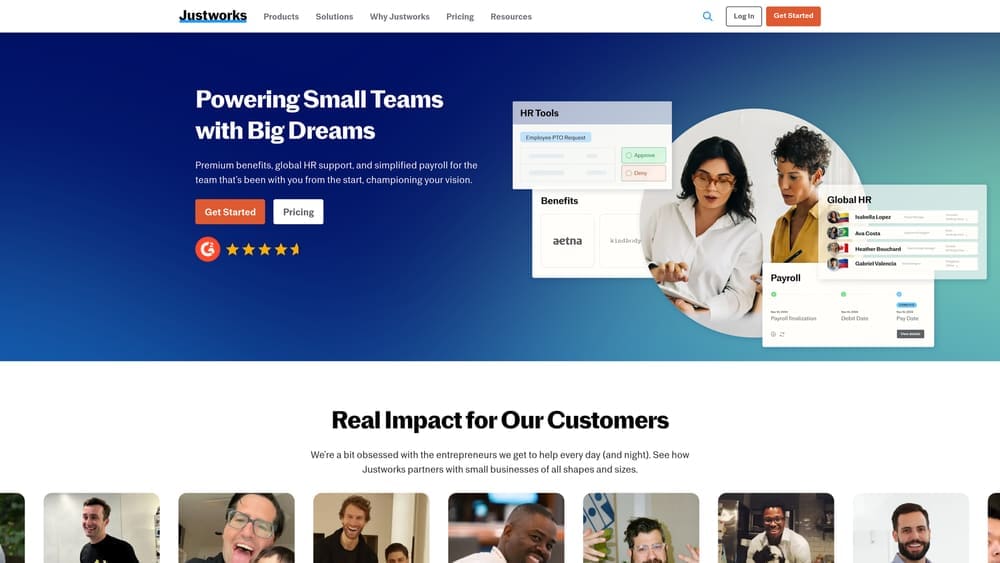
Justworks is a PEO platform designed for startups and small businesses with straightforward per-employee pricing and clean user experience.
Where This Tool Shines
Justworks built its reputation on transparency, which matters when you’re an early-stage founder trying to forecast HR costs. You know exactly what you’ll pay per employee each month, and the platform doesn’t bury fees in complex percentage-of-payroll calculations.
The interface feels like software your team already uses. Onboarding is fast, and employees can manage their own benefits and time off without constant HR intervention. For tech companies under 50 people, this simplicity is often more valuable than enterprise-grade features you won’t use yet.
Key Features
Transparent per-employee pricing: Flat monthly rate per employee makes budgeting straightforward as you scale.
Strong HRIS and accounting integrations: Connects cleanly with QuickBooks, Xero, and common startup accounting tools.
24/7 support: Access to support team around the clock, which matters when payroll issues surface outside business hours.
Competitive health insurance options: Access to national carriers with plans that work for distributed teams.
Compliance automation: Handles multi-state tax filings and employment law requirements as you hire across state lines.
Best For
Startups with 5-50 employees who value simplicity and predictable costs. Works well if you’re hiring primarily in the U.S. and don’t yet need complex global payroll capabilities.
Pricing
Starts at $59 per employee per month for the basic plan. Plus plan with additional features runs $99 per employee per month.
3. Rippling
Best for: Tech companies wanting unified HR and IT management in one platform
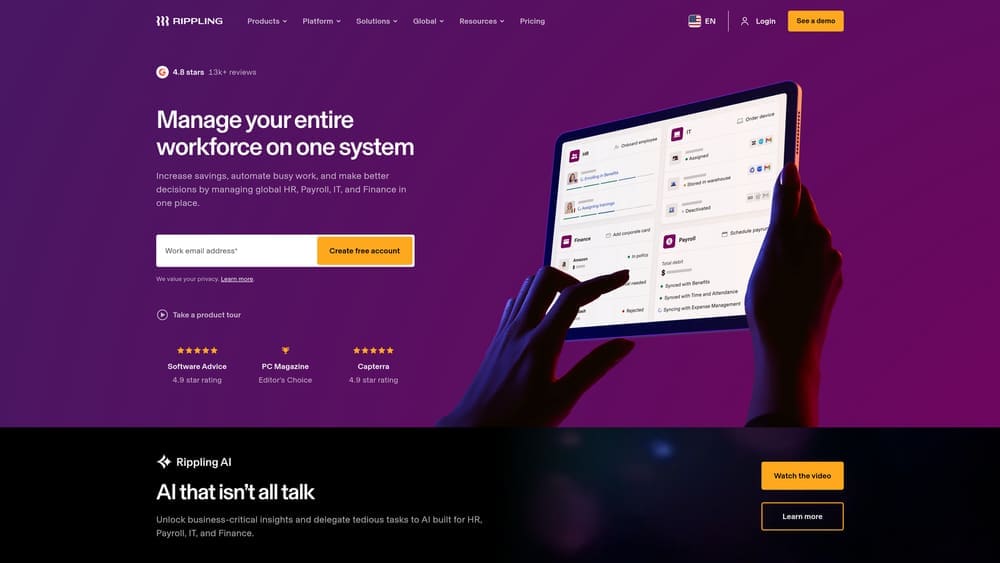
Rippling is a unified platform that combines HR, IT, and finance capabilities with PEO services and extensive automation.
Where This Tool Shines
Rippling’s core insight is that HR and IT are deeply connected at tech companies. When you hire someone, you need to provision their laptop, grant access to Slack and GitHub, add them to payroll, and enroll them in benefits. Rippling handles all of that in one workflow.
The platform has over 500 integrations, which means it likely connects with whatever tools your team already uses. The automation capabilities are particularly strong—you can build workflows that trigger actions across multiple systems when someone joins, changes roles, or leaves.
Key Features
Combined HR and IT management: Manage employee data, payroll, benefits, and device provisioning from a single platform.
Device provisioning and app management: Automatically set up laptops, grant software access, and manage licenses as people join or leave.
500+ integrations: Connects with most tools in a typical tech company stack, from Slack to AWS to your accounting software.
Automated compliance workflows: Handle multi-state tax requirements and employment law compliance as you scale.
Custom workflow builder: Create automated processes that span HR, IT, and finance without manual handoffs.
Best For
Technology companies with 20-200 employees who want to eliminate manual handoffs between HR and IT. Especially valuable if you’re managing a distributed team with complex software access requirements.
Pricing
Custom pricing based on which modules you select. Core HRIS starts around $8 per employee per month, with PEO services priced separately.
4. TriNet
Best for: Mid-size tech companies needing industry-specific expertise and enterprise benefits
TriNet is an established PEO with a dedicated technology industry vertical and access to Fortune 500-caliber benefits.
Where This Tool Shines
TriNet has been serving technology companies for decades, which means they understand the specific compliance challenges that emerge when you’re scaling quickly. They’ve seen the equity compensation mistakes, the multi-state tax issues, and the benefits expectations that come with competing for engineering talent.
The technology vertical includes dedicated HR advisors who understand startup dynamics. They can help you think through compensation structures, equity grant timing, and how to structure benefits as you grow from 50 to 200 employees. The benefits packages are genuinely competitive—health plans, mental health coverage, and perks that won’t embarrass you when recruiting from larger tech companies.
Key Features
Technology industry expertise: Dedicated vertical with advisors who understand startup-specific HR challenges and equity compensation.
Multiple benefit plan tiers: Choose from good, better, best benefit packages based on your budget and competitive positioning.
Risk mitigation services: Help with employment law compliance, workers’ compensation, and reducing liability exposure.
HR consulting included: Access to strategic HR guidance as part of the service, not an expensive add-on.
Performance management tools: Built-in systems for reviews, goal tracking, and compensation planning.
Best For
Technology companies with 50-500 employees who need more strategic HR support than basic payroll and benefits administration. Works well if you’re at the stage where HR complexity is becoming a real operational burden.
Pricing
Custom pricing typically structured as a percentage of total payroll. Expect pricing conversations to start around 3-5% of gross payroll depending on services selected.
5. Insperity
Best for: Companies wanting a dedicated HR business partner and strategic advisory
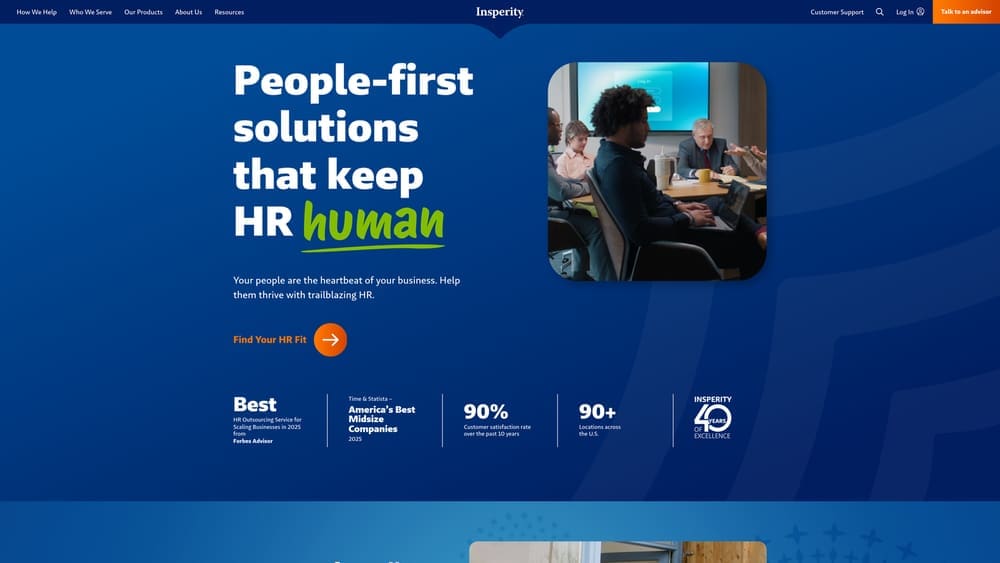
Insperity is a full-service PEO that assigns each client a dedicated HR business partner who functions as an extension of your leadership team.
Where This Tool Shines
Insperity’s model is built around the dedicated HR business partner relationship. You’re not calling a support line when issues surface—you’re texting or calling someone who knows your company, understands your growth plans, and has context on your team dynamics.
This approach works particularly well for tech companies that don’t have a full-time HR leader yet but need strategic guidance beyond basic compliance. Your business partner can help you think through compensation structures, navigate difficult terminations, and build performance management systems that actually work for your culture.
Key Features
Dedicated HR business partner: Assigned advisor who learns your business and provides ongoing strategic guidance.
Performance management tools: Systems for running reviews, tracking goals, and managing compensation cycles.
Leadership training resources: Programs to help first-time managers develop people management skills.
Robust compliance support: Help navigating multi-state employment law, wage and hour rules, and regulatory changes.
Benefits administration: Full management of health insurance, retirement plans, and voluntary benefits.
Best For
Technology companies with 25-300 employees who need strategic HR guidance but aren’t ready to hire a full-time VP of People. Especially valuable if your leadership team lacks HR experience.
Pricing
Custom pricing based on headcount and services selected. Typically positioned for companies with at least 25 employees due to the dedicated business partner model.
6. Sequoia One
Best for: Venture-backed companies competing for talent against public tech companies
Sequoia One is a PEO focused on providing premium benefits packages competitive with what employees would receive at established tech companies.
Where This Tool Shines
Sequoia One exists because venture-backed startups face a specific problem: you’re competing for talent against Google, Meta, and well-funded competitors who offer exceptional benefits. Standard PEO plans often fall short of what top engineering candidates expect.
The platform specializes in premium benefit configurations—comprehensive health coverage, strong mental health support, generous parental leave policies, and benefits benchmarking so you understand how your package compares to competitors. They also understand equity compensation deeply, which matters when you’re explaining total compensation to candidates.
Key Features
Premium benefit options: Access to top-tier health plans, mental health coverage, and benefits packages that compete with public tech companies.
Equity compensation expertise: Guidance on structuring equity grants, explaining total comp to candidates, and managing option administration.
Silicon Valley-caliber plans: Benefits designed to match what employees would receive at well-funded competitors.
Benefits benchmarking: Data on how your benefits compare to other venture-backed companies at similar stages.
Recruiting support: Help articulating total compensation packages to candidates in a compelling way.
Best For
Venture-backed technology companies competing for senior engineering talent in competitive markets. Most valuable if you’re raising Series A or later and need benefits that won’t be a recruiting disadvantage.
Pricing
Custom pricing positioned at the premium end of the PEO market. Designed for companies that view benefits as a competitive recruiting advantage rather than a cost to minimize.
7. Deel
Best for: Companies with international teams and contractor-heavy workforces
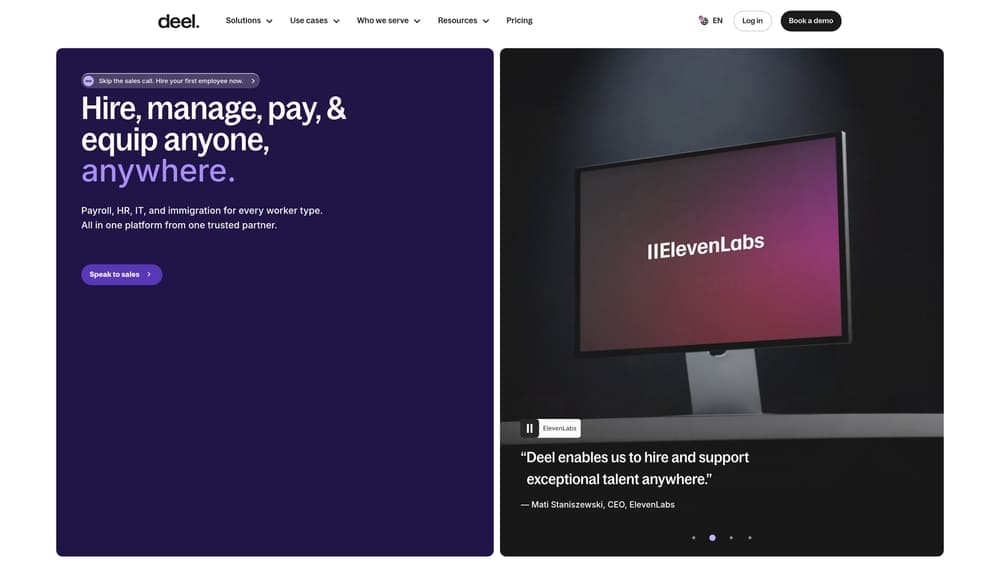
Deel is a global payroll and PEO platform that handles employment and contractor payments across 150+ countries.
Where This Tool Shines
Most traditional PEOs can’t help you when you want to hire someone in Portugal or pay contractors in Argentina. Deel built its entire platform around global workforce management, which means they handle the compliance, tax, and benefits complexity that comes with international teams.
The platform works for both employees and contractors, which matters for tech companies that often start with contractor relationships before converting to full employment. You can manage U.S. employees, international employees through Employer of Record (EOR) services, and contractors all in one system.
Key Features
Global payroll in 150+ countries: Pay employees and contractors internationally with local compliance handled automatically.
Contractor and EOR services: Manage both contractor relationships and full employment through a single platform.
Compliance automation: Handle local labor laws, tax requirements, and employment regulations across countries.
Localized benefits: Provide health insurance and benefits that meet local standards in each country where you employ people.
Equity management: Tools for granting and managing equity compensation for international team members.
Best For
Technology companies building distributed teams across multiple countries. Especially valuable if you’re hiring internationally and don’t want to establish legal entities in each country.
Pricing
Contractor payments start at $49 per contractor per month. EOR services for international employees start at $599 per employee per month, varying by country.
8. Papaya Global
Best for: Companies needing automated global payroll with workforce analytics
Papaya Global is a global workforce management platform that automates payroll and compliance across countries with strong analytics capabilities.
Where This Tool Shines
Papaya Global differentiates through automation and visibility. The platform connects to local payroll providers in each country but gives you a unified dashboard to see everything happening across your global workforce.
The analytics capabilities are particularly strong—you can see labor cost breakdowns by country, track hiring velocity across regions, and understand the true cost of employment in different locations. This visibility matters when you’re making strategic decisions about where to build out teams.
Key Features
Automated global payroll: Run payroll across multiple countries with local compliance handled automatically.
Workforce analytics dashboard: See labor costs, headcount trends, and employment metrics across your entire global team.
Multi-country compliance: Automated handling of local labor laws, tax requirements, and employment regulations.
HRIS integrations: Connects with major HRIS platforms to sync employee data and reduce manual entry.
Payments infrastructure: Direct payment capabilities in local currencies with transparent foreign exchange rates.
Best For
Technology companies with 50+ employees spread across multiple countries who need visibility into global workforce costs. Works well if you’re making strategic decisions about geographic expansion.
Pricing
Payroll services start at $12 per employee per month. EOR services for international employment are priced separately based on countries and headcount.
9. ADP TotalSource
Best for: Established tech companies wanting enterprise-grade infrastructure and stability
ADP TotalSource is the PEO offering from ADP, bringing enterprise-grade compliance infrastructure and the stability of an established provider.
Where This Tool Shines
ADP has been processing payroll for decades, which means their compliance infrastructure is genuinely robust. When tax laws change or new employment regulations roll out, they have the resources to adapt quickly and ensure you stay compliant.
This stability matters more as you scale. Early-stage startups often prioritize modern interfaces and fast implementation. But when you’re at 200+ employees with complex multi-state operations, you start caring more about whether your provider will still be around in five years and whether they can handle unusual compliance scenarios.
Key Features
Enterprise-grade infrastructure: Built on ADP’s established payroll and compliance systems used by Fortune 500 companies.
Comprehensive compliance coverage: Deep expertise in multi-state tax requirements, wage and hour laws, and regulatory changes.
Extensive reporting capabilities: Detailed analytics and reporting tools for understanding workforce costs and trends.
Established provider stability: Backing of a large public company with decades of payroll processing experience.
Benefits administration: Access to national benefit carriers with competitive group rates.
Best For
Technology companies with 50-1000+ employees who prioritize stability and compliance depth over cutting-edge interfaces. Works well if you’re past the startup phase and need infrastructure that scales reliably.
Pricing
Custom pricing typically suited for companies with at least 50 employees. Pricing structure usually based on percentage of payroll or per-employee fees depending on services selected.
Making the Right Choice
The right PEO depends heavily on where you are today and where you’re heading in the next 18 months.
Early-stage startups with under 50 employees typically find Justworks or Rippling the best fit. Both offer transparent pricing, modern interfaces, and the integrations your team expects. Justworks wins on simplicity. Rippling wins if you want unified HR and IT management.
Mid-size companies scaling past 50 employees often need more strategic support than basic payroll administration. TriNet and Insperity both provide dedicated advisors who understand tech company dynamics and can help you navigate equity compensation, performance management, and multi-state compliance as you grow.
For companies building international teams, the decision becomes clearer. Deel and Papaya Global handle the global complexity that domestic PEOs simply can’t address. Deel works well if you’re managing a mix of contractors and employees. Papaya Global shines if you need strong analytics across your global workforce.
If you’re venture-backed and competing for talent against well-funded competitors, Sequoia One’s premium benefits approach might justify the higher cost. Standard PEO plans often fall short of what senior engineers expect from established tech companies.
For established tech companies with 200+ employees, ADP TotalSource brings enterprise-grade infrastructure and the stability that matters more as you scale. The interface isn’t as modern as newer entrants, but the compliance depth and provider stability become more important at this stage.
Before committing to any single provider, use a comparison service like PEO Metrics to see pricing and capabilities side-by-side. PEO contracts are typically annual commitments, and switching providers mid-year creates operational headaches. The goal isn’t finding the “best” PEO in the abstract—it’s finding the one that matches your specific headcount, state footprint, benefit priorities, and growth trajectory.
Before you sign that PEO renewal, make sure you’re not leaving money on the table. Many businesses unknowingly overpay because of bundled fees, hidden administrative markups, and contracts designed to limit flexibility. We give you a clear, side-by-side breakdown of pricing, services, and contract terms—so you can see exactly what you’re paying for and choose the option that truly fits your business. Reach out to us
