
Water damage restoration is one of the harder industries to fit into a standard PEO relationship. Your crews handle mold remediation, asbestos abatement, structural drying, and demolition — sometimes all on the same job site. Workers’ comp classification is complicated, headcount swings wildly after storm events, and when a hurricane sends your Florida-based team into North Carolina, you’re suddenly navigating a different state’s compliance requirements with no time to prepare.
Most PEO comparison resources don’t account for any of this. They’re written for office-based businesses with stable headcounts and clean risk profiles. Restoration companies operate in a different reality, and picking the wrong PEO means overpaying on comp premiums, getting stuck with slow onboarding when you need to scale fast, or working with a provider that quietly inflates administrative fees because they don’t understand your industry.
The providers below were evaluated on workers’ comp program strength, multi-state compliance capability, rapid onboarding support, and pricing transparency — the criteria that actually matter for restoration work. Here are the top PEO providers worth considering.
1. PEO Metrics
Best for: Restoration companies that want to compare providers before committing to one
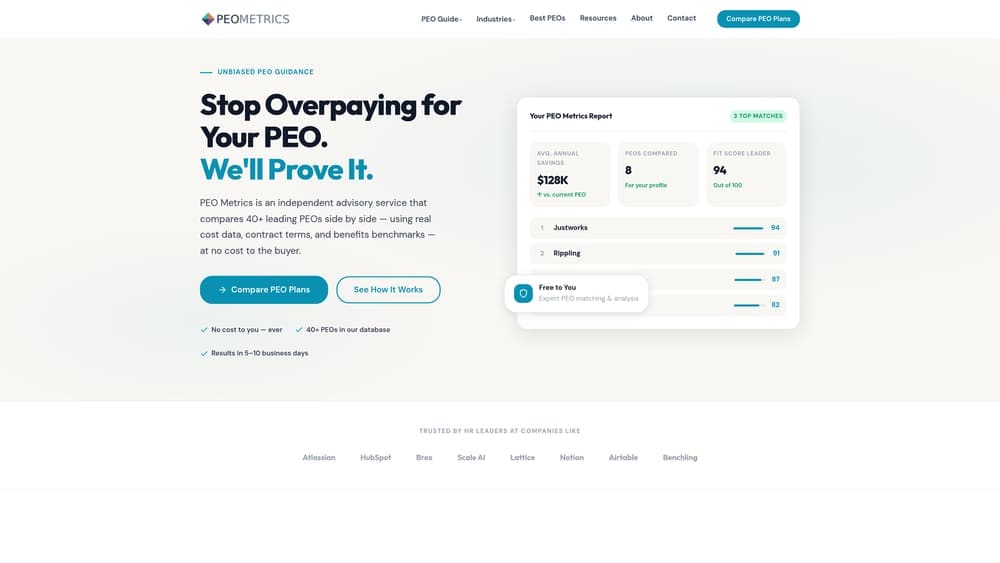
PEO Metrics is an unbiased PEO comparison platform that helps restoration companies evaluate providers side-by-side using detailed metrics, pricing analysis, and industry-specific criteria.
Where This Tool Shines
The core problem PEO Metrics solves is information asymmetry. Most business owners sign a PEO contract without ever seeing a true apples-to-apples comparison of what they’re paying versus what competitors charge. For restoration companies specifically, that gap is expensive — workers’ comp markups, administrative fee structures, and contract flexibility terms vary significantly between providers, and generalist PEOs often charge more simply because they’re less familiar with your risk profile.
PEO Metrics isn’t affiliated with any single provider, which means the analysis isn’t shaped by referral incentives. For a restoration company owner trying to figure out whether their current PEO is actually competitive, or evaluating options before a first contract, that independence matters more than it might in a lower-stakes industry.
Key Features
Side-by-Side Provider Comparisons: Detailed data across multiple PEOs so you can evaluate pricing, services, and contract terms in one place rather than managing separate sales conversations.
Pricing Transparency Analysis: Surfaces hidden markups and administrative fees that are easy to miss inside bundled PEO pricing — particularly relevant for high-risk trades where comp markups can be significant.
Industry-Specific Filtering: Filters for high-risk trades and construction-adjacent industries, so you’re not being matched with PEOs that routinely decline restoration companies or price them poorly.
Unbiased Guidance: Not affiliated with any PEO provider, which removes the referral incentive that shapes most broker recommendations.
Best For
Any restoration company evaluating their first PEO, coming up on a contract renewal, or suspicious they’re overpaying. Particularly useful before signing anything — this is the kind of due diligence that pays for itself if it surfaces a better rate on comp premiums alone.
Pricing
Free comparison service. Contact PEO Metrics directly for details on the scope of analysis and what’s included.
2. Insperity
Best for: Mid-size restoration companies prioritizing premium benefits and dedicated HR support
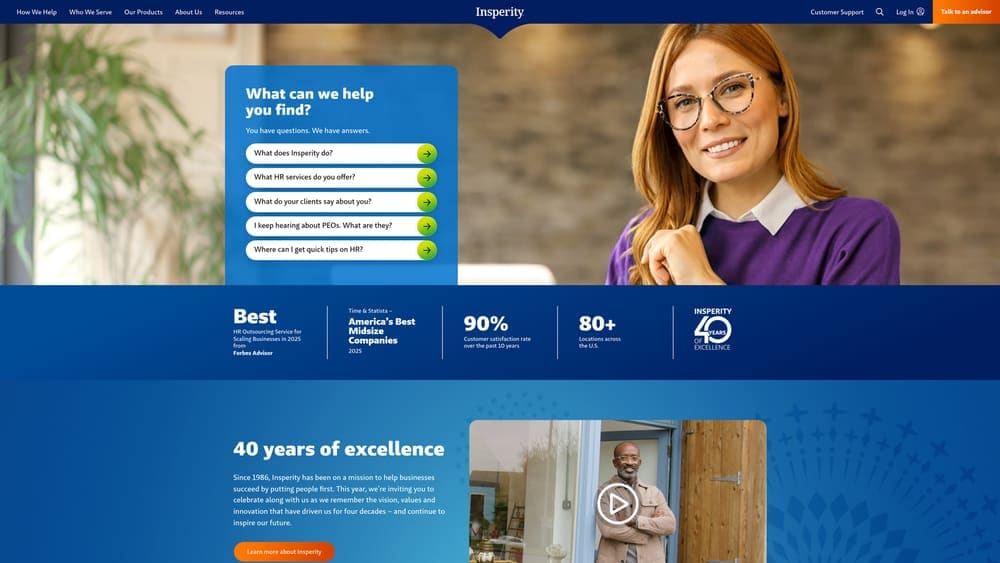
Insperity is a large, established PEO offering comprehensive HR services, Fortune 500-level benefits packages, and dedicated advisory support for companies in the 50 to 5,000 employee range.
Where This Tool Shines
Insperity’s strength is the depth of its HR infrastructure. You get a dedicated HR team, not just a software platform, which matters when you’re dealing with a complex workers’ comp claim after a job-site incident or trying to navigate a multi-state compliance issue mid-project. Their benefits packages are genuinely competitive — the kind that can improve retention in a labor market where experienced restoration technicians are hard to keep.
The tradeoff is that Insperity is built for companies with some operational maturity. If your headcount swings from 15 to 60 after a major weather event, their model may feel less nimble than you need. They’re better suited to companies with a stable core team that supplements with subcontractors during surges rather than companies that directly hire and release large crews seasonally.
Key Features
Dedicated HR Advisory Teams: Real HR professionals assigned to your account, not just a help desk — useful when claims, compliance questions, or employee relations issues arise unexpectedly.
Competitive Benefits Packages: Access to large-group health insurance and benefits that are difficult for smaller companies to obtain independently, which supports recruitment and retention of skilled technicians.
Performance Management Tools: Training and performance tracking tools that help restoration companies build more structured workforce development programs.
Established Track Record: Long history with companies in the 50-5,000 employee range and a stable compliance infrastructure across multiple states.
Best For
Mid-size restoration companies with a relatively stable core workforce that want premium benefits, strong HR advisory support, and a provider with deep operational infrastructure. Less ideal for very small companies or businesses with extreme seasonal headcount swings.
Pricing
Custom pricing based on headcount and services selected. Typically structured as a percentage of payroll. Request a quote directly through Insperity.
3. ADP TotalSource
Best for: Restoration companies with 50+ employees that need rapid multi-state payroll scaling
ADP TotalSource is ADP’s full-service PEO solution built on enterprise-grade payroll infrastructure, designed for companies that need to scale headcount quickly and manage payroll compliance across multiple states.
Where This Tool Shines
When a major storm event sends your crews into three states simultaneously, payroll and tax compliance can become a genuine operational problem fast. ADP TotalSource’s infrastructure is built to handle exactly that kind of multi-state complexity — tax withholding, workers’ comp compliance, and regulatory reporting across jurisdictions. The onboarding speed is a real differentiator here; ADP’s systems are designed to process new employees at scale, which matters when you’re hiring 30 people in a week after a flood event.
The broader ADP ecosystem is also worth noting. If you’re already using ADP tools for time tracking or workforce management, TotalSource integrates cleanly rather than adding another disconnected system to manage.
Key Features
Enterprise Payroll Infrastructure: Robust, battle-tested payroll processing with rapid onboarding capabilities that support quick headcount ramp-ups after disaster events.
Multi-State Compliance Support: Handles payroll tax withholding, workers’ comp registration, and regulatory compliance across state lines — critical for restoration companies deployed regionally.
Integrated Time and Workforce Tools: Time tracking and workforce management tools that integrate with the broader ADP platform for streamlined operations.
Ecosystem Integration: Works within ADP’s broader suite of HR and payroll tools, reducing friction for companies already in the ADP environment.
Best For
Restoration companies with 50 or more employees that regularly deploy crews across state lines, need fast onboarding during surge periods, and want enterprise-grade payroll infrastructure behind their HR operations.
Pricing
Custom pricing. Generally better suited for companies with 50 or more employees. Contact ADP directly for a quote based on headcount and service scope.
4. Paychex PEO
Best for: Smaller restoration companies that need pay-as-you-go workers’ comp and risk management support
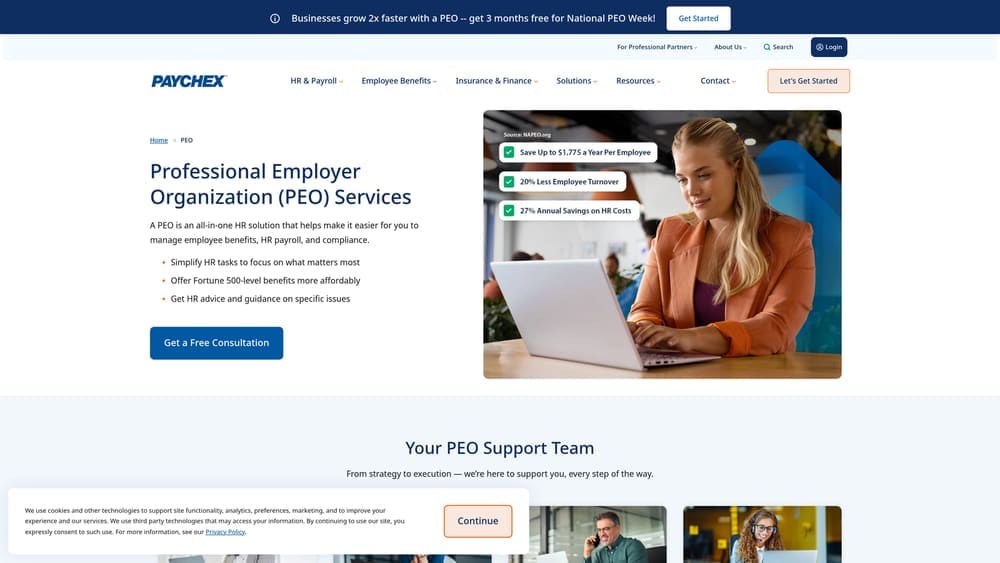
Paychex PEO offers HR outsourcing with pay-as-you-go workers’ comp options, risk management support, and a dedicated HR professional assigned to each account — designed to work for smaller field-heavy businesses.
Where This Tool Shines
Cash flow is a real pressure point for smaller restoration companies. Traditional workers’ comp policies require large upfront deposits based on estimated payroll, which creates a cash flow problem when your payroll fluctuates month to month. Paychex’s pay-as-you-go comp option ties premiums to actual payroll rather than projections, which smooths that cash flow issue considerably for companies whose headcount moves with the work.
The risk management and workplace safety support is also worth noting for restoration work. OSHA compliance, job-site safety documentation, and incident reporting support are areas where smaller restoration companies often have gaps, and having a PEO that actively supports those programs reduces both liability exposure and, over time, workers’ comp costs.
Key Features
Pay-as-You-Go Workers’ Comp: Premiums calculated on actual payroll rather than annual estimates, which improves cash flow for companies with variable headcount.
Risk Management Support: Workplace safety resources and compliance support relevant to field-based, high-risk work environments.
Dedicated HR Professional: A named HR contact assigned to your account rather than a general support queue.
Scalable for Smaller Companies: Accessible for businesses that haven’t yet reached the headcount thresholds that larger PEOs prefer.
Best For
Smaller restoration companies, particularly those under 50 employees, that want pay-as-you-go workers’ comp to manage cash flow, basic HR outsourcing, and a dedicated point of contact for HR questions without enterprise-level complexity or pricing.
Pricing
Custom pricing. Pay-as-you-go workers’ comp options are available for qualifying businesses. Contact Paychex for a quote based on your headcount and service needs.
5. TriNet
Best for: Multi-state restoration operations needing industry-tailored compliance bundles
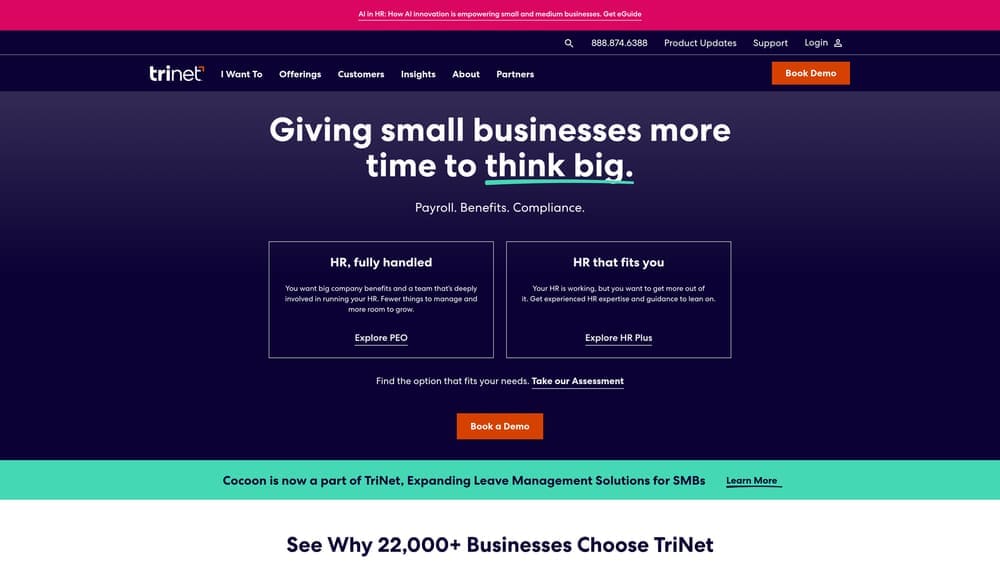
TriNet is a PEO with strong multi-state compliance capabilities and industry-specific service bundles, built for companies that operate across state lines and need regulatory compliance managed at the HR level.
Where This Tool Shines
TriNet’s industry-tailored approach is the differentiator here. Rather than offering a single generic HR package, TriNet structures its services around industry categories, which means the compliance frameworks, risk mitigation tools, and HR support are calibrated for businesses with specific regulatory environments. For restoration companies operating in construction-adjacent classifications, that matters — you’re not getting a package designed for a software company.
Their multi-state tax and regulatory compliance support is solid for companies that regularly cross state lines. Claims management support is also a notable feature; workers’ comp claims in restoration work can be complex and contested, and having a PEO with structured claims management processes reduces the administrative burden when incidents occur.
Key Features
Industry-Tailored HR Bundles: Service packages structured by industry type rather than one-size-fits-all, with compliance frameworks relevant to higher-risk trade environments.
Multi-State Regulatory Compliance: Tax withholding, workers’ comp compliance, and regulatory support across state lines for companies with distributed operations.
Risk Mitigation and Claims Management: Structured support for workers’ comp claims and risk management, relevant for field-based operations with higher incident exposure.
Cloud-Based HR Platform: Self-service tools for employees and managers that reduce administrative overhead for distributed teams.
Best For
Restoration companies that regularly operate across multiple states, want industry-specific compliance support rather than a generic HR package, and need structured claims management capability built into their PEO relationship.
Pricing
Custom pricing. TriNet typically uses a per-employee-per-month model. Contact TriNet for a quote based on headcount, states of operation, and service requirements.
6. Justworks
Best for: Small restoration companies that want transparent flat-rate pricing and simple HR outsourcing
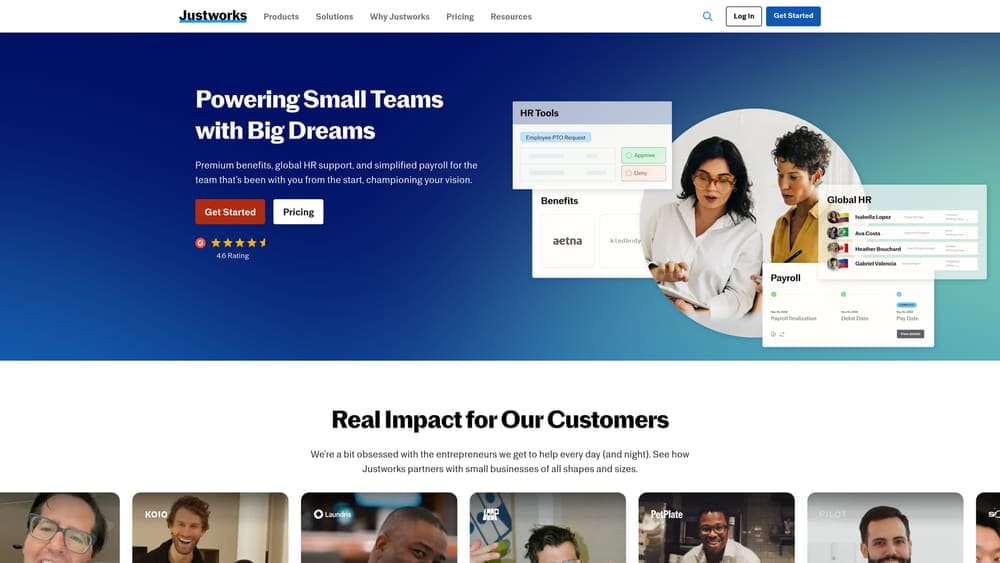
Justworks is a PEO built around pricing transparency and ease of use, offering flat per-employee-per-month pricing, a clean interface, and access to large-group benefits for small businesses.
Where This Tool Shines
Justworks is the most straightforward option on this list from a pricing and setup standpoint. Their flat per-employee pricing is publicly listed, which is genuinely unusual in the PEO space where most providers require a sales conversation before you can see any numbers. For a small restoration company owner who’s skeptical of hidden fees and wants to know exactly what they’re paying before signing anything, that transparency has real value.
The tradeoff is that Justworks is designed for simplicity, which means it’s less equipped for the operational complexity that larger or faster-scaling restoration companies face. It doesn’t have the deep workers’ comp specialization or rapid multi-state onboarding infrastructure of some other providers on this list. It’s a solid fit for smaller, more stable operations — less so for companies with heavy seasonal surge hiring or complex multi-state deployments.
Key Features
Flat Per-Employee Pricing: Publicly listed pricing with no hidden fees, making it easier to budget and compare against other options without a sales process.
Simple Onboarding Interface: Clean, intuitive platform that reduces the administrative learning curve for small business owners managing HR without a dedicated HR team.
Large-Group Benefits Access: Access to health insurance and benefits packages that small businesses typically can’t access independently.
Basic Compliance Support: Payroll tax compliance and foundational HR compliance support for companies with straightforward needs.
Best For
Small restoration companies, typically under 25 employees, with relatively stable headcount that want predictable HR costs, transparent pricing, and access to better benefits without complex contract terms or opaque fee structures.
Pricing
Starts at $59 per employee per month for the Basic plan. Pricing is publicly listed on the Justworks website, which is a notable differentiator in this space.
7. Amplify PEO
Best for: Restoration companies that want trade-specialized workers’ comp expertise and EMR management
Amplify PEO specializes in construction and high-risk trades, with focused expertise in workers’ comp classification accuracy, experience modification rate management, and job-site safety program development.
Where This Tool Shines
Amplify is the most industry-specific option on this list for restoration and construction-adjacent work. Workers’ comp classification errors are common in restoration — mold remediation, asbestos abatement, and structural drying each potentially carry different NCCI classification codes, and a generalist PEO that misclassifies your crews is either overcharging you or creating audit exposure. Amplify’s specialization means they understand these distinctions, which reduces both misclassification risk and the premium inflation that comes with it.
The experience modification rate management is also a meaningful differentiator. Your EMR directly affects your workers’ comp premiums, and a PEO that actively works to manage it through safety programs and claims handling can reduce costs over time in a way that purely administrative PEOs can’t. For restoration companies with a history of claims, this focus on EMR improvement is worth taking seriously.
Key Features
Trade-Specific Workers’ Comp Expertise: Deep familiarity with NCCI classification codes relevant to restoration, construction, and environmental remediation work — reducing misclassification risk and associated costs.
EMR Management Programs: Structured programs focused on improving your experience modification rate over time through safety practices and claims management, which directly affects comp premiums.
Safety Program Development: Job-site safety program support designed for high-risk field environments, including OSHA compliance frameworks relevant to restoration work.
OSHA Compliance Support: Compliance monitoring and reporting support for the specific regulatory requirements restoration companies face around hazardous materials and job-site safety.
Best For
Restoration companies of any size that prioritize workers’ comp accuracy, have a history of claims they want to actively manage down, or operate in environments where OSHA compliance and safety documentation are ongoing operational priorities.
Pricing
Custom pricing. Amplify typically offers competitive rates for high-risk trades due to their specialization. Contact them directly for a quote based on your workforce profile and classification mix.
Which PEO Actually Fits Your Restoration Business
The right answer depends on where you are operationally. Here’s a straightforward way to think through it.
If you’re a smaller company, under 25 employees, with a relatively stable crew and limited multi-state exposure, Justworks gives you transparent pricing and solid benefits access without unnecessary complexity. Paychex PEO is the better call if cash flow management around workers’ comp is a priority, or if you want more hands-on risk management support.
Mid-size companies operating across state lines should look seriously at TriNet or ADP TotalSource. TriNet’s industry-tailored compliance approach is useful if regulatory complexity is your primary pain point. ADP TotalSource makes more sense if you need enterprise-grade payroll infrastructure and rapid onboarding capability during surge periods.
If you’re scaling and want premium benefits to support retention of experienced technicians, Insperity’s depth of HR advisory support and benefits quality is hard to match in that size range.
For companies where workers’ comp classification accuracy and EMR management are the priority, Amplify PEO is the most purpose-built option on this list. Generalist PEOs frequently misclassify restoration crews, and the cost of that over a multi-year contract adds up quickly.
Restoration companies face a risk profile that most PEO sales processes aren’t designed to account for. The seasonal surges, multi-state deployments, and hazardous material exposure mean that provider selection carries more financial consequence than it does for a typical office-based business. Getting it wrong isn’t just an administrative inconvenience; it’s overpaying on comp premiums for years, or being locked into a contract with a provider that can’t handle your operational reality.
Before you sign that PEO renewal, make sure you’re not leaving money on the table. Use PEO Metrics to compare providers on the specific criteria that matter for restoration work — workers’ comp program strength, pricing transparency, and multi-state capability — before committing to anything. Don’t auto-renew. Make an informed, confident decision.
