How PEOs work across industries like construction, healthcare, startups, and multi-state employers.
Small childcare businesses with five employees face complex HR, compliance, and workers’ comp demands that generic solutions rarely handle well. This guide covers seven practical strategies for evaluating and maximizing a childcare and daycare PEO for 5 employees, helping owners avoid overpaying, underutilizing their platform, or partnering with a provider that doesn’t understand the industry’s specific risk profile.
Nonprofits face unique HR and compliance challenges that standard PEO contracts often fail to address, making it critical to evaluate providers through a nonprofit-specific lens. This guide offers seven practical strategies for identifying the best PEO for nonprofit organizations based on mission-aligned pricing, compliance fit, and operational structure rather than generic brand comparisons.
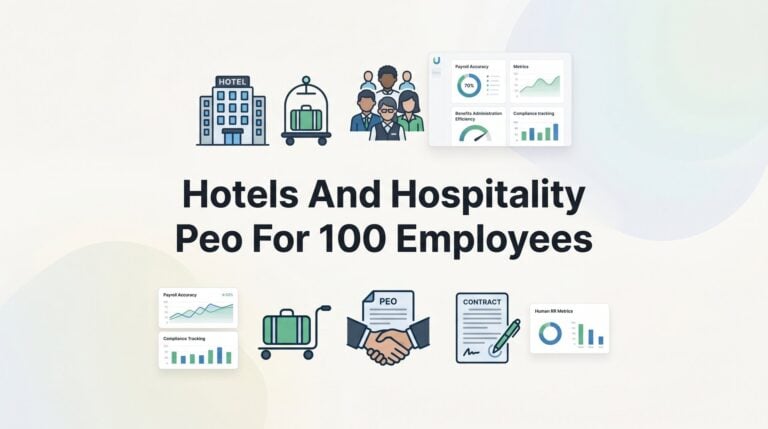
Hospitality operators at 100 employees face compounding HR challenges — high turnover, seasonal staffing, workers’ comp exposure, and complex compliance — that a well-structured PEO can meaningfully address. This guide outlines seven targeted strategies for hotels and hospitality businesses using a Hotels and Hospitality PEO for 100 Employees to reduce operational drag without overpaying for services built for a different scale.
At 15 employees, gyms and fitness studios face a unique HR challenge — managing trainers, part-time staff, high workers’ comp risk, and competitive benefits without a dedicated HR team. This guide covers seven practical ways a PEO helps fitness studio owners at this headcount solve industry-specific problems, from workers’ comp classification to instructor benefits that actually attract talent.
A PEO can solve real operational headaches for 15-employee restaurants — from tip compliance and workers’ comp exposure to competitive benefits — but only if you understand which services actually fit your staffing mix and cost structure.
Restaurants with around 50 employees face a unique combination of HR pressures — from tipped wage compliance to high turnover — that a PEO can help manage more effectively at this specific headcount. This guide covers seven practical strategies for getting measurable value from a restaurants PEO for 50 employees, including how to structure benefits, control workers’ comp costs, and streamline payroll without overpaying for services you don’t need.
Switching schools and private education businesses to a PEO requires more than a standard payroll migration — academic calendars, credentialed staff, seasonal headcount changes, and enrollment-driven budgets create unique compliance and operational risks that generic transition guides ignore. This step-by-step resource walks education operators through a structured PEO switch designed specifically for private schools, tutoring centers, and learning enrichment businesses.
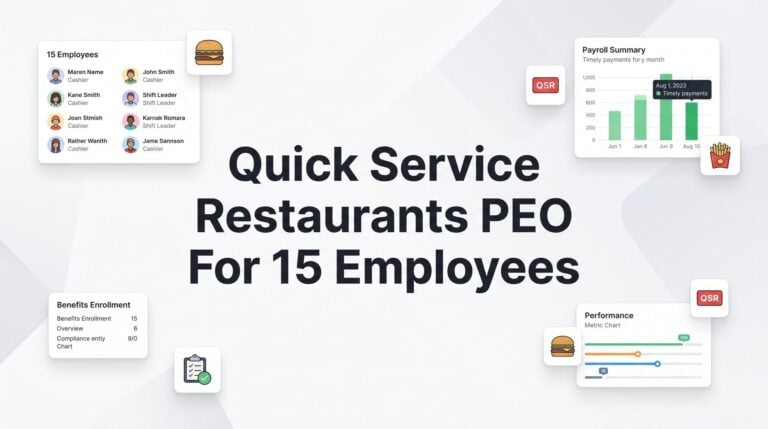
Quick service restaurants with 15 employees face unique HR challenges — from tipped wage compliance to high turnover — that most generic PEO tools overlook. This guide identifies the best PEO comparison tools specifically suited to QSR operators at the 15-employee level, helping you evaluate providers side by side before committing to per-head pricing that directly impacts your bottom line.
PEO compliance support for quick service restaurants goes well beyond standard handbook templates, addressing the specific risks QSR operators face daily—tipped employee regulations, minor labor laws, split shift rules, and multi-jurisdiction wage requirements. This guide breaks down what that support actually covers inside fast food and fast casual operations, and where it meaningfully reduces exposure versus where gaps still exist.
Quick service restaurant operators competing for hourly workers can access affordable health insurance, retirement plans, and other competitive benefits through a PEO without building an internal HR infrastructure. This guide explains what a PEO actually delivers for QSR employee benefits, including how cost pooling works, what the administrative burden looks like in practice, and whether it makes financial sense for operators managing high turnover and variable-hour teams.
