How PEOs work across industries like construction, healthcare, startups, and multi-state employers.
Running a 25-person water damage restoration crew creates unique HR and risk management challenges that generic PEO solutions often mishandle through incorrect classification codes and mismatched contract terms. This guide outlines seven targeted strategies for selecting a Water Damage Restoration PEO for 25 Employees that accurately reflects your crew’s specific hazard profile, controls workers’ comp costs, and supports rapid scaling during high-demand emergency response periods.
Switching janitorial companies to a PEO consolidates payroll, benefits, workers’ comp, and compliance management under one provider—reducing the HR complexity unique to cleaning operations like high turnover, multi-site scheduling, and OSHA chemical handling requirements. This step-by-step guide walks janitorial business owners through a smooth transition that avoids coverage gaps and keeps a dispersed, non-desk workforce properly supported throughout the process.
A 50-employee water damage restoration company faces unique HR and risk management challenges that make PEO selection critically important. This guide outlines seven targeted strategies for evaluating a Water Damage Restoration PEO for 50 Employees, focusing on industry-specific expertise, workers’ comp cost management, and operational fit for companies running hazardous-environment crews at this critical growth stage.
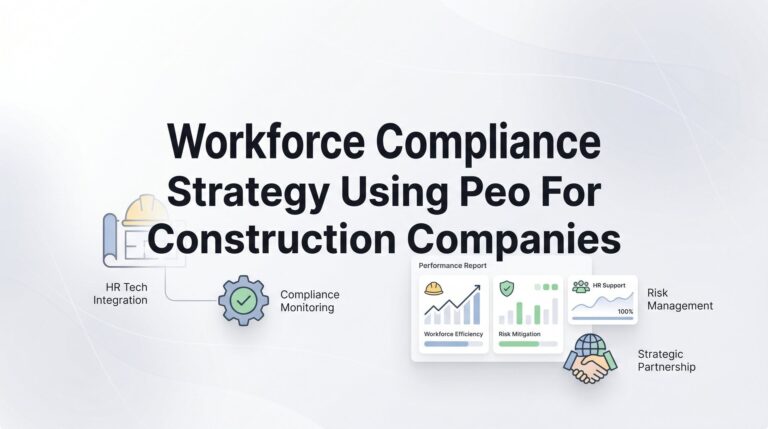
Construction companies managing multi-state crews, subcontractor relationships, and OSHA requirements face compliance challenges most industries never encounter. This guide examines how a workforce compliance strategy using a PEO for construction companies can address these specific gaps—from workers’ comp cost control to multi-jurisdiction payroll—and what to evaluate before choosing a PEO that genuinely understands construction operations.
Water damage restoration companies with 100 employees face unique HR and compliance challenges—from hazardous materials handling to storm-season workforce fluctuations—that require a specialized approach to PEO selection. This guide outlines seven targeted strategies for choosing a Water Damage Restoration PEO for 100 Employees, focusing on critical factors like workers’ comp management, field crew payroll, and high-risk industry expertise that generic PEO providers often overlook.
Finding the right PEO for fire protection companies means identifying providers that understand high-risk trade work, elevated workers’ comp classifications, and multi-state licensing compliance. This guide evaluates seven PEOs based on their ability to handle the unique HR, safety, and payroll challenges facing fire suppression, alarm installation, and sprinkler fitting businesses.
Fire protection contractors face unique payroll challenges—high-risk workers’ comp classifications, certified payroll requirements, and multi-state compliance—that basic payroll software can’t fully address. This guide breaks down the Fire Protection PEO vs Payroll Company decision by comparing seven top solutions based on headcount, prevailing wage work, workers’ comp exposure, and how much employer liability you want to retain.
Small fire protection companies with just five employees face unique HR and compliance challenges—from high-risk NCCI classification codes to costly workers’ comp rates—that most PEOs aren’t built to address. This guide outlines seven practical strategies for finding a Fire Protection PEO for 5 Employees that delivers real cost savings and compliance support without the overhead designed for much larger operations.
Fire protection companies with 15 employees face unique HR and compliance challenges that most generic PEOs aren’t equipped to handle. This guide outlines seven targeted strategies for selecting a Fire Protection PEO for 15 Employees that accurately reflects your risk profile, manages field labor complexities, and fills the gap between small-business limitations and serious regulatory exposure — without overpaying for coverage that doesn’t fit your operation.
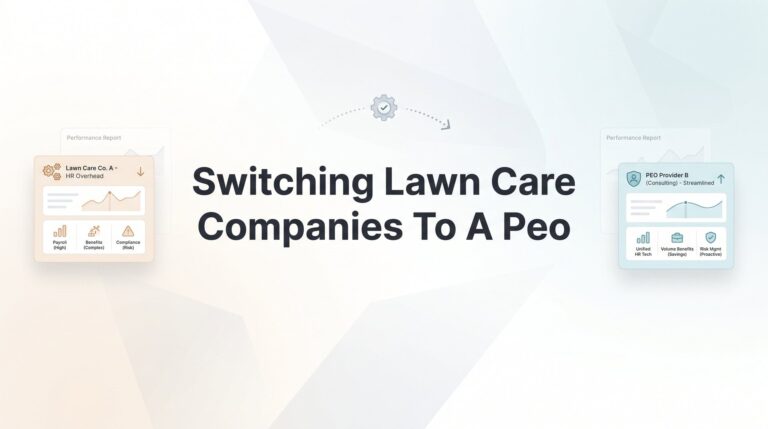
Switching lawn care companies to a PEO can eliminate the HR burden that bogs down growing operations, and this practical step-by-step guide walks owners through the actual transition process — covering timing decisions, seasonal workforce considerations, and common pitfalls to avoid when moving from in-house payroll or a basic provider to a full PEO platform.
