How PEOs work across industries like construction, healthcare, startups, and multi-state employers.

PEO benefits structuring for manufacturing firms requires a tailored approach that accounts for shift work, high injury exposure, skilled labor retention, and multi-site complexity. This guide outlines seven targeted strategies to help manufacturers move beyond generic benefit plans and build PEO-managed packages that address the real operational and workforce challenges unique to the industry.
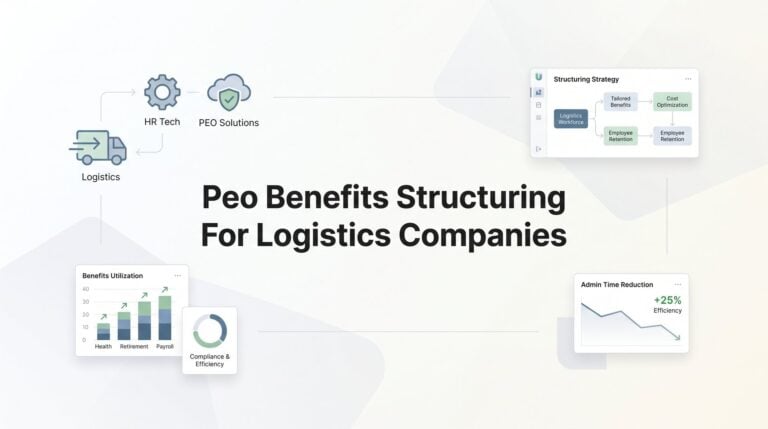
Logistics companies managing mixed workforces of drivers, warehouse staff, and office employees face unique challenges with PEO benefits structuring for logistics companies, including DOT compliance, multi-state workers’ comp, and tiered coverage needs. This guide reviews the 8 best PEO providers that specialize in handling these complexities rather than applying generic, one-size-fits-all benefit solutions to high-risk, distributed logistics workforces.
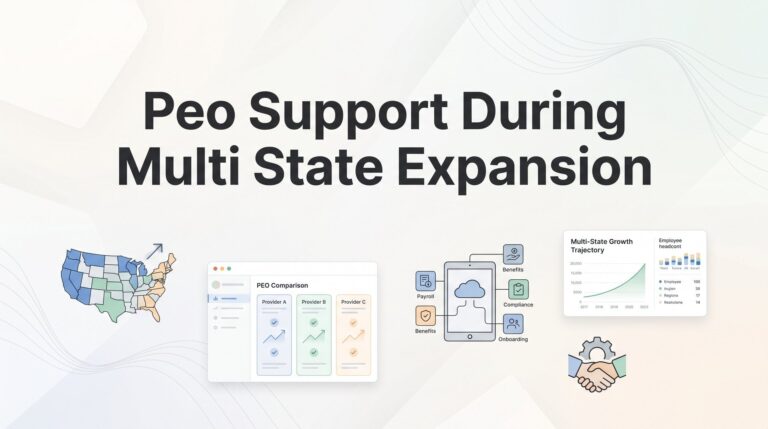
PEO support during multi-state expansion can simplify compliance, tax registration, and workers’ comp requirements when hiring across state lines—but coverage varies significantly by provider. This guide breaks down what PEOs actually handle in multi-state scenarios, where gaps commonly appear, and how to evaluate whether a provider is genuinely equipped for your expansion before you commit.

Technology companies competing for top engineering talent can leverage PEO benefits structuring for technology companies to access Fortune 500-caliber health plans and perks without the HR infrastructure of a large enterprise. This guide evaluates the 8 best PEO providers specifically suited for tech firms—from early-stage startups to scaling SaaS companies—based on benefits quality, tech integrations, and flexibility for distributed teams.
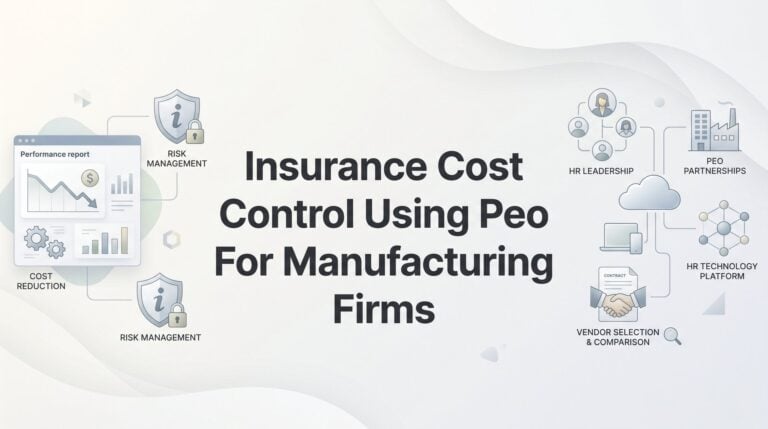
Manufacturing firms struggling with high workers’ comp premiums, health insurance costs, and OSHA-related liability can leverage insurance cost control using a PEO to access large-group buying power previously unavailable to smaller operations. This article outlines seven specific strategies that help manufacturers reduce their second or third largest P&L expense by pooling employees into larger risk groups for significantly better rates.
A proper PEO ROI analysis for logistics companies requires a framework built around the industry’s unique cost structure—multi-class workers’ comp codes, CDL compliance, seasonal hiring spikes, and multi-state regulations—not a generic calculator that ignores these variables. This guide walks logistics operators through a step-by-step methodology to determine whether a PEO partnership delivers measurable financial value for their specific operation.
Manufacturing businesses face unique workers’ comp challenges that make a well-structured PEO workers’ comp strategy for manufacturing firms essential—from managing high-risk NCCI class codes and mod rates to negotiating comp structures that accurately reflect your facility’s actual exposure. This guide provides a practical, sequential framework for auditing current risk, evaluating PEO partnership terms, and implementing claims management processes tailored specifically to manufacturing envi…
Multi-location retailers struggling with fragmented payroll, inconsistent benefits, and rising state-by-state compliance costs can achieve meaningful labor cost optimization using a PEO to consolidate workforce management across all stores. This guide breaks down exactly how franchisees and regional chains with 8 to 50+ locations can strategically leverage a Professional Employer Organization to reduce waste, standardize benefits enrollment, and control workers’ comp rates at scale.
A PEO ROI analysis for construction companies requires far more than plugging headcount into a generic calculator — it must account for trade-specific workers’ comp rates, seasonal workforce fluctuations, EMR impact, and prevailing wage compliance. This guide walks construction business owners through a realistic, industry-specific framework to accurately compare true costs before and after partnering with a PEO.
Labor cost optimization using a PEO for professional services firms offers a strategic path to reducing the 70-85% of revenue consumed by people costs—but only when implemented thoughtfully. This guide breaks down exactly how PEOs can lower payroll taxes, benefits expenses, and administrative overhead for accounting, legal, and consulting firms, while honestly addressing where the savings are real versus overhyped.
