How PEOs work across industries like construction, healthcare, startups, and multi-state employers.
Landscaping companies considering a PEO face specific tradeoffs beyond the standard sales pitch of better workers’ comp rates and HR support. This guide examines seven critical decision factors—including seasonal fee structures, control over hiring, and hidden costs—that directly impact your bottom line and crew management, helping you determine whether a PEO actually makes financial and operational sense for your landscaping business.
HVAC contractors with fewer than 50 employees struggle to compete for skilled technicians when offering employee benefits, often facing high premiums and limited options in the small-group insurance market. PEOs address this by pooling employees across multiple companies to access large-group insurance rates, potentially transforming an HVAC contractor’s ability to offer competitive health coverage and other benefits that help attract and retain experienced technicians.
HVAC contractors face unique payroll challenges including seasonal staffing fluctuations, multi-state crews, and prevailing wage requirements that standard solutions can’t handle. While HVAC PEO payroll services are marketed as comprehensive solutions, many platforms lack critical features like certified payroll tracking, charge termination fees for seasonal layoffs, or reject companies with higher workers’ comp mods—making it essential to understand which providers actually meet the specific…
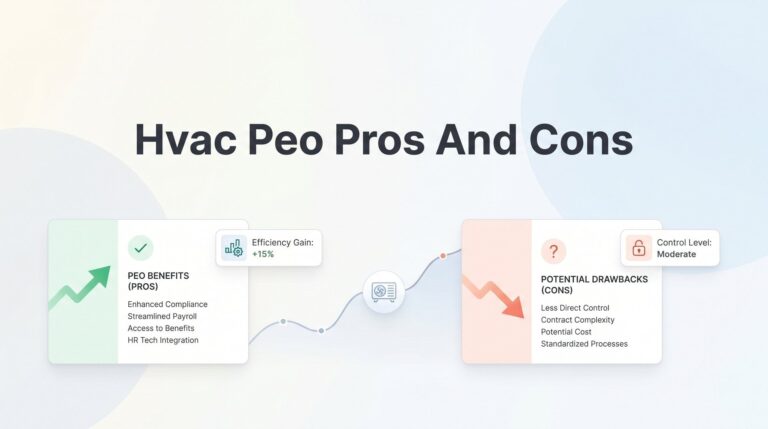
HVAC contractors face mounting HR burdens from seasonal hiring, workers’ comp costs, and multi-state compliance challenges. This practical guide examines HVAC PEO pros and cons to help you determine whether a Professional Employer Organization will genuinely solve your administrative headaches or create new complications—based on your company size, growth trajectory, and specific operational pain points rather than generic sales promises.
Residential construction companies face uniquely complex workers compensation challenges due to diverse crew risk profiles and fluctuating experience modification rates. A Residential Construction PEO Workers Compensation Program can help manage these costs and liabilities, but builders need to understand how these arrangements actually work, what hidden costs exist beyond quoted rates, and when co-employment makes strategic sense for their specific operation.
Commercial construction payroll involves complex, multi-jurisdictional compliance challenges that standard payroll software can’t handle—from prevailing wage requirements and certified reporting to union pay structures across multiple job sites. Commercial Construction PEO Payroll Services designed specifically for contractors automate these layered obligations, managing tax jurisdictions, fringe benefit tracking, and simultaneous pay structures so you’re not manually cross-referencing wage d…
When your lawn care business reaches 100 employees, you’ve entered a critical growth phase where HR complexity demands professional support but you’re not large enough for a full internal department. This guide provides seven targeted strategies for selecting a lawn care PEO that understands your industry’s unique challenges—seasonal workforce fluctuations, elevated workers’ comp risks, equipment liability, and managing dispersed crews—helping you navigate this pivotal transition with the rig…
Tree service companies face sky-high workers’ comp costs due to the inherent dangers of working at heights with heavy equipment and chainsaws. A specialized PEO for tree service companies can dramatically reduce these insurance premiums and provide safety programs tailored to arboriculture’s unique risks, but finding providers who understand the industry’s seasonal workforce needs and won’t overprice high-risk classifications requires careful evaluation.
Finding the best PEO for tree service companies requires providers who understand high-risk arborist classifications, seasonal crew management, and the unique workers’ comp challenges of chainsaw and climbing work. This guide evaluates seven PEO options specifically suited for tree care operations, from small trimming crews to multi-territory climbing teams, focusing on transparent pricing, safety protocol expertise, and flexibility for the operational realities arborists face daily.
When your plumbing company reaches 100 employees, you gain real negotiating power with PEO providers but need specific strategies to leverage it effectively. This guide outlines seven critical approaches for selecting a plumbing PEO for 100 employees that address your unique challenges—from managing workers’ comp costs across multi-state crews to handling complex payroll and compliance needs without a full internal HR department.
