How PEOs work across industries like construction, healthcare, startups, and multi-state employers.
Professional services firms face a unique challenge: they need enterprise-level benefits to compete for top talent, but rising healthcare costs—often increasing 12% annually—directly erode margins when revenue fluctuates. A PEO for professional services benefits cost containment strategy provides access to Fortune 500-level rates and risk pooling, helping smaller firms offer competitive packages while controlling costs that can’t be deferred like other business expenses.
Staffing agencies struggle with benefits management due to fluctuating workforces, variable hours, and high turnover rates. This guide presents seven practical PEO benefits structuring strategies specifically designed for staffing agencies to offer competitive packages while managing costs, addressing challenges like short-term assignments, multi-client deployments, and the need to attract quality talent without sacrificing profit margins.
When professional services firms acquire consulting groups, law firms, or accounting practices, workforce integration often determines deal success more than financials. A PEO for professional services M&A workforce integration strategy enables acquirers to rapidly harmonize benefits, maintain multi-state compliance, and create unified employee experiences during the critical transition period—protecting the talent assets that represent the core value of the acquisition while leadership focus…
Managing multiple acquired companies often means juggling incompatible payroll systems, benefit structures, and compliance workflows that create hidden costs and operational inefficiencies. This guide reveals seven proven strategies for achieving PEO workforce standardization across portfolio companies, helping private equity firms and multi-entity operators transform HR fragmentation into a strategic value creation lever while reducing per-employee costs and compliance risk.
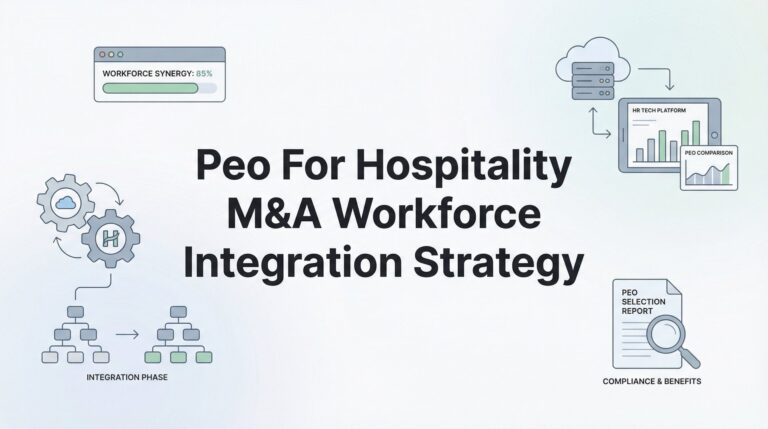
Hospitality M&A deals face unique workforce challenges including tipped employees, seasonal staffing, union agreements, and multi-state compliance that can derail deal economics if mishandled. This guide provides a step-by-step framework for using a PEO for hospitality M&A workforce integration strategy, addressing tip credit compliance, variable scheduling, high turnover, and multi-location complexity specific to hotels, restaurants, and event venues.
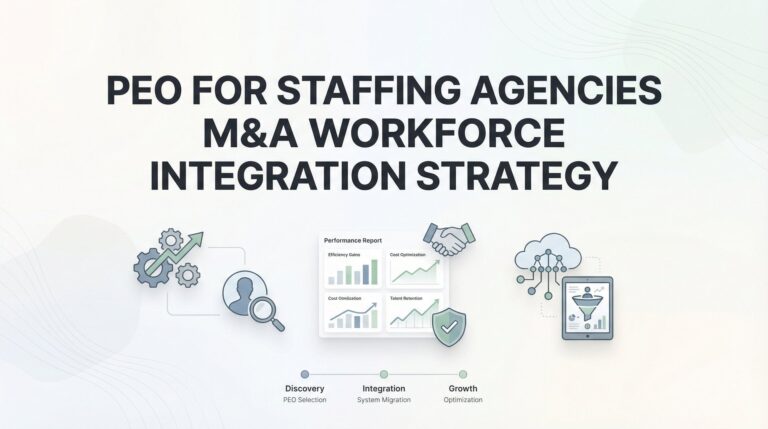
Staffing agency acquisitions create unique HR challenges as you inherit multiple payroll systems, inconsistent benefits, and complex employment arrangements across states. A PEO for staffing agencies M&A workforce integration strategy serves as a unifying layer that consolidates fragmented systems, standardizes compliance protocols, and streamlines the integration of both internal staff and temporary workers—transforming post-acquisition chaos into a coordinated operation without disrupting c…
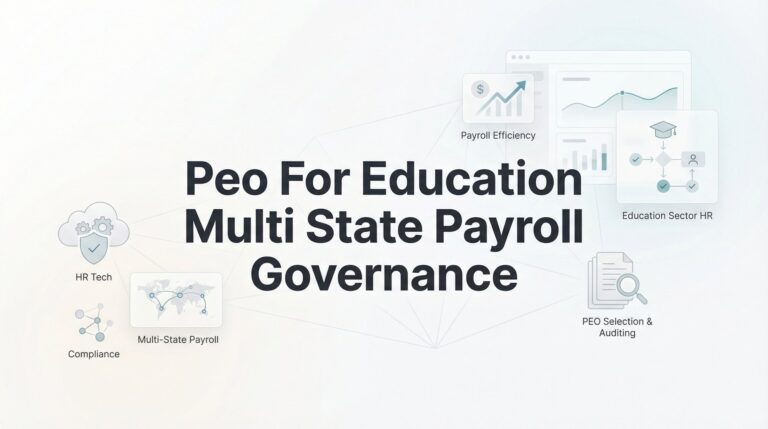
Managing educators across multiple states creates a complex payroll governance challenge that most providers aren’t equipped to handle. A PEO for education multi state payroll governance helps navigate varying state retirement systems like Texas TRS, Colorado PERA, and Arizona ASRS, each with different contribution rules, certification pay minimums, and supplemental contract requirements. This specialized approach addresses the unique intersection of education-sector compliance and multi-stat…

Law firm mergers involve unique HR complexities beyond typical M&A, including partnership structures, multi-state bar compliance, and attorney retention risks. A PEO for law firms M&A workforce integration strategy can absorb much of this burden by addressing challenges like harmonizing billable-hour compensation, managing jurisdiction-specific licensing, and retaining partners with portable client books—ensuring you don’t lose the talent that made the acquisition valuable.
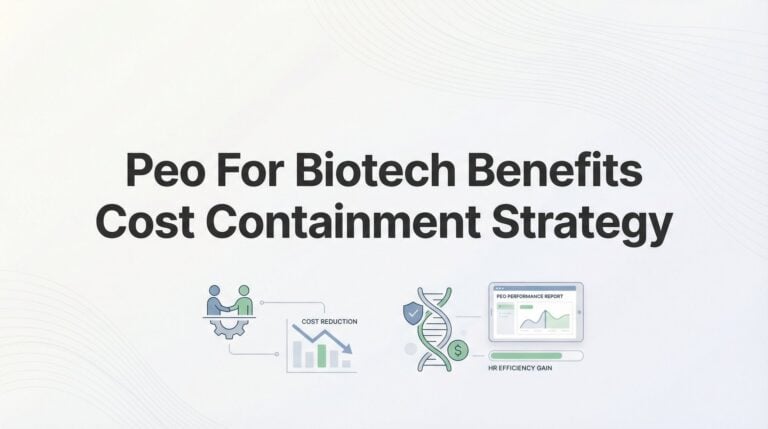
Biotech companies can significantly reduce benefits costs while maintaining competitive coverage by implementing targeted PEO for biotech benefits cost containment strategies that address their unique workforce needs. This guide reveals seven specialized approaches that account for biotech-specific factors like PhD-level talent requirements, lab exposure classifications, clinical trial cycles, and the distinct utilization patterns between research scientists and administrative staff—helping c…
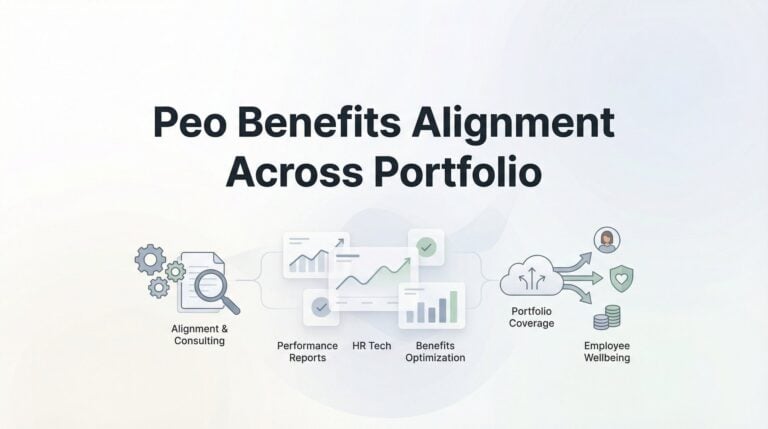
Managing benefits across multiple portfolio companies often results in a costly patchwork of PEO arrangements inherited through acquisitions or organic growth. This practical guide shows multi-company operators, PE firms, and holding companies how to achieve strategic PEO benefits alignment across portfolio companies—identifying when consolidation makes financial sense, when to maintain separate structures, and how to execute changes without operational disruption while reducing costs and imp…
