Coverage of tax responsibility, workers’ comp, liability exposure, and regulatory obligations under co-employment.
Nonprofits face the same complex employment law requirements as for-profit businesses—including FLSA overtime, ADA accommodations, and multi-state payroll regulations—but typically lack dedicated HR resources. A workforce compliance strategy using PEO for nonprofit organizations can help mission-driven teams navigate multi-state employment laws, workers’ compensation requirements, and grant-specific reporting obligations while operating within restricted budgets and limited administrative cap…
When you hire employees in new states, you’re suddenly responsible for registering with each state’s tax and unemployment agencies—a complex process most business owners don’t anticipate until it’s urgent. PEO state tax registration support can handle this multi-state compliance burden for you, but the level of service varies significantly between providers: some PEOs fully manage all registrations under their own tax IDs, others simply guide you through doing it yourself, and many fall somew…
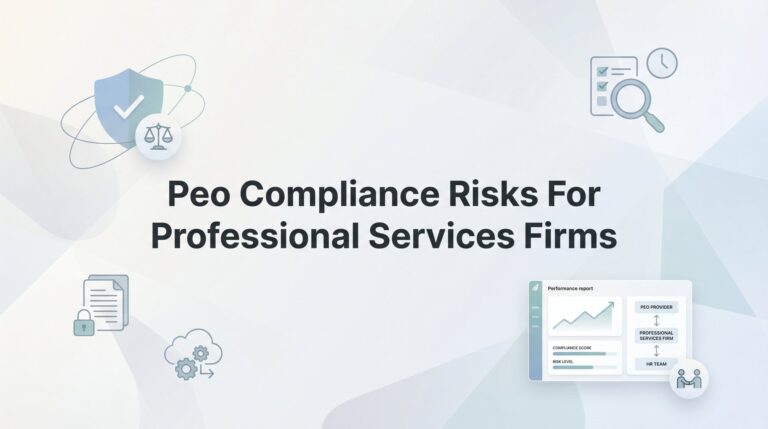
Professional services firms face unique PEO compliance risks that standard providers often overlook, including conflicts between professional licensing requirements and third-party employment arrangements, client confidentiality concerns with data handling, and partnership structures that don’t align with typical compliance frameworks. While firms meticulously manage client work, their own employment compliance—covering wage and hour rules, multi-state payroll, and worker classification—frequ…
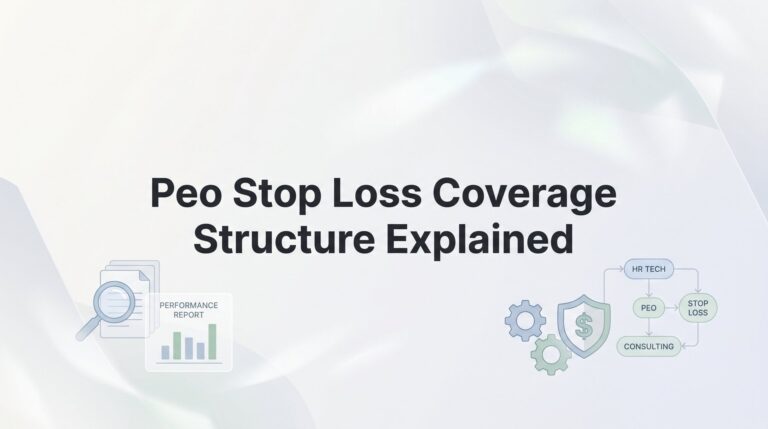
When catastrophic health claims hit—like a $400,000 leukemia treatment—most PEO clients are surprised they’re not financially devastated. That’s because of stop loss coverage, a hidden layer of protection that shields businesses from massive medical costs. Understanding the PEO stop loss coverage structure explained here is critical: it’s what separates stable renewals from 40% rate shocks and determines whether your risk pool remains financially viable when expensive claims occur.
When the Department of Labor determines that two businesses share employer responsibilities over the same workers, both can be held fully liable for wage violations—even if only one made the mistake. DOL joint employment enforcement risks have intensified for companies using PEOs, staffing agencies, or contractor arrangements, with potential penalties reaching six figures in back wages and damages for violations you didn’t directly commit.
Before signing with a PEO, understanding their regulatory capital requirements is critical to protecting your business from financial disaster. These requirements ensure PEOs maintain sufficient reserves to handle payroll taxes, benefits premiums, and workers’ compensation—safeguarding you from scenarios where your PEO collects funds but fails to forward them to the IRS or insurers, leaving you liable for potentially massive tax debts and compliance violations.
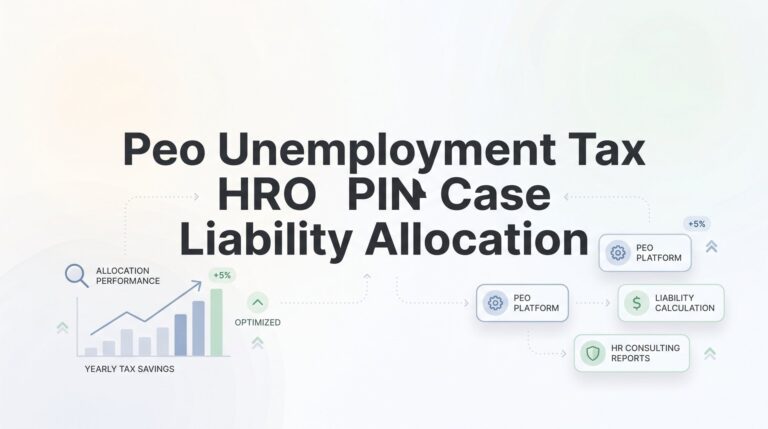
When you partner with a PEO, your unemployment insurance costs may not reflect your actual claims experience due to how the PEO allocates unemployment tax liability across its client base. Understanding PEO unemployment tax liability allocation methods before signing a contract is critical—the difference between pooled rates and experience-rated allocation can mean thousands of dollars annually, especially if your business has low turnover but you’re subsidizing higher-risk companies in the s…
When your PEO’s billing doesn’t align with your general ledger, financial reporting becomes a monthly reconciliation nightmare. This guide walks you through building a PEO payroll consolidation framework for financial reporting compliance that solves timing mismatches, maps PEO invoice categories to your chart of accounts, and creates the documentation trail your auditors demand—eliminating the gap between co-employment operations and accurate financial statements.
Understanding indemnification clauses in PEO agreements is critical for accurately modeling your true employment risk costs. When employment claims arise, these contract provisions determine whether you or your PEO bears the financial burden of legal defense and settlements—potentially shifting tens of thousands in unexpected costs to your balance sheet if the language carves out supervisory decisions, hiring practices, or workplace safety issues from PEO coverage.
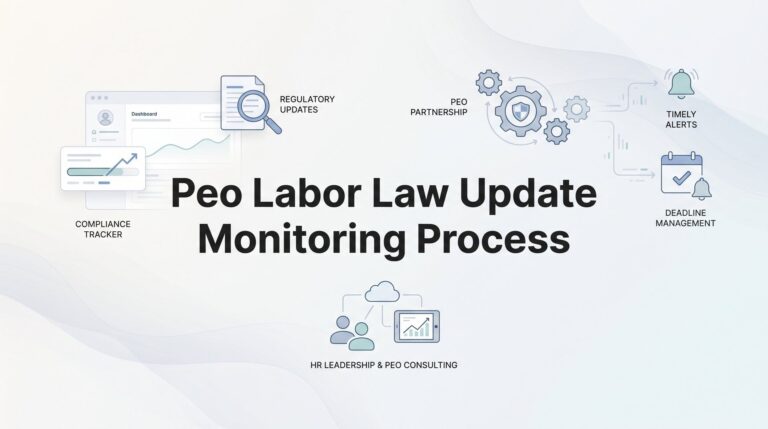
Professional Employer Organizations use varying approaches to track employment law changes, from sophisticated legal teams monitoring federal, state, and local regulations in real-time to basic newsletter subscriptions. This article reveals how the PEO labor law update monitoring process actually works behind the scenes and why understanding your provider’s compliance tracking system matters when you’re responsible for staying current across multiple jurisdictions with conflicting requirements.
