Coverage of tax responsibility, workers’ comp, liability exposure, and regulatory obligations under co-employment.

When you join a PEO, your workers’ comp and health insurance expenses don’t disappear—they’re just reclassified under a bundled administrative fee because the PEO holds the master policies, not your company. Understanding these PEO master policy accounting implications is critical for business owners, as this structural change affects how costs appear on financial statements, how your CPA categorizes expenses, and what lenders or auditors see when reviewing your books.
Partnering with a PEO transfers critical payroll and tax responsibilities, but hidden PEO financial reporting risks can expose your business to IRS penalties, audit complications, and reconciliation nightmares. This guide identifies seven specific financial reporting vulnerabilities in PEO relationships—from tax deposit failures to opaque billing—and provides actionable strategies to monitor, mitigate, and prevent costly problems before they impact your bottom line.
This comprehensive peo workers comp audit preparation guide helps business owners navigate the verification process when actual payroll is compared against initial estimates under a PEO arrangement. Learn exactly what documentation to gather, how to avoid common pitfalls like employee classification errors and missing subcontractor certificates, and ensure a smooth audit that prevents unexpected premium charges or delays.
A PEO loss prevention program structure directly impacts your workers’ compensation premiums, but its value depends entirely on your business risk profile. While construction companies with frequent claims need robust, proactive loss control services, remote software companies may not benefit from extensive programs. Understanding whether your PEO offers genuine risk management that lowers your experience modification rate—versus basic reactive claims handling—is essential for determining act…
A PEO workers comp incident reporting system directly impacts your experience modification rate, compliance risk, and long-term costs—yet most businesses overlook it when choosing a provider. Understanding how your PEO handles injury reporting, claim handoffs, and regulatory deadlines is critical to avoiding penalties and maintaining the operational efficiency you hired them to deliver.
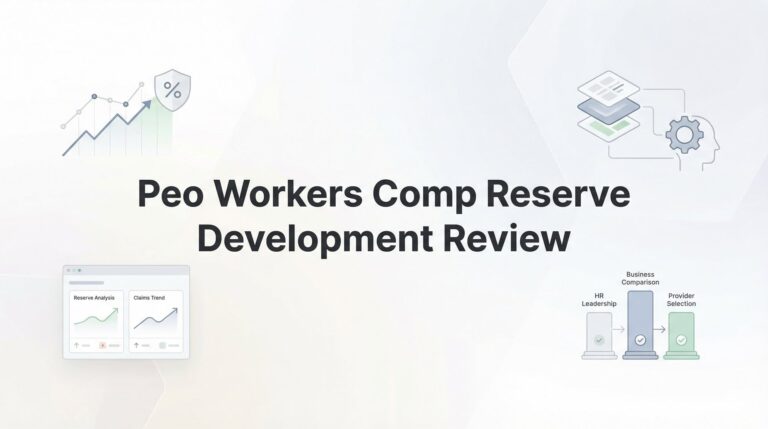
Understanding PEO workers’ comp reserve development review is critical for controlling your insurance costs. This guide explains how to analyze your PEO’s reserve development reports, interpret key figures that impact your experience modification rate, and identify warning signs of unfavorable reserve trends before they trigger premium increases at renewal—giving you the knowledge to ask the right questions and protect your bottom line without needing actuarial expertise.
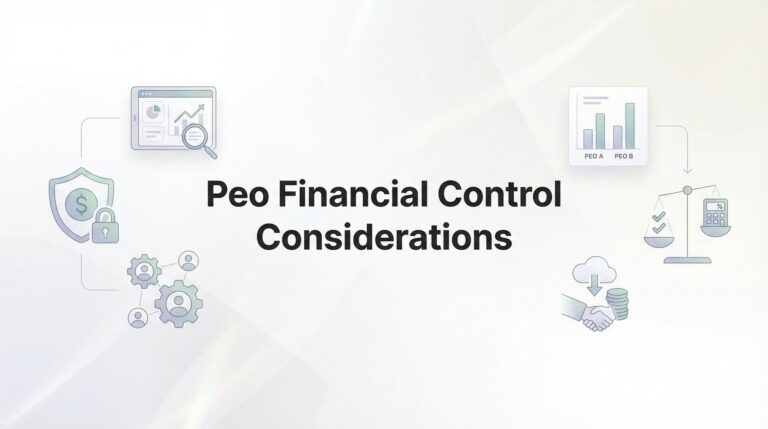
Before signing with a PEO, understand the critical financial control trade-offs that affect your business operations. This guide examines seven key PEO financial control considerations, including cash flow timing, fund visibility, and reporting accuracy—factors that directly impact your operating capital and decision-making ability. Learn the specific control dynamics that determine whether a PEO partnership supports or constrains your business.
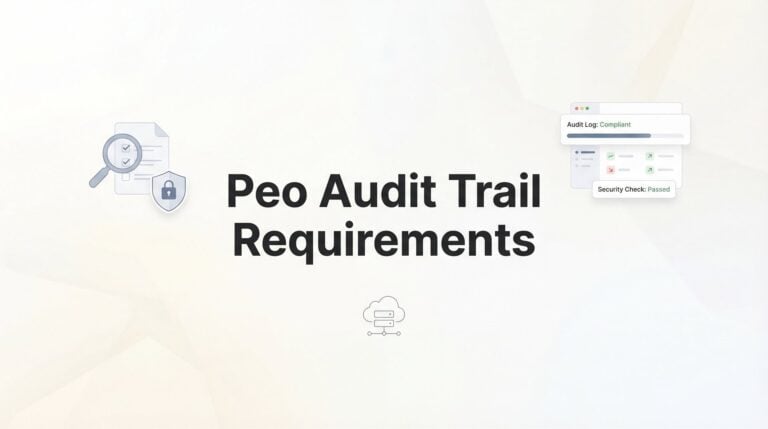
When a wage claim or compliance investigation hits your business, your PEO’s audit trail capabilities determine whether you have immediate documentation or a costly legal problem. Comprehensive PEO audit trail requirements should include timestamped records of all payroll transactions, manager approvals, schedule changes, and calculation histories that prove exactly what happened with every employee hour and payment—documentation that can resolve disputes in hours instead of turning into expe…
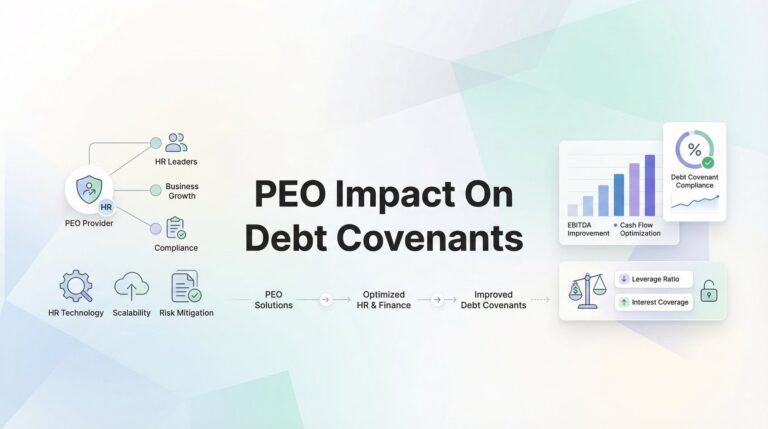
Switching to a PEO can alter how payroll and employment liabilities appear on financial statements, potentially affecting the debt ratios lenders use to monitor covenant compliance. Before signing a PEO agreement, business owners should understand the PEO impact on debt covenants, particularly if they have revolving credit facilities or loans tied to EBITDA or fixed charge coverage ratios, as the transition may trigger recalculation requirements or technical violations without proper coordina…
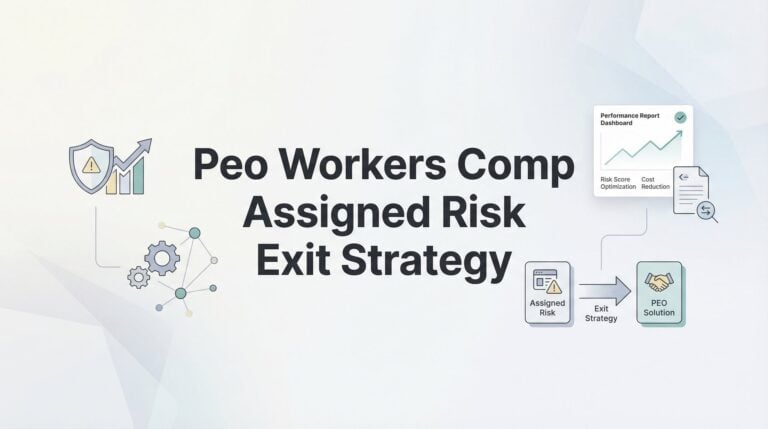
Businesses trapped in assigned risk workers’ compensation pools face premium rates and limited options, but a Professional Employer Organization (PEO) offers a proven exit strategy. This guide provides a step-by-step approach to leveraging a PEO’s master workers’ comp policy to escape assigned risk, rebuild insurability, and eventually qualify for standard market coverage—including how to find accepting PEOs, negotiate timelines, and avoid common pitfalls that keep businesses stuck.
