Coverage of tax responsibility, workers’ comp, liability exposure, and regulatory obligations under co-employment.
Venture-backed startups face unique workers’ compensation challenges including rapid hiring, multi-state operations, and investor scrutiny on burn rate. This guide explains how to strategically structure workers’ comp through a PEO for venture-backed startups, covering advanced workers comp structuring decisions that impact funding rounds, experience mods, and cost optimization—going beyond basic PEO setup to address the specific needs of VC-funded companies managing diverse employee classifi…
Venture-backed startups expanding across multiple states face critical compliance challenges that directly impact valuations and funding rounds. A PEO for venture-backed startups enterprise compliance risk management helps founders address workers’ comp, employment classification, and state labor law requirements before they become deal-breaking issues during Series B due diligence or acquisition talks.
Venture-backed startups face unique employment litigation risks that can derail funding and acquisitions, especially when using a PEO for venture backed startups litigation risk mitigation framework. This guide shows how to structure clear accountability between your team and your PEO, properly document co-employment relationships, and build HR infrastructure that protects against claims arising from rapid hiring, equity compensation, and multi-state expansion—creating the clean employment pr…

Workers’ compensation costs can significantly impact EBITDA across private equity portfolios, but strategic PEO structuring transforms this expense into a competitive advantage. This guide provides PE operators with a tactical framework for managing workers’ comp across portfolio companies with varying risk profiles—from optimizing experience mods and negotiating master policies to preserving individual exit flexibility while avoiding the common pitfall of letting underperforming companies di…
Private equity firms acquiring portfolio companies often inherit fragmented HR systems with inconsistent compliance practices, outdated policies, and significant liability exposure that can derail value creation timelines. A PEO for private equity portfolio companies delivers enterprise compliance risk management infrastructure without requiring custom builds at each acquisition, standardizing employment practices, workers’ compensation, and regulatory adherence across the portfolio while pro…
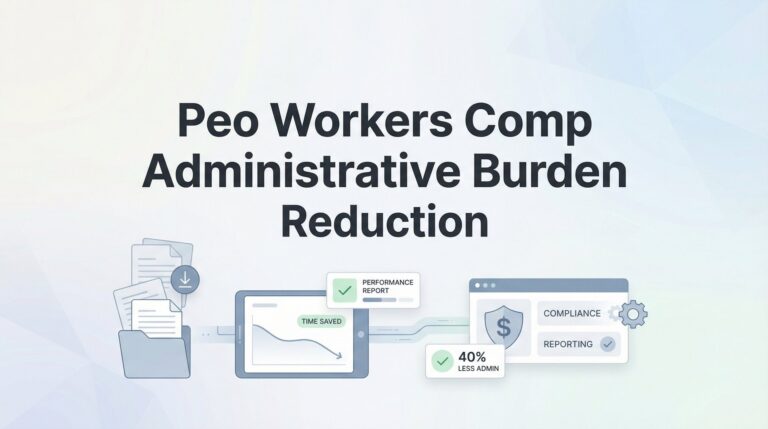
Managing workers’ comp can consume hours of HR time weekly through certificate tracking, claims coordination, audits, and classification code management—costs that multiply as companies grow. This guide explores seven proven strategies for using a PEO to significantly reduce peo workers comp administrative burden, focusing on practical implementation tactics like consolidating under master policies, streamlining claims management, and automating compliance tasks rather than surface-level bene…
Choosing a PEO doesn’t mean you’re stuck with whatever workers’ comp carrier they use—and that carrier choice directly impacts your premiums and claims outcomes. This step-by-step guide shows business owners how to evaluate and influence the PEO workers comp carrier selection process, whether you’re vetting a new PEO partnership or auditing your current arrangement to reduce one of your largest employment expenses.
When using a PEO for workers’ compensation, business owners remain responsible for accurate job classifications, payroll reporting, and safety documentation despite the PEO handling the policy. This peo workers comp compliance audit checklist identifies seven critical checkpoints specific to co-employment arrangements that can prevent premium adjustments, back-charges, and coverage gaps during audits.
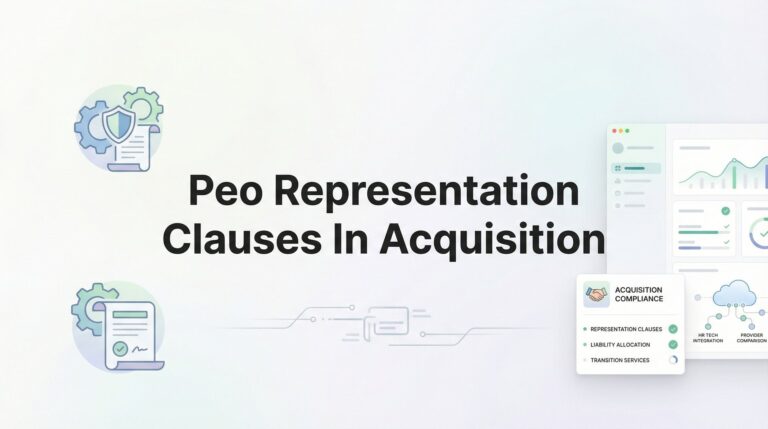
PEO representation clauses in acquisition agreements require sellers to personally guarantee third-party PEO compliance and performance—creating liability exposure for issues beyond their control. Before signing, business owners must understand these aren’t standard boilerplate provisions but specific contractual commitments that can trigger post-closing financial obligations if PEO-related compliance gaps, misclassifications, or disputes emerge after the sale.
Managing workers’ compensation across multiple locations creates compliance headaches and financial risk due to varying state regulations, classification codes, and rate structures. This guide provides seven actionable PEO workers’ comp multi-location coverage strategies that help businesses achieve consistent protection, control premiums, and maintain compliance across all locations without building an internal workers’ comp team—focusing on practical operational decisions rather than generi…
