Coverage of tax responsibility, workers’ comp, liability exposure, and regulatory obligations under co-employment.
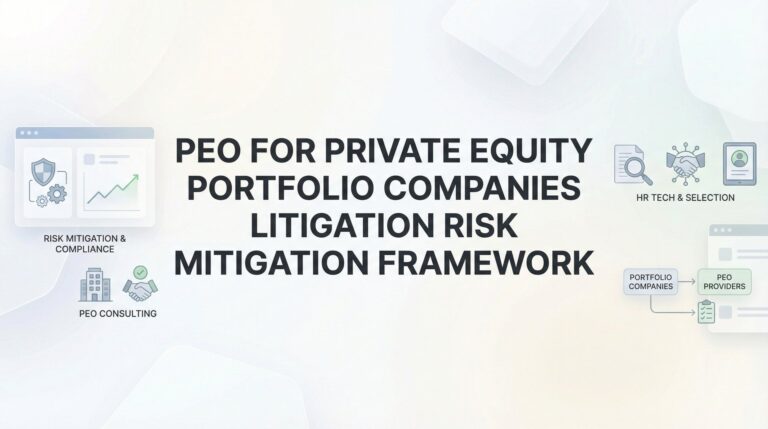
Private equity firms managing multiple portfolio companies face compounded employment litigation risk that can threaten fund-wide performance through discovery exposure and reputational damage. This framework demonstrates how to strategically deploy a PEO for private equity portfolio companies litigation risk mitigation framework across your holdings—moving beyond individual company solutions to create an integrated, systematic approach that assesses exposure, selects compliance-focused PEO p…
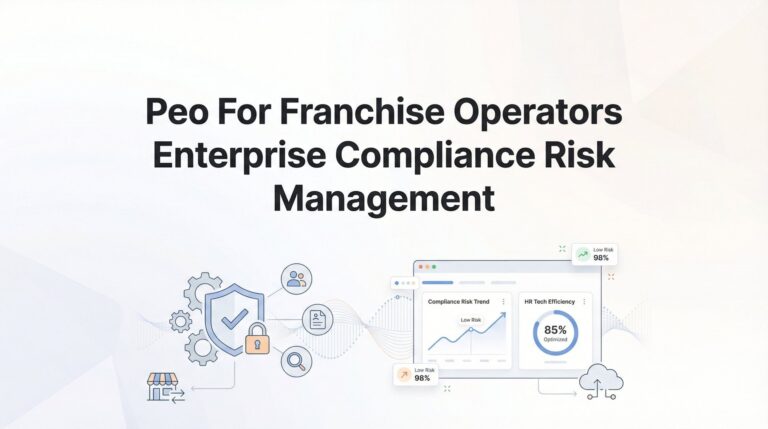
Franchise operators managing multiple locations across different states face complex, layered compliance challenges—from varying minimum wage laws and break requirements to predictive scheduling mandates and meal break rules. A PEO for franchise operators provides enterprise compliance risk management by navigating the intersection of franchisor brand standards, federal mandates, state regulations, and local ordinances, helping prevent costly violations and class action lawsuits while maintai…
Franchise operators face unique litigation risks managing employment practices across multiple locations while navigating franchisor systems, multi-state wage laws, and high turnover. A PEO for franchise operators litigation risk mitigation framework addresses these complexities by providing specialized compliance systems that standard HR approaches can’t handle, protecting your entire operation from employment-related lawsuits that exploit the franchise structure’s legal gray zones.
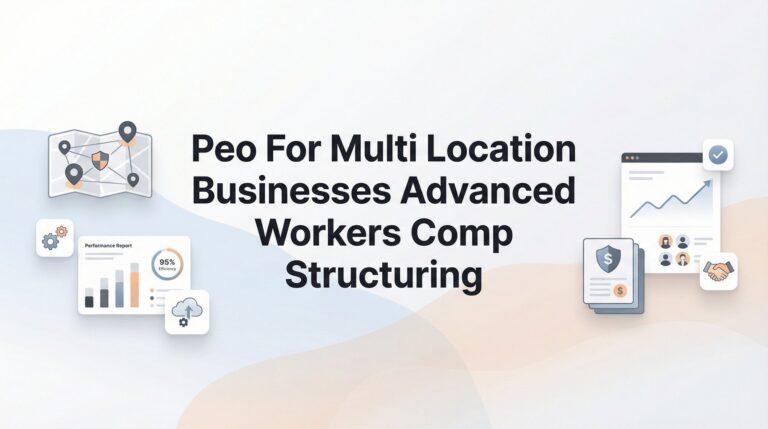
Multi-location businesses struggle with workers’ comp complexities—different state rates, varying classification codes, and managing multiple policies across facilities. This tactical guide shows how PEOs for multi-location businesses enable advanced workers’ comp structuring through master policy optimization, state-specific classification management, exposure auditing, and reporting systems that prevent costly compliance gaps before they emerge.
Managing a multi-location business means navigating different employment laws in every state you operate—from paid leave mandates to minimum wage changes and workers’ comp requirements. A PEO for multi-location businesses provides centralized enterprise compliance risk management, helping you maintain consistent HR practices across all jurisdictions without building separate legal departments in each market, though it requires careful evaluation to determine if it’s the right solution for you…
Managing multi-location businesses across different states creates compounding litigation risk when employment practices, documentation standards, and policy interpretations vary by location. A PEO for multi-location businesses litigation risk mitigation framework addresses this challenge by standardizing compliance across jurisdictions—from California’s meal break rules to New York’s harassment training requirements—preventing the costly exposure that occurs when inconsistent treatment of si…
Call centers face unique compliance challenges including TCPA violations costing up to $1,500 each, state-by-state telemarketing regulations, PCI-DSS requirements, and multi-state labor laws complicated by high turnover. A PEO for call centers enterprise compliance risk management can handle these burdens by managing I-9 verification, benefits administration, and regulatory documentation—but success depends on structuring the partnership correctly from the start to address industry-specific r…
Understanding PEO workers comp actuarial considerations helps business owners look beyond surface-level rate quotes to evaluate the underlying pricing mechanisms—loss projections, risk pooling, reserve estimates, and classification assumptions—that determine actual costs. By grasping how PEOs price workers compensation actuarially, you gain negotiating leverage to identify inflated proposals, challenge assumptions, and determine whether a pooled PEO structure genuinely saves money or if a sta…
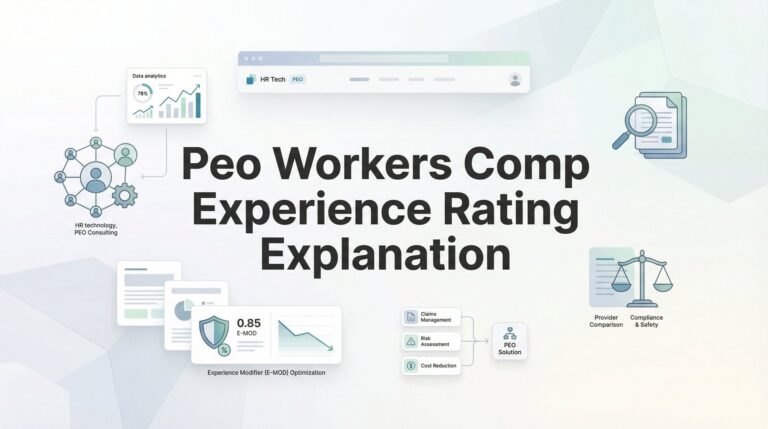
When your PEO workers comp premium jumps unexpectedly, understanding PEO workers comp experience rating explanation is crucial to knowing whether you’re paying fairly or subsidizing other companies’ claims. This guide cuts through the opacity of PEO pricing structures to show you exactly how your claims history connects to your premiums, what experience rating actually measures, and which questions to ask your PEO to determine if you’re getting a fair deal based on your own risk profile rathe…
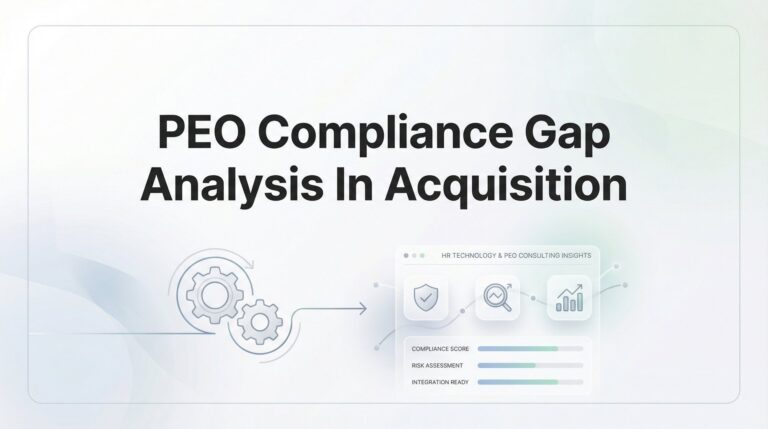
When acquiring a company using a PEO or integrating one into your existing arrangement, conducting a thorough PEO compliance gap analysis in acquisition is critical to avoid deal-breaking issues and costly post-close surprises. This systematic guide covers the essential due diligence steps—from requesting key documents and understanding co-employment agreement limitations to identifying which compliance responsibilities fall outside the PEO’s scope and prioritizing findings within tight deal …
