Coverage of tax responsibility, workers’ comp, liability exposure, and regulatory obligations under co-employment.
Landscaping companies face constant litigation risks from worker classification audits, injury claims, and wage disputes—challenges inherent to seasonal staffing and physical work. A PEO for landscaping companies litigation risk mitigation framework addresses these vulnerabilities by providing compliant HR systems, proper worker classification protocols, documented safety training, and accurate payroll processing that help protect your operation from the costly legal exposures that threaten p…
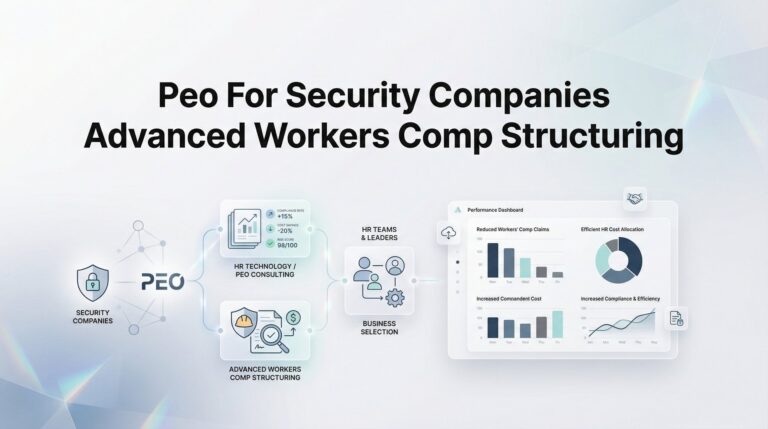
Security companies face workers’ comp premiums consuming 15-25% of payroll due to high-risk classification codes that traditional insurers avoid. This guide provides mechanical steps for PEO for security companies advanced workers comp structuring, including how to separate administrative from field personnel, negotiate experience mod protections, and avoid contract traps that force you to pay for risk you don’t actually carry—critical for armed security, patrol, executive protection, and eve…
Security companies face unique litigation risks from armed personnel, physical confrontations, and complex labor compliance issues that most lack dedicated teams to manage. A properly structured PEO for security companies litigation risk mitigation framework provides systematic protection through documented training protocols, compliant hiring processes, and defensible HR practices—transforming your company from vulnerable to legally defensible when lawsuits inevitably arise.
Managing a janitorial enterprise with distributed crews across multiple sites creates unique compliance challenges that standard PEO services may not adequately address. While a PEO for janitorial services enterprise compliance risk management can streamline HR administration and workers’ comp, the real operational risks—misclassification, overnight supervision gaps, safety protocol enforcement, and high turnover—require specialized solutions beyond basic co-employment arrangements that under…
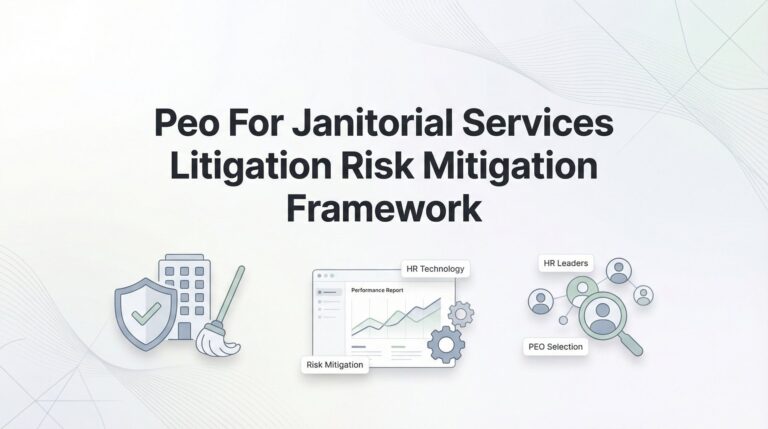
Janitorial companies face severe litigation risks from wage misclassification, workplace injuries, harassment claims, and I-9 compliance gaps across dispersed worksites. This guide shows how to strategically structure a PEO for janitorial services litigation risk mitigation framework that addresses your industry’s specific legal exposures—from high turnover and overnight shifts to scattered workforce management—creating a systematic defense against the compliance blind spots that plaintiffs’ …
Managing multi-state warehouse operations creates compounding compliance challenges across OSHA requirements, workers’ comp claims, and state-specific employment laws that standard HR systems can’t handle. A PEO for warehousing enterprise compliance risk management consolidates regulatory obligations, standardizes safety protocols across facilities, and provides specialized expertise to reduce exposure while your internal team focuses on operations.
Warehousing operations face concentrated litigation risks from wage-and-hour violations, workers’ comp disputes, and OSHA citations that stem from shift complexity and operational inconsistencies. A PEO for warehousing litigation risk mitigation framework helps warehouse operators systematically address these exposures through co-employment structures that strengthen compliance systems, standardize HR processes across shifts, and clarify which risks transfer to the PEO versus those requiring …
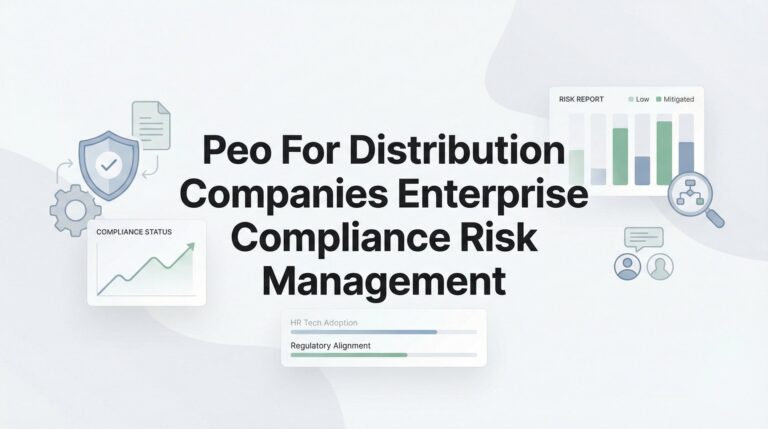
Distribution companies face complex compliance challenges across OSHA warehouse safety, FMCSA driver regulations, workers’ comp classifications, and multi-state employment laws—where a single violation can exceed annual PEO costs. This guide examines how a PEO for distribution companies enterprise compliance risk management can reduce administrative burden and mitigate certain HR-related risks, while clarifying which operational compliance issues remain your responsibility and how to evaluate…
A PEO partnership can reduce employment liability, but only when deliberately aligned with your company’s legal risk landscape. This practical guide provides a step-by-step framework for integrating PEO services with legal risk management—covering exposure audits, accountability boundaries, and monitoring systems to prevent costly gaps in your co-employment arrangement.
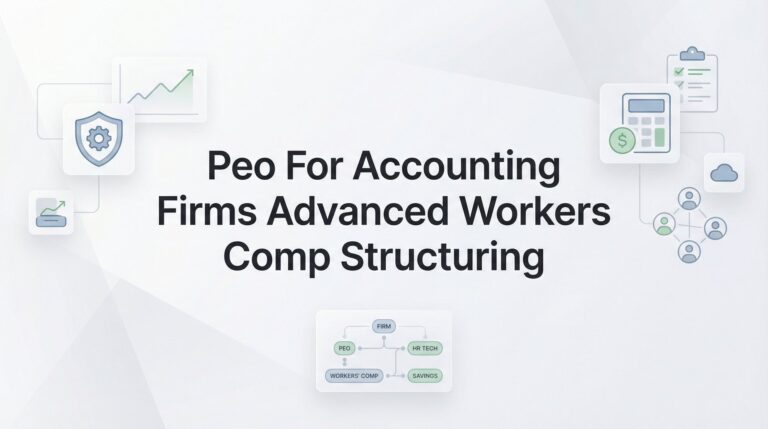
Accounting firms often overpay for workers compensation insurance due to broad industry classifications that don’t reflect their actual low-risk profile. A PEO for accounting firms with advanced workers comp structuring can unlock significant savings, but only if you move beyond default arrangements to actively architect coverage that matches your firm’s specific risk exposure and claims patterns.
