Coverage of tax responsibility, workers’ comp, liability exposure, and regulatory obligations under co-employment.
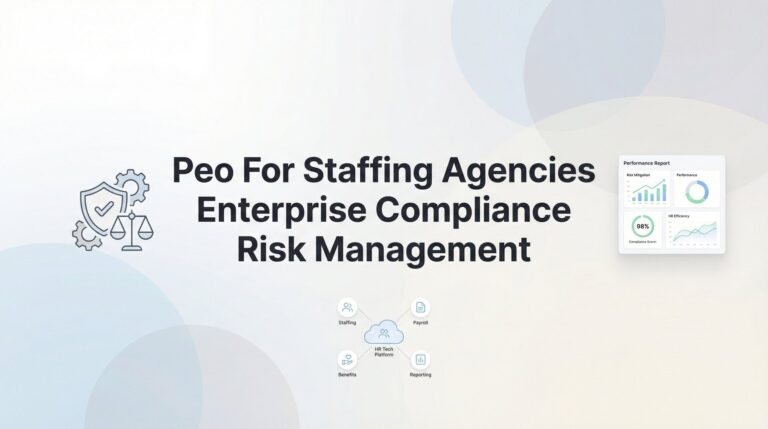
Staffing agencies face unique compliance challenges managing workers across multiple jurisdictions and client sites, operating in an already complex co-employment structure. A PEO for staffing agencies enterprise compliance risk management must navigate layered employment relationships, fluctuating headcount, and multi-state regulatory requirements—but adding a third party to an existing co-employment model introduces new contractual and liability considerations that require careful evaluatio…

Most business owners trust their PEO to handle workers’ comp compliance, but classification errors, premium miscalculations, and documentation gaps often surface during state audits—leaving you liable for penalties. This guide provides a practical framework for conducting quarterly or annual PEO workers’ comp regulatory compliance reviews, helping you identify red flags, request the right documentation, and catch compliance issues before regulators do.
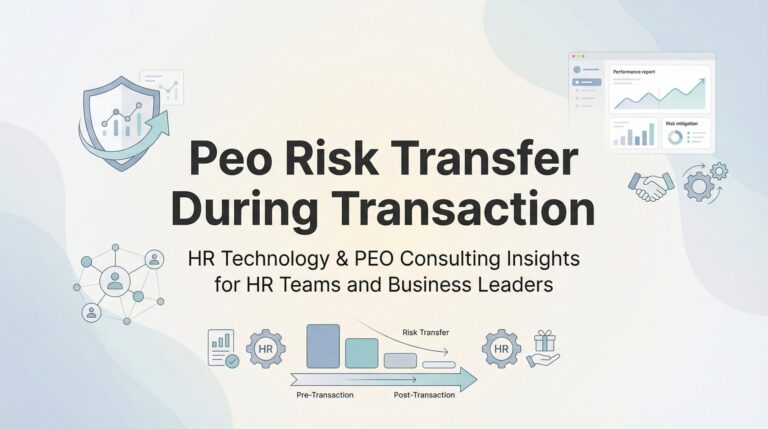
When you sign a PEO agreement, employment risk doesn’t transfer completely—it splits in specific, often counterintuitive ways. Understanding peo risk transfer during transaction is critical because co-employment means certain liabilities shift to the PEO while others remain your responsibility, and the dividing line isn’t always clear until a claim arises. The PEO typically handles payroll taxes and workers’ compensation, but decision-making authority determines who’s liable when employment d…

Most business owners overlook PEO contract indemnity clause risks while negotiating agreements, focusing instead on pricing and benefits. These often one-sided provisions determine who pays when problems arise, and poorly structured clauses can unexpectedly shift significant liability and costs from your PEO partner onto your company’s balance sheet.
Before signing a PEO contract, understanding the indemnification clause is critical—it determines who pays when employment claims, payroll tax issues, or benefits errors occur. A thorough PEO indemnification clause analysis reveals that co-employment structures create complex liability scenarios where poorly written terms can leave business owners financially responsible for the PEO’s mistakes, potentially costing more than a year’s worth of service fees.

When a discrimination claim hits your business, your PEO agreement probably won’t protect you the way you think. Courts focus on who made the actual employment decisions that led to the lawsuit—and that’s typically still you, the business owner, regardless of co-employment arrangements. Understanding PEO liability in discrimination claims means recognizing that cutting checks and handling benefits doesn’t transfer legal responsibility for hiring, firing, and workplace decisions that trigger l…
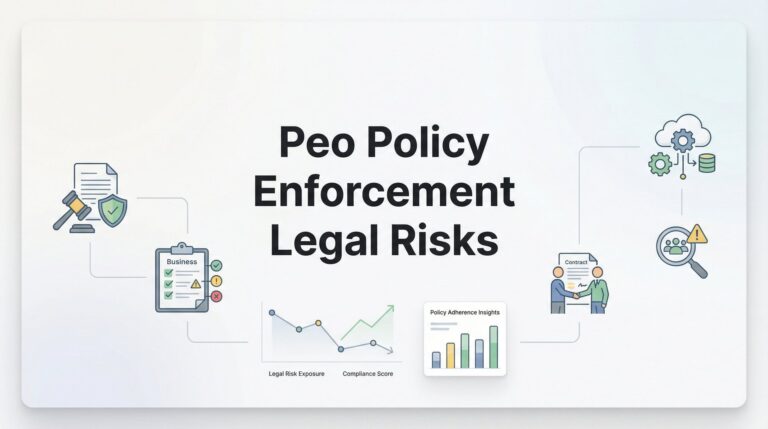
Partnering with a PEO creates a co-employment relationship where unclear responsibility for policy enforcement can lead to wrongful termination claims, discrimination lawsuits, and wage violations. This guide addresses the specific friction points that increase PEO policy enforcement legal risks—including documentation responsibilities, termination approval processes, and maintaining consistency when generic PEO policies don’t align with your operational needs—with seven practical strategies …
When an EEOC complaint arrives, many business owners assume their PEO handles it completely—but co-employment means PEO EEOC complaint handling responsibility is often split between both parties. Who responds, who pays legal costs, and who’s ultimately liable depends on your contract terms and which party made the employment decision that triggered the complaint, leaving business owners potentially exposed even with a PEO partnership.
When a harassment complaint arrives, most business owners either assume their PEO handles everything or nothing—both are wrong. The PEO role in harassment investigations is actually a shared responsibility with specific boundaries that aren’t always clear until you’re mid-crisis. Understanding who investigates, who decides outcomes, and where your liability sits before a complaint lands protects your business from costly missteps that happen when roles overlap or fall through the cracks.
Real estate enterprises face unique compliance challenges including multi-state licensing, contractor classification across jurisdictions, and complex workforce structures mixing W-2 employees with 1099 agents. A PEO for real estate enterprise compliance risk management must address industry-specific exposures like property management labor laws and fair housing requirements—not just standard payroll functions—to truly mitigate the regulatory risks that come with operating across state lines …
