Coverage of tax responsibility, workers’ comp, liability exposure, and regulatory obligations under co-employment.
A PEO legal risk audit checklist reveals the hidden liability gaps in co-employment relationships that most business owners overlook. This comprehensive guide examines seven critical audit areas—from co-employment agreement language to documentation handoff points—that determine whether your PEO arrangement truly protects your company or quietly exposes you to legal risk you’re unaware of until litigation occurs.
Court rulings have established critical boundaries for PEO co-employment liability that directly affect business owners’ legal exposure. This analysis examines seven key PEO co employment court precedents that determine who bears responsibility when workplace disputes, injury claims, or employment lawsuits arise—revealing which contractual protections actually hold up in court and which clauses fail when you need them most.

Business owners partnering with a PEO often assume they’ve transferred worker misclassification liability, but in most co-employment arrangements, the legal and financial risk remains with the employer. If the IRS or Department of Labor determines workers were improperly classified as independent contractors instead of W-2 employees, business owners face substantial penalties including back taxes, unpaid overtime claims, and benefit reimbursements—even though the PEO handles payroll processin…
PEO regulatory enforcement risks often blindside businesses because the co-employment model creates shared liability that hits from unexpected directions. While PEOs handle HR administration, enforcement actions from agencies like the DOL, EEOC, and OSHA frequently target both the PEO and client company, creating joint liability for wage violations, discrimination claims, worker classification issues, and safety compliance—even when businesses assume their PEO partnership shields them from re…
When you engage a PEO, the co-employment structure fundamentally changes how labor costs appear in your financial statements, creating potential confusion for shareholders and board members. The PEO impact on shareholder reporting is significant: traditional payroll line items are replaced with bundled PEO invoices that combine wages, taxes, benefits, and fees, while headcount metrics may appear disconnected from expense trends, requiring finance teams to proactively explain these structural …
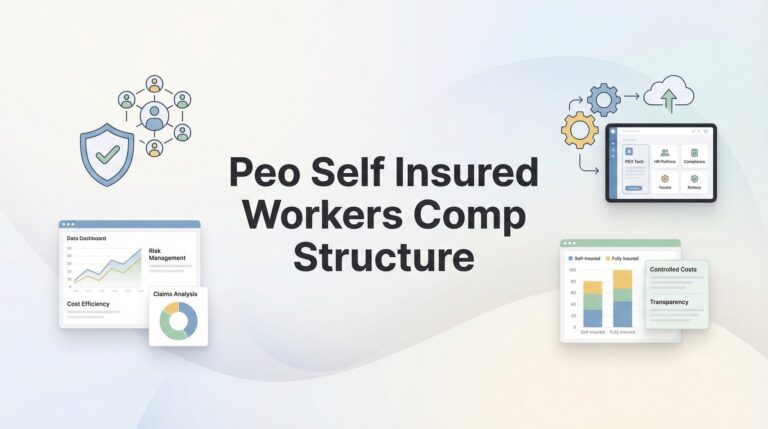
Most business owners don’t understand their PEO’s workers’ comp arrangement until a claim arises or renewal pricing seems inconsistent. The peo self insured workers comp structure operates differently than traditional fully-insured models—the PEO carries the financial risk of your claims rather than simply administering coverage, which directly impacts your pricing calculations, what happens when you leave the arrangement, and whether you’re subsidizing other companies’ claims experience.
PEO regulatory reporting legal risks don’t disappear when you outsource—employers remain liable when payroll tax filings, EEO-1 reports, or unemployment filings fail. This guide provides seven practical strategies to protect your business from enforcement actions in co-employment arrangements, focusing on operational safeguards that address where reporting failures actually occur and how to maintain accountability despite shared administrative responsibilities.
PEO revenue recognition considerations require careful attention because the legal structure of PEO arrangements—where the PEO technically employs your workers—doesn’t always match the economic reality of who bears the costs and controls the work. Understanding how to properly categorize PEO-related expenses, from payroll costs to administrative fees, is essential for accurate financial reporting and avoiding audit complications that arise from the unique way money flows through these co-empl…
PEO risk allocation between parties isn’t straightforward—the co-employment model creates a shared liability structure where some risks transfer to the PEO, some remain with the client company, and others fall into gray areas only clarified when problems arise. Most business owners mistakenly assume signing a PEO agreement offloads most HR liability, but the actual risk distribution depends on specific contract terms, state regulations, and the nature of each compliance issue or claim.
Partnering with a PEO creates a co-employment relationship where legal responsibilities are shared, not transferred. While PEOs handle day-to-day HR functions, business owners remain liable for compliance gaps the IRS or Department of Labor may uncover. Implementing PEO legal oversight best practices helps you maintain necessary visibility into wage claims, worker classification, and benefits administration without micromanaging every decision, protecting your business from unexpected legal e…
