Coverage of tax responsibility, workers’ comp, liability exposure, and regulatory obligations under co-employment.
Indemnification clauses in PEO agreements explained through a compliance framework reveal how risk is allocated between employers and PEO providers—often in ways that surprise business owners. Understanding these contractual provisions is essential for avoiding unexpected financial exposure from lawsuits, regulatory fines, and employment disputes that many assume their PEO automatically covers.
Many business owners assume partnering with a PEO transfers their state wage and hour liability under PEO co-employment arrangements, but that assumption can be costly. This article breaks down exactly who bears legal and financial responsibility when wage and hour claims arise, and why the gap between perceived and actual PEO coverage often leaves employers exposed.
Reviewing PEO data ownership clauses before signing can prevent costly disputes over employee records, payroll data, and historical files if you ever need to exit the relationship. This guide provides a practical peo data ownership clauses review risk mitigation strategy to help business owners identify problematic contract language, protect data access rights, and build safeguards against data loss during PEO transitions.
Understanding PEO workers comp dividend qualification rules is essential before signing any agreement, as the actual payout mechanics—including loss ratio thresholds, pool performance requirements, and individual account eligibility criteria—are rarely explained clearly during the sales process. This guide breaks down exactly what determines whether you qualify for a dividend and how the calculation works, so you can accurately evaluate what’s being offered.
Understanding PEO dispute resolution provisions explained within your compliance framework is critical before signing any co-employment agreement. This guide breaks down what dispute resolution clauses actually mean for business owners, covering arbitration terms, discovery rights, venue requirements, and the specific protections your compliance framework must include to avoid costly, one-sided outcomes when billing disputes, workers’ comp mishandling, or service failures arise.
When an employee files a workers’ comp claim through a PEO arrangement, most business owners discover too late that the PEO claims management oversight structure involves multiple third-party organizations making critical decisions about reserves, medical treatment, and claim resolution without employer visibility—creating costly gaps that inflate experience mods and leave injured workers feeling unsupported.
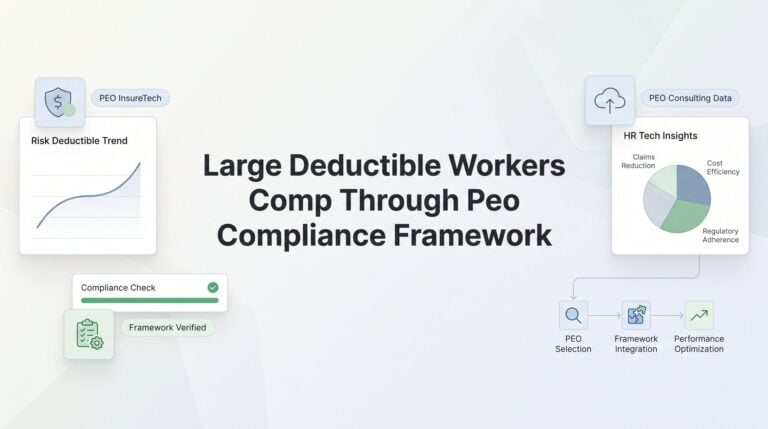
Employers considering large deductible workers comp through a PEO compliance framework face unique challenges where co-employment structures create financial and regulatory ambiguity beyond standard high-deductible policies. This guide breaks down the compliance obligations, contractual risks, and documentation requirements mid-size and larger employers must understand before entering or maintaining these complex arrangements.

Understanding benefit fiduciary liability under the PEO model compliance framework is critical for business owners who assume co-employment transfers all ERISA exposure to their PEO provider. Because fiduciary responsibility follows discretion rather than contracts, employers who influence benefit decisions retain personal liability for compliance failures—making a structured internal framework essential to protecting both the business and its leadership.
Understanding joint employer liability allocation in PEO contracts is critical before signing—what the sales pitch implies and what the contract actually delivers are often very different. This practical breakdown clarifies which employment liabilities genuinely transfer to the PEO and which remain squarely with the business owner, helping you make informed decisions about real risk exposure.
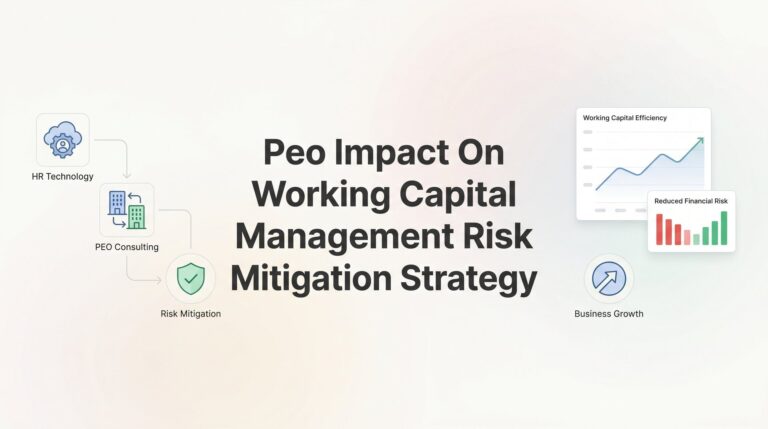
A PEO impact on working capital management and risk mitigation strategy goes beyond basic HR outsourcing — it fundamentally restructures how payroll taxes, workers’ comp premiums, and compliance costs hit your cash flow. This analysis breaks down the financial mechanics for business owners and CFOs, covering both the genuine liability transfer benefits and the potential cash flow constraints that can emerge when choosing the wrong provider.
