Coverage of tax responsibility, workers’ comp, liability exposure, and regulatory obligations under co-employment.
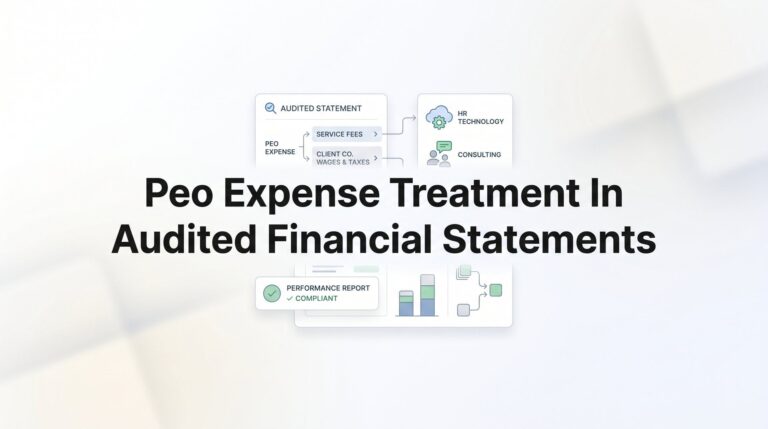
Understanding PEO expense treatment in audited financial statements is critical for business owners using professional employer organizations, as improper booking can delay audit opinions, trigger restatements, and raise red flags with lenders. This guide explains how the co-employment structure creates accounting complexity and what your general ledger needs to reflect to avoid costly audit complications.
Understanding your PEO compliance audit rights in your contract is critical before something goes wrong with payroll taxes, workers’ comp rates, or unemployment filings. Most PEO service agreements favor the provider, leaving business owners without the contractual mechanisms needed to inspect records—this guide explains what audit provisions to look for and how to negotiate stronger protections.
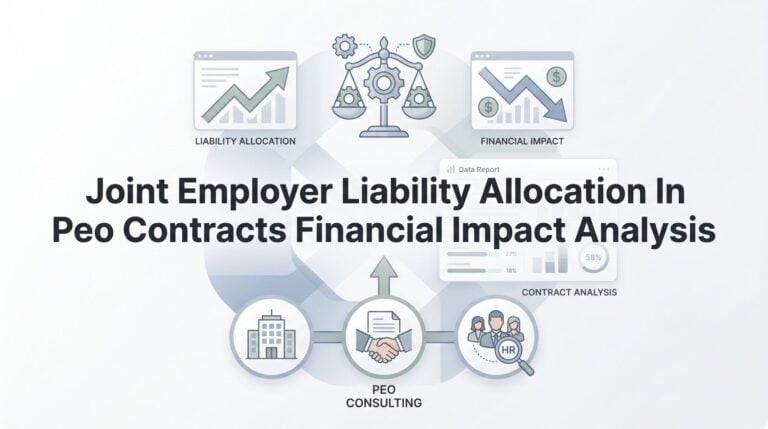
Understanding joint employer liability allocation in PEO contracts financial impact analysis reveals a costly blind spot for business owners: the indemnification clauses buried in PEO agreements often shift significant legal and financial exposure—including wage-and-hour claims, defense costs, and regulatory penalties—back to the client. Knowing exactly what your contract assigns to you versus your PEO can mean the difference between manageable risk and devastating unexpected liability.
Qualifying for PEO workers’ comp dividends requires more than a clean claims year—it demands a compliance framework that simultaneously satisfies insurance carrier rules, PEO contractual requirements, and state-specific regulations. This guide breaks down exactly how dividend qualification works within PEO arrangements and what your organization needs to track to stay eligible and evaluate whether pursuing dividends actually makes financial sense.
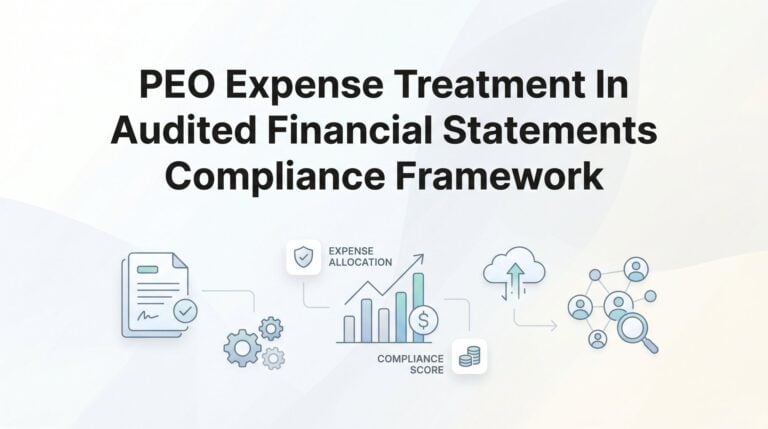
Understanding PEO expense treatment in audited financial statements compliance framework is critical for business owners facing formal audits, SBA loans, or investor rounds. Misclassifying PEO fees on your income statement can affect expense ratios, debt covenant compliance, and whether your auditor issues a clean opinion or a management letter comment requiring explanation to lenders.
Service businesses face constant margin erosion from unpredictable labor costs like workers’ comp spikes, benefits renewals, and compliance penalties—all of which hit gross margin directly. This guide explains how building a PEO-based risk mitigation strategy helps service business owners stabilize and protect gross margin by converting volatile employment costs into predictable, manageable expenses rather than treating PEO services as a simple HR convenience.
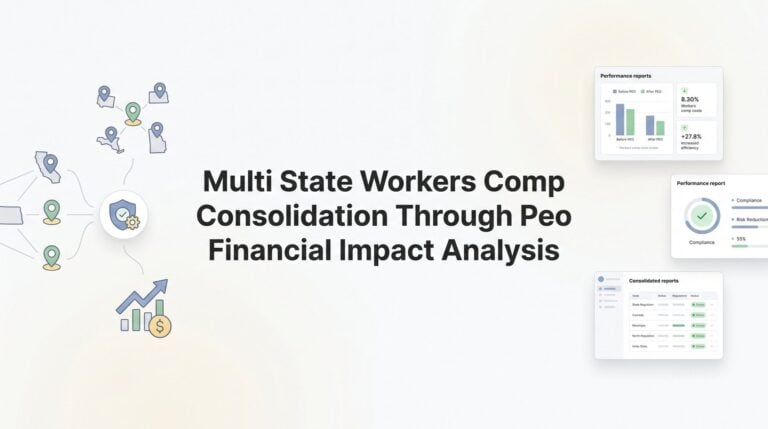
Businesses operating across multiple states often struggle with fragmented workers’ comp policies, each carrying separate carriers, audits, and rate structures. This multi-state workers’ comp consolidation through PEO financial impact analysis breaks down the real cost layers, risk shifts, and state-specific variables to help owners determine whether consolidating under a PEO master policy actually saves money — or simply trades one set of complexities for another.
Managing multi-state workers comp compliance under a PEO shifts certain obligations to the PEO while others remain the employer’s responsibility—and understanding exactly where that line falls is critical to avoiding audits, claim denials, and premium spikes. This guide breaks down what actually changes when you bring a PEO into a multi-state operation, what stays with you, and the gray areas that require proactive clarification before something goes wrong.
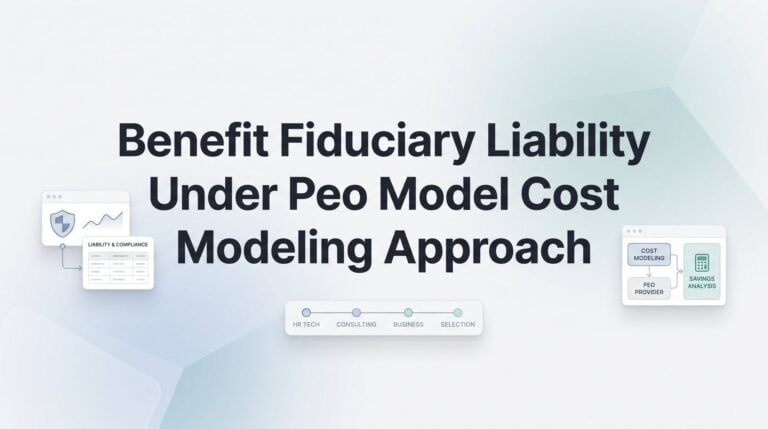
Benefit fiduciary liability under the PEO model is a quantifiable cost variable that most businesses either misattribute entirely to the PEO or overlook in their financial analysis. This cost modeling approach clarifies where fiduciary responsibility actually sits in a PEO arrangement, what the real exposure costs, and how to build an accurate model so your PEO comparison numbers reflect true financial risk.
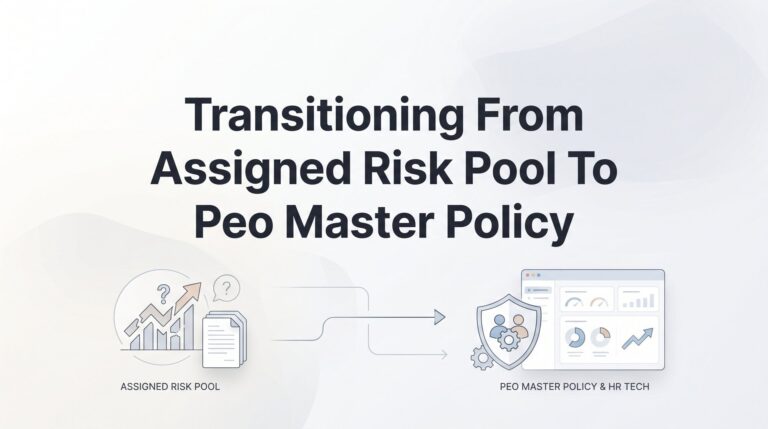
Transitioning from assigned risk pool to PEO master policy offers high-hazard businesses in construction, roofing, and landscaping a practical escape from inflated workers’ comp premiums by pooling employees with thousands of others under a PEO’s coverage umbrella. This step-by-step guide walks through the documentation requirements, timing considerations, and key decision points to help businesses navigate the process and potentially qualify for the voluntary market.
