
When a distribution company acquires another operation, the workforce integration piece is where deals quietly fall apart. You’re merging hourly warehouse crews with different shift structures, blending benefits mid-year, reconciling workers’ comp classifications across facilities, and trying to keep turnover from spiking while the dust settles.
A PEO can absorb a massive amount of that complexity. But not every PEO handles M&A transitions well. Distribution-specific challenges like multi-site payroll, high workers’ comp exposure, and union-adjacent labor dynamics make provider selection even more critical during an acquisition.
This list focuses on PEO providers and tools that are genuinely useful when you’re integrating workforces post-deal. We evaluated based on speed of onboarding acquired employees, flexibility in benefits harmonization, experience with distribution and logistics workforces, and ability to consolidate compliance across multiple locations.
1. PEO Metrics
Best for: Distribution companies that need to evaluate PEO options fast under M&A deal pressure
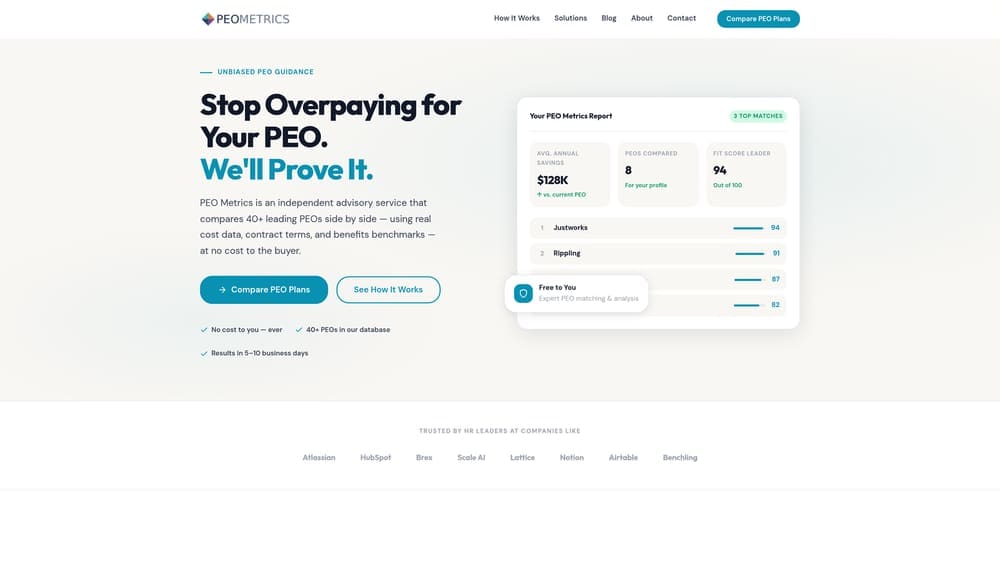
PEO Metrics is an unbiased PEO comparison platform that helps you identify the right provider before you commit — using side-by-side data, pricing analysis, and detailed service metrics.
Where This Tool Shines
M&A timelines don’t give you 90 days to run a leisurely PEO evaluation. When you’re trying to onboard acquired employees in 30 days or less, the last thing you need is to discover three months in that your PEO doesn’t handle multi-state workers’ comp consolidation or lacks experience with hourly distribution workforces.
PEO Metrics is most useful at the front of the process. It’s not affiliated with any single PEO, so the comparisons are genuinely unbiased. You can filter by distribution industry experience, M&A onboarding capability, and pricing structure — which matters a lot when you’re comparing a percentage-of-payroll model against a per-employee fee under time pressure.
Key Features
Side-by-Side Provider Comparisons: Detailed breakdowns of pricing, services, and contract terms across multiple PEO providers in one view.
Unbiased Guidance: Not tied to any PEO — recommendations are based on your actual business requirements, not referral incentives.
Distribution Industry Filtering: Helps identify providers with real experience in logistics, warehouse, and hourly workforce environments.
M&A Onboarding Evaluation: Surfaces which providers can handle compressed timelines and large-scale employee onboarding events.
Cost Transparency: Breaks down pricing structures to prevent overpaying during time-pressured transitions when vendor leverage is high.
Best For
PE operating partners, HR leaders, and business owners who are actively evaluating PEO options as part of a distribution acquisition. Also valuable for companies that already have a PEO and want to verify they’re not overpaying before renewing mid-integration.
Pricing
Free comparison service. Contact PEO Metrics directly for details on how the evaluation process works for your specific deal scenario.
2. ADP TotalSource
Best for: Large distribution acquisitions requiring enterprise-scale payroll consolidation across multiple sites and states
ADP TotalSource is an enterprise-scale PEO with robust multi-site payroll infrastructure and dedicated transition support for large workforce consolidations.
Where This Tool Shines
If you’re integrating a distribution network with facilities across several states, ADP TotalSource has the infrastructure to handle it. Their implementation teams are experienced with large onboarding events — the kind that happen when you acquire a regional DC operator with 300+ hourly employees spread across three locations.
The compliance infrastructure is also genuinely strong. Multi-state wage law differences, payroll tax registrations in new jurisdictions, and benefits administration at scale are areas where ADP’s size works in your favor. The tradeoff is that you’re working with a large organization, and smaller deals may not get the same level of attention.
Key Features
Multi-Site Payroll Consolidation: Handles complex payroll across states, facilities, and employee classifications in a single system.
Dedicated Implementation Teams: Assigned support for large onboarding events, which matters when you’re racing a deal close date.
Fortune 500-Level Benefits Access: Gives acquired employees access to competitive health and retirement plans that smaller operators often can’t match.
Compliance Infrastructure: Deep regulatory coverage for multi-state environments, including wage and hour, OSHA, and benefits compliance.
Best For
Mid-to-large distribution operators or PE-backed platforms consolidating multiple acquisitions. Best suited for deals where headcount and geographic complexity justify enterprise-level PEO infrastructure.
Pricing
Custom pricing using a percentage-of-payroll model. Contact ADP TotalSource directly for a quote based on your headcount and deal structure.
3. Insperity
Best for: Distribution M&A scenarios where the two companies have materially different benefits structures that need to be harmonized
Insperity is a PEO known for deep benefits consulting and plan design flexibility, with HR advisory services that extend into blue-collar and hourly workforce environments.
Where This Tool Shines
Benefits harmonization is one of the most politically sensitive parts of any distribution acquisition. If the acquired company’s warehouse crew had better health coverage than your existing team, you’ve got a retention problem the moment people start comparing notes. Insperity’s benefits consulting team is equipped to work through those scenarios — not just administratively, but strategically.
They also have retirement plan consolidation support, which matters if the acquired entity has an existing 401(k) that needs to be wound down or transitioned. The HR advisory layer is useful for culture stabilization post-acquisition, particularly when you’re managing hourly employees who are skeptical of ownership changes.
Key Features
Benefits Harmonization Consulting: Structured support for aligning two different benefits plans into a single offering that works for both legacy and acquired employees.
Retirement Plan Transition Support: Handles 401(k) consolidation or wind-down as part of the integration process.
Hourly Workforce HR Advisory: Practical HR guidance with experience in blue-collar environments, not just office-based teams.
Performance and Culture Tools: Supports workforce stability during the uncertainty that typically follows a change of ownership.
Best For
Distribution companies where benefits disparity between the acquiring and acquired workforce is a known integration risk. Also a solid fit for operators who want ongoing HR advisory support, not just payroll processing.
Pricing
Per-employee-per-month pricing; typically requires a minimum of five employees. Contact Insperity for a quote specific to your headcount and benefits configuration.
4. Paychex PEO
Best for: Fast payroll onboarding for shift-based, overtime-heavy distribution workforces on compressed deal timelines
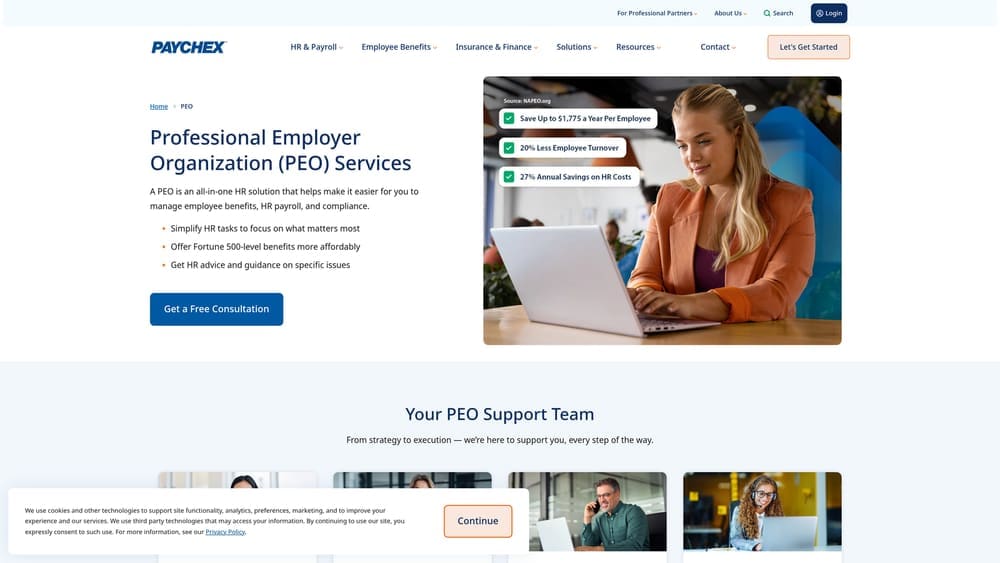
Paychex PEO brings rapid onboarding capabilities and flexible pay configurations built for the variable-hour reality of distribution and logistics operations.
Where This Tool Shines
Distribution payroll is not simple. You’re dealing with shift differentials, overtime calculations that vary by state, variable weekly hours, and multiple pay codes across departments. Most PEOs can handle standard salaried payroll — fewer handle the complexity of a 24/7 warehouse operation without friction.
Paychex has time and attendance integrations that connect with warehouse and logistics systems, which cuts down on manual data entry during onboarding. Their ability to handle compressed timelines is a practical advantage when deal closings don’t wait for ideal implementation windows.
Key Features
Rapid Payroll Onboarding: Designed to handle compressed deal timelines where normal 60-90 day implementations aren’t feasible.
Shift and Overtime Configurations: Flexible pay setup for variable hours, shift differentials, and complex overtime rules across multiple states.
Time and Attendance Integration: Connects with warehouse and logistics scheduling systems to reduce manual entry errors during transition.
Scalable Deal Size: Works for smaller bolt-on acquisitions as well as larger consolidations, without requiring enterprise-level minimums.
Best For
Distribution operators who need fast, clean payroll setup for acquired hourly workforces. Particularly useful when the acquired company has messy or inconsistent payroll records that need to be cleaned up quickly.
Pricing
Custom pricing based on headcount and services selected. Contact Paychex for a quote tailored to your deal structure.
5. Justworks
Best for: Smaller distribution acquisitions where the buyer doesn’t have a dedicated HR team running the integration
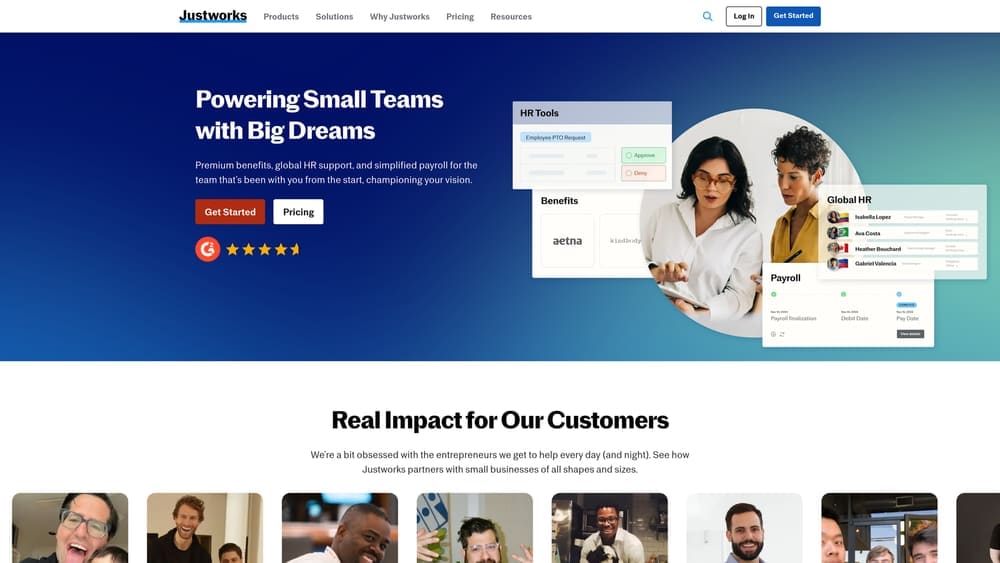
Justworks is a straightforward PEO platform designed for simplicity — transparent pricing, clean UI, and solid benefits access without requiring HR expertise to operate.
Where This Tool Shines
Not every distribution acquisition is a 500-person DC consolidation. A lot of deals in this space are smaller — a regional operator picking up a local competitor with 40 employees, or a family-owned distributor being absorbed by a mid-market platform. In those cases, deploying enterprise PEO infrastructure is overkill.
Justworks is built for operators who want to get acquired employees onto a clean payroll and benefits platform quickly, without needing a full HR department to manage the transition. The flat per-employee pricing also makes cost forecasting straightforward, which matters when you’re managing deal integration costs against a budget.
Key Features
Transparent Flat Pricing: No percentage-of-payroll complexity — you know exactly what you’re paying per employee per month.
Simple Onboarding: Designed to be operated without dedicated HR expertise, which matters in lean acquisition scenarios.
Benefits Access: Provides competitive health, dental, and vision options for smaller teams that wouldn’t otherwise qualify for group rates.
Clean Compliance Basics: Handles payroll taxes, workers’ comp, and state compliance without requiring manual oversight.
Best For
Small-to-mid-size distribution acquisitions, particularly where the acquiring company is lean on HR resources and needs a simple, low-friction integration path for a smaller acquired workforce.
Pricing
Starts at $59 per employee per month (Basic) or $109 per employee per month (Plus). Pricing is publicly available and does not require a sales conversation to evaluate.
6. TriNet
Best for: Distribution M&A where merging workers’ comp programs and claims histories is a primary integration risk
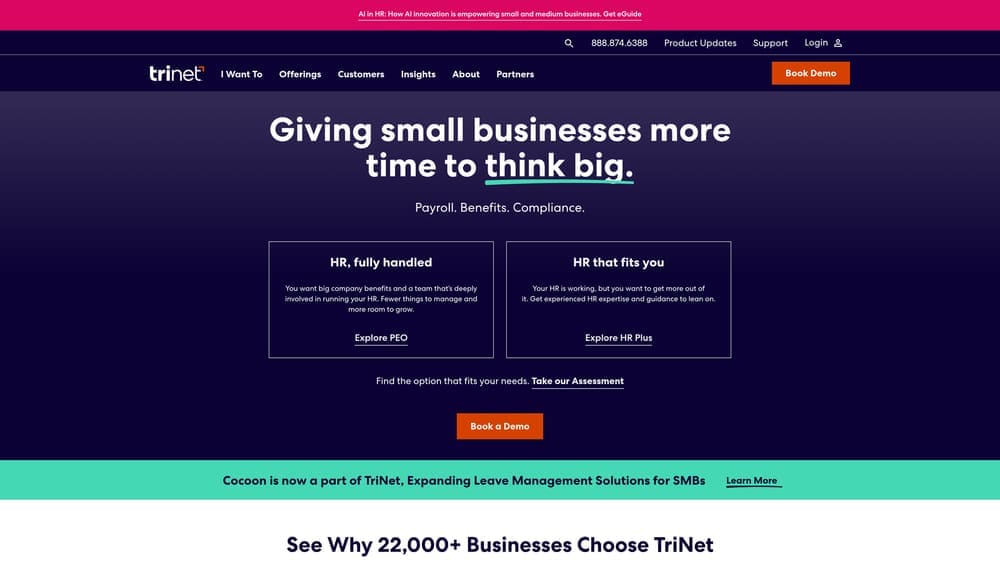
TriNet is a PEO with strong risk management and workers’ comp expertise, with vertical-specific experience in industries involving physical labor and warehouse operations.
Where This Tool Shines
Workers’ comp is genuinely complicated in distribution M&A. When you acquire another company, you’re inheriting their claims history, their classification codes, and potentially their experience modification rate. Merging two entities with different safety programs and risk profiles under a single PEO structure requires careful handling — and getting it wrong creates liability exposure that outlasts the deal.
TriNet’s risk management team has experience working through exactly these scenarios. Their safety program development support is also useful for getting an acquired facility up to your standards quickly, which matters both for compliance and for limiting future claims that would affect your combined cost structure.
Key Features
Workers’ Comp Consolidation: Structured support for merging claims histories and classification codes across two entities.
Industry-Specific Risk Management: Designed for high-exposure sectors with physical labor, not just office environments.
Safety Program Development: Helps bring acquired facilities into compliance with your safety standards post-close.
EPLI Coverage: Employment practices liability coverage that protects against claims that often arise during ownership transitions.
Best For
Distribution operators where the acquired company has a different workers’ comp risk profile, a history of claims, or safety practices that don’t align with the acquirer’s standards. Also valuable when EPLI exposure is a concern during the integration period.
Pricing
Per-employee-per-month pricing that varies by industry risk profile. Contact TriNet for a quote — pricing will reflect the workers’ comp exposure level of your distribution operations.
7. Rippling PEO
Best for: PE-backed distribution platforms doing serial acquisitions that need a unified system of record across multiple entities
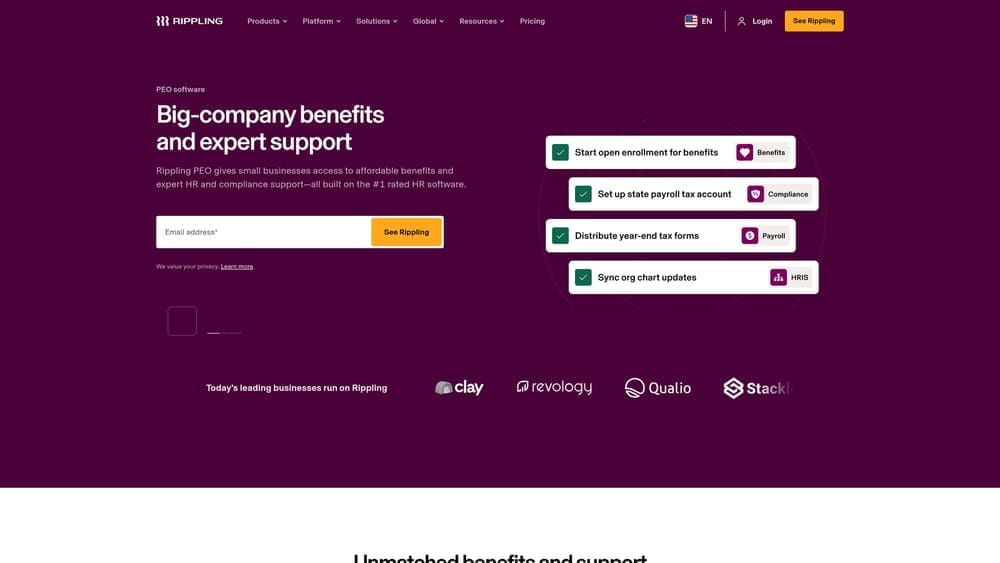
Rippling PEO is a unified HR, IT, and payroll platform that consolidates tech stacks alongside workforce integration — built for operators who are running multiple acquired entities simultaneously.
Where This Tool Shines
If you’re a PE-backed distribution platform that has done two or three acquisitions in the past 18 months, you’ve probably got a patchwork of HR systems, payroll platforms, and IT setups that don’t talk to each other. Rippling’s unified architecture addresses that directly — not just payroll and benefits, but device management and software access as well.
The automated onboarding workflows are genuinely useful at scale. When you’re bringing on acquired employees across multiple locations, automating the provisioning process reduces errors and speeds up the time to productivity. The API-driven integration layer also connects with warehouse management systems and distribution software, which reduces the manual reconciliation that typically slows down HR integration.
Key Features
Unified HR, Payroll, and IT Platform: Single system covering workforce management and technology provisioning across all acquired entities.
Automated Onboarding Workflows: Scales employee onboarding across multiple locations without proportional increases in HR headcount.
API Integrations: Connects with existing distribution management and warehouse systems to maintain operational continuity during transition.
Single System of Record: Eliminates the fragmented data problem that plagues multi-entity operators managing acquisitions on separate platforms.
Best For
PE-backed distribution platforms executing a buy-and-build strategy with multiple acquisitions. Also useful for operators who want to eliminate tech stack fragmentation as part of the integration process, not just HR administration.
Pricing
Core platform starts at $8 per employee per month; PEO pricing is available on request. Contact Rippling for a quote based on your entity structure and headcount.
8. Oasis (a Paychex Company)
Best for: Distribution acquisitions that expand your geographic footprint into new states with unfamiliar regulatory environments
Oasis is a compliance-focused PEO with deep multi-state expertise, built for operators who suddenly find themselves with employees in states they haven’t operated in before.
Where This Tool Shines
Geographic expansion through acquisition is a common distribution growth strategy — and it creates immediate compliance exposure. If you’re a Midwest operator that just acquired a Southeast distributor, you’re now responsible for payroll tax registration, state-specific wage and hour laws, and labor law posting requirements in states your HR team has never dealt with.
Oasis specializes in exactly this kind of multi-state complexity. Their dedicated HR specialists handle state tax registration and labor law navigation for new jurisdictions, which removes a significant operational burden from your team during an already demanding integration period. The EPLI and risk management support is also relevant during ownership transitions, when employment practices claims are statistically more likely to arise.
Key Features
Multi-State Compliance Management: Dedicated specialists for navigating labor law and regulatory requirements in new state jurisdictions.
State Tax Registration: Handles payroll tax registration in states where acquired employees work, including jurisdictions new to the acquiring entity.
Payroll Tax Filing: Manages tax filing obligations across all states in your combined post-acquisition footprint.
EPLI and Risk Management: Provides employment practices liability coverage and risk support during the ownership transition period.
Best For
Distribution operators whose acquisitions extend their geographic reach into new states, particularly when the acquiring company’s HR team lacks familiarity with those jurisdictions’ specific requirements.
Pricing
Custom pricing. Contact Oasis directly for a quote based on your multi-state footprint and headcount.
Picking the Right PEO for Your Deal Timeline
No single PEO is the right answer for every distribution M&A scenario. The right choice depends on what’s actually driving complexity in your specific deal.
If you’re consolidating a large multi-site operation, ADP TotalSource or Rippling give you the infrastructure to handle it. If workers’ comp and risk management are your primary concern, TriNet is worth a close look. If benefits harmonization is the politically sensitive issue in your integration, Insperity’s consulting depth is hard to match. For smaller bolt-on acquisitions with lean HR teams, Justworks keeps things simple without sacrificing compliance coverage. And if geographic expansion into new states is the core compliance challenge, Oasis is purpose-built for that scenario.
The honest truth is that most operators go into this evaluation without enough data. You’re comparing providers under time pressure, often relying on sales conversations that aren’t designed to surface the tradeoffs that matter for your situation. That’s exactly where a comparison tool like PEO Metrics earns its value — not as a replacement for due diligence, but as a way to compress the evaluation timeline and get to an informed decision faster.
A few things worth keeping in mind as you evaluate:
Co-employment timing matters: Understand exactly when the PEO co-employment relationship begins for acquired employees and how that affects coverage under the PEO’s master health plan and workers’ comp policy. This is a legal question that deserves a direct answer before you sign.
Implementation timelines are negotiable: Most PEOs quote standard onboarding windows. For M&A scenarios, push for a faster path. Some providers have dedicated transition teams for exactly this use case — others don’t, and that’s worth knowing upfront.
Don’t inherit a bad PEO relationship: If the acquired company already has a PEO, evaluate whether to keep it or transition. Staying with an incumbent PEO for convenience is a common mistake that creates long-term cost and flexibility problems.
Before you lock in a provider or auto-renew an existing contract under pressure, make sure you have a clear picture of what you’re actually paying for. Bundled fees, administrative markups, and contracts designed to limit flexibility are common in PEO agreements — and they’re harder to spot when you’re moving fast on a deal. Don’t auto-renew. Make an informed, confident decision.
