
Grease trap pumping is one of those trades where the operational complexity is real but the business size is usually small. You’re managing field crews who handle hazardous waste, running CDL drivers under DOT oversight, dealing with confined space protocols, and trying to meet insurance minimums on municipal contracts — all with a headcount that probably doesn’t crack 50 people. Most PEOs aren’t built for that combination.
The challenge isn’t finding a PEO. There are plenty of them. The challenge is finding one that actually understands your risk classifications, won’t mishandle a workers’ comp claim when a technician gets hurt on a job site, and won’t disappear into a call center queue once you’ve signed the contract.
The options below are worth evaluating specifically for grease trap pumping and liquid waste hauling operations. Some have direct experience with environmental and trade-based workforces. Others bring pricing transparency or service flexibility that matters when you’re a small operator with limited leverage. If you want to compare several of these side-by-side before committing to a single sales conversation, that’s exactly what PEO Metrics is built for.
1. PEO Metrics
Best for: Grease trap operators who want unbiased, side-by-side PEO comparisons before committing to a provider.
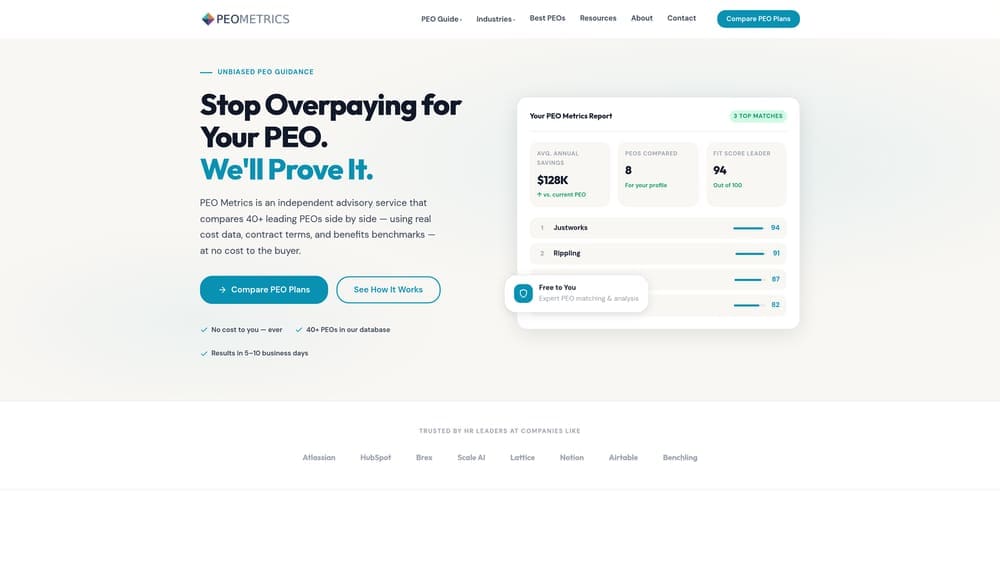
PEO Metrics is a PEO comparison and advisory service — not a PEO provider itself — that helps operators evaluate and compare providers using detailed metrics, pricing analysis, and unbiased guidance.
Where This Tool Shines
The core problem with evaluating PEOs is that every sales rep tells you the same thing. They all claim to handle high-risk classifications, they all say their workers’ comp program is competitive, and they all nod enthusiastically when you describe your field crew setup. PEO Metrics cuts through that by giving you structured, side-by-side comparisons so you can see what’s actually different between providers.
For grease trap operators specifically, this matters because your risk profile is genuinely unusual. Workers’ comp for vacuum truck operators and confined space technicians isn’t something every PEO carrier handles well. Having a pre-vetted shortlist of providers who’ve actually worked with similar classifications saves you from signing a contract and discovering the mismatch six months later.
Key Features
Side-by-Side Provider Comparisons: Compare PEOs across pricing, service structure, and contract terms in one place rather than managing multiple disconnected sales conversations.
Unbiased Guidance: PEO Metrics isn’t affiliated with any single PEO provider, so the recommendations aren’t shaped by referral incentives.
High-Risk Classification Matching: Helps identify PEOs with demonstrated experience in trade and environmental service classifications — directly relevant for liquid waste and grease trap work.
Pre-Vetting Before Sales Calls: Saves time by narrowing the field before you invest hours in proposals and demos.
Useful After a Bad PEO Experience: Particularly valuable for operators who’ve already been through one PEO relationship that didn’t work out and want a more structured process this time.
Best For
Any grease trap or liquid waste operator who’s actively evaluating PEOs and wants to make a more informed decision without relying entirely on vendor-provided information. Also useful for operators approaching a PEO renewal who want to benchmark their current provider against alternatives before auto-renewing.
Pricing
Free to use. PEO Metrics is compensated by providers, not by the businesses using the comparison service.
2. Employers Holdings (EHI)
Best for: Small operators under 50 employees with significant field risk exposure who need strong workers’ comp underwriting.
Employers Holdings is a PEO and insurance holding company with a track record serving small businesses in higher-risk, blue-collar classifications — including environmental and field service trades.
Where This Tool Shines
Workers’ comp is where grease trap operators get burned most often by the wrong PEO. Misclassification, weak carrier relationships, and poor claims management are all real risks. EHI’s focus on small businesses in elevated-risk classifications means their underwriting relationships are better calibrated to what you’re actually dealing with than a generalist PEO that primarily serves office-based companies.
Their emphasis on the sub-50-employee segment also matters. At that headcount, many national PEOs either decline to quote or assign you to their least experienced service team. EHI’s model is built around this segment, which tends to translate into more attentive service and pricing that actually makes sense at small scale.
Key Features
Workers’ Comp for Higher-Risk Classifications: Underwriting programs designed with blue-collar and trade-based risk in mind, not retrofitted from an office-worker baseline.
Small Business Focus: Specifically serves operators in the under-50-employee range who are often underserved by large national PEOs.
Claims Management Support: Hands-on support for field injury incidents, which matters when a technician gets hurt on a job site and you need the process handled correctly.
Bundled HR and Payroll: Full HR, payroll, and benefits administration in one package.
Focused Service Model: Not trying to be everything to every business — that focus tends to produce better outcomes for the segment they serve.
Best For
Grease trap operators with under 50 employees who have meaningful workers’ comp exposure and want a PEO that’s genuinely built for their risk profile rather than one that’s stretched to accommodate it.
Pricing
Custom quotes based on headcount, payroll volume, and risk classification. Request a quote directly from their team.
3. Justworks
Best for: Grease trap operators with mixed workforces — some field, some office — who prioritize pricing transparency and clean HR administration.
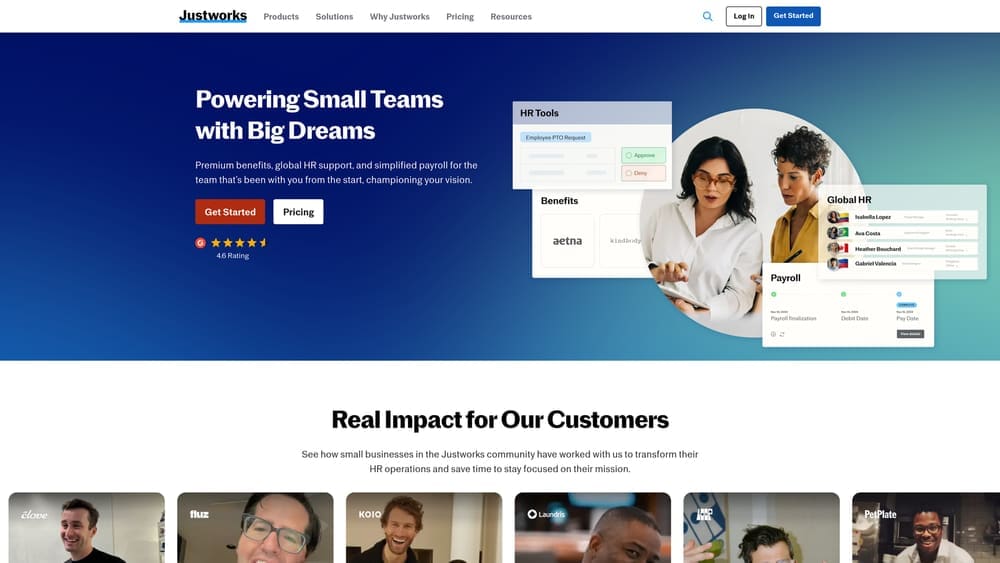
Justworks is a modern PEO platform known for flat-rate, transparent pricing and straightforward HR administration, with strong multi-state compliance support.
Where This Tool Shines
Justworks won’t be the right fit for every grease trap operator, but it earns a spot on this list for a specific reason: pricing transparency. Most PEOs quote percentage-of-payroll or bundled rates that are genuinely difficult to compare. Justworks uses a per-employee-per-month model with published rate tiers, which makes it much easier to understand what you’re actually paying and why.
If your operation has a mix of field technicians and an office or dispatch team, Justworks handles that workforce split cleanly. It’s not specialized for heavy industrial risk the way EHI is, but for operators whose primary pain point is HR complexity and compliance rather than workers’ comp cost management, it’s worth a look.
Key Features
Flat PEPM Pricing: Published rate structure with no hidden markups — unusual in the PEO industry and valuable for operators who’ve been burned by opaque billing.
Self-Service Employee Portal: Clean onboarding and employee-facing tools that reduce administrative burden on office staff.
Competitive Benefits Access: Health, dental, and vision plans through a large-group pool — useful for attracting and retaining field workers.
Variable Pay Support: Handles multiple pay types, variable hours, and overtime — relevant for field crew payroll.
Multi-State Compliance: Solid compliance infrastructure for operators running routes across state lines.
Best For
Operators with 10–75 employees who have a mix of office and field staff, want pricing they can actually understand, and whose workers’ comp situation isn’t their primary concern.
Pricing
Starts around $59–$99 per employee per month depending on plan and headcount. Verify current pricing directly with Justworks, as tiers can shift.
4. Oasis (a Paychex Company)
Best for: Mid-size grease trap operators who want enterprise-grade payroll infrastructure with dedicated HR support.
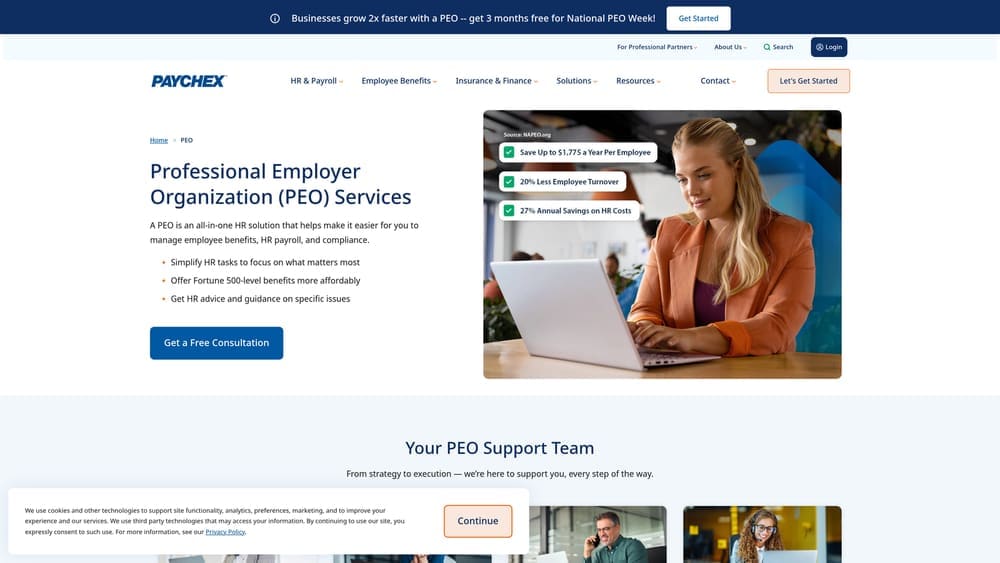
Oasis combines Paychex’s payroll engine with a dedicated PEO service layer, giving operators the reliability of a large platform without being left entirely to self-service tools.
Where This Tool Shines
Grease trap and liquid waste payroll is genuinely complicated. You’ve got CDL drivers with per diem, technicians with variable hours, potential overtime across multiple service territories, and benefits eligibility that varies by classification. Paychex’s payroll infrastructure handles that complexity well — it’s one of the most capable payroll engines in the market for businesses with non-standard pay structures.
The Oasis layer adds dedicated HR business partner support on top of that, which is the piece that separates it from standard Paychex payroll. For operators who’ve outgrown basic payroll providers but aren’t sure they need a full boutique PEO, this is a reasonable middle ground.
Key Features
Complex Payroll Handling: Overtime, per diem, variable hours, and multi-classification payroll managed through Paychex’s proven infrastructure.
Dedicated HR Business Partner: A named HR contact assigned to your account rather than a generic support queue.
Pay-As-You-Go Workers’ Comp: Ties workers’ comp premiums to actual payroll runs — reduces upfront deposit requirements and improves cash flow.
Large-Group Benefits Access: Health plan options through Paychex’s scale, competitive for attracting field workers.
Multi-Location Compliance: Handles state-specific compliance for operators with multiple service territories.
Best For
Operators with 25–150 employees who need robust payroll handling for a complex field workforce and want a recognizable, established platform with dedicated HR support.
Pricing
Custom pricing, typically structured as a percentage of payroll or PEPM. Request a quote directly — pricing varies meaningfully by headcount and configuration.
5. Insperity
Best for: Established grease trap operators with 30+ employees who want premium HR advisory support and competitive benefits to compete for field talent.
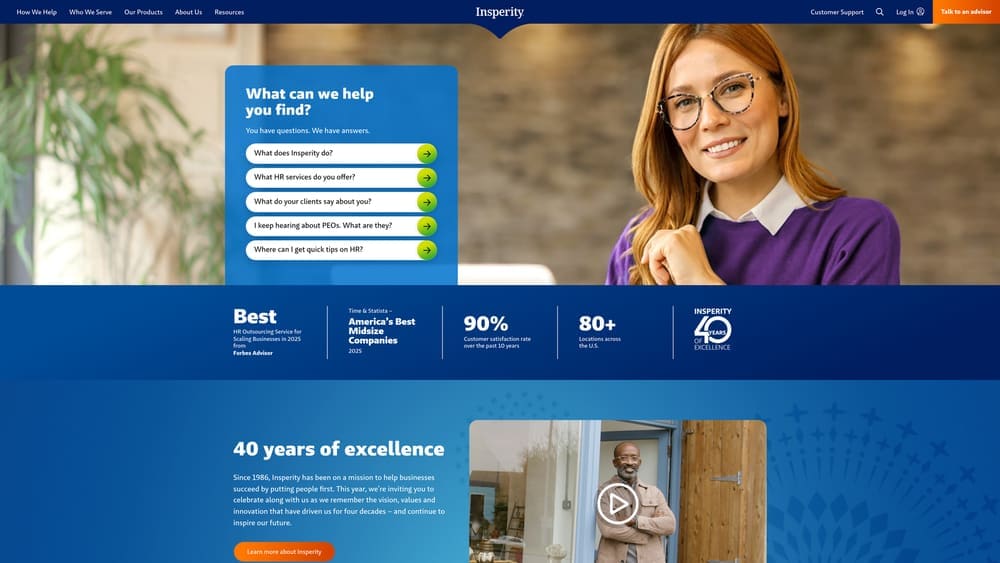
Insperity is one of the largest national PEOs in the U.S., known for deep HR advisory capabilities and benefits packages that help trade businesses attract and retain workers in competitive labor markets.
Where This Tool Shines
Retaining good vacuum truck operators and field technicians is genuinely hard. The work is physically demanding, the hours are irregular, and competing employers are always looking to poach experienced CDL drivers. Insperity’s benefits packages tend to be among the most competitive in the PEO space, which gives operators a real recruiting and retention tool beyond just wages.
Their HR advisory bench is also substantive. You get access to HR specialists who can help with OSHA compliance planning, safety program development, and risk management — all of which are directly relevant to confined space work and hazmat-adjacent operations. The tradeoff is cost: Insperity is a premium service, and the value equation is harder to justify below 30 employees.
Key Features
Deep HR Advisory Support: Dedicated HR specialists with genuine expertise, not just a compliance checklist and a hotline number.
Competitive Benefits Packages: Health and ancillary benefits that can meaningfully differentiate you from competitors when recruiting field workers.
OSHA and Safety Resources: Risk management support including safety program guidance — relevant for confined space and hazmat protocols.
Payroll and Time Tracking: Robust tools for field workforce management and variable compensation.
Compliance Infrastructure: Strong support for businesses with complex, multi-state risk profiles.
Best For
Grease trap operators with 30 or more employees who are investing in workforce quality and retention, and who want HR advisory depth that goes beyond basic compliance support.
Pricing
Custom pricing. Insperity typically delivers better value at 30+ employees. Smaller operators may find the cost structure difficult to justify relative to more focused alternatives.
6. TriNet
Best for: Grease trap operators expanding into new states or managing compliance across multiple service territories.
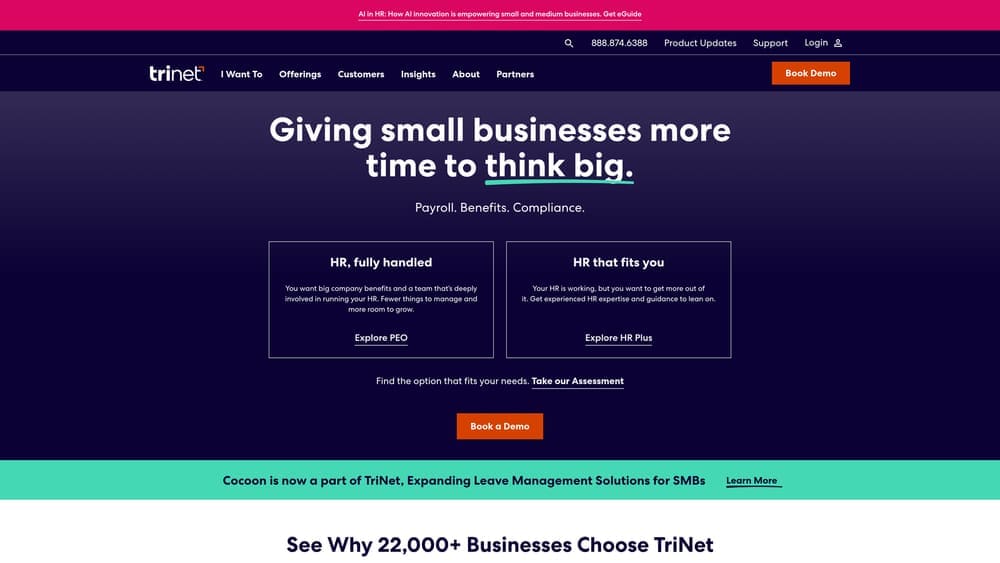
TriNet offers industry-specific HR guidance with a particular strength in multi-state compliance — useful for liquid waste operators whose service routes cross state lines.
Where This Tool Shines
State-by-state compliance for environmental services isn’t simple. Licensing requirements, waste disposal regulations, and workers’ comp rules vary significantly between states, and operators who expand without a compliance infrastructure in place can find themselves exposed quickly. TriNet’s multi-state support is one of the more capable in the PEO market.
They also offer industry-specific HR guidance that extends beyond generic HR templates, which is useful for trade and field service businesses that have operational realities most HR software wasn’t designed around. If you’re actively growing into new markets, TriNet is worth evaluating alongside the other options here.
Key Features
Multi-State Compliance Support: Handles regulatory complexity for operators crossing state lines — particularly relevant for environmental services businesses expanding their territory.
Industry-Specific HR Guidance: Tailored support for trade and field service businesses rather than generic HR policy templates.
Fortune 500-Level Benefits Access: Large-group health plan options that improve your ability to compete for field talent.
Variable Compensation Payroll: Handles complex pay structures including variable hours and multiple classification types.
Dedicated Compliance Expertise: HR support team with depth in regulatory compliance, not just administrative processing.
Best For
Operators with 20–200 employees who are actively expanding across state lines and need a PEO that can keep pace with the compliance complexity that expansion creates.
Pricing
Custom PEPM pricing — varies by employee count and service tier. Request a quote directly from TriNet’s team.
7. Resourcing Edge
Best for: Small grease trap operators who want personalized, hands-on service and feel like a number at larger national PEOs.
Resourcing Edge is a boutique PEO with a reputation for personalized account management and a service model that adapts to small operator needs rather than forcing small businesses into enterprise-designed workflows.
Where This Tool Shines
There’s a real service quality gap at national PEOs for small operators. If your headcount is under 25, you’re often not a priority account. You get the same portal and the same call center as everyone else, but you don’t get the attentive service that was implied in the sales process. Resourcing Edge’s model is specifically oriented toward smaller businesses, and that translates into actual responsiveness when something goes sideways.
For grease trap operators who’ve had a frustrating experience with a large PEO, the appeal here is straightforward: real points of contact, a service model that’s not entirely volume-driven, and flexibility to adapt to how your business actually operates rather than how the platform wants you to operate.
Key Features
Dedicated Account Management: Named contacts who know your business — not a rotating call center queue.
Flexible Service Model: Adapts to small operator needs rather than applying enterprise-scale processes uniformly.
Bundled Workers’ Comp and HR: Full service package with personalized onboarding for field-based teams.
Payroll and Benefits for Small Crews: Handles the payroll and benefits complexity of small field-based workforces without requiring enterprise-level headcount to justify the service.
Responsive Service Culture: Less volume-driven than national PEOs — a meaningful differentiator when you need a quick answer on a compliance question.
Best For
Operators with 10–75 employees who prioritize service quality and responsiveness over brand recognition, and who’ve been burned by the impersonal service model of larger national providers.
Pricing
Custom pricing. Best suited for operators in the 10–75 employee range. Request a quote to get specific figures for your headcount and risk profile.
8. CoAdvantage
Best for: Grease trap and liquid waste operators based in Florida, Texas, Georgia, and Gulf Coast states.
CoAdvantage is a regional PEO with strong market presence in the Southeast and Sun Belt — directly relevant given that a significant concentration of grease trap and liquid waste businesses operate in these markets.
Where This Tool Shines
Regional PEOs often outperform national providers in specific markets because their compliance expertise, carrier relationships, and service teams are calibrated to local regulatory environments. In Florida and Texas especially, where environmental services regulations and workers’ comp rules have their own quirks, that regional depth matters. CoAdvantage’s presence in these markets isn’t incidental — it’s core to their model.
For operators running routes in the Gulf Coast states, there’s also a practical service advantage: account managers who understand the regulatory landscape you’re actually operating in, not a generalist who has to look up Florida’s workers’ comp rules every time you have a question.
Key Features
Southeast and Sun Belt Expertise: Deep presence in Florida, Texas, Georgia, and Gulf Coast markets where much of the liquid waste industry is concentrated.
Competitive Workers’ Comp for Trades: Workers’ comp programs calibrated to trade-based businesses in their core regional markets.
State-Specific Compliance Knowledge: Compliance support aligned to the regulatory environments of their primary service states.
Field Workforce Payroll and HR: Payroll, benefits, and HR administration designed for field-based teams.
Regional Account Management: Personalized service from teams who understand your market, not a national call center.
Best For
Grease trap and liquid waste operators headquartered in or primarily operating across Florida, Texas, Georgia, and surrounding Gulf Coast states who want regional expertise alongside full PEO services.
Pricing
Custom pricing. Regional focus often means competitive rates in their core markets. Request a quote directly to see how their pricing compares for your specific headcount and location.
Which PEO Actually Fits Your Operation
The honest answer is that there’s no single right choice here — it depends on your headcount, where you operate, and which problem is most urgent for your business right now.
If workers’ comp cost and classification accuracy is your primary concern, Employers Holdings and CoAdvantage (for Southeast operators) are the most targeted options. Both are built for the kind of risk profile that grease trap operators carry.
If you’re a small operator who’s had a bad PEO experience and wants more attentive service, Resourcing Edge is worth a serious look. The boutique model exists precisely because national PEOs underserve small accounts.
If you’re growing across state lines and compliance complexity is increasing, TriNet and Oasis both handle multi-state operations well. Oasis has the edge on payroll complexity; TriNet has the edge on compliance depth.
If you have 30 or more employees and want to use benefits as a retention tool for your field crew, Insperity is the premium option worth evaluating. Below 30, the cost structure is harder to justify.
If pricing transparency matters most and your workforce is a mix of field and office, Justworks gives you a clear, published rate structure that’s unusual in this industry.
Before you commit to any of these, it’s worth doing a structured comparison rather than relying on each provider’s own sales materials. PEO contracts are typically multi-year commitments with meaningful exit friction. Getting the decision right upfront is worth the extra time.
Many businesses unknowingly overpay because of bundled fees, hidden administrative markups, and contracts designed to limit flexibility. PEO Metrics gives you a clear, side-by-side breakdown of pricing, services, and contract terms so you can see exactly what you’re paying for before you sign anything. Don’t auto-renew. Make an informed, confident decision.
Before you sign that PEO renewal, make sure you’re not leaving money on the table.
Many businesses unknowingly overpay because of bundled fees, hidden administrative markups, and contracts designed to limit flexibility. We give you a clear, side-by-side breakdown of pricing, services, and contract terms—so you can see exactly what you’re paying for and choose the option that truly fits your business.
