Breakdowns of PEO pricing models, fee structures, hidden costs, and long-term financial impact. Includes comparisons between percentage-of-payroll and per-employee pricing models.
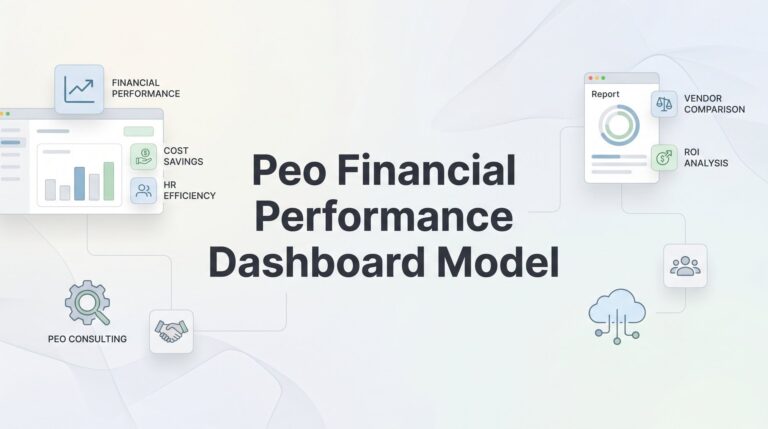
A PEO financial performance dashboard model gives business owners and HR leaders an independent framework to track whether their PEO arrangement is genuinely saving money over time. Rather than relying on vendor-provided reports or renewal presentations, this self-built model uses your own pulled data to measure real financial performance, replacing gut feelings with structured, ongoing visibility into the true value of your PEO relationship.
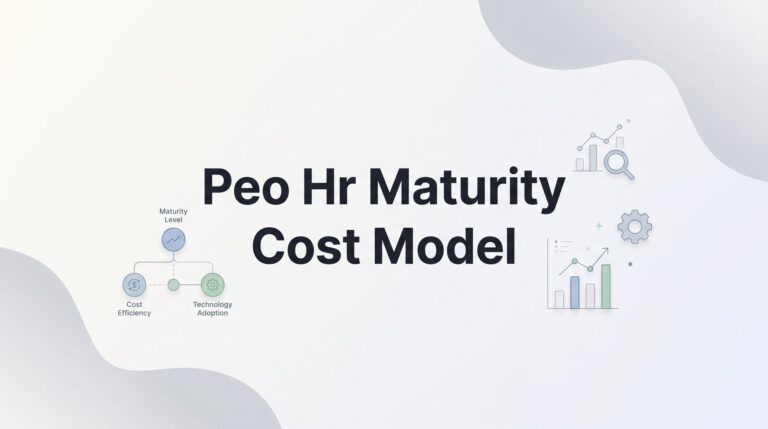
The PEO HR maturity cost model reveals why two identical-sized companies can pay the same PEO fees yet receive vastly different value — and it comes down to your existing HR sophistication, not headcount. This framework helps businesses assess their internal HR capabilities before signing a PEO contract, so they can accurately determine fair pricing, identify negotiation leverage, and avoid overpaying for services they already handle in-house.
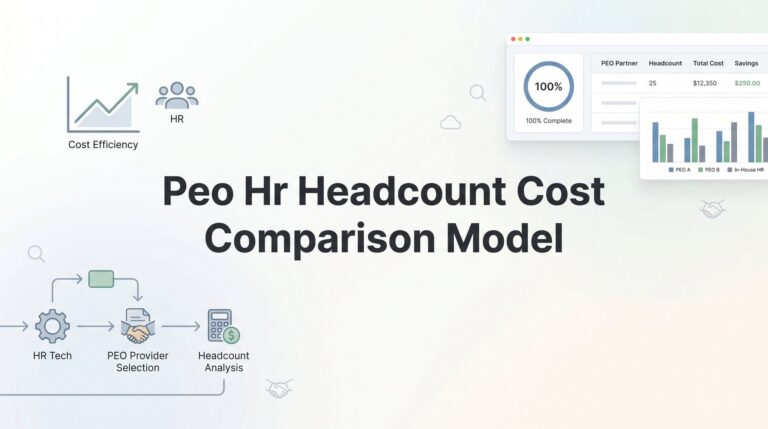
Building a reliable PEO hr headcount cost comparison model requires more than lining up quotes — it means projecting how pricing structures shift as your workforce grows. This guide outlines seven strategies for modeling PEO costs across headcount tiers, payroll percentages, and growth trajectories so you can identify the provider that remains cost-effective long-term, not just at your current employee count.
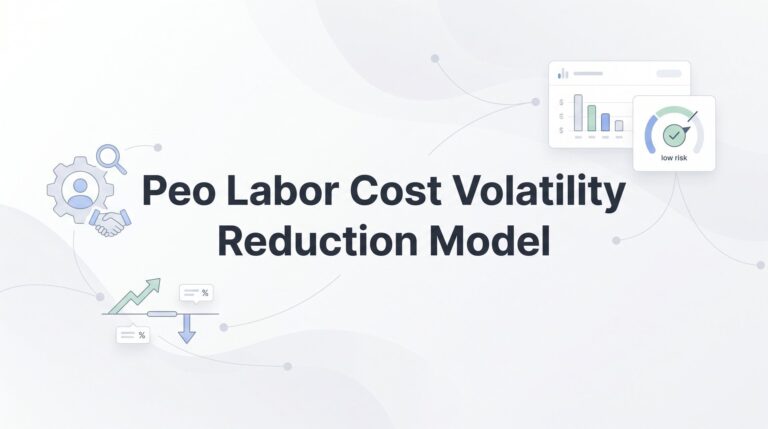
The PEO labor cost volatility reduction model helps businesses stabilize unpredictable labor expenses—including workers’ comp spikes, health insurance increases, and unemployment tax shifts—by pooling risk across thousands of co-employed workers through a Professional Employer Organization. This practical framework explains how co-employment spreads cost shocks so individual employers avoid absorbing the full financial impact of a bad year, though results vary significantly by provider.
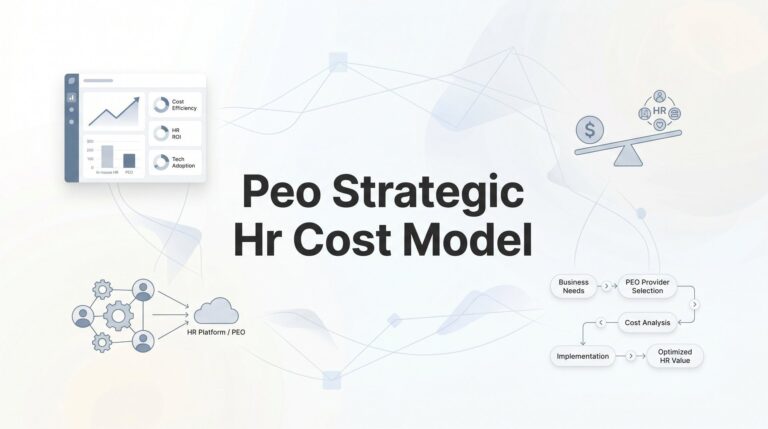
A PEO strategic HR cost model goes beyond comparing vendor quotes to reveal what HR is truly costing your business now versus under a PEO arrangement. This guide helps operators build a complete cost comparison that accounts for headcount, risk profile, benefits, and growth trajectory before signing, turning a price comparison into a genuinely strategic outsourcing decision.
A PEO payroll integration savings model helps businesses quantify the true financial impact of consolidating fragmented payroll systems—tax filing, timekeeping, benefits reconciliation, and compliance—under a single co-employment structure. This framework cuts through oversimplified vendor claims to reveal where genuine cost reductions occur and how to calculate them accurately for your organization.

The PEO enterprise cost consolidation model offers large employers a structured approach to collapsing fragmented HR vendor relationships—payroll, benefits, compliance, and workers’ comp—into a single bundled fee. This framework replaces accumulated, disconnected contracts with unified cost visibility, enabling organizations to benchmark true per-employee HR spend, leverage group purchasing power, and make data-driven decisions about their HR infrastructure.
PEO internal rate of return analysis provides a more accurate framework for evaluating PEO engagements than simple ROI calculations by accounting for the timing of uneven cash flows across multiple years. This practical approach applies standard capital budgeting methodology to model upfront costs, compounding benefits savings, and exit expenses, giving business owners an annualized return rate that reflects the true financial impact of their PEO investment.
The PEO benefit negotiation savings model works by pooling employees across multiple companies to secure lower insurance rates, but actual savings depend heavily on your workforce size, demographics, and current costs. This breakdown explains the real mechanics behind PEO pooled buying power—including the structural quirks rarely disclosed in sales meetings—so business owners can accurately evaluate whether joining a PEO will genuinely reduce benefit costs or simply shift where the money …
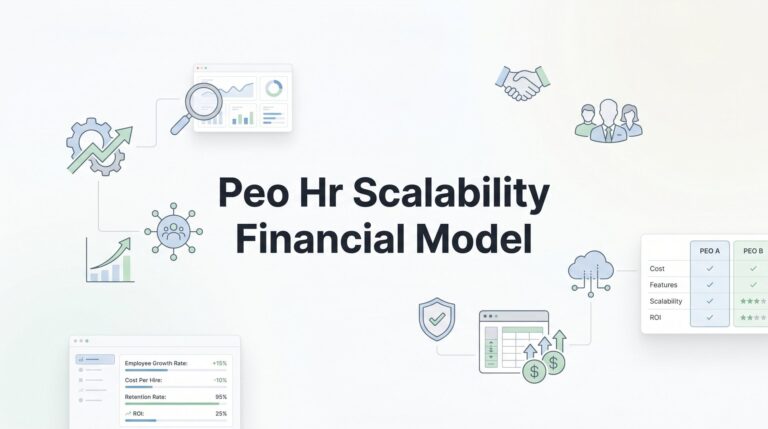
A PEO HR scalability financial model helps growing businesses track how PEO costs shift as headcount increases, revealing when the original pricing logic breaks down. This practical framework shows business owners how to map expenses against growth milestones, identify when to renegotiate contracts, and determine the optimal timing for transitioning away from a PEO arrangement.
