Breakdowns of PEO pricing models, fee structures, hidden costs, and long-term financial impact. Includes comparisons between percentage-of-payroll and per-employee pricing models.
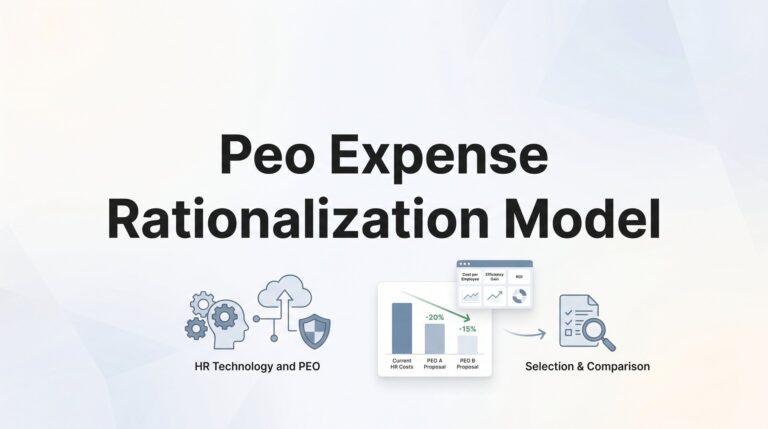
A PEO expense rationalization model provides a structured framework for breaking down bundled PEO invoices into individual cost components — administrative fees, workers’ compensation, benefits, and payroll processing — so businesses can accurately compare what they’re paying against market alternatives. This practical approach cuts through the intentional opacity of PEO pricing, helping companies determine whether their current arrangement delivers genuine value or quietly inflates costs.
A PEO financial impact projection model goes beyond vendor pricing proposals to forecast the true multi-year cost of co-employment by layering quoted fees against your fully-loaded HR baseline, growth assumptions, and risk variables. This guide walks business owners through building a rigorous 12-36 month projection that reveals whether a PEO partnership genuinely saves money—and under what conditions it doesn’t.
A practical peo benefits cost savings model that cuts through vendor claims by explaining exactly where health insurance, dental, vision, and retirement savings come from, what assumptions drive those numbers, and how to build a realistic calculation framework tailored to your company’s size and workforce before committing to a PEO arrangement.
A PEO multi-state compliance cost model helps businesses understand exactly what they’re paying for when outsourcing complex, state-by-state employment obligations—from unemployment insurance registrations and workers’ comp policies to paid leave administration and wage-and-hour compliance. As remote teams expand across states like Colorado, Washington, and California, the regulatory burden compounds quickly, making a clear cost framework essential for evaluating whether co-employment deliver…
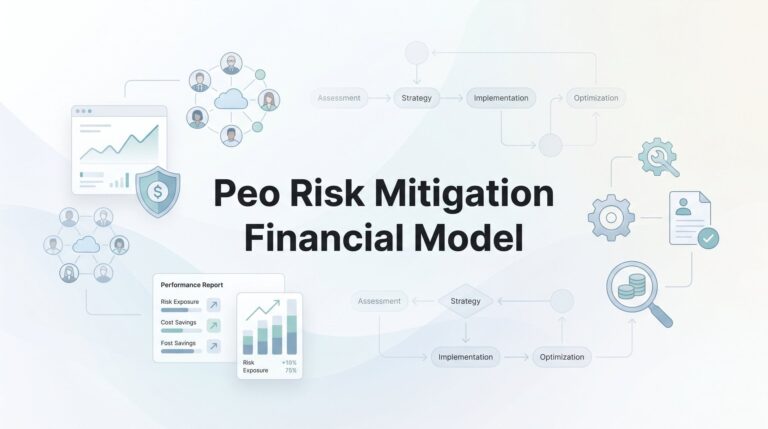
A PEO risk mitigation financial model gives business owners a structured framework to quantify the true financial value of their PEO arrangement—moving beyond visible admin fees to assign real dollar amounts to compliance exposure, workers’ comp volatility, employment practices liability, and benefits cost instability. This approach transforms PEO evaluation from guesswork into a defensible financial analysis you can present to any CFO or board.
A PEO litigation cost avoidance analysis can reveal significant financial benefits of partnering with a professional employer organization, but most sales-deck projections rely on generic assumptions that don’t reflect your company’s actual risk profile. This guide breaks down how to conduct an honest, credible analysis—accounting for your industry, state, and claims history—so you can evaluate real protection value rather than inflated headline numbers.
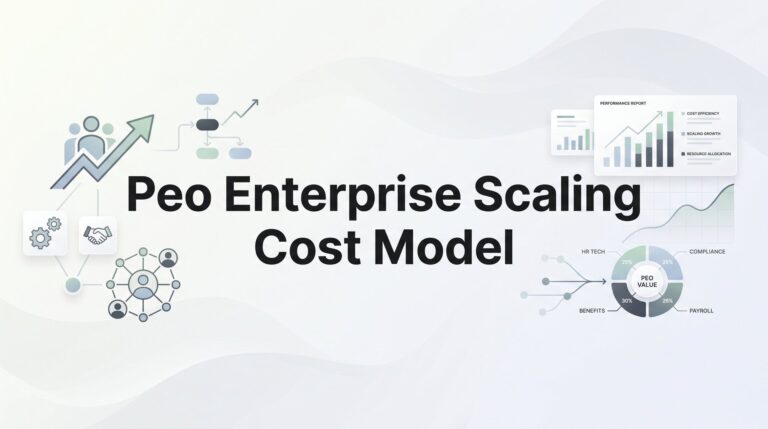
Understanding the PEO enterprise scaling cost model is critical for growing companies, as the per-employee pricing structure that works at 50 employees often becomes financially inefficient at 200 or more. This analysis breaks down how benefits markups, bundled fees, and workers’ comp dynamics shift at enterprise scale—and what HR leaders should evaluate before their PEO contract quietly becomes a cost liability.
A PEO cash flow improvement model reveals how co-employment arrangements affect working capital beyond just payroll convenience — shifting when money leaves your account, restructuring insurance liabilities, and potentially improving your balance sheet in ways most business owners never consider before signing. Understanding these cash flow mechanics upfront helps you determine whether a PEO relationship creates genuine financial benefit or introduces timing problems that could strain operati…
The PEO insurance premium stabilization model promises predictable benefits costs by pooling risk across thousands of employees, but the reality is more nuanced than the sales pitch suggests. This breakdown explains the actual mechanics of how pooled risk affects your premiums, who genuinely benefits from the model, and the tradeoffs that PEO proposals rarely mention upfront.
Understanding a PEO compensation administration cost model is challenging because most PEO contracts bundle compensation admin fees with benefits, compliance, and other services, making direct cost comparisons nearly impossible. This breakdown reveals how compensation administration costs are actually structured within PEO agreements, what factors drive pricing, and how business owners can isolate and benchmark what they’re truly paying for this specific service layer.
