Deep dives into payroll, benefits administration, HR support, onboarding, and operational shifts inside a PEO arrangement.
When you use a PEO across multiple LLCs or subsidiaries, you face a critical accounting challenge: the PEO sends one consolidated invoice, but you need payroll costs properly allocated to each legal entity’s P&L. Without a clear PEO multi-entity accounting structure, you’ll struggle with misallocated expenses, inaccurate profitability metrics by business unit, tax filing complications across different EINs, and potential audit issues from unintended intercompany transactions that arise when m…
When you partner with a PEO, your financial statements shift from itemized payroll expenses to consolidated invoicing—one line item replacing what used to be separate entries for wages, taxes, benefits, and workers’ comp. While this PEO consolidated financial reporting impact simplifies bookkeeping, it can complicate cost analysis, departmental tracking, and financial due diligence. Understanding how this bundled approach affects your business books helps you decide whether the administrative…
This step-by-step guide shows business owners how to verify and reconcile benefit deductions when using a PEO, addressing the critical gap between what PEOs calculate and what your financial records show. Learn the specific process for PEO accounting for benefit deductions across health insurance, retirement contributions, and other benefits to catch discrepancies before they become audit problems or employee complaints.
Learn how to properly record PEO transactions with seven practical journal entry examples that solve common accounting challenges. This guide covers everything from basic gross-up method entries to complex scenarios like workers’ comp adjustments and multi-state payroll, helping business owners maintain accurate books while using a Professional Employer Organization for payroll and HR services.
When you switch to a PEO, payroll expenses and tax liabilities shift timing on your books because PEOs run payroll on their own cycle and invoice after the fact. This PEO effect on payroll accrual timing creates month-end reconciliation challenges and temporary cash flow gaps that catch finance teams off guard, making it essential to adjust your accounting processes before the first pay cycle under the new arrangement.
This step-by-step guide shows businesses how to create clear PEO accounting policy documentation that addresses the unique complexities of co-employment relationships, including split payroll responsibilities, pass-through costs, and monthly reconciliation processes. Learn to build written policies that specify exactly how PEO transactions should be recorded, establish proper cost allocation methods, and create audit trails that satisfy CPAs—without hiring additional accounting staff.
When you use a PEO for payroll, your accounting becomes complicated because invoices bundle wages, taxes, benefits, and fees into one number. This guide explains the specific accounting workflow for properly recording PEO payroll liability accounting, helping you break down bundled invoices into accurate expense categories so your financial statements reflect true labor costs and remain useful for decision-making and audits.
This step-by-step guide shows business owners how to properly handle PEO accrual accounting treatment when PEO invoices don’t align with internal payroll periods. You’ll learn the practical mechanics of unbundling PEO invoices, recording accurate monthly accruals, managing timing differences between pay periods and billing dates, and implementing a repeatable reconciliation system that keeps your financial statements accurate and prevents expense misstatements.
Small and mid-sized businesses struggle with rising health insurance costs due to limited negotiating power, but a PEO for lower health insurance costs can deliver substantial savings when used strategically. This guide reveals seven practical approaches that go beyond basic pooled buying power, helping you understand PEO health insurance economics and maximize savings specific to your business situation while avoiding arrangements that barely cover PEO fees.
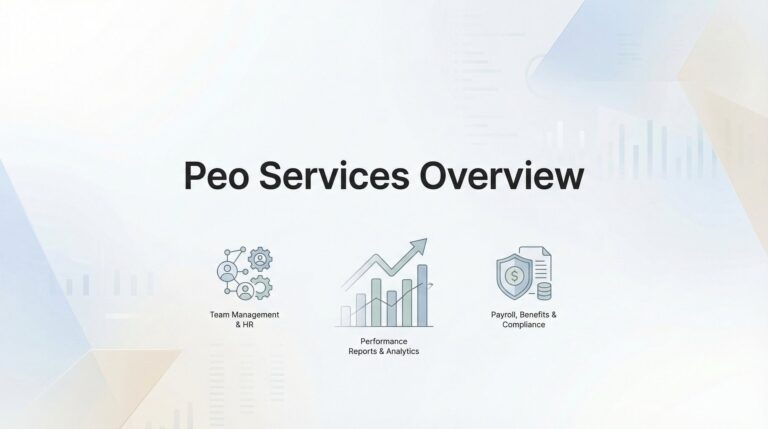
Not all PEO services are created equal—what one provider calls “comprehensive HR” might be another’s basic package. This PEO services overview breaks down what’s actually included in standard agreements versus optional add-ons, helping you understand the core functions every legitimate provider delivers, where service boundaries typically fall, and how to evaluate whether you’re paying for what your business truly needs before signing a contract.
