Deep dives into payroll, benefits administration, HR support, onboarding, and operational shifts inside a PEO arrangement.
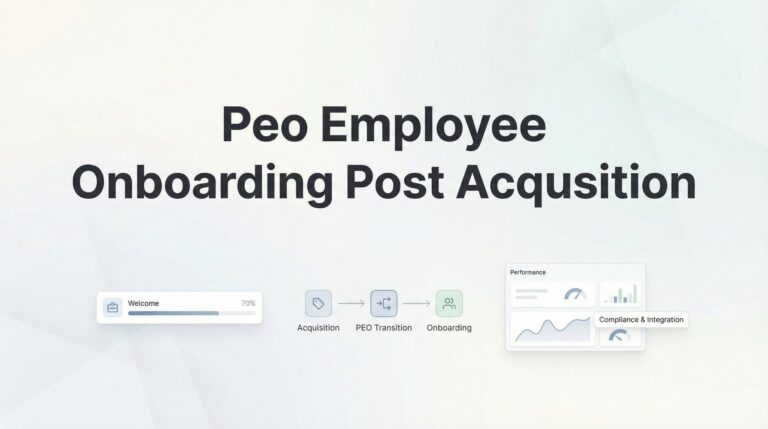
Successfully onboarding acquired employees through your PEO requires immediate action on payroll, benefits, and communication—not months of transition planning. This post-acquisition playbook shows how to leverage your existing PEO relationship to consolidate 47+ new employees into one unified system while preventing the retention crisis that happens when acquired staff face paycheck delays, insurance gaps, and uncertainty about their benefits during those critical first weeks.
Successfully integrating your PEO with an existing HRIS platform requires strategic planning from contract negotiation through ongoing maintenance. This practical walkthrough covers essential steps including pre-contract audits, data mapping protocols, technical decision points, and common sync error prevention—helping you avoid duplicate work and data conflicts while maintaining your current system investment in platforms like Workday, BambooHR, or UKG.

This practical guide shows you how to establish PEO integration with ATS systems to eliminate duplicate data entry and streamline the transition from candidate to employee. You’ll learn the realistic integration options available beyond vendor marketing claims, effective workarounds when direct API connections aren’t possible, and how to evaluate whether connecting your systems is worth the investment for your organization’s specific hiring volume and needs.
Building a PEO workforce harmonization strategy means aligning fragmented benefit plans, compliance frameworks, and HR processes across multiple states or merged teams without disrupting operations or losing talent. This practical guide covers the essential steps: auditing your current workforce structure, defining what harmonization means for your organization, negotiating the right PEO partnership, and managing employee transitions effectively—whether you’re consolidating after an acquisiti…
Post-acquisition HR consolidation through a PEO can accelerate integration and reduce administrative chaos when merging workforces, but requires strategic planning to avoid retention issues and benefits gaps. This step-by-step guide covers how to assess whether PEO HR consolidation after acquisition fits your deal, navigate benefits harmonization, align payroll systems, and execute a smooth transition that protects employee experience while delivering integration value on your timeline.
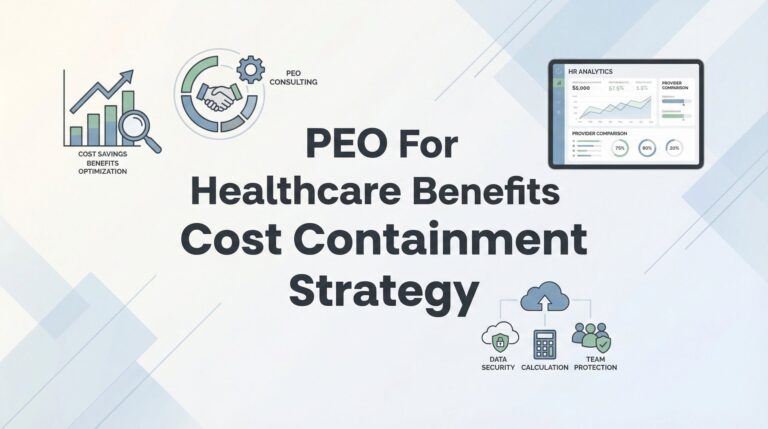
Healthcare benefits costs continue rising, but a PEO for healthcare benefits cost containment strategy offers small and mid-sized businesses access to enterprise-level advantages without cutting employee benefits. This guide examines seven proven approaches—from master health plan pooling to alternative funding arrangements—that PEOs use to reduce healthcare expenses while maintaining competitive coverage, including realistic savings expectations and implementation tradeoffs for each stra…
A PEO integration governance framework prevents co-employment failures by clearly defining internal ownership, decision points, and accountability across HR, finance, and PEO handoffs. Most PEO relationships break down not from poor service delivery, but from governance gaps where teams assume others are handling critical tasks like payroll corrections, benefits updates, or termination approvals—leaving employees caught between three parties with no clear answers.
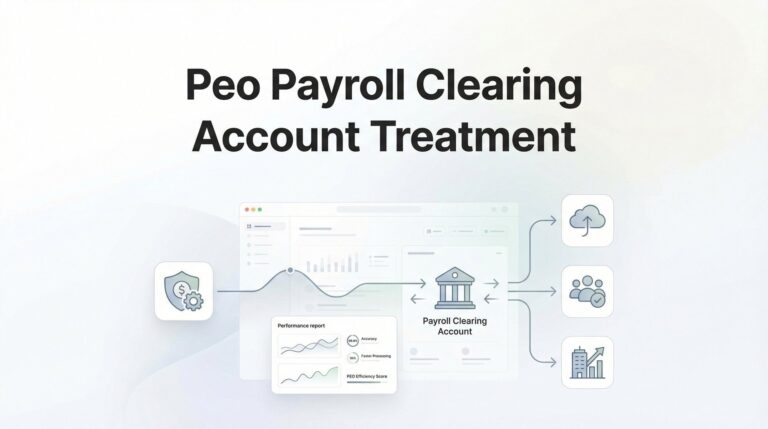
When you switch to a PEO, you’ll notice large payroll sums leaving your account days before employees are paid—that’s the PEO payroll clearing account treatment at work. This clearing account mechanism affects your cash flow timing, creates tax liability considerations, and changes how you reconcile monthly books, making it essential for business owners to understand how PEOs handle funds during the gap between withdrawal and employee payment.
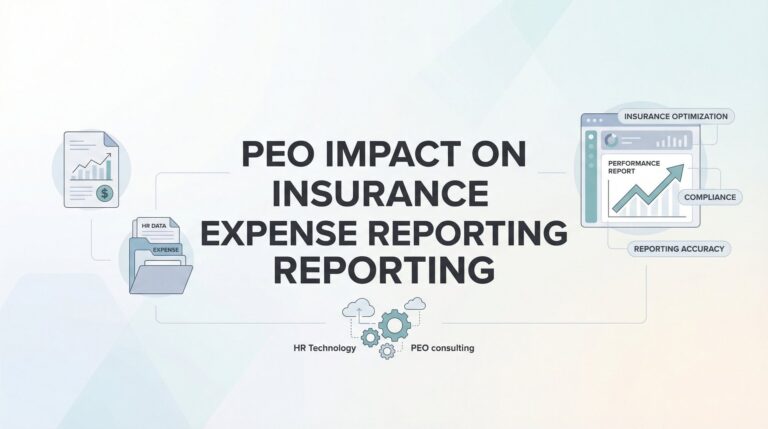
When you partner with a PEO, your insurance expenses don’t disappear—they relocate on your financial statements. The PEO impact on insurance expense reporting means health, dental, vision, and workers’ comp costs that once appeared as separate line items now get bundled into a single “Professional Services” expense. This happens because the PEO becomes the employer of record for insurance purposes, holding policies and billing you through their service fee rather than as direct insurance prem…
Integrating a PEO with your existing HR software stack is rarely plug-and-play, despite what sales teams promise. This guide covers the practical steps for connecting your PEO to current HR tools—from auditing your systems and negotiating integration support to building workarounds when native connections don’t exist—so you can maintain the recruiting platforms, performance management systems, and time-tracking software your team already relies on.
