Contract reviews, exit planning, transition steps, and what happens when you leave a PEO.
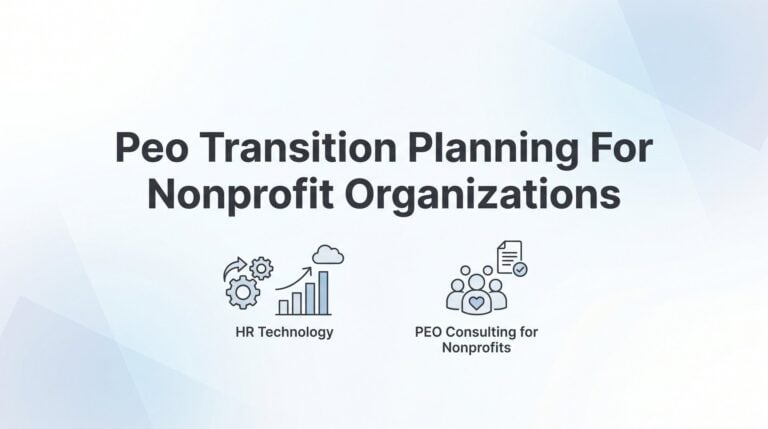
Effective PEO transition planning for nonprofit organizations requires careful sequencing to protect grant compliance, maintain payroll accuracy, and satisfy board governance requirements without disrupting operations. This guide covers the specific audit steps, compliance considerations, and decision frameworks nonprofits need when moving to, between, or away from PEO providers under the constraints of restricted budgets and donor oversight.
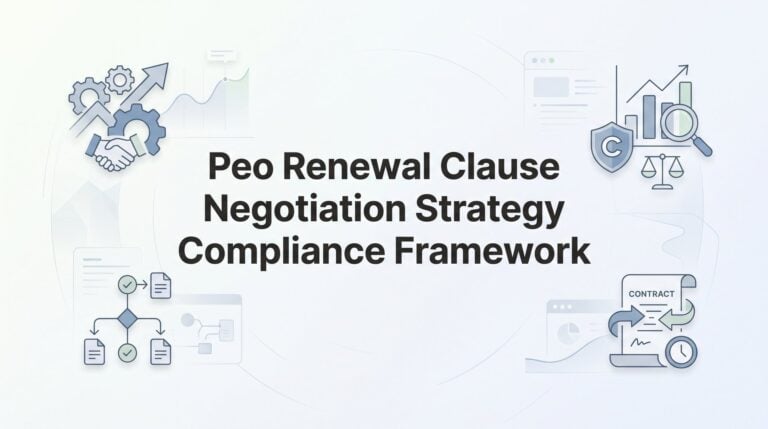
A practical 6-step peo renewal clause negotiation strategy compliance framework helps business owners avoid costly auto-renewal traps and rate increases by auditing their current PEO agreement before leverage disappears. This guide walks through how to assess compliance obligations, identify negotiation windows, and approach renewal conversations with your PEO provider from a position of informed strength.
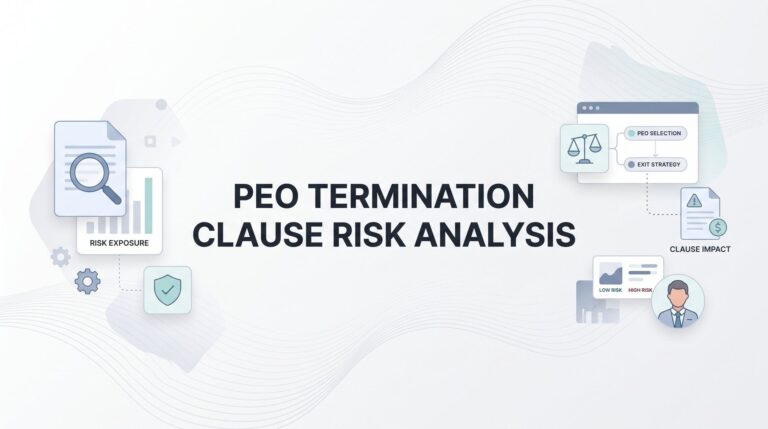
A thorough PEO termination clause risk analysis reveals what most business owners overlook when signing PEO agreements: costly exit provisions including extended notice windows, liquidated damages clauses, and restricted data access that only surface when you’re ready to leave. Understanding these contract terms before signing can prevent five-figure surprises and ensure a clean transition when your business outgrows its current provider.

A thorough peo data ownership clauses review cost modeling approach helps business owners identify hidden exit liabilities before signing — including data portability restrictions, export fees, and format limitations that rarely appear on monthly invoices but can create significant lump-sum costs when transitioning away from a PEO provider.
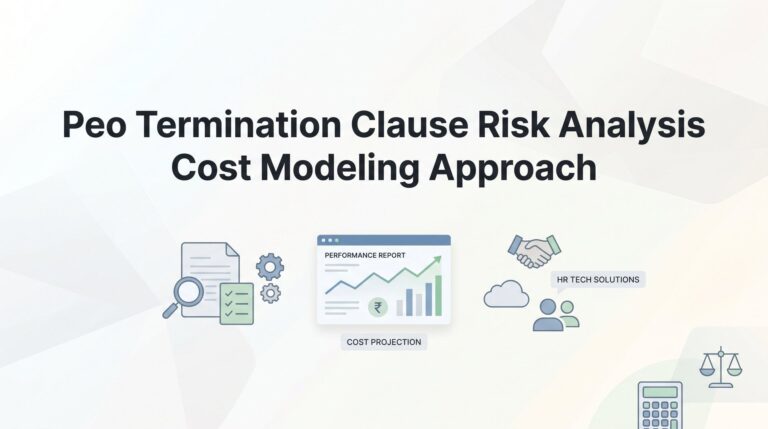
A PEO termination clause risk analysis cost modeling approach helps businesses avoid costly surprises when exiting a PEO contract, including hidden penalties, missed notice windows, workers’ comp liabilities, and data fees. By modeling total exit costs before signing—not just ongoing fees—companies can negotiate smarter terms, plan transitions strategically, and avoid being trapped in underperforming relationships simply because leaving costs more than staying.
A practical peo renewal clause negotiation strategy for business owners who want to avoid surprise rate increases, missed opt-out windows, and unfavorable lock-in terms at contract renewal time. This step-by-step guide covers how to identify leverage points, time your negotiations effectively, and renegotiate terms whether you’re approaching your first renewal or have been through the process before.
Catching PEO underperformance warning signs early requires independent visibility into your vendor’s metrics before slow drift becomes costly damage. This guide covers nine tools that give businesses their own data on payroll accuracy, benefits costs, compliance quality, and HR responsiveness—so you can identify problems months before contract leverage disappears.
PEO contract ambiguity analysis reveals how vague service descriptions, undefined fee triggers, and fuzzy termination terms can leave businesses at a costly disadvantage when disputes arise. This guide outlines seven practical strategies to identify and resolve unclear contract language before signing, helping you negotiate from an informed position rather than discovering gaps after something goes wrong.
PEO renewal trap clauses explained: auto-renewal provisions, narrow cancellation windows, termination fees, and rate escalation language buried in PEO contracts can lock HR leaders into unfavorable terms before they realize it. This guide breaks down the specific contract mechanics that make leaving a PEO difficult or costly, so you know exactly what to review before your next renewal date.
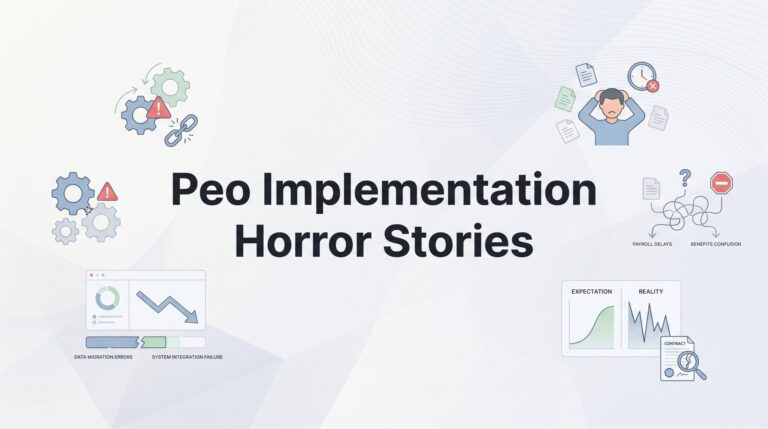
PEO implementation horror stories rarely stem from bad providers—they stem from rushed, poorly managed transitions that lead to payroll errors, benefits access failures, and compliance disasters. This guide breaks down seven common PEO implementation failures, from skipped due diligence to botched data migrations, with concrete prevention strategies to help businesses avoid costly mistakes during onboarding.
