Contract reviews, exit planning, transition steps, and what happens when you leave a PEO.
Switching commercial cleaning companies to a PEO requires careful planning around industry-specific challenges like dispersed workforces, workers’ comp classifications, and mid-quarter payroll transitions. This step-by-step guide addresses the practical friction points—from certificate of insurance continuity to I-9 compliance for overnight crews—that generic PEO switching advice overlooks.
Switching tree service companies to a PEO requires careful coordination across payroll, benefits, insurance, and compliance to avoid costly coverage gaps or liability risks. This step-by-step guide helps tree care business owners navigate the transition process safely, addressing the industry’s unique challenges including high-risk workers’ comp rates, seasonal staffing, and multi-state compliance requirements.
Switching pool service companies to a PEO can simplify payroll, workers’ comp, and HR compliance for field-based operations, but the transition requires careful planning around class codes, experience modification rates, and seasonal staffing. This step-by-step guide walks pool service business owners through exactly what to expect before, during, and after making the switch.
Switching pest control companies to a PEO requires careful planning around industry-specific challenges like workers’ comp experience modifiers, pesticide applicator licensing records, and continuous coverage during transition. This step-by-step guide walks pest control operators through the exact process, covering the operational details that generic PEO guides overlook.
Switching flooring companies to a PEO requires careful planning around industry-specific challenges like workers’ comp experience modification rates, seasonal workforce fluctuations, and W-2/1099 compliance complexities. This step-by-step guide walks flooring company owners through the actual transition process, covering the critical details most generic PEO guides overlook to help you execute the move cleanly and avoid costly mistakes.
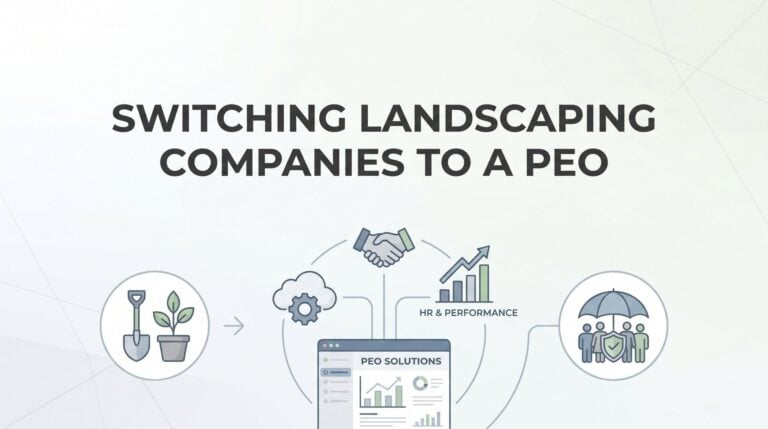
Switching landscaping companies to a PEO requires careful planning around seasonal workforce fluctuations, workers’ comp classifications, and transition timing to avoid operational disruption. This step-by-step guide walks landscaping operators through the practical sequence of a PEO transition, covering the industry-specific details—like seasonal headcount pricing and class codes—that generic guides overlook.
PEO cancellation penalties explained here cover the real costs business owners face when exiting a PEO contract early, including penalty types, calculation methods, and timing factors that affect your financial exposure. Whether you’re currently locked into an agreement or evaluating providers, understanding these fees before you sign can save thousands in unexpected termination costs.
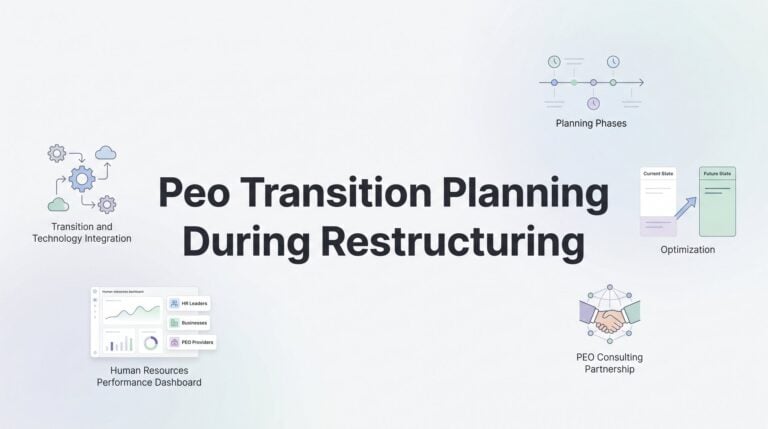
PEO transition planning during restructuring requires a deliberate, step-by-step approach to avoid payroll disruptions, coverage gaps, and compliance risks. This guide walks HR and finance leaders through coordinating PEO changes alongside business restructuring—whether you’re shifting headcount, crossing state lines, or changing entity structures—so both transitions happen smoothly and simultaneously.
PEO transition planning for restaurant groups requires a structured approach that accounts for tipped employees, multi-location compliance, and high turnover without disrupting payroll or benefits coverage. This guide walks restaurant operators through the critical steps to switch PEO providers seamlessly, helping you avoid costly compliance gaps, missed payrolls, and lapsed workers’ comp coverage across all your locations.
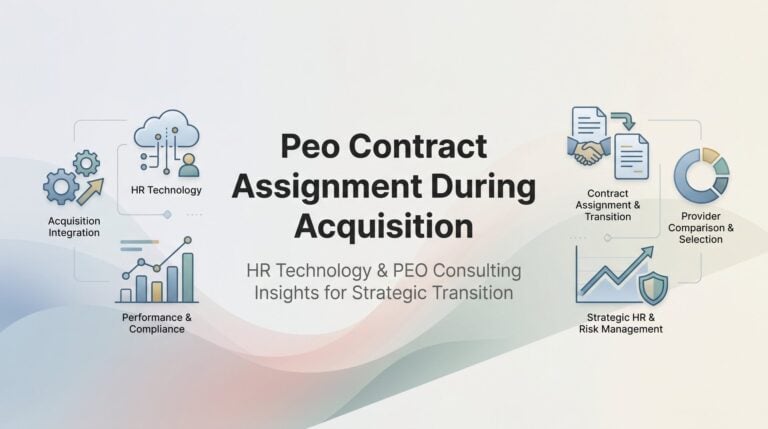
When a company is acquired, PEO contract assignment during acquisition doesn’t happen automatically — the existing co-employment agreement has its own transfer rules that vary significantly depending on whether the deal is structured as an asset purchase or stock purchase. Understanding these distinctions early in due diligence helps buyers and sellers avoid coverage gaps, unexpected termination fees, and employee disruption at a critical transition moment.
