Contract reviews, exit planning, transition steps, and what happens when you leave a PEO.
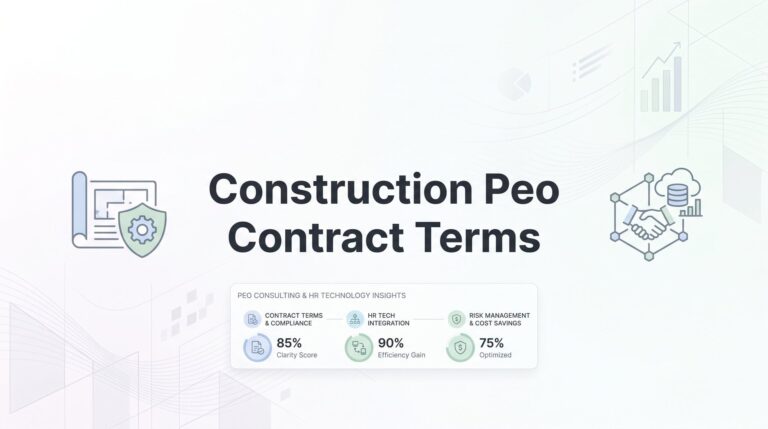
Construction business owners often focus on PEO pricing while overlooking critical construction PEO contract terms that create significant financial risk. Termination clauses, indemnification provisions, and industry-specific protections for jobsite injuries, multi-state compliance, and seasonal workforce changes can expose contractors to far greater liability than monthly fees, making careful contract negotiation essential before signing any PEO agreement.
Construction PEO cancellation policies are far more complex than standard service agreements because they involve active workers’ comp claims, ongoing project insurance requirements, and coverage transitions that can halt operations if mishandled. Contractors often overlook exit terms when signing, but understanding your construction PEO cancellation policy before entering the relationship is critical—once you need to leave, you’re negotiating from a position of weakness with jobsites, claims…
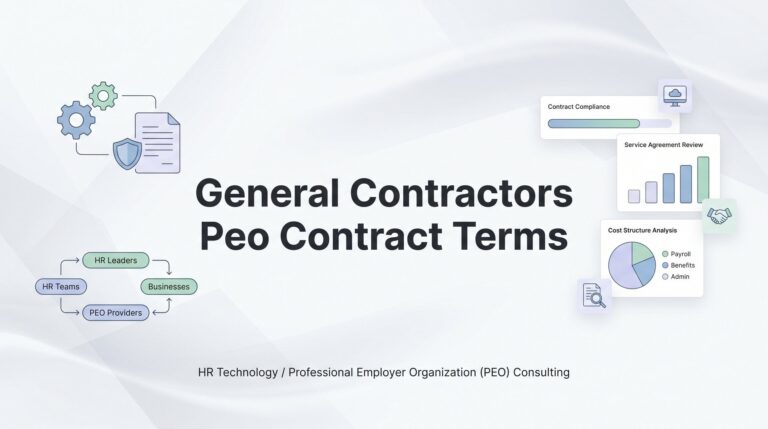
General contractors face unique risks with standard PEO agreements that aren’t designed for seasonal workforce fluctuations and construction-specific workers’ comp classifications. Understanding general contractors PEO contract terms before signing is critical—especially regarding employee minimums during slow seasons, proper trade classifications that prevent costly audit adjustments, and flexibility for project-based staffing changes that can mean the difference between a strategic partners…
Before signing with a PEO, general contractors must carefully review cancellation policies that most rush through in minutes. Unlike office businesses, construction companies face unique exit risks including project continuity issues, experience mod complications affecting bids, and seasonal workforce challenges—making unfavorable cancellation terms potentially cost tens of thousands in penalties and insurance gaps rather than minor administrative fees.
Learn how to transition misclassified 1099 subcontractors to W-2 employees through a PEO arrangement, reducing legal risk while providing benefits and protections. This guide covers when switching subcontractors to a PEO makes sense, how to handle compensation changes and tax obligations, and which workers should remain independent contractors versus converting to employee status.
Switching general contractors to a PEO requires careful planning due to construction-specific challenges like fluctuating workforce sizes, complex workers’ comp classifications, and project-based payroll cycles. This practical guide addresses the real complications contractors face—from experience mod portability to certified payroll requirements—treating the transition as the six-month strategic project it actually is, not a simple administrative change.
Most business owners overlook negotiable PEO renewal clauses that can cost or save thousands of dollars. This comprehensive framework teaches you how to systematically analyze the financial impact of auto-renewal terms, rate adjustments, and termination penalties, then negotiate from an informed position. Learn to quantify what each clause actually costs, identify which terms offer the most negotiating leverage, and build a compelling case that gets PEO providers to adjust their terms in your…
Transitioning PEOs in logistics requires careful planning to avoid disruptions that could impact scattered drivers, multi-state payroll, workers’ comp claims, and DOT compliance. This tactical framework provides six specific steps for PEO transition planning for logistics companies, addressing unique challenges like maintaining your experience modification rate, ensuring payroll continuity for drivers mid-route, and preventing compliance gaps that could trigger FMCSA audits when your workforc…
PEO termination clauses represent one of the most significant hidden financial risks in service agreements, yet most businesses overlook them during contract evaluation. This peo termination clause risk analysis financial impact analysis reveals how early exit fees, benefits continuation requirements, and timing penalties can exceed your entire annual HR budget, potentially trapping you in underperforming relationships or creating unexpected six-figure costs when switching providers.
Switching PEOs in manufacturing requires careful planning around shift workers, union considerations, OSHA compliance, and critical payroll timing that can’t afford disruptions. This practical guide provides manufacturing-specific steps for PEO transition planning, addressing operational realities like production schedules, seasonal staffing, workers’ comp classifications, and compliance requirements that generic transition advice often misses.
