Contract reviews, exit planning, transition steps, and what happens when you leave a PEO.
When your PEO gets acquired, employee uncertainty about benefits and HR contacts can trigger turnover among top performers. This guide provides seven actionable strategies for PEO employee retention during acquisition, focusing on proactive communication, benefits continuity, and transition management steps you can control in the critical first 90 days—whether you stay with the merged entity or switch providers.
After an acquisition, HR leaders face the complex challenge of merging different PEO benefits structures, health plans, and policies across newly combined employee populations. This operational guide provides a practical, step-by-step approach to PEO benefits restructuring post acquisition, covering everything from initial benefits audits through final enrollment, with critical decisions typically required within 30-90 days to maintain compliance and employee morale.

Mergers involving PEO arrangements require immediate decisions about employer of record status, payroll continuity, and benefits transfers across combined workforces. This step-by-step guide covers the critical sequence for PEO employment transfer during merger—from pre-close due diligence through final consolidation—whether you’re keeping your current PEO, switching providers, or moving to direct employment post-acquisition.
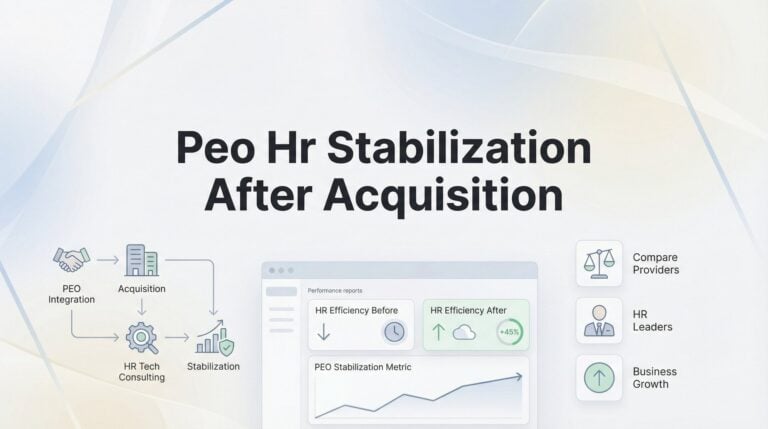
When your PEO gets acquired, employee benefits, payroll continuity, and compliance can be disrupted without warning. This guide provides seven actionable strategies for PEO HR stabilization after acquisition, helping you audit contracts, protect employee data, maintain benefits continuity, and decide whether to stay with the new entity or transition to a different provider while minimizing operational disruption.
Before your business gets acquired, a thorough PEO contract review can prevent costly surprises during due diligence. Change-of-control provisions, hidden liability clauses, and termination penalties that seemed manageable during normal operations can become deal-breakers or add six figures to transaction costs when ownership changes hands. These seven strategies help both sellers preparing for acquisition and buyers evaluating PEO arrangements identify and negotiate around critical contract …

Switching PEOs requires clear employee communication to prevent confusion about payroll, benefits, and enrollment processes. This step-by-step guide shows how to manage PEO employee communication during transaction periods, addressing common concerns like direct deposit timing, healthcare network changes, and portal access before employees discover problems on their own.
Planning to sell your business? Your PEO relationship needs a strategic exit 6-12 months before closing to avoid deal complications. This guide walks through the complete PEO exit planning before sale timeline, from initial assessment and benefits transition to employee communication and due diligence preparation, helping you unwind co-employment arrangements without operational disruption or spooking potential buyers during M&A negotiations.
Planning a PEO multi-entity transition requires careful coordination of different EINs, state registrations, employee counts, and benefit structures across business entities to avoid payroll gaps and compliance issues. This step-by-step guide provides a framework for mapping your entity structure, sequencing the rollout, handling entity-specific complications, and building a timeline that accounts for critical dependencies—whether you’re consolidating all entities under one PEO or maintaining…
PEO contracts often contain data ownership clauses that can trigger unexpected costs—from five-figure extraction fees to operational disruptions during transitions. This guide provides seven practical strategies for conducting a thorough PEO data ownership clauses review financial impact analysis, helping business owners identify hidden expenses, negotiate better contract terms, and protect their employee data, payroll records, and compliance documentation before signing or renewing agreeme…
A PEO service carve-out strategy allows businesses to retain valuable PEO services while replacing overpriced ones with specialized providers, potentially saving six figures annually. However, successful implementation requires careful analysis of which services can be separated and understanding the hidden costs and compliance risks involved in unbundling your PEO relationship.
