

If you run quick service restaurants, or manage HR for a franchisee group, you’ve probably heard the pitch that a PEO will fix turnover paperwork, workers’ comp costs, and benefits for hourly staff all at once. Sometimes it can. Often it depends on whether the provider actually accepts restaurants and prices them sensibly.
This list is written for QSR owners, franchisees, and HR leads. The options were chosen on restaurant and hourly-workforce fit, pricing transparency, workers’ comp approach, benefits access for part-time staff, and how fast a provider can onboard high-volume hiring. It mixes a comparison service, PEOs, and one payroll-only alternative, and it keeps those categories separate.
Vendor details below are drawn from each company’s positioning and should be confirmed on official sites and in written quotes, since pricing, minimums, and state availability change. Details here are current as of November 2026 only to the extent you verify them.
Quick Comparison of the Options
- PEO Metrics: best for operators who want to compare several PEO quotes before signing; pricing on its website; compares multiple PEOs against each other rather than selling a single one.
- Justworks: best for small QSR operators wanting a simple, self-serve PEO; pricing on its website; known for published, easy-to-understand pricing.
- Insperity: best for growing multi-unit operators wanting hands-on HR guidance; quote-based; assigned HR advisory support.
- TriNet: best for restaurant groups wanting an industry-oriented PEO approach; quote-based; industry-specific packaging (confirm for restaurants).
- ADP TotalSource: best for larger or multi-state chains valuing payroll and timekeeping depth; quote-based; ties into ADP’s wider workforce tools.
- Paychex PEO: best for operators already on Paychex payroll; quote-based; a natural upgrade path from Paychex payroll.
- Vensure HR: best for small to mid-size operators comparing additional options; quote-based; a wide range of PEO and HR outsourcing packages.
- Gusto: best for single-location owner-operators with small teams; pricing on its website; payroll and HR without co-employment.
1. PEO Metrics
PEO Metrics is a PEO comparison and consulting service, not a PEO. It helps businesses compare providers side by side using detailed metrics and pricing analysis, and that matters in a category where a quote is rarely just one number. It sits first here because the real QSR decision is usually which PEO, and whether a PEO at all, rather than which logo.
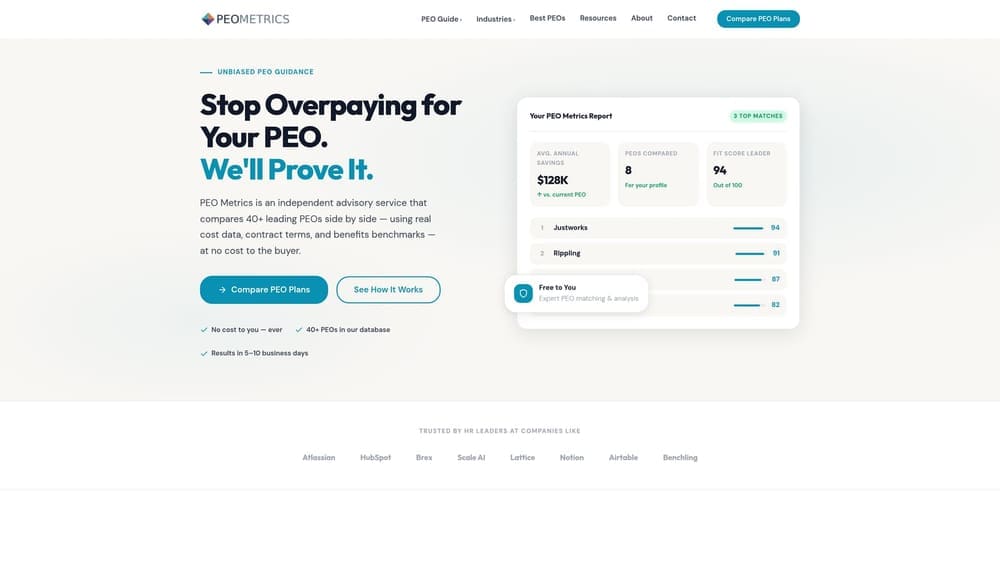
Its distinctive trait on this list is that it isn’t selling you one PEO. You see several against each other before committing, which helps surface the things operators commonly miss: workers’ comp rates versus headline fees, renewal increases, benefit eligibility for part-timers, and contract exit terms.
- Side-by-side provider comparisons let you weigh quotes on the same terms instead of reconciling different formats.
- Pricing analysis helps you see what’s bundled, what’s marked up, and where administrative fees sit.
- Detailed provider metrics give you more to compare than brand reputation.
- Consultative guidance helps you decide whether a PEO, or something simpler, fits your restaurant count and turnover.
There’s no software to integrate and no payroll migration, since it’s an advisory service. Setup is mostly gathering your headcount, states, payroll history, and current benefits and comp details, which whoever owns HR or finance can do in an afternoon.
Limitations: PEO Metrics doesn’t run payroll, administer benefits, or act as your employer of record. It may receive placement fees from vendors, so you should weigh its guidance with that in mind. Its value also depends on you gathering real quotes; comparing guesses doesn’t help. If you already know you want a specific provider and just need to sign, it adds a step.
Pricing: see the PEO Metrics website for current details.
Best for: Operators who want to compare several PEO quotes before signing.
2. Justworks
Justworks is a PEO built around a clean, modern platform and pricing that’s easier to read than most. It’s designed for small and growing businesses that want payroll, benefits, and compliance support without a heavy onboarding project.
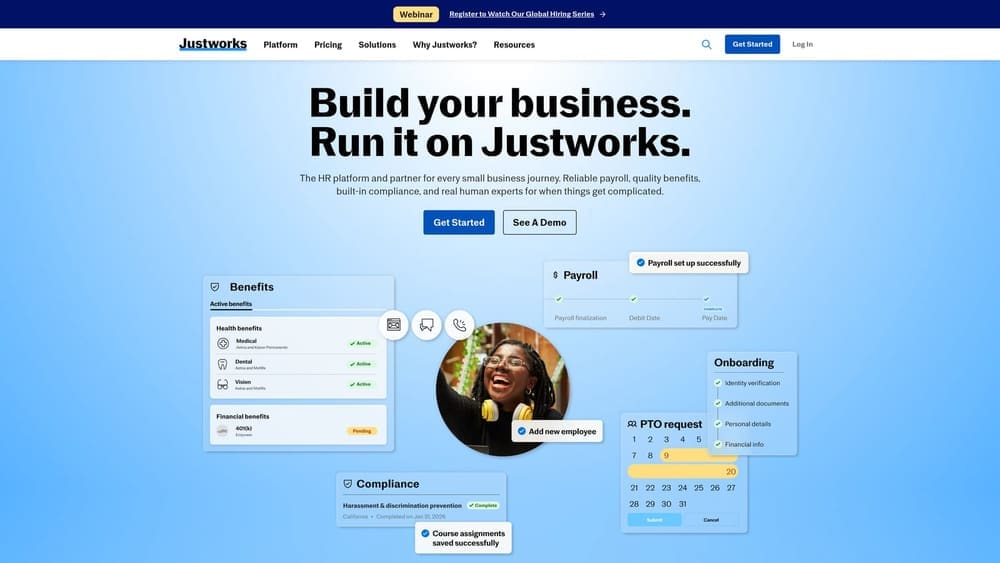
Against the rest of this list, its edge is clarity. Published pricing means you can estimate costs before a sales call, and a self-serve employee experience suits managers who don’t have an HR department to field every question.
- PEO co-employment places certain employer responsibilities under the PEO’s umbrella, which reduces admin for a small team.
- Payroll handles pay runs and tax filings in one place.
- Benefits administration lets staff enroll and manage plans themselves.
- The employee self-service platform lets crew members update details and view pay information without calling a manager.
Integrations and setup specifics should be confirmed on Justworks’ official site, including time-tracking and POS or scheduling connections your restaurants rely on. Day-to-day, an owner or office manager can usually run it.
Limitations: Confirm fit for high-turnover hourly teams, including how benefit eligibility works for part-timers, and check current state availability. A self-serve model also means less hands-on advice than a provider with an assigned HR representative.
Pricing: see the Justworks website. As of November 2026, confirm current rates, since what moves cost typically includes headcount and the plan tier you choose.
Best for: Small QSR operators wanting a simple, self-serve PEO.
3. Insperity
Quote-based pricing is the first thing to know about Insperity, a large PEO that pairs payroll and benefits with an assigned HR presence. It’s aimed at growing employers that want a person to call, not just a portal.
That assigned, hands-on advisory support is what separates it here. For a multi-unit operator dealing with wage-and-hour questions, terminations, and manager coaching, a dedicated representative can matter more than interface polish.
- A dedicated HR representative gives your managers a named contact for employee relations questions.
- Payroll covers pay processing and tax handling.
- Benefits give you a group plan menu you may not get on your own.
- Risk and compliance support helps you work through policy and regulatory questions.
Confirm integrations on the official site, especially timekeeping and scheduling tools. Implementation usually involves a sales and onboarding team, so expect more process than a self-serve signup, and plan for HR or finance leadership to own the relationship.
Limitations: Pricing is quote-based and minimums may apply, so verify eligibility before assuming it works for a very small operator. Without published rates, you’ll need to compare quotes carefully, including workers’ comp and renewal terms.
Pricing: quote-based. Headcount, payroll size, state, benefits choices, and workers’ comp class codes typically influence the number.
Best for: Growing multi-unit operators wanting hands-on HR guidance.
4. TriNet
TriNet is an established PEO that has historically packaged its services by industry. For a restaurant group, the question is whether it offers a real hospitality approach and accepts your type of operation.
Its potential distinction is that industry orientation, which can mean benefit and compliance setups shaped around a sector rather than a generic plan. Treat that as something to confirm for restaurants specifically, not assume.
- PEO co-employment shifts a portion of employer administration to the provider.
- Benefits options give your staff access to group coverage choices.
- Payroll consolidates pay runs and filings.
- Compliance support helps with ongoing regulatory questions.
Ask about integrations with your POS, scheduling, and timekeeping tools directly with TriNet. Setup typically runs through an implementation team, with HR or finance owning it after launch.
Limitations: Pricing is quote-based, and you should verify minimums and restaurant eligibility before investing time. Don’t assume an industry package covers tip reporting or part-time benefit rules without seeing it in writing.
Pricing: quote-based. Expect headcount, location, benefits selections, and workers’ comp classification to shape it.
Best for: Restaurant groups wanting an industry-oriented PEO approach.
5. ADP TotalSource
Pay attention to the name: ADP TotalSource is ADP’s PEO, which is a different arrangement from ADP’s payroll-only products. Buying ADP payroll doesn’t mean you’re in a co-employment relationship, and the reverse is also worth clarifying with any rep.
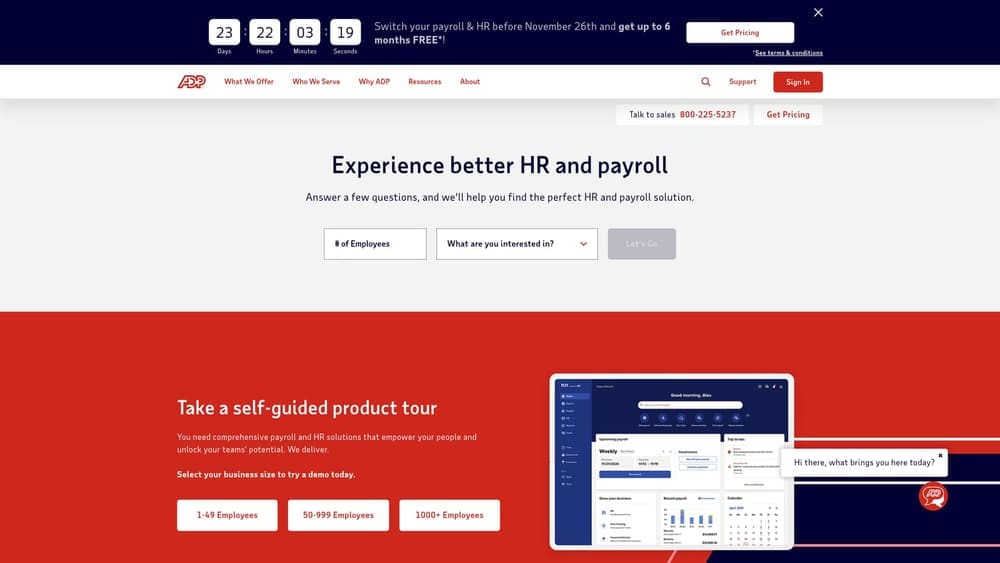
Its strength is connection to ADP’s wider payroll and workforce management tools. For chains where scheduling, time and attendance, and payroll accuracy across states are daily pressures, that depth can outweigh a simpler platform.
- PEO co-employment moves a share of employer administration to the provider.
- Payroll handles multi-state pay and tax processing.
- Benefits give hourly and salaried staff access to group plans.
- Time and attendance tie-in may connect hours worked to pay (verify what’s included).
Integrations center on the ADP ecosystem; confirm exactly which modules come with TotalSource and which are separate. Implementation is typically a managed project, and a payroll or HR operations lead usually owns it.
Limitations: Pricing is quote-based, so verify minimums and how fees are itemized. It may not suit a small franchisee with a handful of employees; confirm eligibility early.
Pricing: quote-based, influenced by headcount, states, benefits, and workers’ comp classification.
Best for: Larger or multi-state QSR chains valuing payroll and timekeeping depth.
6. Paychex PEO
If you already run payroll through Paychex, Paychex PEO may be the lowest-friction way to add co-employment. It extends a large payroll provider’s relationship into benefits, HR support, and shared employer responsibility.
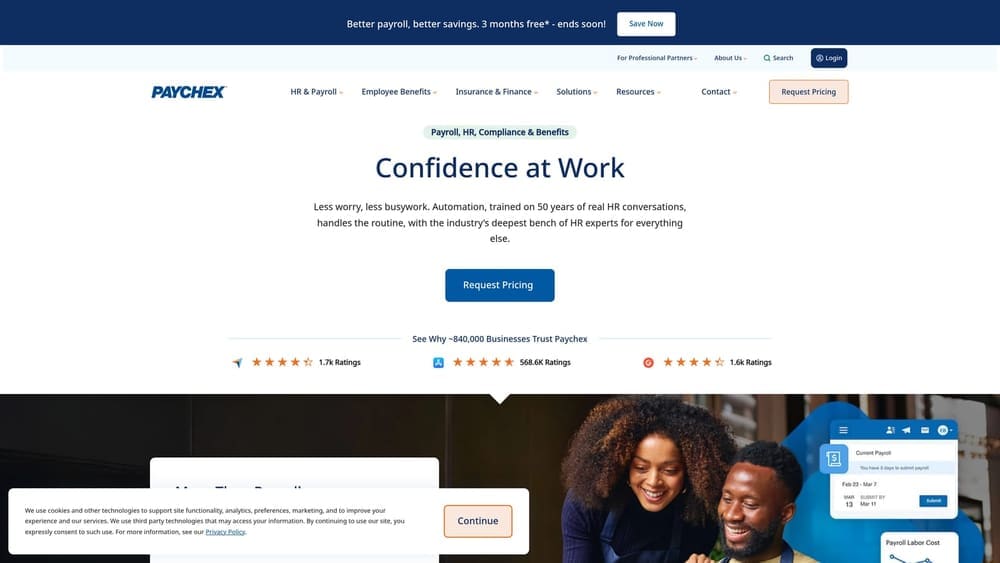
The standout is that upgrade path. Staying with a known payroll system can reduce data migration and retraining, which counts when managers are already stretched thin.
- PEO co-employment shares employer administration with the provider.
- Payroll continues in a familiar environment if you’re an existing client.
- Benefits give your team group plan access.
- HR support gives managers somewhere to take compliance and employee questions.
Confirm specifics about how it connects to Paychex payroll and any timekeeping tools. Setup for existing clients may be lighter than a fresh PEO onboarding, though you should ask what actually changes.
Limitations: Verify restaurant-specific capabilities, including tip reporting and multi-state coverage, before relying on it. Being a current payroll customer isn’t a reason to skip quote comparison.
Pricing: quote-based. Headcount, state mix, benefits choices, and workers’ comp class codes typically move it.
Best for: Operators already on Paychex payroll who want to add PEO services.
7. Vensure HR
Vensure HR offers PEO and HR outsourcing services to a broad mix of business sizes. It’s a candidate when you want another data point beyond the biggest names.
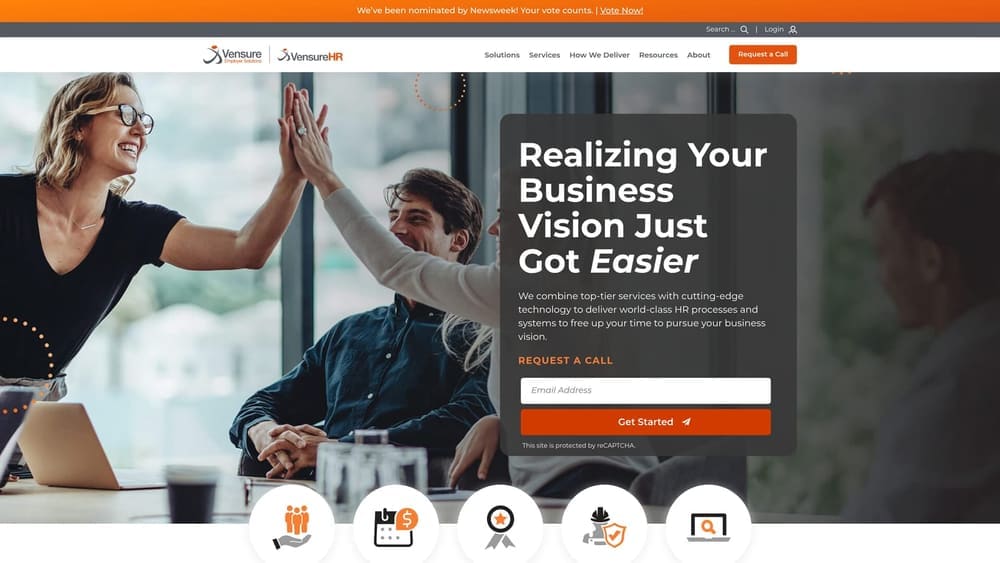
What sets it apart on this list is breadth: a range of PEO and outsourcing packages across client sizes, which may let a smaller operator find a fit that larger-focused providers don’t offer.
- PEO services share employer administration and compliance duties.
- HR outsourcing can cover tasks you don’t want in-house.
- Payroll handles pay and tax processing.
- Benefits give staff access to group coverage.
Check integrations on the official site, including any scheduling and timekeeping connections. Ask who your day-to-day service contact will be, since that experience shapes how the relationship feels once you’re live.
Limitations: Verify the brand structure behind the service you’re quoted, service consistency, and state availability. Treat it as an option to compare, not an assumed fit.
Pricing: quote-based. Headcount, states, benefits selections, and workers’ comp classification typically drive the figure.
Best for: Small to mid-size operators comparing additional PEO options.
8. Gusto
Gusto isn’t a PEO and isn’t an employer of record. It’s a payroll and HR platform for small businesses, included here because for a single-location operator, payroll-only may be all the structure you need.
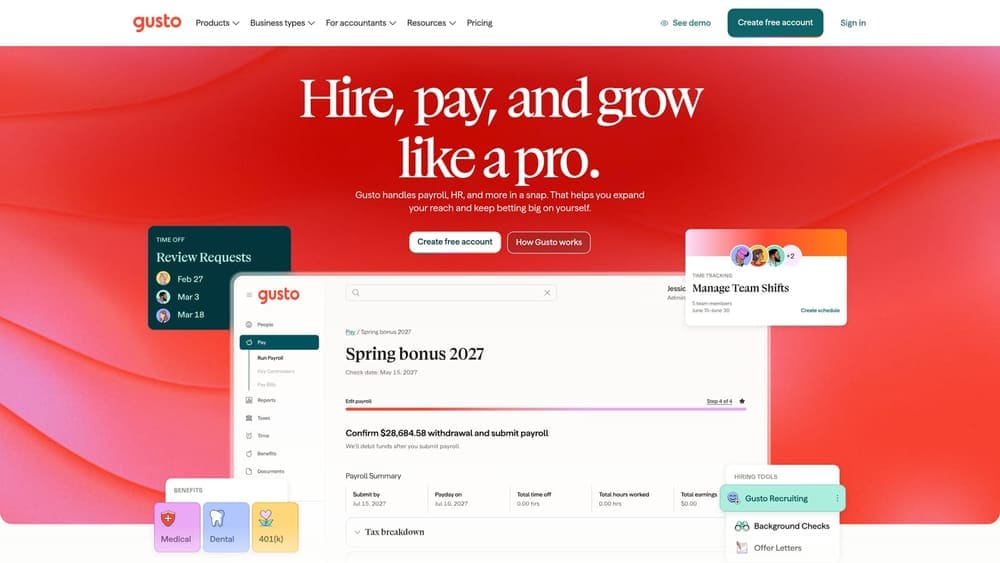
Its distinction is the absence of co-employment. You stay the sole employer, handle your own compliance and workers’ comp policy, and use software for pay, benefits administration, and onboarding.
- Payroll runs pay and tax filings without a co-employment arrangement.
- Benefits administration helps you offer and manage coverage you buy yourself.
- Time tracking records hours for hourly staff.
- Onboarding tools speed up paperwork for new hires, useful with frequent turnover.
Confirm integrations on the official site, including POS and scheduling. Setup is typically light, and an owner or manager can run it.
Limitations: It doesn’t offer pooled benefits or pooled workers’ comp, and there’s no co-employment, so it doesn’t replace a PEO. As you add locations or states, you may outgrow it.
Pricing: see the Gusto website. As of November 2026, confirm current plans; cost typically scales with plan tier and number of employees.
Best for: Single-location owner-operators with small teams.
Matching the Right Option to Your Restaurant Situation
A few distinctions help before you choose. A PEO enters a co-employment relationship and typically offers pooled benefits and workers’ comp. A CPEO is an IRS-certified PEO. An ASO provides HR services without co-employment. An EOR becomes the legal employer of record, often for workers in places you aren’t set up. Payroll-only tools like Gusto don’t co-employ anyone.
- Comparing before committing: start with PEO Metrics, then gather written quotes. Compare workers’ comp, renewal terms, part-time benefit eligibility, and exit terms, not just headline fees.
- Single-location owners: Gusto or Justworks may be enough. Payroll-only may fit if your needs are simple.
- Multi-unit and multi-state operators: Insperity and ADP TotalSource are worth quoting for hands-on support or timekeeping depth, and TriNet if industry packaging is verified.
- Franchisees with high turnover: prioritize onboarding speed, part-time benefit rules, and restaurant eligibility, and check franchisor requirements first.
Before you sign that PEO renewal, make sure you’re not leaving money on the table.
Many businesses unknowingly overpay because of bundled fees, hidden administrative markups, and contracts designed to limit flexibility. We give you a clear, side-by-side breakdown of pricing, services, and contract terms, so you can see exactly what you’re paying for and choose the option that truly fits your business.
