

If you run restaurants and you’re weighing a PEO, a generic ranking won’t tell you much. A tipped-wage payroll, split shifts, seasonal hiring and a workers’ comp class dominated by kitchen injuries put different demands on a provider than an office-based company does. This list covers PEO providers and one comparison service, judged on restaurant-relevant criteria: tip and payroll handling, time and scheduling integrations, workers’ comp and safety support, benefits for hourly and part-time staff, minimums, and how clearly pricing is disclosed. No tool is called best without a stated criterion, and every vendor detail should be confirmed directly before you sign.
Quick Comparison of Restaurant PEO Options
- PEO Metrics: best for operators comparing several PEOs before requesting quotes; pricing on its website; the only option here that compares multiple PEOs side by side and is not a PEO itself.
- Insperity: best for growing groups with no in-house HR; quote-based; a dedicated HR representative for day-to-day employee relations.
- ADP TotalSource: best for multi-location operators already on ADP; quote-based; ties into the wider ADP payroll and time ecosystem.
- TriNet: best for operators prioritizing benefits breadth; quote-based; industry-tailored packages with a wide benefits marketplace.
- Paychex PEO: best for restaurants already on Paychex; quote-based; native tie-in with Paychex Flex payroll and time tools.
- Justworks: best for small single or few-location restaurants; see website for pricing; published per-employee pricing and simple onboarding.
- Vensure HR: best for operators wanting one provider across payroll, HR and PEO; quote-based; the widest service breadth under one group.
- Oasis Outsourcing: best for mid-size operators wanting customizable benefits; quote-based; flexible plan design for small and mid-size employers.
- Barrett Business Services (BBSI): best for operators focused on workers’ comp cost and claims; quote-based; local-branch, hands-on safety and comp management.
1. PEO Metrics
PEO Metrics is a comparison service, not a PEO. It helps businesses compare PEO providers side by side using detailed metrics and pricing analysis, so you can see how several vendors stack up before you request final quotes. It sits first because it’s a different kind of tool: it does not run your payroll or employ your staff, and it comes before the choice among the other eight.
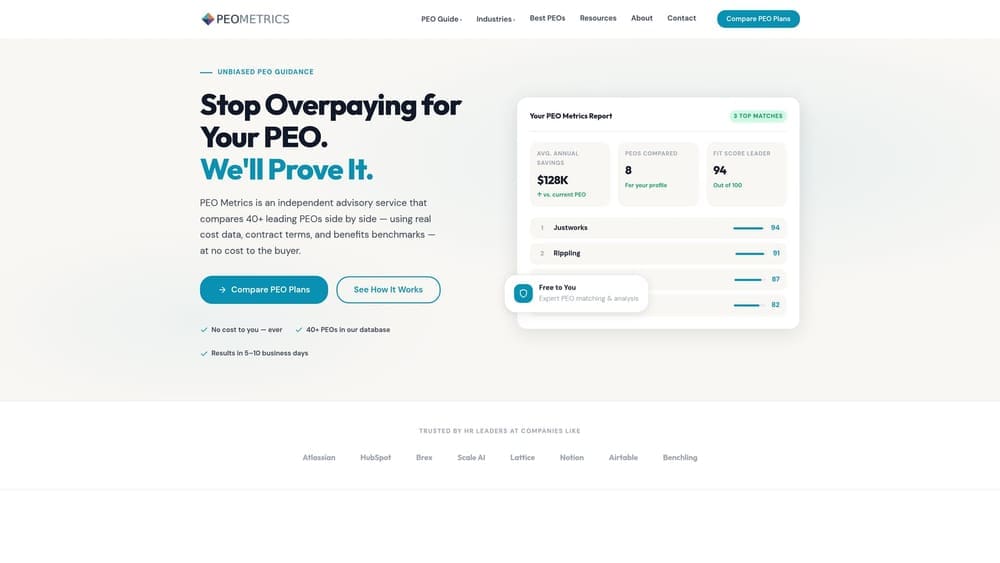
Its distinctive strength is neutral, multi-vendor comparison on equal terms. That matters in restaurants because quotes are hard to line up. One vendor may assume a lower workers’ comp rate than another, or bundle fees differently, and a headline number can hide those differences.
- Side-by-side provider comparison, so you can weigh services and contract terms in one view.
- Pricing analysis that helps you see what you’d actually pay rather than a bundled headline figure.
- Detailed provider metrics to check each vendor against your restaurant criteria.
- Selection guidance for narrowing the field before you commit time to demos.
Integrations don’t apply, since there’s nothing to connect to your POS or scheduler. Setup is a conversation and a comparison, and the person who runs it day to day is usually the owner or HR lead making the decision.
The limits are plain. PEO Metrics provides no payroll, HR or insurance services, so it can’t replace a PEO. It may also receive vendor placement fees, which you should factor in when weighing any recommendation. Pricing and any costs for the service are listed on its website.
Best for: Operators who want to compare several PEOs on equal terms before requesting final quotes.
2. Insperity
Insperity is a large PEO known for a service model built around a dedicated HR representative. For a restaurant group without HR staff, that person can act as the first call for employee relations issues such as write-ups, terminations and scheduling disputes.
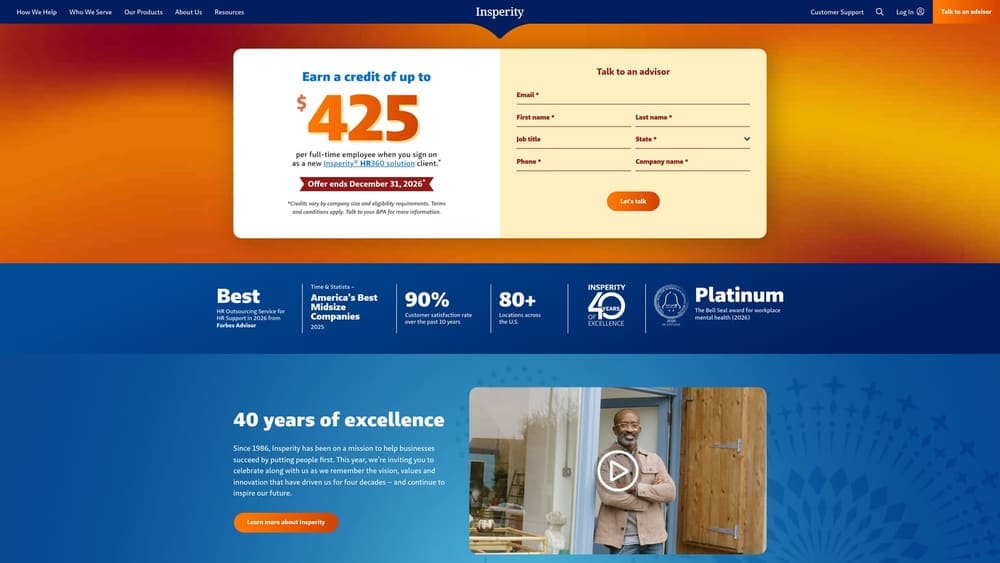
That hands-on model is what separates it from the more platform-driven providers on this list. The trade-off is that it tends to suit larger or steadier headcounts better than the smallest operators, so check minimums early.
- A dedicated HR representative who handles day-to-day employee relations questions.
- Payroll and benefits administration in one place, reducing the number of vendors you manage.
- Workers’ comp and risk support to help with claims and safety practices.
- An employee self-service platform so staff can handle routine tasks themselves.
Time and scheduling integrations are not something to assume. Ask which time clocks and scheduling tools connect, and whether tip data flows into payroll cleanly. Implementation typically involves your owner or a general manager working with the vendor, then the HR representative takes over ongoing questions.
It may not suit a single-unit operator with a very small, high-turnover team, where a heavier service model could cost more than it returns. Pricing is quote-based and depends on factors such as headcount and the benefits and workers’ comp assumptions in your quote, so get it in writing as of 2026.
Best for: Growing restaurant groups with no in-house HR who want hands-on advisory support.
3. ADP TotalSource
Limits first: ADP TotalSource is built for scale, and very small operators may find the service less personal than a high-touch provider. Confirm minimums before going further.
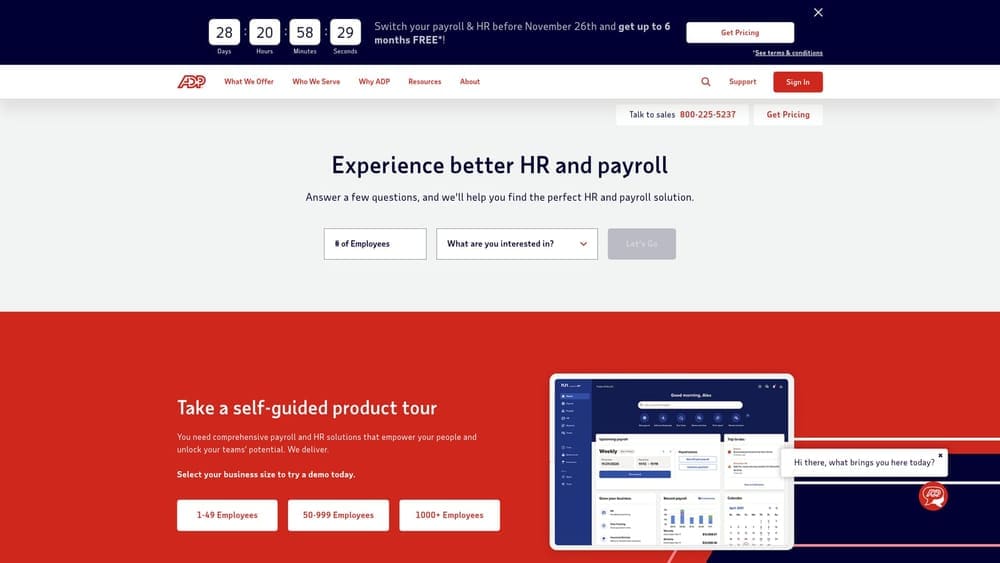
What it does well is connect to the broader ADP payroll and time and attendance products. If your locations already clock in through ADP, keeping payroll, time data and the PEO under one ecosystem can cut reconciliation work, which matters when you have staff splitting shifts across sites.
- Payroll and tax administration across locations from a single system.
- Benefits access that you can offer to eligible staff without building a plan yourself.
- Time and attendance tools that feed hours directly into payroll.
- Compliance support for wage and hour and employment rules.
The integrations are strongest with ADP’s own payroll and time products. If you run a different scheduling or POS tool, ask how it connects. Setup usually involves a payroll lead or office manager plus an implementation team, and multi-location groups should plan for a staged rollout.
It’s less compelling if you’re on a competing payroll platform and have no reason to move. Pricing is quote-based and moves with headcount, the services you select and your workers’ comp profile.
Best for: Multi-location operators already on ADP products.
4. TriNet
TriNet offers industry-tailored PEO packages and a broad benefits marketplace. For a restaurant operator, the draw is the range of benefits options, which can help you compete for managers, chefs and full-time staff in a tight labor market.
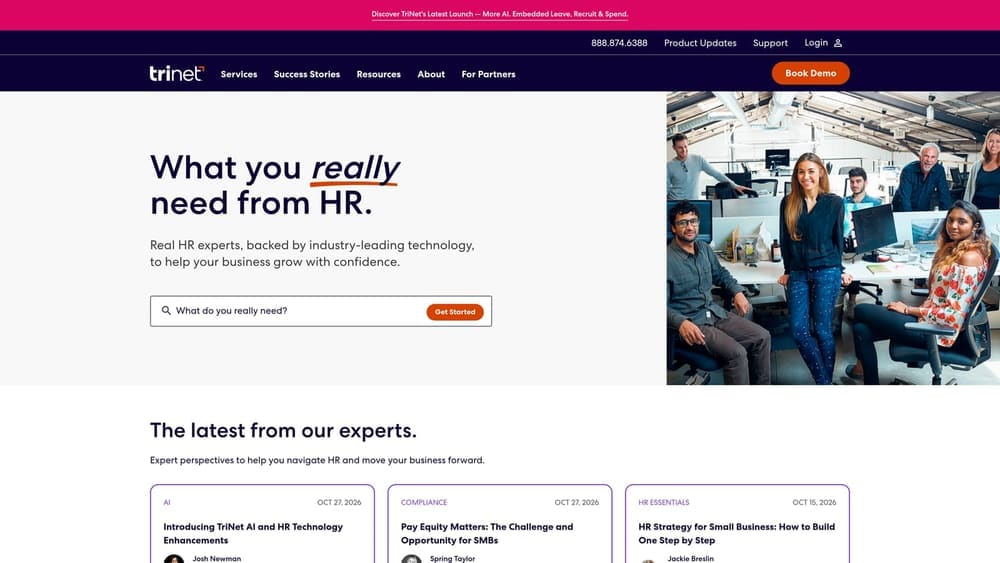
The caution is plan design. Benefits structures can lean toward salaried teams, and high-turnover hourly staff may not enroll or may not be eligible in the way you expect. Ask how the plans treat part-time and variable-hour employees, including how ACA measurement works for them.
- Industry-specific plan options so the package starts closer to your business type.
- A benefits marketplace that gives you more choices for different employee groups.
- Payroll and HR compliance handled alongside benefits administration.
- Risk and workers’ comp support to help manage claims and safety.
Integrations should be verified with the vendor, particularly for time clocks, scheduling and tip reporting. Implementation generally needs an owner or finance lead for the transition, then an HR or payroll contact for the ongoing work.
It’s a weaker fit if your main goal is a simple, low-cost setup for a small hourly crew. Pricing is quote-based, so compare it against others using the same workers’ comp assumptions.
Best for: Operators prioritizing benefits breadth for managers and full-time staff.
5. Paychex PEO
Paychex PEO is the PEO service built on the Paychex payroll platform and Paychex Flex. Its distinct advantage is the native link with Paychex Flex time and payroll tools, which helps if your restaurants already run on that system.
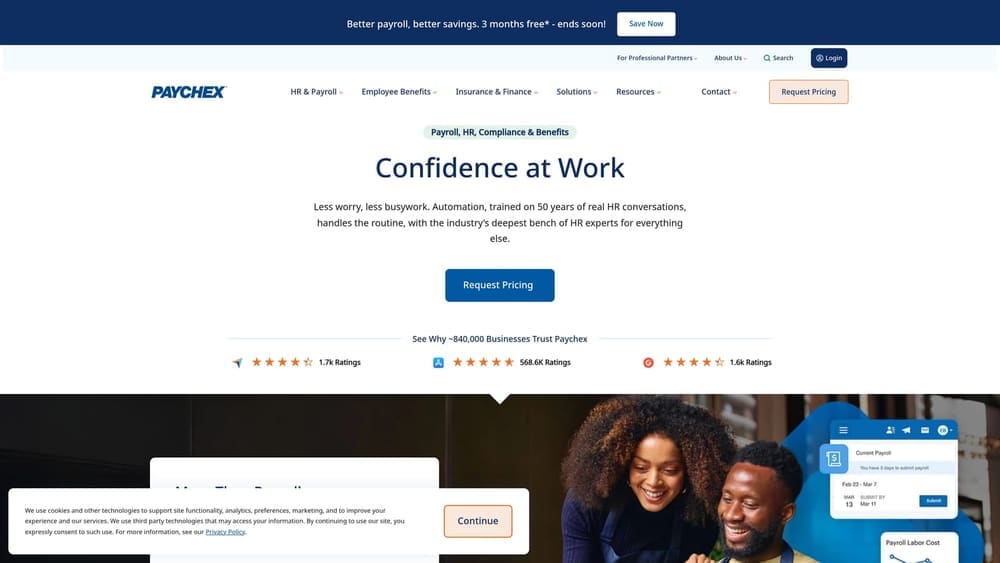
Moving from Paychex payroll to Paychex PEO may mean less data migration and a familiar interface for whoever processes payroll each week. That can reduce the setup burden for an operator who doesn’t want to retrain managers.
- Payroll and tax filing that handles multi-site withholding and reporting.
- Benefits administration so eligible employees can enroll through one platform.
- A workers’ comp program that covers coverage and claims through the PEO.
- HR advisory support for everyday questions on hiring, discipline and policies.
Integrations center on Paychex Flex time and payroll. If you use outside scheduling or POS tools, ask how hours and tips are imported. Setup typically involves a payroll administrator plus implementation staff.
The open questions are minimums and renewal pricing, both of which you should confirm in writing. It’s less compelling if you’re not already a Paychex customer, since the integration advantage then disappears. Pricing is quote-based and varies with headcount, services and workers’ comp class.
Best for: Restaurants already using Paychex that want to add PEO services.
6. Justworks
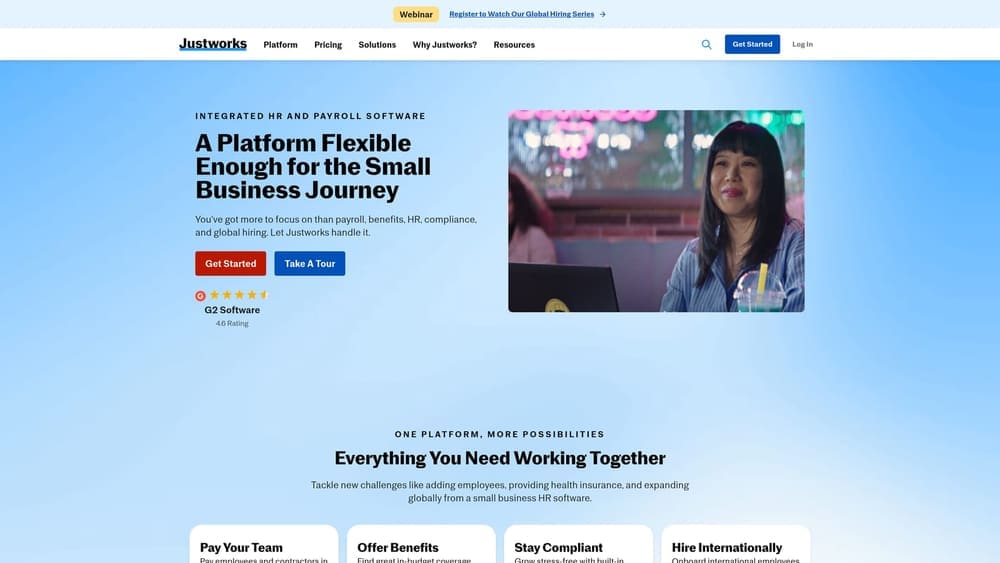
Justworks is a PEO with a modern interface and published per-employee pricing. That transparency is rare among PEOs, and it’s the main reason it stands out on a list where nearly everything else is quote-based.
Where it fits
A single-unit or few-location restaurant without an HR person can benefit from simple onboarding and a self-service app that employees can use without training. You can see what you’d pay before talking to sales, though check the website for current tiers and what each includes.
- A self-service employee app for paystubs, benefits and time-off requests.
- Payroll and benefits in one place for a small team.
- Compliance support so a small operator isn’t tracking filings alone.
- Published pricing tiers that make budgeting more predictable.
Where it doesn’t
Complex multi-state restaurant groups with heavy tip payroll may find less room for customization. Verify POS and scheduling integrations directly, and ask specifically how tips, tip credits and tip pooling are handled. Pricing is listed on the website and typically moves with employee count and plan choices.
Best for: Small single-location or few-location restaurants wanting simplicity.
7. Vensure HR
Vensure HR is a large HR outsourcing and PEO group with broad industry coverage. Its differentiator is breadth: payroll, HR outsourcing and PEO services under one group, which suits an operator who wants to avoid stitching together separate vendors.
Because it spans several service types, make sure you know exactly which one you’re buying. A PEO involves co-employment, while payroll-only or HR outsourcing arrangements do not, and the difference changes who is responsible for what.
- PEO and HR outsourcing options so you can choose the level of involvement you want.
- Payroll processing that covers hourly staff and multiple pay schedules.
- Benefits offerings for eligible employees.
- Risk management support to address workers’ comp and safety.
Integrations should be verified with the vendor. The service experience may vary by brand or team within the group, so ask who will service your account and what their restaurant experience looks like. Implementation involves an owner or finance lead working with an assigned team.
It’s less suited to operators who want a single, uniform platform experience and don’t care about breadth. Pricing is quote-based and depends on headcount, services and risk profile.
Best for: Operators wanting a single provider spanning payroll, HR and PEO services.
8. Oasis Outsourcing
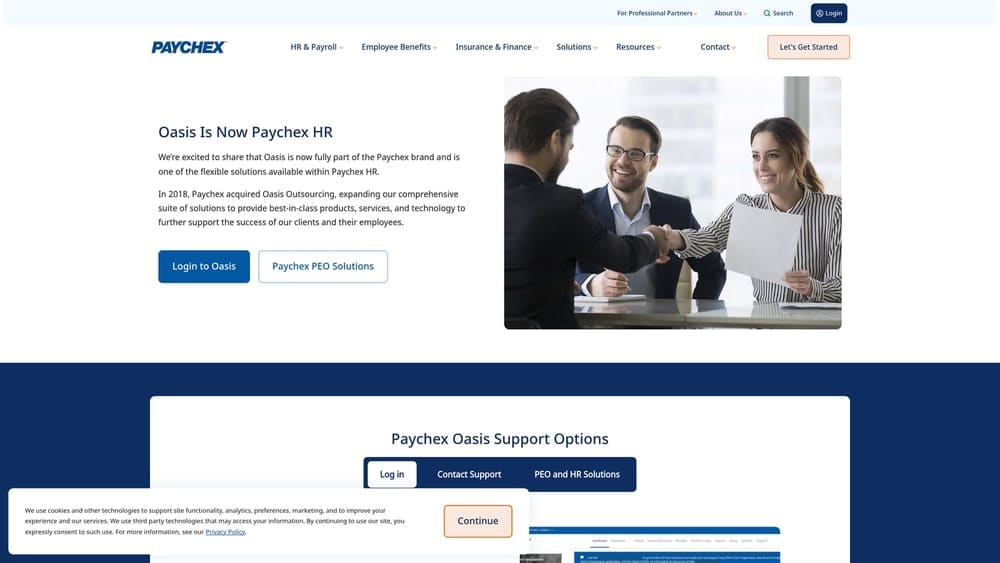
Oasis Outsourcing is a long-running PEO serving small and mid-size employers. Its standout trait here is flexible plan design, which can matter if you want a benefits package shaped around your mix of managers, full-time cooks and part-time servers.
- Flexible plan design so benefits can be tailored to different employee groups.
- Payroll processing for hourly and salaried staff.
- Benefits options you can adjust as your team changes.
- Workers’ comp support to help with coverage and claims.
Technology and integration depth can differ by plan, so confirm what’s included before signing. Ask directly about time clock and scheduling connections and how tip income flows into payroll. A mid-size operator will typically have an HR or finance contact working with the vendor during setup and afterward.
It may be a poor match if your priority is a polished, tech-first experience across every plan, or if you need a provider whose systems tie into a specific payroll ecosystem. Pricing is quote-based and moves with headcount, benefit selections and workers’ comp assumptions.
Best for: Mid-size restaurant operators wanting customizable benefits packages.
9. Barrett Business Services (BBSI)
Barrett Business Services (BBSI) is a PEO and business management provider that combines a local-branch service model with a workers’ comp focus. If your biggest cost pressure is injuries, claims and premiums, this is the one on the list organized around that problem.
Restaurant work carries real injury exposure from burns, cuts and slips, so hands-on safety management has practical value. A local branch can mean someone who understands your area and can visit your sites.
- Local branch support so you have a nearby contact rather than a distant call center.
- A workers’ comp and safety focus aimed at lowering claims and managing costs.
- Payroll processing for your hourly workforce.
- HR advisory help for hiring, discipline and policy questions.
The key limitation is footprint. Confirm state availability and how the service is structured for your locations before going further. Verify integrations with the vendor, since technology depth isn’t the headline strength. Day-to-day, expect to work with a branch team rather than a self-service portal alone.
It’s less compelling if you operate across many states or want a platform-first experience. Pricing is quote-based and depends on headcount, payroll and your workers’ comp history.
Best for: Operators whose main concern is workers’ comp cost and claims handling.
Matching a Provider to Your Restaurant’s Situation
Match the tool to the problem. If you own one unit and have no HR staff, Justworks is the simplest starting point because of its published pricing, though a very small team may not save money from any PEO. If you run several locations on an existing payroll platform, ADP TotalSource or Paychex PEO lets you stay inside a system your managers already know. If workers’ comp drives your costs, BBSI is built around that concern, with the caveat of regional availability. If tip-heavy payroll is your biggest complexity, press every vendor on how tips, tip credits and pooling are handled under federal and state rules, since those rules differ by state.
Terms change, so verify current minimums, pricing, state availability and CPEO status with each vendor as of 2026. Make sure every quote uses the same workers’ comp assumptions, or the comparison means little. This article is informational and not legal, tax or benefits advice.
Before you sign that PEO renewal, make sure you’re not leaving money on the table. Many businesses unknowingly overpay because of bundled fees, hidden administrative markups, and contracts designed to limit flexibility. PEO Metrics gives you a clear, side-by-side breakdown of pricing, services, and contract terms, so you can see exactly what you’re paying for and choose the option that truly fits your business. PEO Metrics may receive vendor placement fees.
