
Running a security guard company means dealing with a workforce profile most PEOs aren’t built for. High turnover, complex shift scheduling, elevated workers’ comp classifications, and multi-state licensing requirements that vary dramatically by jurisdiction — these aren’t edge cases for a contract security operation. They’re the baseline.
A generic PEO that works fine for a tech startup or a retail shop can be a poor fit — and an expensive one — for a security firm. The workers’ comp exposure alone, particularly for armed guard operations or firms working federal contracts, means that choosing the wrong provider can cost you more than going without one.
This guide covers the top resources available to security guard companies evaluating PEO providers. The list is intentionally short. We’ve kept it focused on tools that genuinely serve this niche rather than padding it with options that don’t move the needle for security firms. If you want broader context on what a PEO actually delivers for security operations, the PEO benefits breakdown for home security companies covers adjacent ground worth reading before you start comparing providers.
1. PEO Metrics
Best for: Security firms that need structured, side-by-side PEO comparisons with industry-relevant depth
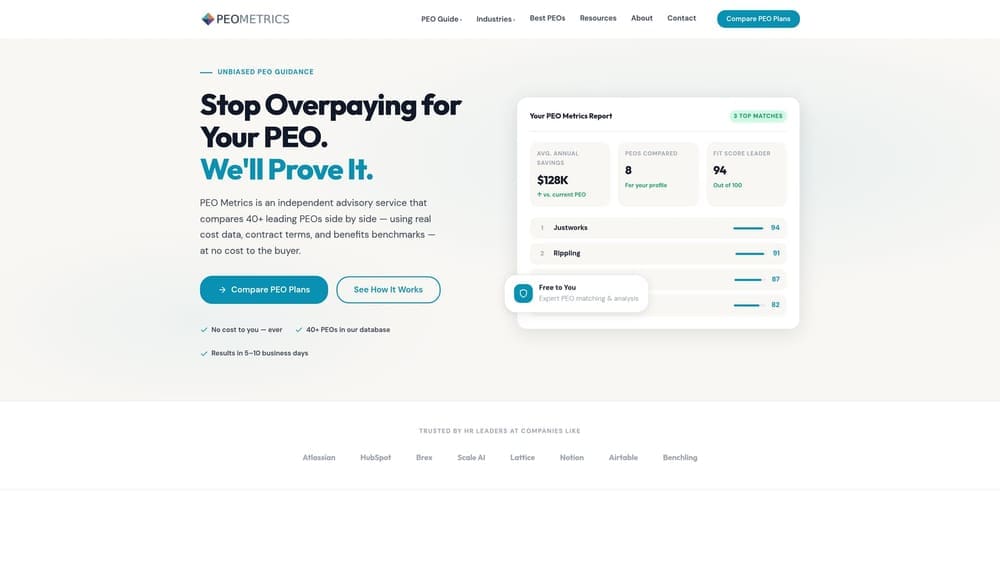
PEO Metrics is a PEO comparison platform built for businesses that need more than a generic referral — particularly useful when your risk profile, payroll complexity, and compliance exposure make the wrong choice genuinely costly.
Where This Tool Shines
For security guard companies, the core value is in the depth of comparison. Most PEO referral services match you to a provider based on headcount and industry code, then step back. PEO Metrics takes a more structured approach: side-by-side analysis that surfaces the variables that actually matter for a security operation — workers’ comp classification handling, multi-state compliance infrastructure, and pricing transparency that shows you where fees are bundled or marked up.
The unbiased positioning is worth noting here. Security companies are frequently approached by PEOs that pitch aggressively but aren’t genuinely equipped for the workers’ comp complexity or the operational demands of a 24/7 shift-based workforce. Having a comparison framework that isn’t tied to any single provider gives you a cleaner read on what you’re actually being offered versus what you actually need.
Key Features
Side-by-Side Provider Comparisons: Structured, detailed comparisons across multiple PEO providers using consistent metrics — not marketing summaries.
Pricing Transparency: Surfaces where you may be overpaying due to bundled fees, administrative markups, or contract structures that limit flexibility.
Unbiased Guidance: Not affiliated with or incentivized by any single PEO provider, which matters when you’re evaluating options in a high-stakes industry.
Industry-Relevant Evaluation Framework: The comparison structure accounts for factors like workers’ comp classification, compliance complexity, and benefits design for hourly workforces — not just headcount and basic payroll.
Support for Complex Evaluations: Particularly useful when workers’ comp rates, armed vs. unarmed distinctions, or multi-state operations make the decision harder than average.
Best For
Security guard companies actively evaluating PEO options who want a structured, apples-to-apples comparison before committing to a contract. Also useful for firms approaching a renewal who want to verify they’re not overpaying relative to the market.
Pricing
Free comparison service. No cost to the business evaluating PEO providers.
2. PEOcompare
Best for: Early-stage discovery — getting a broad view of what providers are available before narrowing down
PEOcompare is a PEO marketplace that aggregates provider options and lets businesses view multiple PEOs in one place, useful when you’re at the beginning of the evaluation process and still mapping the landscape.

Where This Tool Shines
If you’re a security firm owner who hasn’t started the PEO search yet and wants a broad sense of who’s in the market, PEOcompare gives you a starting point without requiring you to contact individual providers one by one. The marketplace format is efficient for initial shortlisting.
That said, be realistic about what you’re getting at this stage. A marketplace view is useful for understanding the range of options, but it won’t necessarily surface the industry-specific variables that matter most for security operations — workers’ comp classification handling, armed guard eligibility, or how a provider manages high-volume onboarding for a turnover-heavy workforce. Think of PEOcompare as a starting point, not a finishing one.
Key Features
Broad Marketplace View: Aggregates multiple PEO providers in one place, reducing the time spent on initial research.
Side-by-Side Comparison Functionality: Allows basic provider comparisons across multiple options simultaneously.
Initial Shortlisting Support: Useful for narrowing a long list of potential providers down to a more manageable set for deeper evaluation.
Range of Business Sizes and Industries: Covers providers that serve various company sizes, which is helpful if your security firm is growing and your PEO needs may change.
Best For
Security firms in the early discovery phase who want to understand what providers exist before starting a more detailed evaluation. Best used as a first step, not a final one — particularly given the compliance and workers’ comp complexity specific to this industry.
Pricing
Free to use for businesses comparing providers.
3. HR Guide
Best for: Security firm owners or office managers handling HR decisions without a dedicated HR background
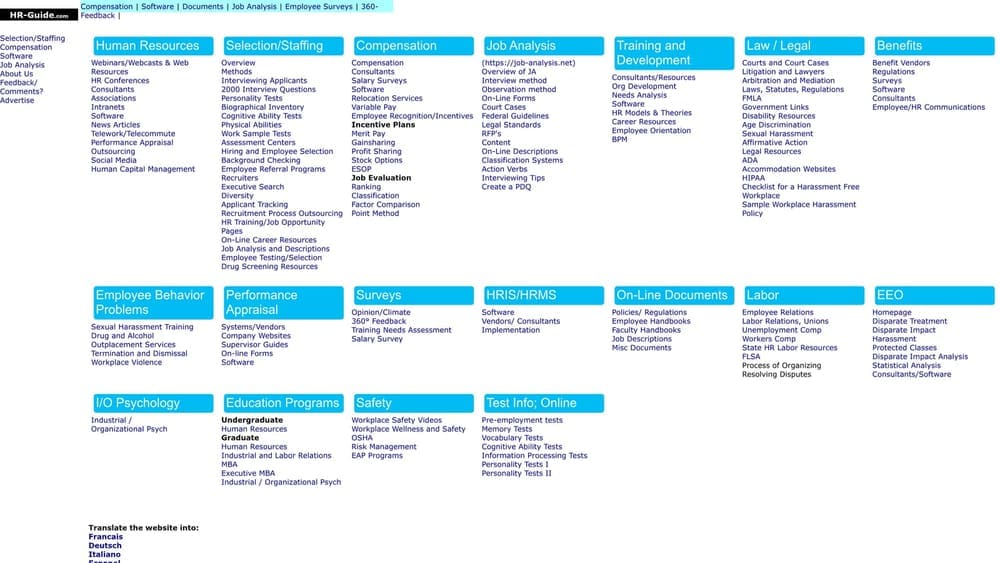
HR Guide is an HR knowledge and guidance resource that covers PEO topics alongside broader HR content. It’s less of a direct comparison tool and more of an educational foundation — useful when you’re making HR decisions and need to build context before you can ask the right questions.
Where This Tool Shines
Many security guard companies — especially smaller operations — don’t have a dedicated HR function. The owner or office manager is handling payroll, compliance, benefits, and PEO evaluation on top of everything else. HR Guide is useful in that context: it covers the basics of PEO structure, co-employment, and compliance topics in accessible language without assuming deep HR expertise.
For security firms specifically, understanding the co-employment model before entering a PEO relationship matters. If you don’t know what you’re agreeing to in terms of shared employer liability, benefits administration, and compliance responsibility, you’re at a disadvantage in any PEO negotiation. HR Guide helps close that knowledge gap. It won’t replace a structured comparison tool, but it makes you a more informed buyer. For compliance-specific depth relevant to security operations, the PEO HR compliance guide for home security covers adjacent regulatory ground worth reviewing alongside it.
Key Features
Educational PEO Content: Covers PEO structures, co-employment basics, and how PEO relationships work in practice — useful for first-time evaluators.
HR Compliance Guidance: Addresses compliance and benefits topics that are relevant to service industry employers managing hourly workforces.
Accessible for Non-HR Professionals: Written for business owners and managers who are making HR decisions without a formal HR background.
Broad Workforce Management Coverage: Touches on topics relevant to service industry employers, including benefits administration and workforce compliance basics.
Best For
Security firm owners or operations managers who are new to PEO evaluation and need to build foundational knowledge before comparing providers. Most useful as a supplement to a structured comparison process, not a replacement for one.
Pricing
Free resource.
What Security Firms Should Evaluate in Any PEO — Before Committing
The three tools above will help you research and compare providers, but it’s worth being clear about what you’re actually evaluating. Security guard companies have a narrower window of good PEO fits than most industries, and the variables that matter are specific.
Workers’ Comp Classification: This is the highest-stakes factor for most security operations. Common NCCI class codes for security guard services carry meaningful rate variation depending on state, client type, and whether guards are armed or unarmed. A PEO that misclassifies your workforce — or that pools security workers with lower-risk employee groups — can create real cost exposure. Ask any PEO you’re evaluating how they handle workers’ comp classification for security clients specifically, and whether armed guard operations are within their appetite.
Armed vs. Unarmed Distinctions: Not all PEOs will take on armed security clients. Those that do may price it very differently. This is a filter you need to apply early. If you’re running armed operations and a PEO doesn’t disclose their position on this upfront, that’s a red flag. For context on how risk management works in adjacent high-liability industries, the PEO risk management breakdown for scaffolding contractors illustrates how specialized risk profiles require specialized PEO handling.
High-Turnover Onboarding: Contract security is one of the higher-turnover industries in the service sector. PEOs that charge per-onboarding fees or that have clunky onboarding workflows become expensive and operationally painful fast. Ask how onboarding is structured, what it costs at volume, and whether the system is built to handle frequent new-hire processing without friction.
Multi-State Licensing and Compliance: Security guard companies operating across state lines face layered compliance requirements: state-specific guard licensing, varying armed guard regulations, and multi-state payroll tax obligations. A PEO with genuine multi-state compliance infrastructure is meaningfully different from one that operates primarily in a single state. This isn’t a generic talking point — it’s a structural requirement for any security firm with contracts in multiple jurisdictions.
Benefits Design for Variable-Hour Workers: Most security guard employees are hourly, and many work variable or part-time schedules. Benefits packages designed for salaried, full-time employees don’t translate well. ACA compliance for variable-hour employees adds another layer. Ask how any PEO you’re evaluating handles benefits eligibility tracking and plan design for an hourly workforce before you assume their standard offering fits.
Shift-Based Payroll Complexity: 24/7 operations, rotating shifts, overtime calculations, and contract-based billing all create payroll complexity that basic PEO payroll systems may not handle cleanly. This is a practical operational factor that often doesn’t come up in initial sales conversations but becomes obvious quickly after you’re live on the platform.
Making the Right Call for Your Security Operation
Security guard companies have a narrower window of good PEO fits than most industries. The workers’ comp exposure alone — especially for armed guard operations or firms working federal contracts — means that a PEO without genuine experience in this space can cost you more than going without one. The tools listed here won’t make the decision for you, but they’ll help you ask better questions, compare real numbers, and avoid getting locked into a contract with a provider that wasn’t built for your risk profile.
If you’re actively evaluating PEO options for your security firm, PEO Metrics is the most direct path to a structured, apples-to-apples comparison with pricing transparency. Use PEOcompare to cast a wider initial net if you’re still in discovery mode, and use HR Guide to fill in any foundational knowledge gaps before you start negotiating. For workers’ comp context that’s relevant to high-liability service operations, the PEO workers’ comp guide for lead paint removal contractors offers a useful parallel on how specialized classification handling works in practice.
Go into any PEO conversation knowing exactly what you’re comparing — and what your operation actually requires. The difference between a PEO that understands security operations and one that doesn’t is measurable in both cost and compliance exposure.
Don’t auto-renew. Make an informed, confident decision.
Before you sign that PEO renewal, make sure you’re not leaving money on the table.
Many businesses unknowingly overpay because of bundled fees, hidden administrative markups, and contracts designed to limit flexibility. We give you a clear, side-by-side breakdown of pricing, services, and contract terms—so you can see exactly what you’re paying for and choose the option that truly fits your business.
