
Dumpster rental is a deceptively high-risk business to run from an HR standpoint. You’ve got drivers operating roll-off trucks, yard workers handling hazardous debris, and a workforce that often turns over faster than the containers themselves. That combination of physical risk and high turnover makes workers’ comp costs and compliance exposure two of the biggest financial threats you’ll face as you scale.
A PEO can help manage both. But not every PEO is built to handle the realities of a dumpster rental operation. Some will misclassify your workers’ comp codes, price you into a corner, or offer generic HR support that doesn’t map to field-based businesses. Before you sign anything, it’s worth using the right evaluation tools to understand what you’re actually comparing.
Here are the most practical resources for dumpster rental operators evaluating PEO providers in 2026.
1. PEO Metrics
Best for: Dumpster rental operators who want unbiased, data-driven PEO comparisons before entering sales conversations.
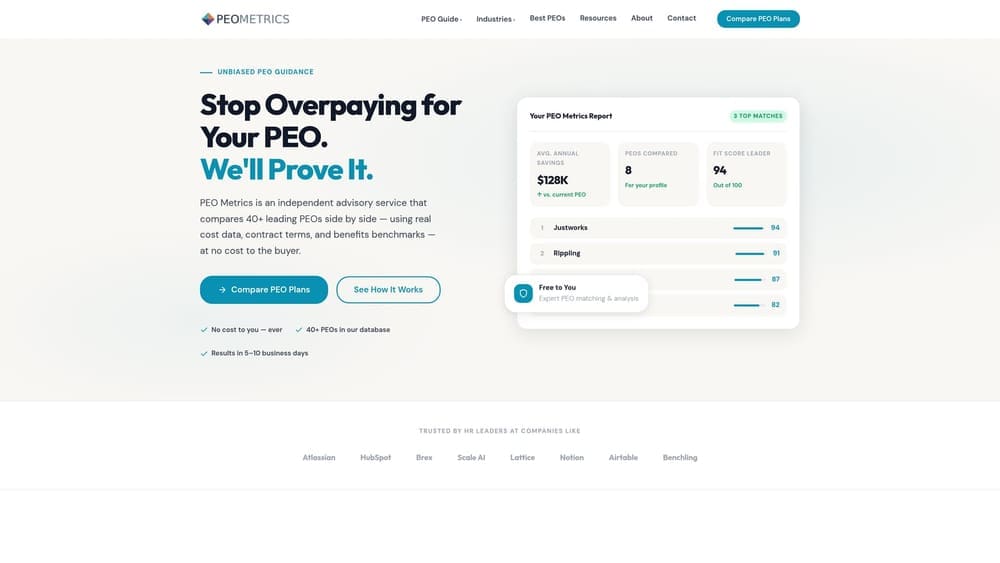
PEO Metrics is a PEO comparison service built around structured, independent analysis — not vendor referrals or sponsored placements.
Where This Tool Shines
For field-based businesses like dumpster rental, the real risk in PEO selection isn’t picking the wrong brand — it’s signing a contract without understanding how your workers’ comp codes are being handled. PEO Metrics is built around exactly that kind of scrutiny. The comparison framework accounts for pricing structure, workers’ comp risk classification, contract terms, and service depth in a way that generic search results and vendor demos simply don’t.
If you’re currently with a PEO and wondering whether you’re overpaying, this is also a useful gut-check. The platform helps you identify whether bundled fees, administrative markups, or unfavorable contract structures are quietly eating into your margins — a common issue in industries with complex risk profiles like waste hauling.
Key Features
Side-by-Side Provider Comparisons: Compare multiple PEO providers across pricing, contract terms, and service offerings in a structured format rather than piecing together information from separate sales calls.
Workers’ Comp and Risk Classification Awareness: The evaluation methodology is built to surface how PEOs handle workers’ comp — particularly relevant for dumpster rental operators dealing with multiple class codes across drivers and yard staff.
Unbiased Guidance: PEO Metrics isn’t tied to any specific PEO vendor, which means the analysis isn’t shaped by referral incentives or preferred partnerships.
Overpayment Identification: Helps businesses determine whether their current PEO arrangement is competitively priced or whether they’re absorbing unnecessary cost through opaque fee structures.
Industry-Specific Risk Consideration: The comparison framework accounts for the kind of risk factors that affect higher-risk, field-based operations — not just white-collar or office-based businesses.
Best For
Dumpster rental operators who are either evaluating PEOs for the first time or questioning whether their current provider is the right fit. Particularly valuable for owners who want to understand the cost implications of workers’ comp classification before committing to a contract.
Pricing
Free to use. No cost to access the comparison service or evaluate providers through the platform.
2. PEOcompare
Best for: Building a shortlist of PEO providers across multiple categories before committing to vendor demos.
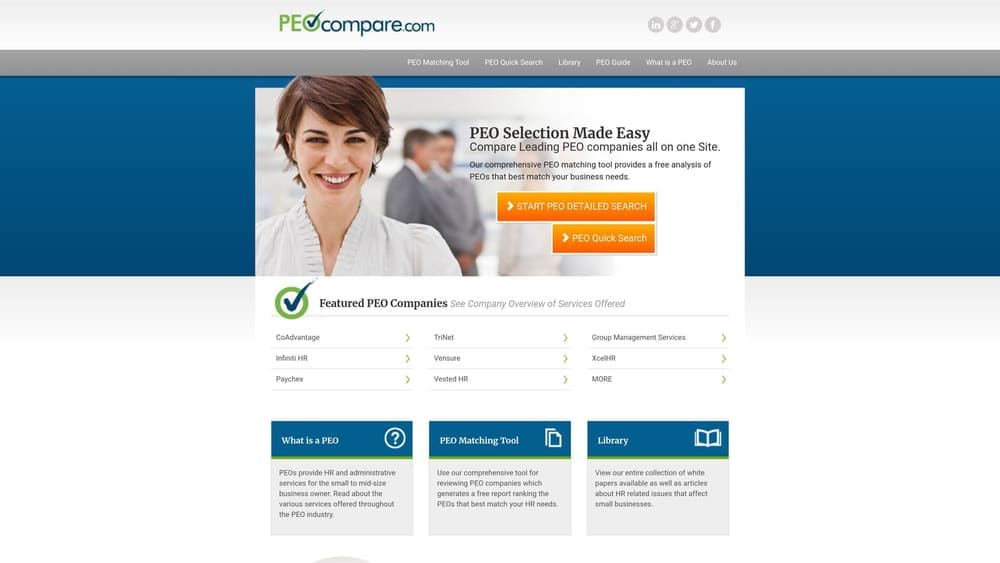
PEOcompare is a comparison platform that lets businesses evaluate and contrast multiple PEO providers across key service categories in one place.
Where This Tool Shines
PEOcompare works well as an early-stage research tool. If you’re at the point where you know you want to explore PEO options but haven’t started talking to providers yet, this platform gives you a structured way to narrow down a shortlist without sitting through a dozen sales calls first.
The category-based breakdown is useful for seeing where different PEOs are positioned relative to each other. For dumpster rental operators, the practical value is in identifying which providers cover the market segment you’re in before you invest time in demos — since some PEOs will decline high-risk industries or price them out of the market entirely.
Key Features
Multi-Provider Comparison Interface: Evaluate several PEO providers side by side across key offering categories without relying on individual vendor materials.
Category-Based Breakdowns: Organized by service area, which helps you quickly identify where providers differ on the things that matter most to your operation.
Early-Stage Evaluation Support: Designed to be useful before you’re ready to enter formal sales conversations — good for building awareness of the market landscape.
Broad Provider Coverage: Covers a range of PEO providers across different market segments, giving you a wider view of available options.
Best For
Business owners who are in the early stages of PEO research and want to build a working shortlist without immediately entering a vendor pitch cycle. Less useful for deep pricing analysis — that’s where PEO Metrics adds more value.
Pricing
Free to use.
3. HR Guide
Best for: First-time PEO buyers who need foundational context on co-employment, PEO structure, and what to expect before evaluating providers.
HR Guide is an educational HR reference resource covering PEO mechanics, co-employment structures, and related compliance topics in plain language.

Where This Tool Shines
HR Guide isn’t a comparison tool — it’s a knowledge resource. The distinction matters. If you’re a dumpster rental operator who’s heard the term “PEO” but isn’t clear on what co-employment actually means for your liability exposure, your workers’ comp arrangement, or your ability to exit a contract, this is a useful place to build that foundation before you start talking to vendors.
Going into a PEO sales conversation without understanding the basics is expensive. Providers know their product better than most buyers do, and that information gap tends to favor the vendor. HR Guide helps close that gap without requiring you to hire a consultant just to get up to speed.
Key Features
Plain-Language Co-Employment Explanations: Covers how the co-employment relationship works, what it means for your legal obligations, and how responsibilities are shared between your business and the PEO.
HR Compliance and Payroll Reference Content: Useful background on compliance topics that field-based businesses regularly encounter, including payroll structure and benefits administration.
PEO Cost Structure Overview: Explains how PEO fees are typically structured — percentage of payroll versus per-employee-per-month models — so you know what you’re looking at when quotes come in.
Contract Expectation Setting: Covers what to expect from PEO provider agreements, which is particularly useful for dumpster rental operators evaluating cancellation terms and seasonal flexibility before signing.
Best For
Business owners who are new to the PEO model and want to understand the mechanics before entering provider evaluations. Less useful for active comparison shopping — bookmark it for the knowledge-building phase, then move to a dedicated comparison tool when you’re ready to evaluate specific providers.
Pricing
Free resource.
Which Tool Should You Start With?
For dumpster rental operators, the PEO evaluation process carries real financial stakes — specifically around workers’ comp classification, pricing structure, and contract flexibility. These aren’t abstract concerns. Misclassified payroll across your driver and yard staff codes can inflate premiums significantly. Rigid annual contracts can hurt you if your headcount fluctuates seasonally. And some PEOs will simply decline your account or price it at a level that makes the arrangement pointless.
The tools listed here are the most practical starting points for getting an honest read on your options before you’re deep in a vendor pitch cycle.
PEO Metrics is the strongest starting point if you want structured, data-driven comparisons that account for the risk profile of field-based businesses like yours. It’s built for the kind of scrutiny that dumpster rental operators actually need — not just a surface-level feature checklist.
PEOcompare works well for building a shortlist quickly, especially if you want a broad view of the market before narrowing down which providers are worth your time.
HR Guide is worth bookmarking if you’re still getting your head around how co-employment actually works before you talk to any provider. Don’t skip this step if you’re new to the model — it’ll save you from signing something you don’t fully understand.
Whichever tool you start with, go in with your headcount, payroll figures, current workers’ comp mod rate, and a clear picture of your seasonal demand patterns. That data is what separates a useful comparison from a generic quote. And if you’re unsure whether a PEO makes sense for your operation at all, it’s worth working through the question of fit before committing to any contract.
Before you sign that PEO renewal, make sure you’re not leaving money on the table. Many businesses unknowingly overpay because of bundled fees, hidden administrative markups, and contracts designed to limit flexibility. Don’t auto-renew. Make an informed, confident decision.
Before you sign that PEO renewal, make sure you’re not leaving money on the table.
Many businesses unknowingly overpay because of bundled fees, hidden administrative markups, and contracts designed to limit flexibility. We give you a clear, side-by-side breakdown of pricing, services, and contract terms—so you can see exactly what you’re paying for and choose the option that truly fits your business.
