
EPLI stands for Employment Practices Liability Insurance. It protects employers against employment-related claims tied to hiring, firing, promotions, pay, harassment, discrimination, wrongful termination, retaliation, and similar workplace conduct.
That's the clean answer. The messy part is what that coverage does inside a PEO contract, because the acronym shows up right when HR and finance are already dealing with service agreements, payroll risk, and liability language they didn't ask to decode.
Table of Contents
- What EPLI Covers and What It Does Not
- How EPLI Works as a Claims-Made Policy
- Typical Coverage and Common Exclusions
- Real Claim Scenarios and What They Cost
- EPLI, PEOs, and the Co-Employment Question
- What HR and Finance Should Check in EPLI Contracts
- Key Takeaways for Your EPLI Evaluation
What EPLI Covers and What It Does Not
An HR director reviews a PEO proposal and sees “EPLI included.” That sounds reassuring until someone asks what it covers in a real dispute. EPLI is Employment Practices Liability Insurance, a specialized liability policy for employment-related claims, not a catch-all answer for every workplace problem. IRMI uses the term to describe coverage for employment practices liability, and the shorthand EPL or EPLI is common across the industry IRMI's employment practices liability definition.
What the policy is built to answer
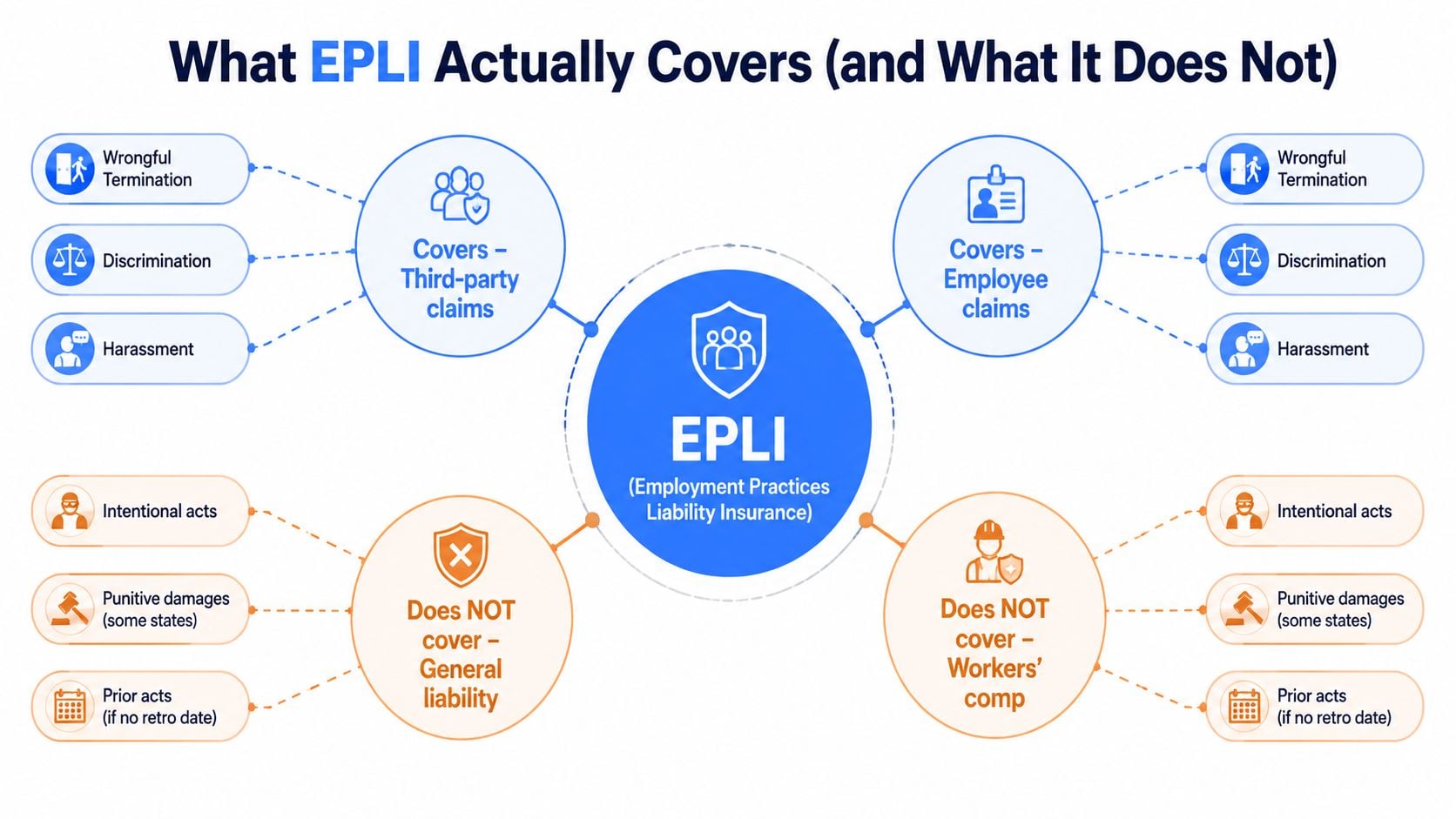
EPLI is built for claims that come out of the employment relationship, including allegations tied to hiring, firing, promotions, pay, and workplace conduct. Industry references describe it as coverage for discrimination, wrongful termination, harassment, and failure to promote, which is why it shows up so often in contract review when employment exposure is part of the deal LiabilityInsuranceAuthority's EPLI overview.
That distinction matters because standard Commercial General Liability policies usually do not pick up employer-employee disputes. LiabilityInsuranceAuthority notes that EPLI sits outside typical CGL coverage because those forms exclude most employment-related torts. If a broker says “your general liability already handles it,” treat that as a warning sign, not a reassurance.
Practical rule: if the claim starts with an employee, former employee, applicant, or sometimes a third party complaining about employment treatment, EPLI is the policy to inspect first.
For a more detailed primer on policy basics, the EPLI guide from PEO Metrics is a useful reference when a PEO proposal is still in draft form.
What it does not magically solve
EPLI does not mean every employment loss gets paid. The Insurance Information Institute explains that the policy usually covers defense costs, settlements, and judgments, but typically excludes punitive damages and criminal or civil fines III on employment practices liability insurance. That gap is not academic. It separates legal defense support from the assumption that the insurer will absorb every ugly outcome.
The blunt takeaway for HR and finance is simple. EPLI is a targeted employment claim policy, not a universal shield. If the contract language is vague, the buyer is probably taking more risk than the sales deck admits.
A separate issue shows up in PEO deals. Teams often assume the PEO's EPLI automatically answers the co-employment question, but that assumption is dangerous. The contract needs to say who carries the policy, whose employees are covered, and whether the client company is named in the insured group or only left hoping the arrangement works as intended. That is the kind of detail that matters in a dispute, and it is where Knowlify training for insurance agents is useful background for anyone reviewing how the coverage is positioned.
How EPLI Works as a Claims-Made Policy
The claims-made structure is the part most buyers gloss over, then regret later. EPLI is typically written as a claims-made policy, so the timing of the allegation matters as much as the allegation itself. If the claim is made outside the active policy period, coverage can disappear even when the underlying employment event happened while the policy was in force Insurance Training Center on EPLI structure.
Why the trigger matters more than the story
Occurrence-based policies look backward at when the incident happened. Claims-made policies look at when the claim was first made and reported. That difference is huge in employment cases because the gap between a manager's decision and a formal demand letter can be long enough to create a coverage problem.
A complaint may start inside an internal process, then become a lawyer's letter months later. If the company switched carriers or let coverage lapse during that window, the trigger becomes the fight. The ABA's labor and employment law journal notes that stand-alone EPLI emerged in the late 1980s to fill gaps left by commercial general liability exclusions, and that early policies were built around limited coverage triggers ABA journal article on EPLI history.
A claims-made policy rewards clean paperwork. Late notice and sloppy renewal handling can do more damage than a weak merits defense.
Named-perils means specific allegations only
EPLI is also usually written on a named-perils basis. That means it responds to the specific employment-related allegations listed in the policy form, not to every workplace dispute under the sun. Buyers who assume “employment insurance” means broad HR liability protection usually overread the contract.
For HR and finance teams, the practical job is to check the trigger language before comparing premium quotes. A policy that looks cheaper can be weaker if it narrows the reporting window, limits covered allegations, or sets traps around renewals and retroactive dates. For anyone who needs a plain-English walkthrough of how the policy is framed, Knowlify training for insurance agents is useful background because the claims-made concept is easier to explain than it is to manage in practice.
The bottom line is plain. EPLI works best when the reporting process is disciplined, the policy period is tracked carefully, and the buyer knows exactly which allegation types are inside the form.
Typical Coverage and Common Exclusions
The fastest way to judge EPLI is to separate the protections you buy from the risks you still keep. Most policies are built to pay defense costs first, then settlements or judgments if the claim fits the coverage grant. That matters because employment cases often get expensive before anyone reaches a resolution.
What good EPLI usually includes
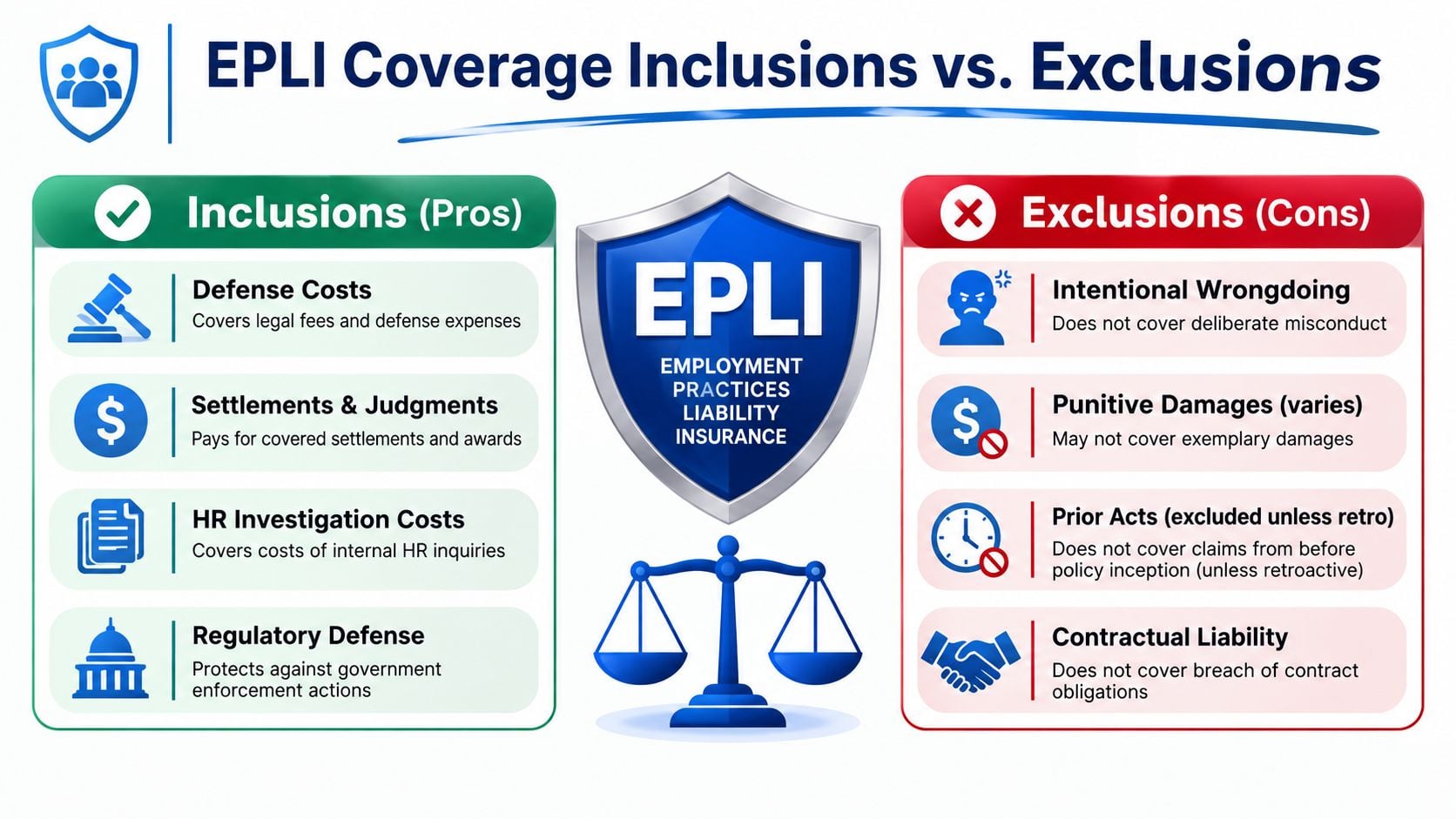
Typical coverage starts with defense costs, then extends to settlements and judgments tied to covered employment claims. The claim types usually include discrimination, wrongful termination, harassment, and retaliation. Some policies also respond to claims brought by current employees, former employees, applicants, and sometimes third parties, which matters when a customer, vendor, or visitor alleges workplace misconduct under a covered theory.
For buyers comparing a PEO bundle to a stand-alone policy, the issue is not whether the coverage sounds broad in a brochure. It is whether the policy language names the claims that matter to that business. A company with high turnover and frequent applicant complaints needs different wording from a stable professional-services firm.
The what EPLI insurance covers page from PEO Metrics is a useful comparison point when a team wants to match the policy form against actual exposure.
The exclusions that create real financial pain
The biggest gap is punitive damages. Those are typically excluded, along with criminal or civil fines. That matters because a defense win still costs money, and a punitive award that falls outside coverage can wipe out the value of a policy that looked adequate on paper.
Another practical problem is that some policy forms carve out wage-and-hour exposure or bury it in endorsements, which leaves employers exposed if they think every labor claim is included. The wording, not the label on the policy, controls how broad the protection really is. The same caution applies to Umbrella Company insurance advice, where the contract language decides what the insurer pays and what stays with the buyer.
What to watch for in plain English
- Defense costs inside limits: if legal spend erodes the policy limit, less money is left for settlement.
- Prior acts language: if the company is switching carriers, gaps in prior coverage can leave older allegations uncovered.
- Intentional wrongdoing exclusions: these are common and usually unavoidable.
That is the heart of the issue. EPLI can shift a real chunk of employment risk, but only if the employer knows exactly where the exclusions sit.
Real Claim Scenarios and What They Cost
Employment claims rarely arrive as neat policy illustrations. They show up as complaints, attorney letters, board questions, and budget meetings no one wanted. The money involved can move fast, even before anyone decides who is liable.
Wrongful termination with a long defense tail
A manager ends employment after a performance dispute. The former employee alleges discrimination or retaliation, and the company spends months in discovery before settlement talks even begin. Defense costs can run from $50,000 to $150,000 before any settlement, even when the employer ultimately wins.
That is the part buyers forget. A business does not have to lose on the merits to take a hit. Attorney fees, document production, depositions, and internal management time all land before the case is finished. If the policy is claims-made and notice comes late, the employer may have to fund those costs itself.
Harassment claim that settles quickly
A harassment allegation often moves faster because the facts are personal, the witnesses are close to the issue, and the company wants the matter resolved without a public fight. A $250,000 settlement is a common working benchmark for this type of scenario. The employer may still pay deductibles, management time, and parts of the response that the policy does not reimburse.
The mistake is treating settlement value as the whole bill. It is not. HR time, outside counsel, and disruption to the team all count, even if the insurer covers the settlement amount itself.
Discrimination claim with a catastrophic outcome
A discrimination claim can become much larger if the facts are bad, the documentation is weak, and the employer has poor witness support. A $500,000 judgment is the kind of number that forces finance to ask whether the policy limits were set for reality or for convenience. Once the limit is exhausted, the company absorbs the rest.
Budget rule: a low premium means nothing if one bad file burns through the limit before the case ends.
For a grounded example of how an employment dispute can unfold in a PEO setting, the PEO employment lawsuit case study from PEO Metrics helps buyers think through the process without pretending every case follows the same script.
Finance should use a simple decision rule. Compare limits against the kind of claim the company could face, not against the premium alone. A policy that looks fine at renewal can look very small after one serious allegation.
EPLI, PEOs, and the Co-Employment Question
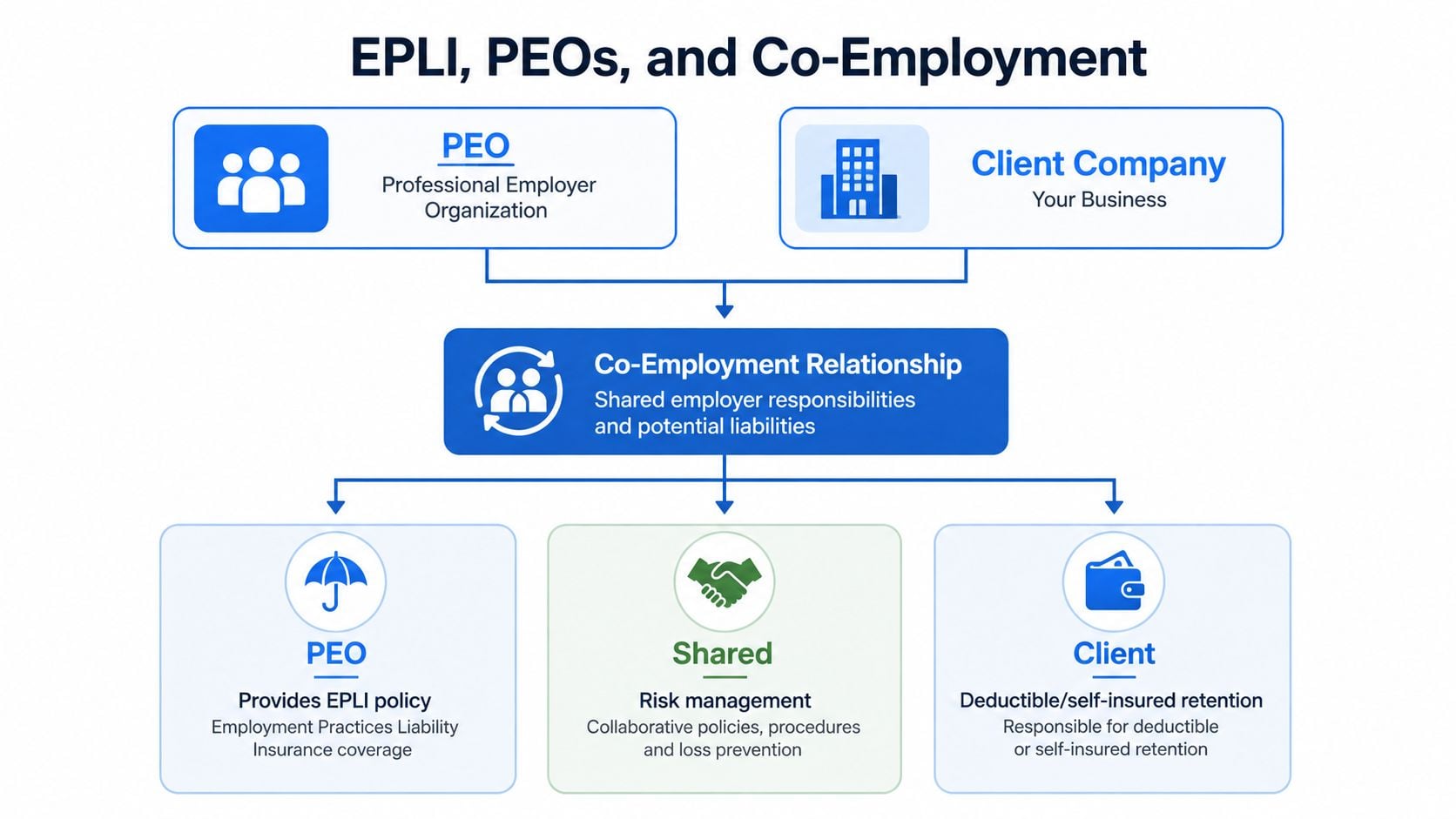
The PEO question is where the acronym stops being academic. In a co-employment relationship, both the PEO and the client company are legal employers in different respects, and the issue is not whether EPLI exists somewhere in the relationship. The issue is who carries it, who pays for it, and whose acts trigger it PEO co-employment explained.
Two basic structures show up again and again
Some PEOs provide EPLI as part of the bundled service. Others expect the client company to maintain its own stand-alone policy. Both models can work, but the contract has to say which entity is responsible for what. If that language is fuzzy, the buyer is usually the one who finds out after the claim is filed.
The Nationwide guidance is blunt on the big picture. Employers are not legally required to buy EPLI, but it is strongly recommended because the cost of defending employment claims can be high Nationwide on employment practices liability. That recommendation matters in a PEO setting because the question is rarely “Should the company have protection?” It is “Which side of the co-employment arrangement controls the protection?”
Partial protection may already exist, but don't assume it
Some buyers already have partial protection through other policies or internal controls. Paycor's guidance notes that employers should evaluate whether existing coverage already fills part of the gap, rather than blindly buying duplicate protection Paycor on employment practices liability insurance. That's smart, but it's not a reason to get casual about the contract.
A PEO may say EPLI is included, while the client's own misclassification, termination practice, or manager conduct still sits outside the policy trigger. Another common problem is that the policy covers the PEO's employees but not every act taken by the client's supervisors, especially if notice rules or covered-party definitions are narrow.
What HR and finance should press on
The business should ask four direct questions. Who is the named insured. Does the policy cover the client's managers and supervisors. How are third-party claims treated. What happens if the PEO relationship ends and a claim shows up later.
If the contract does not assign EPLI responsibility in writing, the buyer is guessing. Guessing is not a risk strategy.
The PEO liability insurance page from PEO Metrics is relevant here because it helps frame where liability language belongs in the contract stack. The right answer is not always “stand-alone” or “bundled.” The right answer is the structure that clearly matches the client's actual employment risk and the PEO agreement's wording.
What HR and Finance Should Check in EPLI Contracts
A weak EPLI review starts with the quote and stops there. That is the mistake. HR and finance need to read the contract and the policy form together, because that is where the allocation of risk lives. Sales language can sound clean while the actual wording leaves the company holding the bag.
A practical review should force the document to answer a simple question, who pays when a claim lands. The answer usually turns on the named insured, the covered acts, the trigger, and the exclusions. If those pieces are vague, the company is not buying certainty, it is buying a dispute later.
The checklist that matters
- Policy form: confirm whether the coverage is stand-alone or part of a broader management-liability package. That choice shapes what gets pulled in, what gets carved out, and what may be weakened by other sections of the program.
- Named-perils list: verify that retaliation and third-party claims are expressly included if those exposures matter to the company. If they are missing, the policy may be narrower than the summary suggests.
- Limits and sub-limits: check both the per-claim limit and the aggregate limit. A policy can look strong until several matters tap the same bucket.
- Claims-made trigger: confirm how notice works and whether any tail coverage exists. Claims-made wording is where many renewal surprises begin, especially after a carrier change or a PEO transition.
- Punitive damages language: read the exclusion carefully and do not assume state law will fix the gap.
- Wage-and-hour language: some forms exclude it or handle it separately, so no one should wave that exposure away.
- Defense-cost allocation: determine whether defense costs erode limits. If they do, legal spend drains the reserve faster than many finance teams expect.
- Renewal and cancellation terms: a cheap first-year quote means little if renewal changes the reporting rules or narrows the trigger.
Red flags that should slow the deal
A policy summary that says “EPLI included” without the actual form attached is a warning sign. So is a contract that hides liability language in an appendix while the service team talks only about payroll and benefits. Buyers should ask for the exact endorsement wording, especially if the company is changing carriers or moving from one PEO to another.
The other red flag is overconfidence. Employment policies are not plug-and-play. The company should read the notice provisions, the definition of insureds, and the exclusions before the signature page, not after a demand letter arrives.
For teams comparing structures, the PEO employment practices liability page from PEO Metrics is a useful reference point, but the policy language still controls over any summary.
The hard truth is simple. HR needs to know who is covered. Finance needs to know what eats the limit. Leadership needs to know whether the contract matches the risk they think they bought.
Key Takeaways for Your EPLI Evaluation
EPLI means Employment Practices Liability Insurance, and that definition is the easy part. The decision is whether the policy is claims-made, what allegations it names, what it excludes, and who carries the responsibility inside a PEO arrangement. If those points are fuzzy, the company is exposed even if the renewal deck looks polished.
The best next step is blunt. Pull the actual policy form, confirm the named insureds, and compare the exclusions against the claim scenarios that could realistically hit the business. Then make the PEO answer one question in writing, who owns EPLI if the relationship changes or a claim surfaces after termination.
PEO Metrics helps companies compare, select, and negotiate PEO agreements with a clear view of pricing, contract terms, and liability language. For employers trying to sort out EPLI inside a PEO relationship, PEO Metrics can help surface the trade-offs before the contract gets signed.
