
Trucking, freight, and warehousing companies carry a different risk profile than most PEO clients. High workers’ comp classification codes, DOT-related compliance obligations, multi-state driver payroll, and driver turnover rates that outpace almost every other industry all mean that a PEO mismatch costs more here than it would for an office-based employer. Some providers actively court transportation and logistics accounts; others simply tolerate them at a markup. This list focuses on providers with a demonstrated presence in the transportation and logistics space, plus one resource for lining their quotes up against each other before you sign anything.
Quick Comparison
- PEO Metrics: best for companies that want to compare multiple PEO quotes before committing; quote-based service; the only entry here that is not a PEO itself but a way to evaluate them side by side.
- ADP TotalSource: best for large multi-state fleets; quote-based; runs on ADP’s own national payroll infrastructure.
- Insperity: best for mid-size to larger fleets without internal HR; quote-based; dedicated human HR service teams rather than a self-service portal.
- TriNet: best for companies competing on driver benefits; quote-based; industry-tailored plan structures instead of one generic package.
- G&A Partners: best for mid-market fleets wanting hands-on safety consulting; quote-based; risk management built around field-service and logistics operations.
- Engage PEO: best for trucking and distribution employers; quote-based; explicitly positioned toward transportation risk classes.
- Resourcing Edge: best for warehousing and distribution with large hourly headcounts; quote-based; time and attendance technology built for shift-based labor.
- Prestige Employee Administration: best for regionally concentrated fleets; quote-based; dedicated service teams instead of a call-center model.
- Vensure Employer Solutions: best for operations spread across many states; quote-based; national reach delivered through a group of affiliated PEO brands.
1. PEO Metrics
PEO Metrics is not a PEO. It is an independent comparison service built for employers who want to evaluate multiple PEO providers against each other using standardized metrics and pricing analysis, rather than working from each vendor’s own sales materials. For a logistics company juggling driver classifications, workers’ comp experience ratings, and multi-state licensing questions, that side-by-side view matters more than it would for a lower-risk employer, because pricing and underwriting for high-risk classes can vary widely between providers.
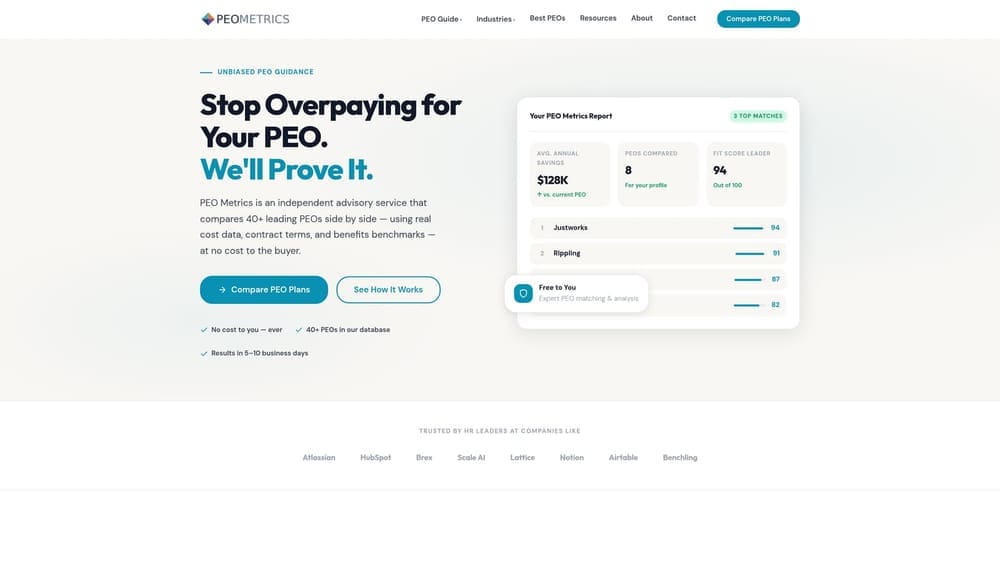
What sets it apart from every other entry on this list is that it doesn’t compete with them. It sits in front of the decision, helping you line up quotes from providers like the ones below before you sign a contract.
- Puts PEO pricing structures and contract terms next to each other so differences in fees and flexibility are easier to spot
- Helps match your workers’ comp classification needs to the providers with real strength in that area, rather than ones that simply accept the business
- Applies data-driven analysis aimed at catching bundled fees or markups that push up the real cost of a PEO relationship
There’s no software to integrate and no employee-facing platform, since the service itself is advisory. Setup is a conversation about your current workforce, states of operation, and classification codes, not a technical onboarding process. The people running it day to day are PEOMetrics advisors working with your HR lead or owner.
The main limitation is built into what it is: PEO Metrics doesn’t run payroll, administer benefits, or write workers’ comp coverage. It’s a step before choosing a PEO, not a substitute for one. Pricing is quote-based, structured as a service engagement rather than a per-employee PEO fee, so check the current details on the site.
Best for: Logistics companies that want to compare multiple PEO quotes and contract terms before committing to any single provider.
2. ADP TotalSource
ADP TotalSource is a PEO built on top of ADP’s own payroll and HR technology stack, aimed at employers who need to run payroll reliably across many states and locations. For a fleet with terminals in a dozen states, that infrastructure is the appeal: ADP’s payroll engine is one of the most established in the country, and TotalSource layers benefits administration, compliance support, and risk management resources on top of it.
What distinguishes it from smaller or more specialized PEOs on this list is scale. You’re buying into a national payroll and HR technology backbone rather than a boutique service relationship, which tends to matter more as a fleet grows past a single region.
- Runs payroll through ADP’s own processing platform rather than a third-party system layered underneath the PEO
- Handles benefits administration and compliance support across multiple states from one account
- Provides safety and risk management resources relevant to regulated, higher-risk workforces
- Gives HR a reporting dashboard that consolidates data across terminals and locations
Integrations run through ADP’s broader payroll ecosystem and common time and attendance tools. Because it’s built on an established enterprise platform, setup involves a more structured onboarding process, generally run jointly by your HR lead and an ADP implementation team.
The tradeoff for that scale is less contract flexibility. Smaller or single-region fleets sometimes find the pricing and terms better suited to larger accounts, so it’s worth confirming directly whether TotalSource’s structure fits a smaller headcount before assuming it will.
Best for: Larger multi-state logistics operations that want an established payroll backbone with PEO services layered on top.
3. Insperity
Insperity is a full-service HR and PEO provider built around dedicated HR service teams rather than a self-service software portal. For a trucking company without an internal HR department, that means a human point of contact handling benefits, payroll, and compliance questions instead of a ticketing system.
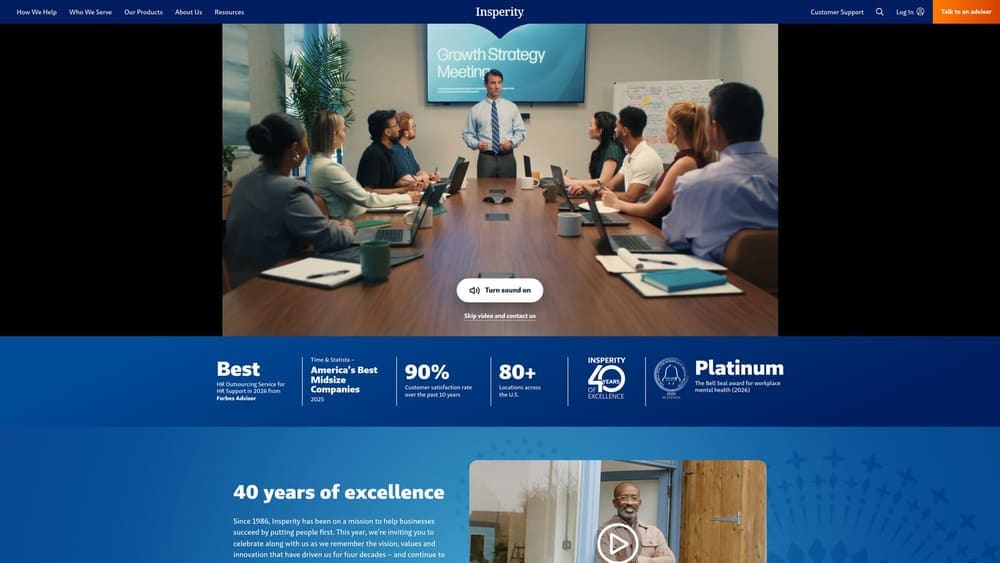
Compared with the more platform-driven providers on this list, Insperity’s differentiator is that hands-on service model. It suits logistics employers who want a relationship with actual HR professionals who understand their account, particularly useful when driver issues, terminal-level HR questions, or compliance concerns come up outside normal business hours.
- Assigns dedicated HR service teams so questions go to people familiar with your account, not a general call center
- Provides access to larger group benefits plans that can help with driver recruitment and retention
- Handles payroll and tax administration across your workforce
- Offers performance and talent management tools for tracking dispersed teams
Insperity’s technology runs through its Premier platform, paired with third-party benefits carrier integrations. Because the model leans on dedicated service teams, setup involves more direct consultation up front to establish how your terminals and driver classifications should be structured within the account.
The service model and associated pricing tend to be built for mid-size and larger fleets. A very small operator with only a handful of drivers may find the cost structure less favorable than options built specifically for smaller headcounts.
Best for: Mid-size to larger logistics companies without an internal HR department that want dedicated HR guidance.
4. TriNet
TriNet structures its PEO offerings around specific industry verticals rather than selling one generic package to every client. That approach is worth a look for logistics employers competing hard for driver talent, since industry-tailored plans often shape benefits offerings around what’s competitive in that labor market.
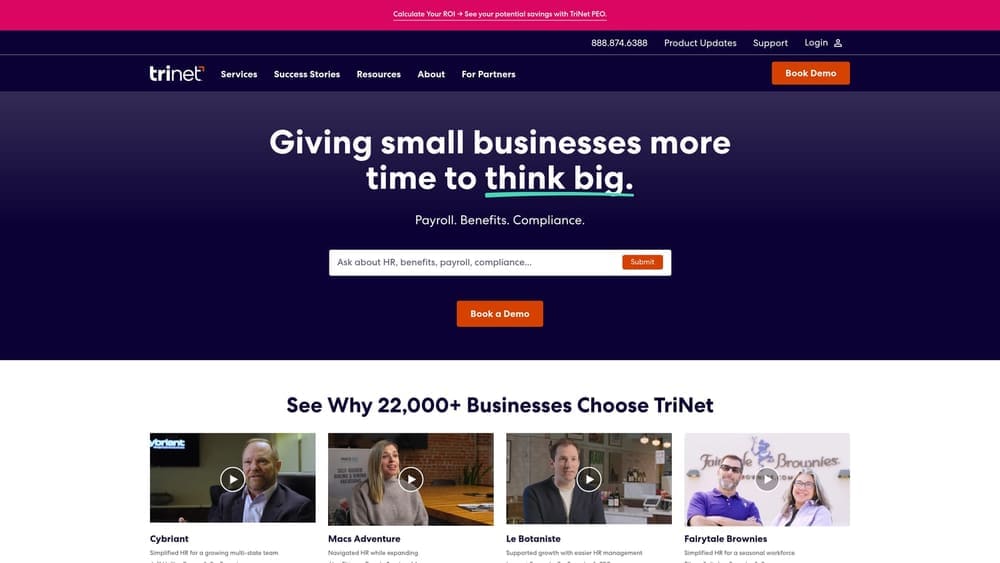
The distinguishing feature versus a generalist PEO is this vertical structure. Instead of a one-size-fits-all benefits menu, TriNet builds plan options around the realities of specific industries, which can translate into more relevant coverage choices for driver and warehouse populations.
- Offers plan structures built around specific industries rather than a single universal package
- Gives employees access to a benefits marketplace with multiple plan choices
- Provides HR compliance and risk mitigation support across the account
- Handles payroll and tax administration as part of the core service
TriNet’s own HR platform is the hub for day-to-day administration, connected to third-party benefits and payroll tools. Setup typically involves an HR lead working with TriNet’s onboarding team to confirm which industry-specific plan structure applies to a transportation account.
Industry vertical offerings change over time, so a logistics buyer should confirm directly which plan structure currently applies to transportation and freight employers rather than assuming a past offering still stands.
Best for: Logistics companies that want benefits packages built around competitive driver recruitment and retention.
5. G&A Partners
Risk management is the reason to look at G&A Partners. It’s a mid-market PEO that pairs dedicated HR consultants with risk management and safety consulting services aimed at regulated, field-heavy industries, which lines up directly with the compliance load carried by trucking and logistics operations.
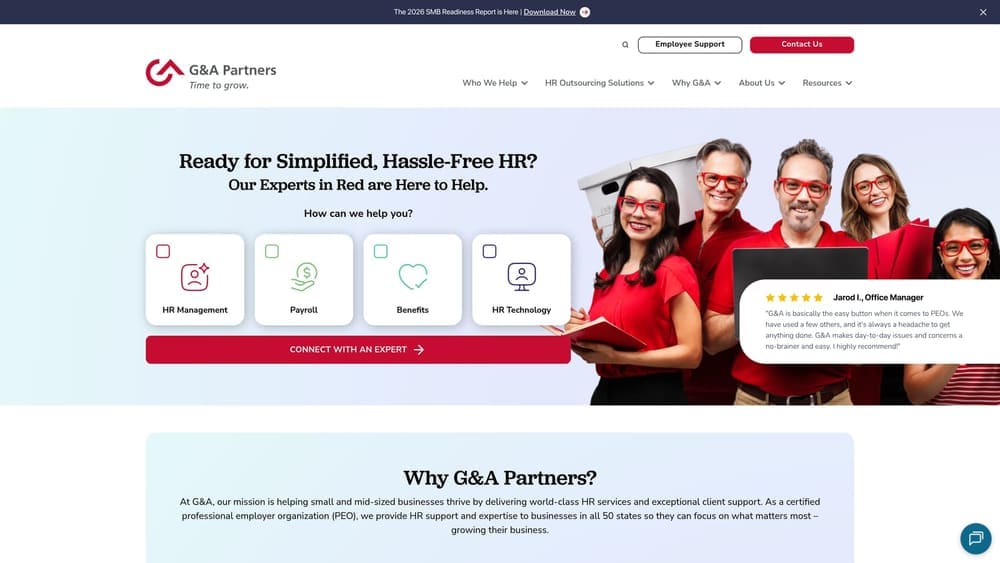
- Assigns dedicated HR consultants who work directly with your account rather than a general support queue
- Provides risk management and safety consulting geared toward field-service and logistics operations
- Administers payroll and benefits as part of the core PEO relationship
- Supports compliance obligations specific to regulated industries
What separates G&A Partners from the larger national names on this list is that safety consulting piece, positioned specifically for operations with drivers and field crews rather than office staff. That focus can matter for a fleet trying to lower its experience modification rate over time.
Administration runs through G&A Partners’ own technology platform. As a mid-market provider, the day-to-day relationship is typically managed jointly between your HR lead and an assigned G&A consultant rather than through a large enterprise implementation team.
Its footprint tends to be regional rather than fully national. A fleet with terminals well outside G&A’s core service areas should confirm directly what support and licensing coverage looks like in those states before assuming parity with its home markets.
Best for: Mid-market fleets wanting hands-on safety consulting alongside standard PEO services.
6. Engage PEO
Engage PEO markets itself directly to transportation, distribution, and logistics employers, which sets it apart from providers that merely accept high-risk classifications alongside a broader industry mix. Its workers’ compensation programs are built specifically around high-risk industry classes, the kind that many general PEOs price cautiously or avoid.
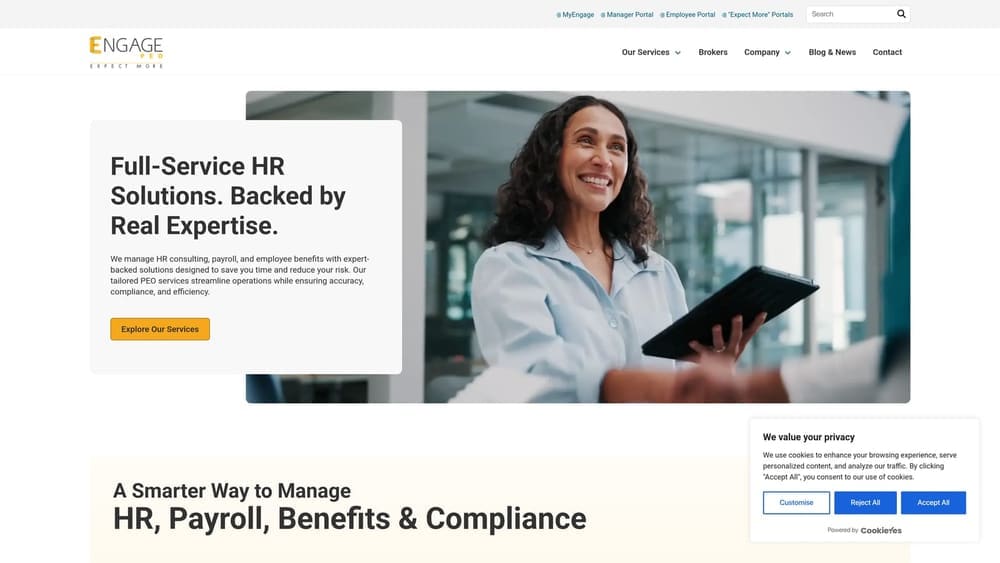
That explicit industry focus is the reason to include Engage on a shortlist: account managers who work specifically with transportation and distribution clients tend to understand classification nuances that a generalist provider might not.
- Structures workers’ compensation programs around high-risk industry classifications rather than treating them as an exception
- Provides HR and compliance support tailored to transportation employers
- Handles payroll and benefits administration as part of the core service
- Assigns account management with specific experience in transportation and distribution accounts
Engage runs its own client platform for day-to-day administration, typically managed by an HR lead in coordination with an assigned account manager.
Its national footprint is smaller than the largest providers on this list. Before signing, confirm that Engage holds active multi-state licensing for every terminal location in your operation, since coverage gaps in individual states can create compliance headaches later.
Best for: Trucking and distribution companies that want a PEO explicitly experienced in transportation risk profiles.
7. Resourcing Edge
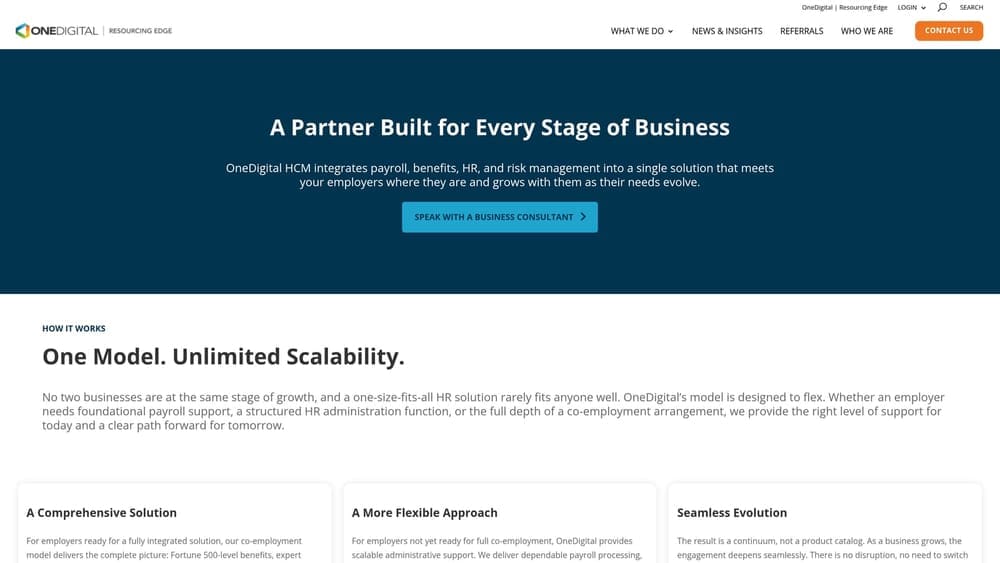
Resourcing Edge combines payroll, HR, and risk management services with a technology platform built around time tracking, which matters most for warehousing and distribution operations running large hourly workforces across multiple shifts.
Where it fits
Compared with providers focused mainly on benefits or safety consulting, Resourcing Edge’s differentiator is the time and attendance technology itself, built for shift-based, hourly labor rather than salaried office staff.
- Combines payroll, HR, and risk management under one service relationship
- Provides time and attendance technology suited to shift-based hourly workforces
- Administers employee benefits alongside payroll
- Supports compliance needs specific to labor-intensive industries
Fit and limits
The Resourcing Edge platform is the hub for daily administration, typically run by an HR lead who manages time tracking data alongside payroll processing. Setup involves configuring that time tracking system against your shift schedules and warehouse locations.
It carries less national brand recognition than ADP TotalSource or Insperity. Before committing, ask for references from other transportation or warehousing clients to confirm the provider has real experience with your kind of workforce, not just general logistics familiarity.
Best for: Warehousing and distribution employers with large hourly workforces needing tighter time and attendance tracking.
8. Prestige Employee Administration
If a large, impersonal platform is the concern, Prestige Employee Administration takes the opposite approach. It’s a mid-market PEO built around dedicated service teams assigned to each client account, rather than a call-center model where you’re routed to whoever picks up.
That consultative, dedicated-team structure is what separates Prestige from the larger platforms on this list. For a regionally concentrated fleet, having the same people handle your account month after month can matter more than access to an enterprise-scale technology stack.
- Assigns a dedicated service team to each client account for continuity
- Administers payroll and tax filings as part of the core service
- Handles benefits administration across the workforce
- Supports ongoing HR compliance needs
Administration runs through Prestige’s client portal, managed day to day by your HR lead in coordination with the assigned service team. Setup is generally lighter than with the largest providers, since Prestige operates at a smaller scale.
That smaller scale is also the limitation. Prestige doesn’t carry the same resources or national reach as ADP TotalSource or Insperity, which can matter for a very large or highly dispersed fleet operating across many states at once.
Best for: Regionally concentrated fleets that value a consistent, dedicated service contact over a large impersonal platform.
9. Vensure Employer Solutions
Vensure Employer Solutions operates as a large PEO group under several affiliated brands, giving it broad multi-state licensing coverage without being a single monolithic entity. For a logistics company with operations spread across many states, that combined footprint can solve licensing gaps that smaller regional PEOs can’t cover on their own.
- Provides multi-state licensing across a group of affiliated PEO brands
- Runs workers’ compensation and risk management programs for regulated workforces
- Administers payroll and benefits as part of the core relationship
- Supports HR compliance obligations across the account
What sets Vensure apart on this list is how it achieves national reach: through a group of affiliated brands rather than one unified national platform. That structure gives it flexibility to serve accounts across many states, but it also means the specific affiliated brand and contract terms that apply to your account can vary.
Administration runs through the Vensure group’s technology platforms, typically managed by an HR lead working with the affiliated brand assigned to the account. Before signing, clarify exactly which Vensure entity holds your contract and confirm its licensing status in every state where you operate.
Best for: Logistics companies with operations spread across many states that need broad licensing coverage in one group.
Matching the Right Provider to Your Fleet
If you’re still comparing quotes, start with PEO Metrics to see the pricing and contract terms from several providers side by side before you commit to any of them. For larger multi-state fleets, ADP TotalSource and Insperity bring the scale and infrastructure that dispersed operations tend to need. If transportation-specific risk management is the priority, Engage PEO and G&A Partners both bring a sharper focus on the classifications and safety concerns that come with regulated fleets. And for smaller or more regionally concentrated operations, Prestige Employee Administration and Resourcing Edge offer a more consultative relationship without enterprise-scale overhead.
None of this replaces confirming current pricing, state-by-state licensing, and workers’ comp classification handling directly with each vendor before you sign. Positioning and offerings shift, and a provider that fit your fleet well last year may look different today.
Don’t auto-renew. Make an informed, confident decision. Before you sign that PEO renewal, make sure you’re not leaving money on the table. Many businesses unknowingly overpay because of bundled fees, hidden administrative markups, and contracts designed to limit flexibility. We give you a clear, side-by-side breakdown of pricing, services, and contract terms, so you can see exactly what you’re paying for and choose the option that truly fits your business.
