

If you run an ecommerce brand with fulfillment staff in one state, support agents in another, and marketers working remotely, the PEO question gets complicated fast. This list is for founders, operations leads, and HR managers weighing whether co-employment makes sense and which provider might fit. We chose each option by reviewing the provider’s own published materials for services, company-size focus, technology, and benefits, then judged how well it suits multi-state and seasonal workforces. No PEO is built only for ecommerce, so fit depends on your state footprint, warehouse workers’ comp exposure, peak-season hiring, and tech stack.
Quick Comparison of Ecommerce PEO Options
- PEO Metrics: best for employers comparing several PEO quotes; pricing on request via the website; normalizes quotes from multiple PEOs so costs compare like for like.
- Justworks: best for small brands without HR staff; pricing on its website; a simple self-service experience for lean teams.
- TriNet: best for mid-sized brands wanting packaged benefits and compliance; quote-based; industry-oriented package structure.
- Insperity: best for brands needing hands-on employee relations help; quote-based; a dedicated HR representative model.
- ADP TotalSource: best for brands already on ADP payroll; quote-based; backed by a very large payroll platform.
- Paychex PEO: best for brands wanting one vendor for payroll and HR; quote-based; payroll, HR, and benefits from one established provider.
- Rippling PEO: best for remote-heavy teams with many apps and devices; pricing on its website; pairs HR with device and app management.
- Gusto: best for very small brands needing only payroll and basic HR; pricing on its website; payroll without co-employment (not a PEO).
1. PEO Metrics
PEO Metrics is our own service, so read this entry with that in mind. It is a PEO comparison and consulting service, not a PEO. It does not run payroll, employ your staff, or take on co-employment risk. PEO Metrics may receive placement fees from vendors, and you should weigh its guidance with that in mind.
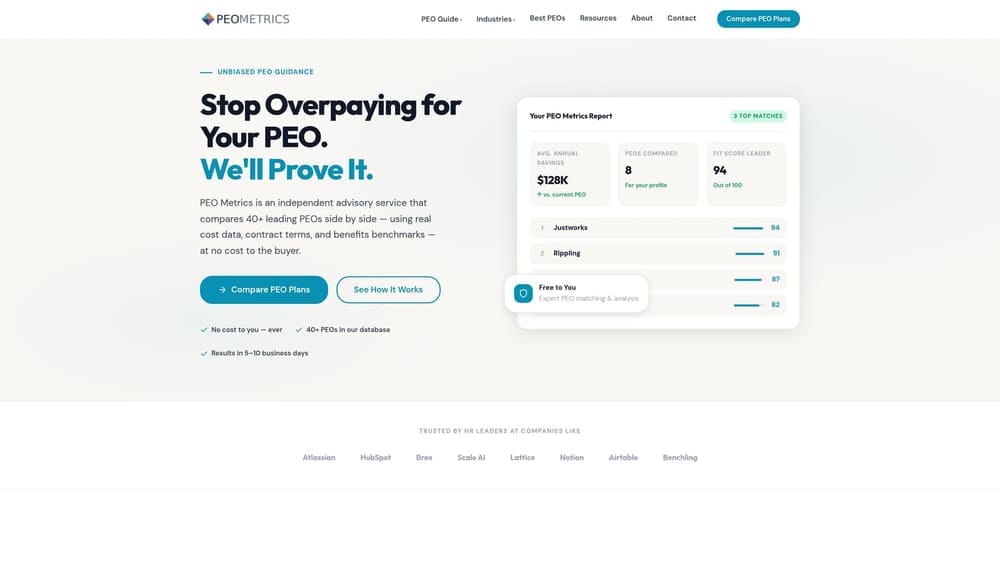
What it does well is the unglamorous part of the buying process. PEO quotes arrive in different formats, with different bundled fees, admin charges, and benefits assumptions, and published prices are rarely comparable. PEO Metrics normalizes quotes from multiple PEOs so you can compare costs like for like, which matters when a seasonal workforce and several states make each quote look different.
- Side-by-side provider comparisons, so you see services and terms next to each other instead of in separate PDFs.
- Pricing analysis that shows what you are paying for beyond the headline rate.
- Detailed provider metrics to check against your headcount, states, and benefits needs.
- Consultative guidance from advisors who can talk through whether a PEO fits at all.
There are no integrations to set up, because it is not a payroll or HR platform. Someone on your team just needs to share current census data, benefits details, and any quotes already in hand.
The limitation is plain: it helps you choose, but it does not deliver HR services itself. If you already know your provider and only want to run payroll, it adds little. Pricing and fee details are on the website; see it for current information as of October 2026.
Best for: Ecommerce employers comparing several PEO quotes before choosing.
2. Justworks
Justworks is a PEO with a self-service platform aimed at small businesses. Its draw is simplicity: a lean ecommerce team with no HR department can run payroll, benefits, and onboarding from one online interface rather than juggling separate tools.
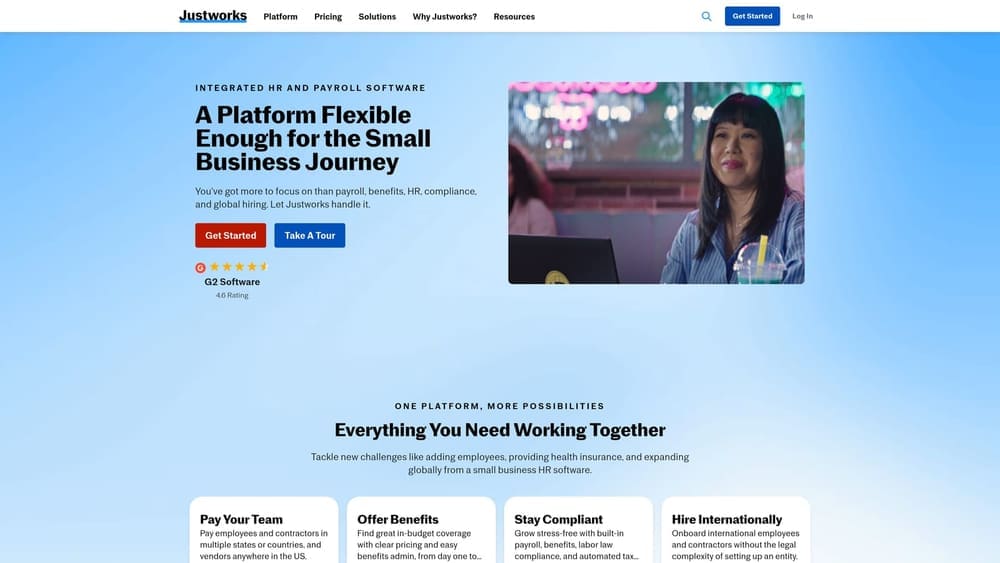
Compared with the service-heavy providers on this list, Justworks leans toward do-it-yourself. That suits a founder who wants to handle HR tasks in an hour a week, and it suits less well a team that expects a named advisor to call.
- An online HR and payroll platform that keeps employee records, pay runs, and time off in one place.
- Benefits administration so you can offer group health and related plans without building a program yourself.
- Compliance support to help with filings and registrations as you add employees in new states.
- Workers’ comp coverage, relevant if you have pick-and-pack staff with injury exposure.
Check its integration list on the website against your accounting and time-tracking tools, since fit varies by stack. Setup is generally handled by whoever owns HR or finance, often the founder or an office manager.
The limitation to test is scale. Verify that Justworks fits a larger or more complex multi-state workforce, including a seasonal warehouse ramp, before assuming it will. Confirm current pricing, what drives it (typically headcount and plan selection), and states served on its website as of October 2026.
Best for: Small ecommerce brands without dedicated HR staff.
3. TriNet
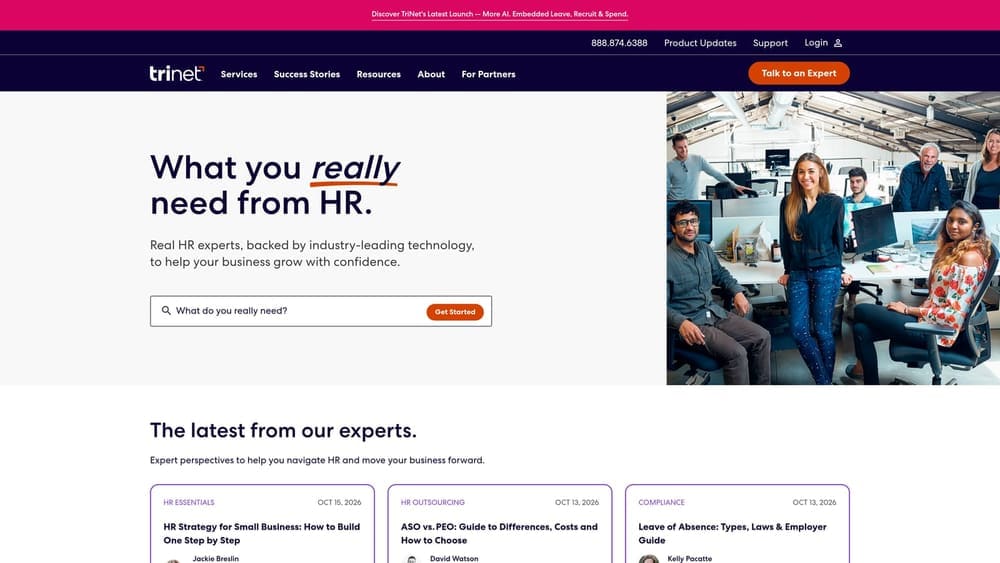
TriNet offers HR, payroll, and benefits through packages organized by industry. That structure is its distinguishing trait here: instead of one generic bundle, you evaluate a package built around the type of business you run, which can make early scoping simpler for a retail or logistics-adjacent employer.
What you get
- Industry-focused PEO packages that group services and benefits in a way aimed at your sector.
- Benefits options for health and related coverage, useful when you compete for warehouse and support hires.
- Payroll and compliance services to cover multi-state tax and filing work.
- HR support for policies, employee questions, and routine issues.
Fit, setup, and cost
Verify integrations on TriNet’s website against your ecommerce platform, accounting, and time-tracking tools. Implementation typically involves HR or finance leads working with TriNet’s onboarding team, so plan for a real transition window rather than a same-week switch.
Its limits are the unknowns you must pin down: minimums and the company size it targets. A very small brand may find it oversized, and you should ask about states served and how seasonal headcount is handled. Pricing is quote-based and depends on factors like headcount, benefits selections, and location, so request a quote and compare it with others as of October 2026.
Best for: Mid-sized brands wanting packaged benefits and compliance support.
4. Insperity
Insperity is known for a service-led model built around a dedicated HR representative. If your growth has outpaced your ability to handle terminations, accommodation requests, or warehouse safety issues in-house, that person is the main reason to consider it.
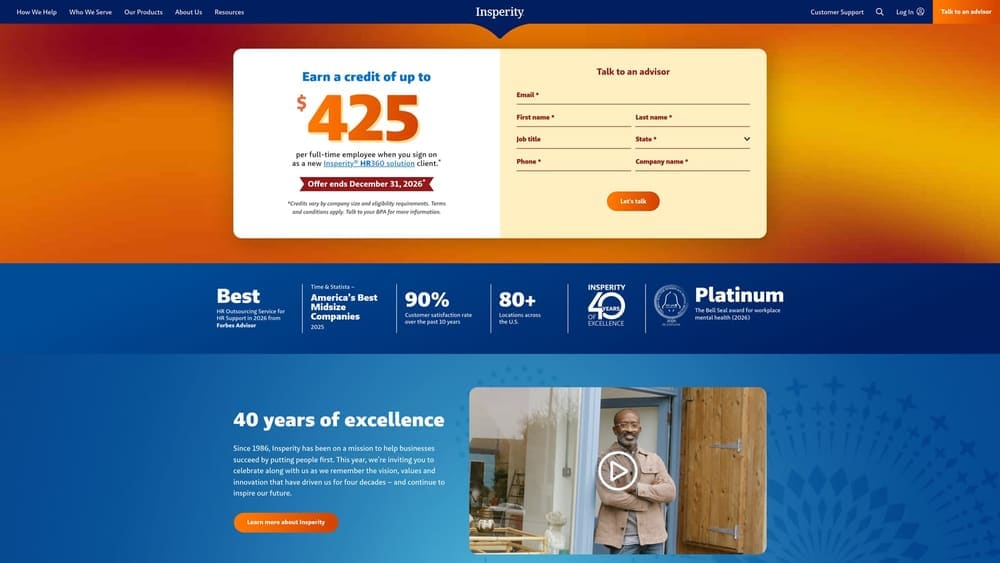
Where other providers on this list emphasize software, Insperity emphasizes advisory access. That is a trade: more hands-on help usually means a more involved relationship and a quote shaped by the services you select.
- A dedicated HR representative who can advise on employee relations and manager questions.
- Payroll and benefits administration under one arrangement, reducing separate vendor management.
- Workforce technology for employees and managers to handle routine tasks themselves.
- Risk and safety support, relevant to fulfillment floors where injuries drive workers’ comp cost.
Confirm integrations on its website. Day-to-day, an HR lead or operations manager works with the representative, while the platform handles self-service tasks.
Limitations: pricing is quote-based, and the service model is likely suited to mid-sized employers, so verify minimum requirements before investing time. A small team that wants to stay hands-off on cost may find it more service than it needs. Price movers typically include headcount, benefits, and services chosen; get a written quote as of October 2026.
Best for: Brands needing hands-on employee relations support.
5. ADP TotalSource
ADP TotalSource is ADP’s PEO offering, tied to its payroll and HR technology. Its distinct advantage on this list is the backing of a very large payroll platform, which matters if your finance team already lives in ADP or you expect to need deep payroll tooling as you grow.
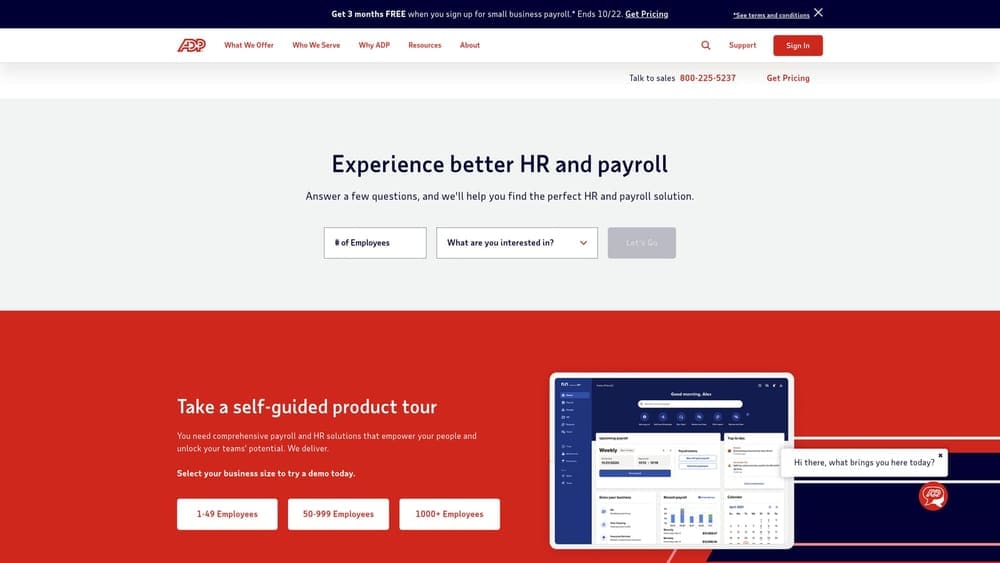
Because it sits inside the ADP ecosystem, integration with ADP products is the obvious strength. Connections to non-ADP tools should be verified rather than assumed, especially for your ecommerce, accounting, and scheduling software.
Core services
- Payroll and HR technology that unify pay runs, employee data, and reporting.
- Benefits access so smaller employers can offer plans that might be hard to buy alone.
- Compliance support for the multi-state tax and labor requirements that come with distributed teams.
- Workers’ comp, a major cost line for warehouse and fulfillment roles.
Watch-outs
Pricing is quote-based, so you will not know your cost until you share census and benefits details. Verify its minimum company size and states served, because eligibility and fit can differ by headcount and location. The HR lead or finance owner typically manages the relationship after an implementation period. Treat any figure you receive as valid only for the date quoted, such as October 2026.
Best for: Brands already using ADP for payroll.
6. Paychex PEO
Paychex PEO packages PEO services alongside the company’s long-established payroll offering. The pitch is consolidation: one vendor for payroll, HR support, benefits, and retirement plans rather than three or four contracts.
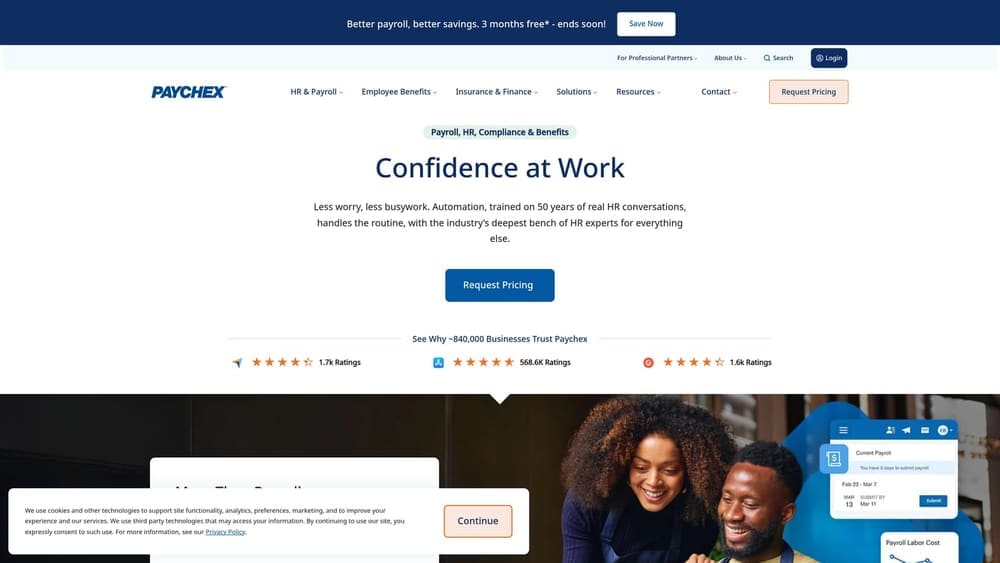
For an ecommerce employer, the practical benefit is fewer handoffs when a seasonal hire needs onboarding, payroll setup, and benefits eligibility tracked together. The tradeoff is that bundling can obscure what each piece costs, so ask for line-item pricing.
- Payroll processing, which anchors the relationship and handles multi-state withholding.
- Benefits administration for health and related plans, handled through one vendor.
- HR support for policy, compliance questions, and employee issues.
- Retirement plan options, helpful for retaining support and operations staff.
Verify integrations on the website, particularly with your accounting and time-tracking tools. Setup usually involves your finance or HR lead and the vendor’s implementation team.
Before you shortlist it, confirm the current PEO branding and structure, its size focus, and how transparent its pricing is. Pricing is quote-based and typically moves with headcount, benefits choices, and services selected. Request a written quote and note the date, as of October 2026.
Best for: Brands wanting one vendor for payroll and HR.
7. Rippling PEO
Rippling PEO connects a PEO to Rippling’s combined HR, IT, and payroll platform. What no one else on this list does in the same way is tie HR records to device and app management, so a new hire’s laptop, software accounts, and payroll setup can start from one record.
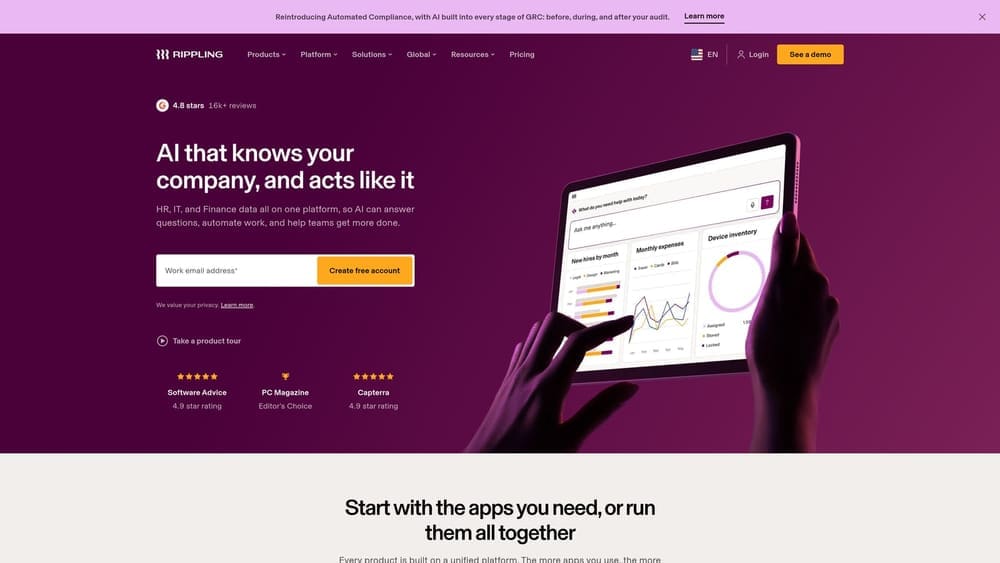
That matters for remote-heavy ecommerce teams: support agents, designers, and media buyers who each need a different set of tools, plus offboarding that must cut access quickly. Warehouse-only employers will see less of that benefit.
- Unified HR, IT, and payroll so employee changes flow across systems from a single entry.
- Device and app management to provision and revoke access as people join or leave.
- Benefits administration for coverage options through the platform.
- Compliance tools to help with filings and policy requirements across states.
Verify its integration list against your stack. Because it spans IT and HR, setup may involve both an operations or IT owner and an HR lead, which can mean more upfront configuration than a payroll-only switch.
The main limitation to check is PEO availability and which states it serves, since you need both before relying on it for a multi-state team. Pricing details are on its website; confirm what drives cost, such as headcount and modules selected, as of October 2026.
Best for: Remote-heavy ecommerce teams managing many apps and devices.
8. Gusto
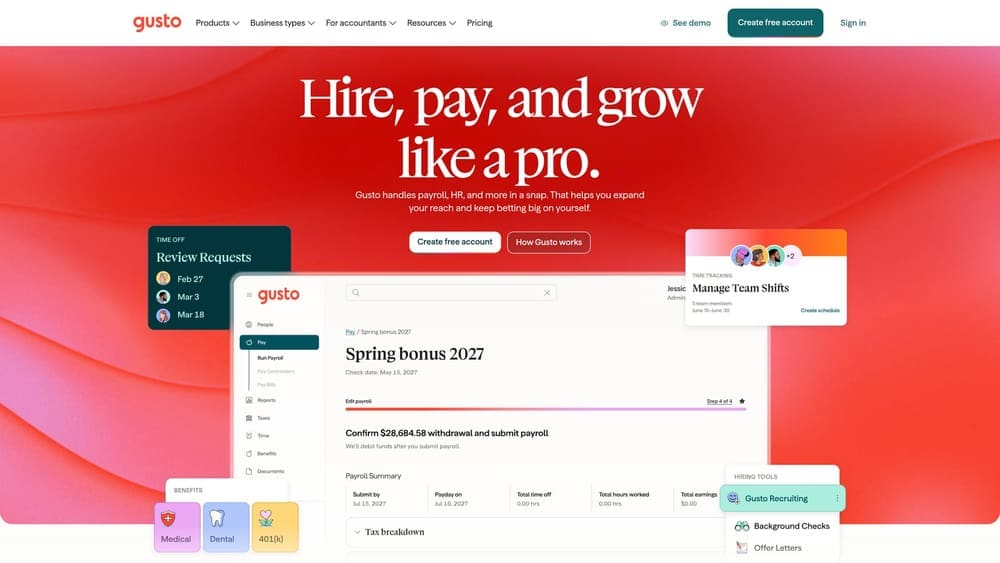
Gusto is included as a contrast, not as a PEO. It is payroll and HR software for small businesses, with no co-employment and no pooled benefits purchasing. It is a useful reference point because many early-stage ecommerce brands do not need a PEO yet.
Why it belongs on the list
Terms get blurred in this market. A PEO shares employer responsibilities through co-employment. A CPEO is a PEO certified by the IRS under a specific program. An ASO provides HR services without co-employment. An EOR employs workers on your behalf, often internationally. A payroll-only tool, which is where Gusto sits, runs pay and filings while you remain the sole employer. Knowing which you need prevents paying for the wrong thing.
- Payroll that handles pay runs and tax filings for your team.
- Benefits administration to set up plans you buy yourself.
- Onboarding tools that cut new-hire paperwork.
- Basic HR features for time off and records.
Limits and cost
You keep the compliance and benefits-buying burden, and you do not get pooled-plan purchasing. Warehouse workers’ comp exposure and multi-state complexity may outgrow it. Verify integrations on its website. Pricing is on the site and typically depends on plan tier and headcount; check it as of October 2026.
Best for: Very small brands that only need payroll and basic HR.
Matching a Provider to Your Brand’s Situation
Three situations narrow the field quickly. If you are very small and just need payroll and basic HR, Gusto is the low-complexity option, with Justworks as the step up into a PEO. If you are growing fast across multiple states, shortlist TriNet, ADP TotalSource, and Insperity, then confirm minimums, states served, and workers’ comp handling for your warehouse roles. If your team is remote-heavy with many tools, Rippling PEO deserves a look, provided it is available where you hire.
If you want hands-on support, Insperity’s dedicated representative is the clearest fit. If you are tied to an existing payroll vendor, ADP TotalSource and Paychex PEO keep payroll and HR under one roof. Keep in mind that PEOs do not always save money, published prices are rarely comparable, and not every PEO accepts every industry or size. Also verify each provider’s IRS CPEO status if that matters to you.
If you are staring at several quotes that do not line up, that is where a comparison helps most. Disclosure: PEO Metrics may receive vendor placement fees.
Before you sign that PEO renewal, make sure you’re not leaving money on the table.
Many businesses unknowingly overpay because of bundled fees, hidden administrative markups, and contracts designed to limit flexibility. We give you a clear, side-by-side breakdown of pricing, services, and contract terms, so you can see exactly what you’re paying for and choose the option that truly fits your business.
