
Roofing companies face a brutal cost equation: workers’ comp premiums that can eat 15-25% of payroll, seasonal workforce fluctuations that complicate benefits administration, and OSHA compliance requirements that demand constant attention. A PEO can help contain these costs—but only if you pick one that actually understands construction trades.
This guide cuts through the noise to highlight PEOs with proven track records in roofing and construction, focusing specifically on their cost containment capabilities. We’re not ranking by general popularity; we’re ranking by how well each option addresses the specific financial pressures roofing contractors face.
1. PEO Metrics
Best for: Roofing companies that want to compare multiple PEOs before committing to avoid overpaying
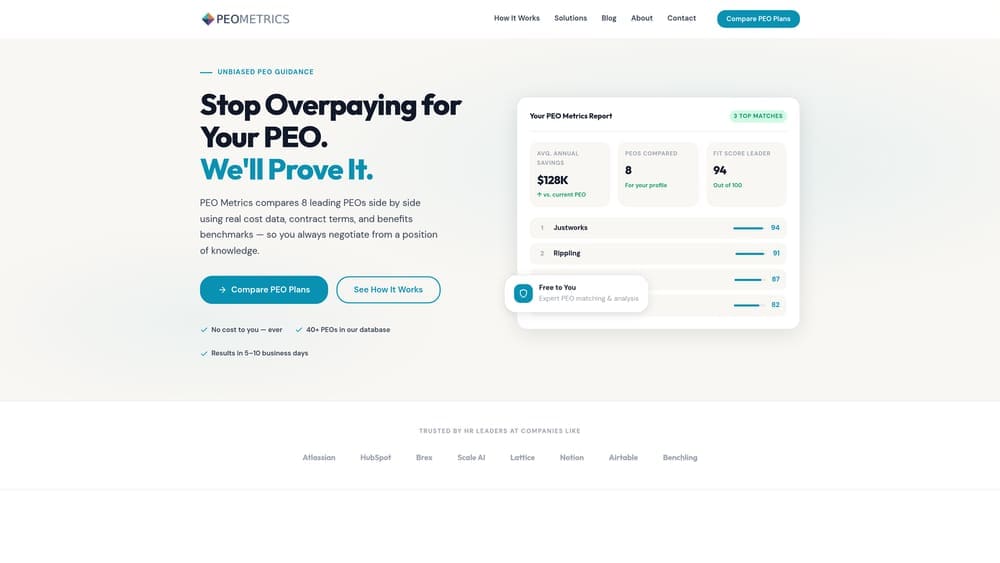
PEO Metrics is a comparison service that helps roofing companies evaluate multiple PEOs side-by-side with detailed cost projections and construction-specific metrics.
Where This Tool Shines
Most roofing contractors end up with whatever PEO their broker pushes hardest. PEO Metrics flips that dynamic by showing you what multiple providers actually charge and what you’re getting for that money. The platform focuses specifically on the metrics that matter for high-risk industries—workers’ comp rate projections, safety program quality, and how each PEO handles seasonal workforce changes.
The real value comes from seeing apples-to-apples comparisons without sales pressure. You get actual pricing data instead of vague “we’ll need to quote you” responses that waste weeks of your time.
Key Features
Side-by-Side Cost Comparisons: See detailed breakdowns of what each PEO charges, including admin fees and workers’ comp projections specific to roofing operations.
Unbiased Guidance: No commission pressure from PEO sales teams means you get straight answers about which providers actually specialize in construction trades.
Construction Industry Context: Evaluations include how each PEO handles high-risk classifications, EMR management, and seasonal workforce fluctuations common in roofing.
Access to Specialized Providers: Connect with PEOs that actually accept roofing companies instead of wasting time with providers who’ll reject your application.
Pricing Transparency: Detailed analysis of fee structures, including hidden administrative markups that inflate costs over time.
Best For
Roofing companies tired of getting the runaround from PEO sales teams. Works especially well if you’re evaluating your first PEO or coming up on a renewal and suspect you’re overpaying. Most useful for contractors with 5-50 employees who need to make cost-conscious decisions without a dedicated HR team to navigate the options.
Pricing
Free comparison service. No cost to evaluate multiple PEOs and get detailed pricing analysis before you commit to any provider.
2. Insperity
Best for: Mid-size roofing operations that need comprehensive HR services and strong safety program support
Insperity is one of the largest PEOs in the US with established construction industry experience and comprehensive HR infrastructure.
Where This Tool Shines
Insperity brings institutional scale to the table. Their safety and risk management teams have seen every roofing scenario you can imagine, which translates to practical guidance that can actually lower your EMR over time. The benefits packages are competitive enough to help you recruit skilled crews in tight labor markets.
Where Insperity pulls ahead is in the depth of their HR support. If you’re dealing with multi-state operations, complex compliance scenarios, or need to professionalize your HR function as you grow, they have the infrastructure to support that evolution.
Key Features
Dedicated Safety Programs: Proactive risk management support designed to reduce workplace incidents and lower workers’ comp costs over time.
Strong Workers’ Comp Administration: Experienced claims management team that understands construction injury patterns and can advocate effectively with carriers.
Comprehensive Benefits Packages: Access to large-group health insurance rates and benefits competitive with what major employers offer.
Construction Trade Experience: Established track record working with contractors means they understand seasonal fluctuations and project-based work cycles.
Multi-State Compliance: Robust systems for managing payroll tax, employment law, and regulatory compliance across different jurisdictions.
Best For
Roofing companies with at least 10-15 employees that are growing and need professional-grade HR infrastructure. Works well if you’re expanding into new states or struggling to manage compliance on your own. The comprehensive service model makes most sense when you value having a full HR department without actually hiring one.
Pricing
Custom pricing based on headcount and risk profile. Typically requires minimum of 5 employees. Expect pricing to be higher than bare-bones PEOs but includes significantly more hands-on service and support.
3. Paychex PEO
Best for: Roofing companies that need pay-as-you-go workers’ comp to manage cash flow
Paychex PEO is a major provider offering integrated payroll and HR services with flexible workers’ comp payment options.
Where This Tool Shines
The pay-as-you-go workers’ comp option solves a major cash flow problem for roofing contractors. Instead of fronting a massive premium deposit at policy inception, you pay workers’ comp premiums as a percentage of each payroll. This eliminates the need to finance large upfront payments and prevents surprise audit bills at year-end.
Paychex also brings strong technology infrastructure. Their platform integrates payroll, time tracking, and HR administration in ways that work reasonably well for field crews who aren’t sitting at desks all day.
Key Features
Pay-as-You-Go Workers’ Comp: Eliminates large upfront premium deposits and spreads costs across each payroll cycle to improve cash flow management.
Integrated Platform: Single system handles payroll, time tracking, benefits administration, and compliance documentation without juggling multiple vendors.
Safety Resources: Access to safety program templates, training materials, and compliance support designed for construction environments.
Scalable Service Model: Can grow with your company from small crew to larger operation without forcing you to switch providers.
Mobile Accessibility: Field crews can access pay stubs, benefits information, and time tracking from their phones.
Best For
Roofing companies that struggle with the cash flow impact of traditional workers’ comp policies. Particularly valuable for seasonal operations that ramp up and down throughout the year. Works well if you want solid technology without needing white-glove HR consulting.
Pricing
Custom pricing based on company size and services selected. Pay-as-you-go workers’ comp eliminates large upfront deposits but expect to pay a small premium on the rate for the financing convenience.
4. TriNet
Best for: Roofing companies operating across multiple states that need strong compliance management
TriNet is a PEO with robust multi-state capabilities and industry-specific HR expertise.
Where This Tool Shines
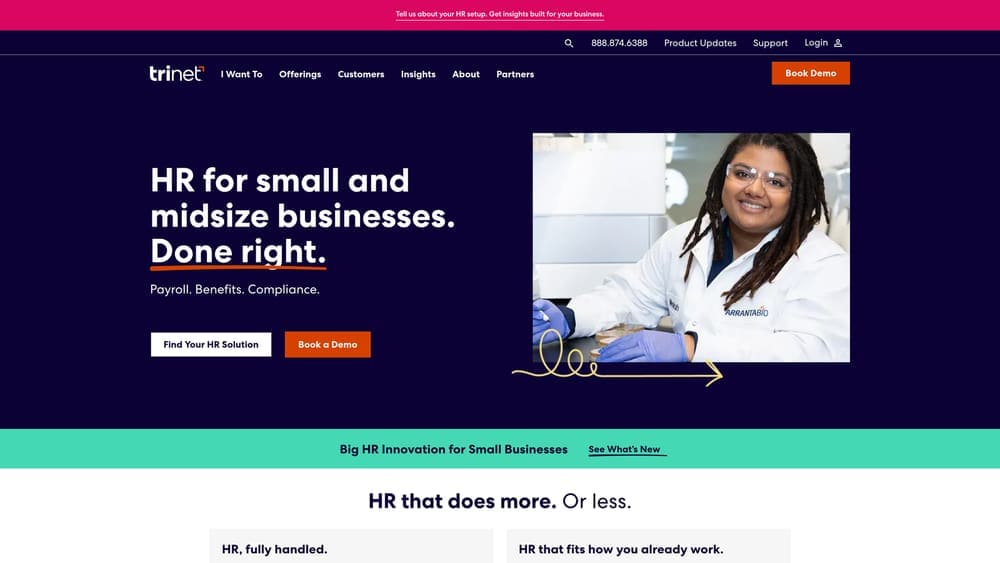
TriNet excels at managing the compliance complexity that comes with multi-state roofing operations. Each state has different workers’ comp requirements, wage and hour laws, and tax obligations. TriNet’s systems handle these variations without requiring you to become an expert in 50 different regulatory frameworks.
Their platform is genuinely user-friendly, which matters when you’re trying to onboard new crew members quickly or manage benefits enrollment for workers who aren’t tech-savvy. The mobile experience works well for field teams that need to access information on job sites.
Key Features
Multi-State Compliance Management: Automated systems handle payroll tax, employment law, and regulatory requirements across different jurisdictions without manual tracking.
Industry Expertise Available: Access to HR advisors who understand construction industry dynamics and can provide relevant guidance.
Comprehensive Benefits Administration: Full-service benefits management including health insurance, retirement plans, and voluntary benefits.
Mobile-Friendly Platform: Clean interface that works well for field crews who need to access pay information, benefits, and time tracking from their phones.
Technology Integration: Connects with common accounting and project management software used by contractors.
Best For
Roofing companies working across state lines or planning to expand regionally. Most valuable when you’re tired of manually tracking different state requirements or worried about compliance gaps. Works well for companies with 10-75 employees that need professional infrastructure without enterprise-level complexity.
Pricing
Custom pricing based on company size, services selected, and risk profile. Generally positioned in the mid-market range—not the cheapest option but includes solid technology and support.
5. Justworks
Best for: Smaller roofing companies that want transparent, predictable pricing without complex fee structures
Justworks is a PEO with flat-rate, per-employee pricing and a straightforward platform designed for simplicity.
Where This Tool Shines
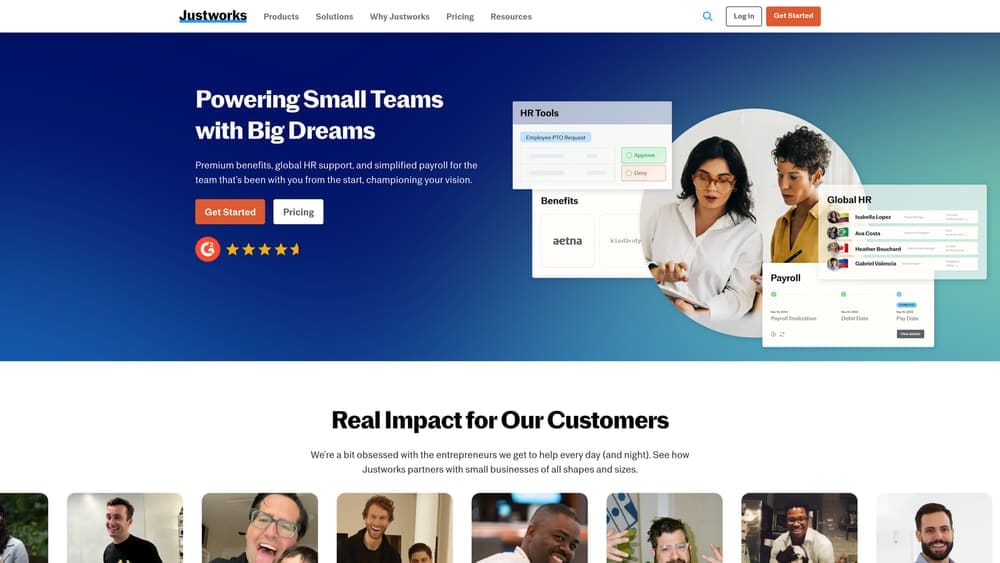
Justworks cuts through the pricing opacity that plagues the PEO industry. You pay a flat monthly fee per employee instead of navigating percentage-of-payroll calculations, hidden administrative fees, and surprise charges. This transparency makes budgeting straightforward and eliminates the feeling that you’re getting nickel-and-dimed.
The platform itself is clean and modern. It’s designed for business owners who want to handle basic HR tasks themselves without wading through enterprise software complexity. Setup is faster than most PEOs, which matters when you need to get up and running quickly.
Key Features
Transparent Flat-Rate Pricing: Simple per-employee-per-month pricing structure eliminates hidden fees and makes costs predictable.
Modern Platform Interface: Clean, intuitive software that doesn’t require extensive training to use effectively.
Large-Group Insurance Rates: Access to health insurance and benefits packages typically available only to much larger employers.
Straightforward Compliance Support: Basic compliance assistance for payroll tax, employment law, and regulatory requirements.
Fast Implementation: Quicker onboarding process compared to enterprise-focused PEOs.
Best For
Smaller roofing companies with 5-20 employees that want to keep things simple. Works well if you’re comfortable handling basic HR tasks yourself but need help with payroll, benefits, and compliance. Best fit for companies that value transparency and don’t need extensive hands-on HR consulting.
Pricing
Basic plan starts around $59 per employee per month. Plus plan with additional features runs approximately $99 per employee per month. Workers’ comp and health insurance costs are separate and vary based on your specific situation.
6. CoAdvantage
Best for: Roofing companies with seasonal workforce fluctuations that need construction-specific expertise
CoAdvantage is a PEO specializing in construction and trade contractors with experience managing seasonal workforce changes.
Where This Tool Shines
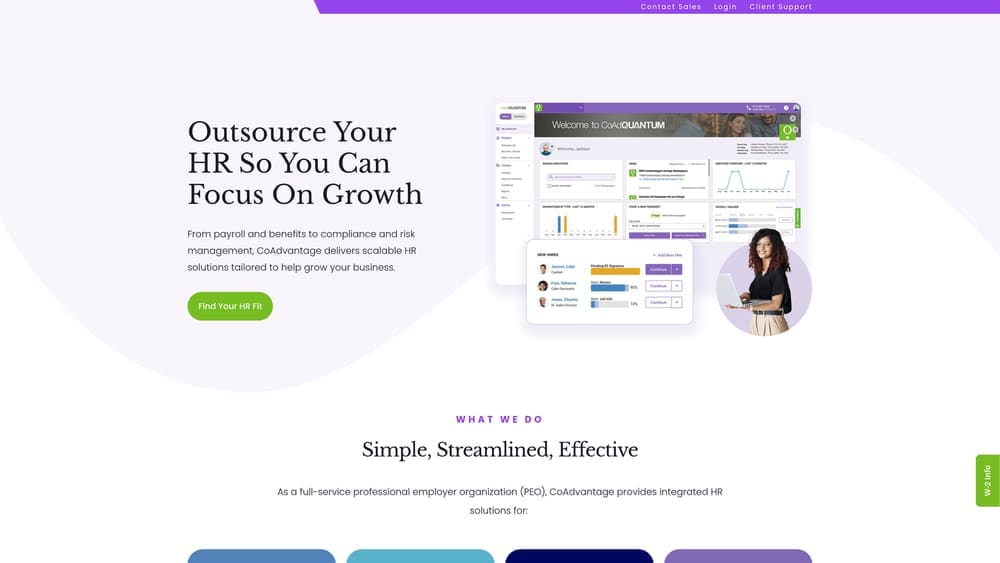
CoAdvantage actually understands the seasonal rhythm of roofing work. They’re set up to handle the workforce fluctuations that come with weather-dependent projects—scaling up crews in busy season, managing layoffs or reduced hours in slow periods, and handling the compliance complexity that comes with those changes.
Their workers’ comp expertise for high-risk trades is particularly strong. They work with carriers who understand construction risk and won’t balk at your classification codes. The regional office structure means you get local market knowledge instead of generic national guidance that doesn’t account for your area’s specific conditions.
Key Features
Construction Industry Specialization: Deep expertise working with trade contractors means they understand your business model and operational challenges.
Seasonal Workforce Flexibility: Systems designed to handle rapid scaling up and down without administrative friction or compliance gaps.
Workers’ Comp Expertise: Strong relationships with carriers willing to write high-risk trades and experience managing claims specific to construction injuries.
Regional Office Network: Local presence provides market-specific knowledge and more personalized service than national call centers.
Safety Program Support: Practical safety resources designed for actual job site conditions, not generic office environments.
Best For
Roofing contractors who experience significant seasonal swings in headcount. Works well if you’ve struggled with PEOs that don’t understand construction or have been rejected by providers uncomfortable with roofing risk. Best fit for companies that value industry expertise over cutting-edge technology.
Pricing
Custom pricing based on company profile and risk factors. Often more flexible with construction industry risk profiles than PEOs that primarily serve low-risk industries. Expect pricing to reflect their specialized expertise.
7. Employer Flexible
Best for: Roofing companies in Texas and the Southwest that want regional expertise and personalized service
Employer Flexible is a regional PEO with strong presence in Texas and surrounding states, offering construction-focused services.
Where This Tool Shines
Employer Flexible brings regional market knowledge that national PEOs can’t match. They understand Texas workers’ comp regulations, local labor market conditions, and the specific challenges roofing contractors face in the Southwest climate. That local expertise translates to better guidance and fewer generic solutions that don’t fit your reality.
The personalized service model means you work with dedicated account managers who actually know your business. When you call with a question, you’re not routed to a random call center rep reading from a script. For contractors who value relationships and responsive service, that difference matters.
Key Features
Regional Market Expertise: Deep knowledge of Texas and Southwest employment regulations, workers’ comp landscape, and local business conditions.
Construction Industry Experience: Established track record serving trade contractors and understanding construction business cycles.
Dedicated Account Management: Personalized service with consistent points of contact who know your company and can provide relevant guidance.
Competitive Workers’ Comp Options: Strong carrier relationships in the region that can deliver competitive rates for roofing contractors.
Responsive Support: Local service model provides faster response times and more accessible support than national providers.
Best For
Roofing companies based in Texas or the Southwest that value regional expertise and personalized relationships. Works well if you’re tired of dealing with national PEOs that don’t understand your market or provide generic solutions. Best fit for contractors who prioritize service quality over having the flashiest technology platform.
Pricing
Custom pricing based on company size, location, and service needs. Regional focus often allows for more competitive pricing than national providers with higher overhead costs.
Making the Right Choice
The right PEO depends entirely on your specific situation. If you’re operating across multiple states, TriNet’s compliance infrastructure makes sense. If cash flow is your biggest constraint, Paychex’s pay-as-you-go workers’ comp solves a real problem. If you’re in Texas and want someone who actually understands your market, Employer Flexible delivers regional expertise.
But here’s the thing most roofing contractors miss: you can’t make an informed decision by talking to just one PEO. Their sales teams are incentivized to make their solution sound perfect for you, whether it actually is or not. You need to see multiple options side-by-side with actual pricing data.
That’s where starting with a comparison service makes sense. You get to see what multiple providers actually charge, how their workers’ comp rates compare, and which ones have real construction industry experience versus just claiming they do. It eliminates weeks of back-and-forth with sales reps and gives you leverage in negotiations.
The cost differences can be substantial. A roofing company with 20 employees might pay anywhere from $50,000 to $90,000 annually depending on which PEO they choose and how the fee structure is set up. Those aren’t rounding errors—that’s real money that either goes to your bottom line or gets absorbed by administrative overhead.
Before you sign that PEO renewal, make sure you’re not leaving money on the table. Many businesses unknowingly overpay because of bundled fees, hidden administrative markups, and contracts designed to limit flexibility. We give you a clear, side-by-side breakdown of pricing, services, and contract terms—so you can see exactly what you’re paying for and choose the option that truly fits your business.
