
Running a residential construction company means managing crews across multiple job sites, navigating workers’ comp for high-risk classifications, and staying compliant with OSHA requirements that change based on project type. A Professional Employer Organization built for construction understands these realities—they won’t treat your framing crew the same as office workers.
This guide covers PEO providers that specialize in or genuinely accommodate residential construction, with attention to workers’ comp experience modification rates, safety program support, and payroll systems that handle prevailing wage and certified payroll when needed. We’ve prioritized providers with actual construction industry experience over generalist PEOs that happen to accept contractors.
1. PEO Metrics
Best for: Contractors who want transparent PEO comparisons with construction-specific evaluation criteria
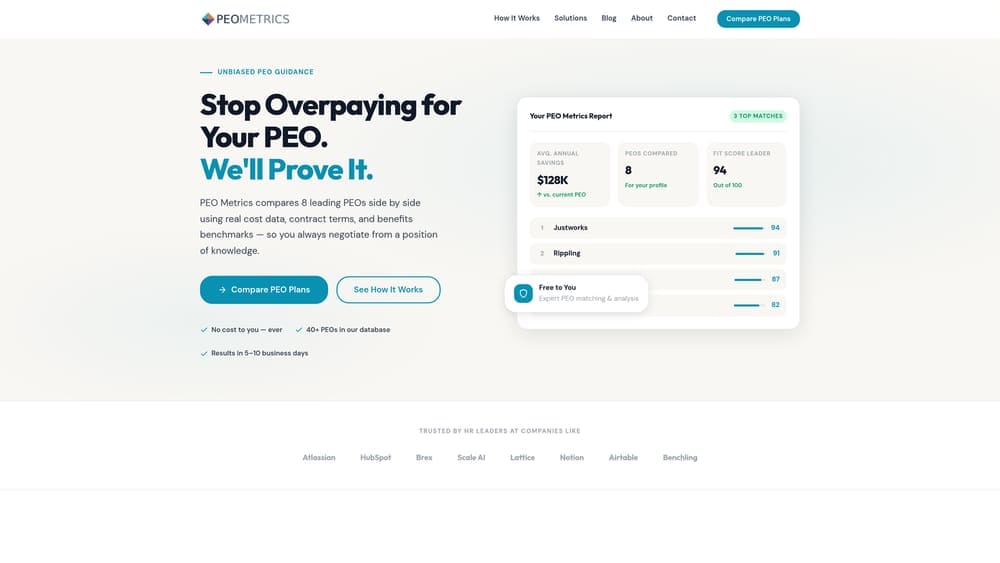
PEO Metrics is a comparison platform designed to help residential construction companies evaluate PEO providers side-by-side using metrics that actually matter for the industry.
Where This Tool Shines
Most PEO comparison processes force you to take sales calls with five different providers, each pitching their own version of “construction expertise.” PEO Metrics cuts through that by showing you detailed comparisons upfront—including how providers handle construction-specific workers’ comp classifications and safety programs.
The platform focuses on transparency around pricing structures and service differences, which matters when you’re comparing proposals that bundle workers’ comp, benefits, and administrative fees in different ways. You can filter specifically for construction industry experience rather than wading through generalist providers.
Key Features
Construction-Focused Filtering: Narrow down providers based on experience with residential construction class codes and safety programs.
Workers’ Comp Analysis: Compare how different PEOs structure workers’ comp programs and handle experience modification rates.
Pricing Transparency: See detailed breakdowns of fee structures across providers before committing to sales calls.
Side-by-Side Comparison: Evaluate multiple PEO options simultaneously with metrics relevant to construction operations.
Unbiased Guidance: Get objective analysis without being steered toward specific providers based on commission structures.
Best For
Residential contractors who want to make an informed PEO decision without spending weeks in sales cycles. Particularly valuable if you’re evaluating your first PEO or comparing renewal options against alternatives.
Pricing
Free comparison service. No cost to access provider comparisons and analysis.
2. TriNet
Best for: Mid-sized residential builders wanting enterprise-level benefits and dedicated risk management support
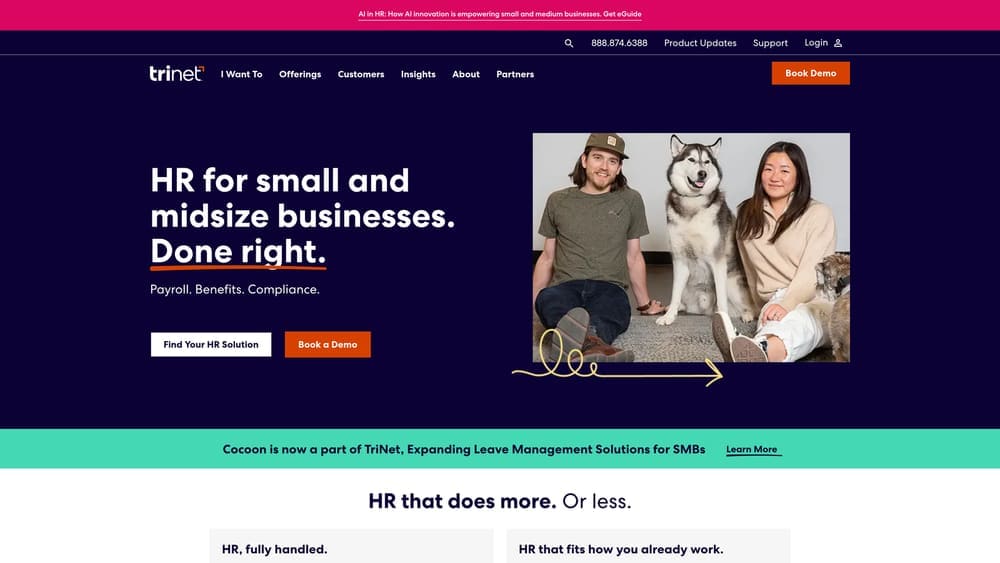
TriNet is a full-service PEO with a construction industry vertical that provides access to large-group health insurance and comprehensive risk management programs.
Where This Tool Shines
TriNet’s construction vertical means you’re not explaining what a framing crew does to someone who primarily works with tech startups. Their risk management consultants understand fall protection requirements and can help structure safety programs that actually reduce your workers’ comp mod rate.
The benefits access is genuinely valuable for smaller residential contractors. You get Fortune 500-level health insurance options that would be impossible to negotiate independently, which helps with crew retention in competitive labor markets.
Key Features
Construction Risk Management: Dedicated consultants who understand residential construction hazards and OSHA compliance requirements.
Large-Group Benefits: Access to enterprise-tier health insurance, dental, and vision plans through TriNet’s master policies.
Safety Incentive Programs: Structured programs that can improve your experience mod rate through documented safety practices.
HR Consultant Access: Dedicated support for employment issues, compliance questions, and policy development.
Technology Platform: Integrated HR, payroll, and benefits administration with employee self-service capabilities.
Best For
Residential construction companies with 20-150 employees who need strong benefits packages to compete for skilled labor and want professional risk management support. Works well if you’re operating in multiple states or managing several concurrent projects.
Pricing
Custom pricing based on headcount, risk profile, and service level selected. Typically positioned as a premium-tier PEO with pricing that reflects comprehensive service.
3. Insperity
Best for: Contractors prioritizing compliance infrastructure and safety consulting alongside HR support
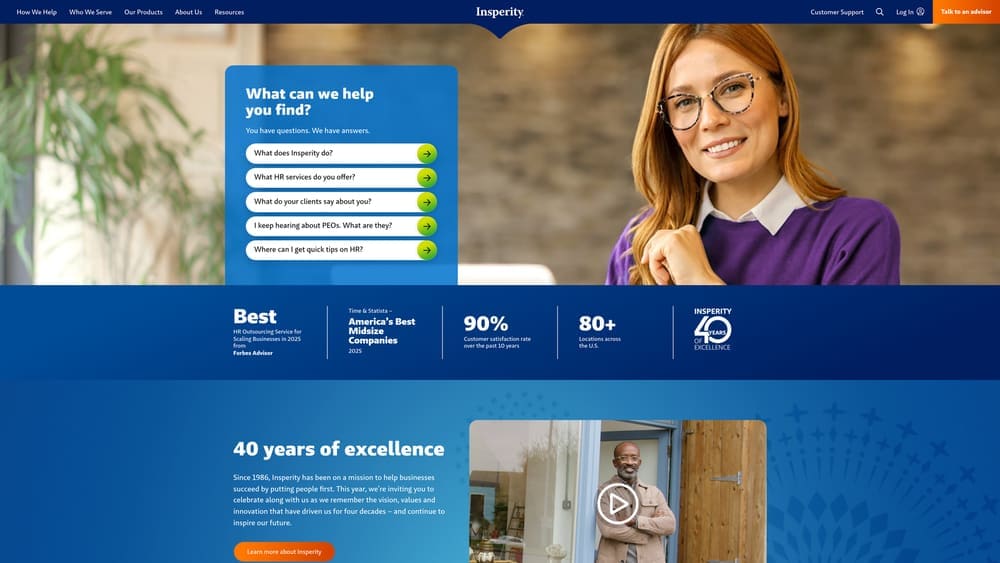
Insperity is an enterprise PEO offering robust compliance management and dedicated safety consulting resources for construction clients.
Where This Tool Shines
Insperity’s compliance infrastructure is built for industries where regulatory exposure matters. Their safety consultants can conduct site visits, help develop job hazard analyses, and provide OSHA consultation that goes beyond generic safety manuals.
The HR technology is comprehensive without being overwhelming. You get performance management tools, applicant tracking, and learning management systems that actually work for construction operations—not just office environments.
Key Features
OSHA Compliance Support: Consultants who help develop site-specific safety plans and conduct compliance audits.
Safety Consulting: Hands-on risk management including site assessments and incident investigation support.
HR Technology Suite: Integrated platform covering recruiting, onboarding, performance management, and training.
Compliance Monitoring: Automated alerts for regulatory changes affecting construction operations.
Employee Relations Support: Professional guidance for difficult employment situations and terminations.
Best For
Established residential contractors who view HR and safety as strategic priorities rather than administrative burdens. Makes sense if you’re managing significant regulatory exposure or planning growth that requires stronger infrastructure.
Pricing
Per-employee pricing model, typically positioned in the premium tier. Expect higher costs than basic PEOs but with more comprehensive service.
4. Paychex PEO
Best for: Contractors needing certified payroll and prevailing wage capabilities for government-adjacent work
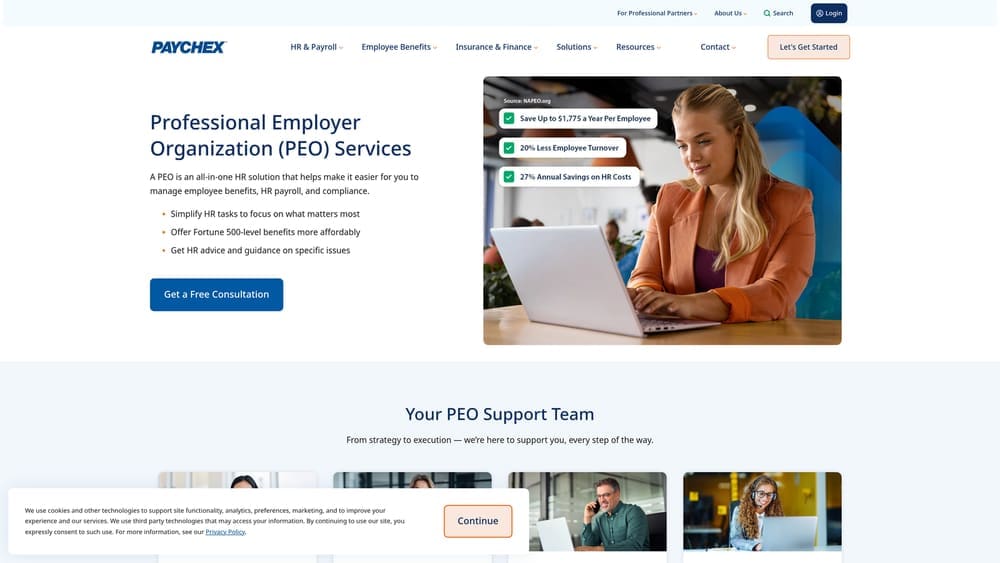
Paychex PEO offers flexible PEO services with particularly strong payroll capabilities designed to handle construction accounting complexity.
Where This Tool Shines
If you occasionally work on projects requiring certified payroll or prevailing wage compliance, Paychex’s system handles these requirements without forcing you into specialized construction payroll software. The platform integrates time tracking with payroll processing in ways that accommodate job costing and project-based reporting.
The flexibility around seasonal workforce management is practical for residential construction. You can scale up for busy season and down during slower months without fighting rigid service agreements.
Key Features
Certified Payroll: Built-in capabilities for government contract compliance including Davis-Bacon reporting.
Prevailing Wage Support: System handles multi-rate payroll when projects require prevailing wage compliance.
Seasonal Flexibility: Service structure accommodates headcount fluctuations without penalty.
Integrated Time Tracking: Mobile time collection that feeds directly into payroll with job costing capability.
Scalable Service Tiers: Choose the level of HR support you need without paying for unnecessary services.
Best For
Residential contractors who occasionally take on government-funded projects, work in municipalities with prevailing wage requirements, or need sophisticated payroll capabilities alongside PEO services. Good fit for companies with 10-100 employees.
Pricing
Scalable pricing based on services selected and employee count. More flexible than all-inclusive PEO models, allowing you to pay for what you actually use.
5. ADP TotalSource
Best for: Multi-state residential builders requiring comprehensive compliance coverage and robust reporting
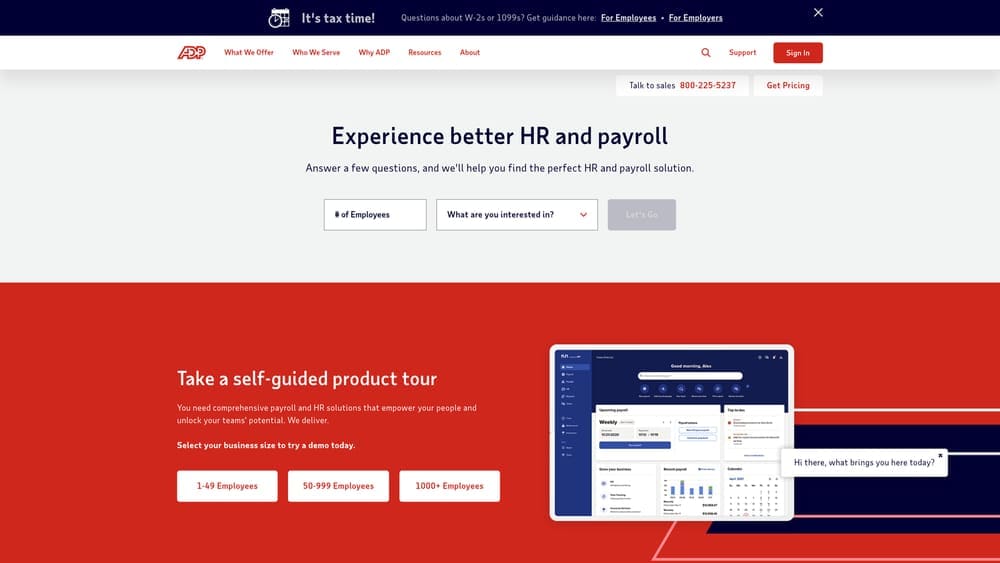
ADP TotalSource is ADP’s large-scale PEO solution designed for companies operating across multiple jurisdictions with complex compliance needs.
Where This Tool Shines
When you’re running residential projects in five different states, compliance gets complicated fast. ADP’s infrastructure handles multi-state tax filing, varying workers’ comp requirements, and state-specific employment regulations without requiring you to become an expert in each jurisdiction.
The reporting and analytics capabilities are enterprise-grade. You can track labor costs by project, analyze workers’ comp claims by crew or location, and generate the financial reports your bank or bonding company requests.
Key Features
Multi-State Compliance: Automated management of varying state requirements for payroll, taxes, and employment regulations.
Mobile Workforce Tools: Apps and systems designed for crews working across different locations and projects.
Advanced Analytics: Detailed reporting on labor costs, workers’ comp exposure, and operational metrics.
Large Carrier Network: Access to major insurance carriers for benefits across all operating states.
Dedicated Service Team: Account management with escalation paths for urgent compliance questions.
Best For
Regional or national residential builders with operations in multiple states, typically 50+ employees. Makes sense when compliance complexity justifies premium pricing and you need enterprise-level infrastructure.
Pricing
Enterprise pricing with higher minimums than mid-market PEOs. Expect comprehensive service but budget accordingly for the ADP brand premium.
6. BBSI
Best for: Regional contractors wanting hands-on consulting relationships and local business support
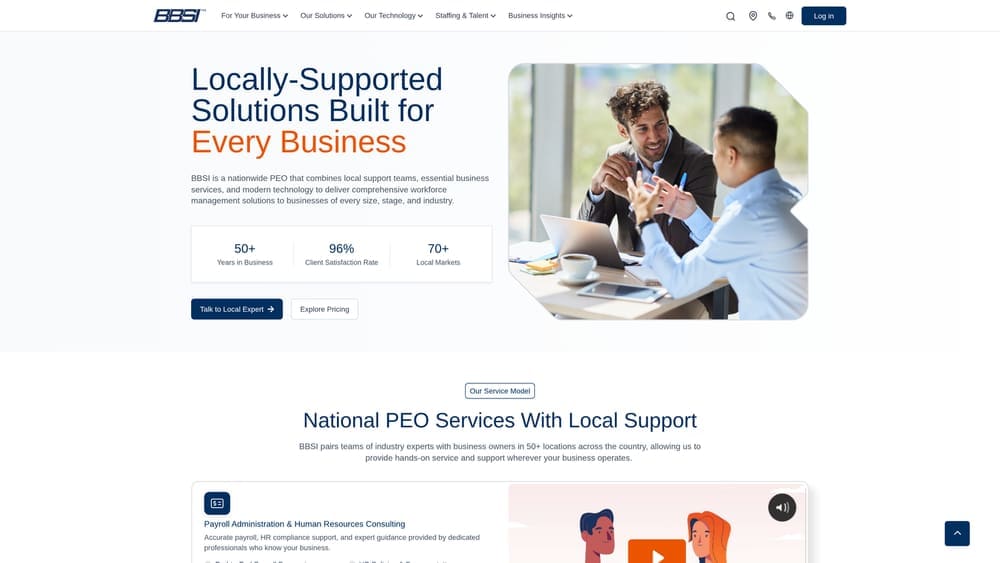
BBSI operates through a local business unit model, providing PEO services with a hands-on consulting approach and strong construction industry focus in many regions.
Where This Tool Shines
BBSI’s model is fundamentally different from national PEOs. You work with a local business unit that understands your regional market, knows local subcontractor networks, and can provide business consulting beyond just HR and payroll services.
The construction industry expertise varies by region, but in markets where BBSI has concentrated construction clients, they bring genuine operational understanding. Your consultant might help with business development strategies or operational efficiency—not just compliance checklists.
Key Features
Local Business Unit Model: Regional offices with consultants embedded in your market rather than distant call centers.
Hands-On Consulting: Relationship-based service including business strategy support beyond HR functions.
Regional Construction Focus: Strong industry expertise in markets where they’ve built construction client concentrations.
Business Development Support: Consulting that extends to operational improvement and growth strategies.
Flexible Service Approach: Adaptable to how you actually run your business rather than forcing standardized processes.
Best For
Residential contractors operating primarily in one region who value relationship-based service and want a PEO partner that understands local market dynamics. Typically best for companies with 15-75 employees.
Pricing
Competitive regional pricing that’s often more flexible than national PEOs. Service level and relationship access justify costs for contractors who value hands-on support.
7. Oasis (Paychex)
Best for: Mid-market contractors seeking simplified workers’ comp management with solid HR infrastructure
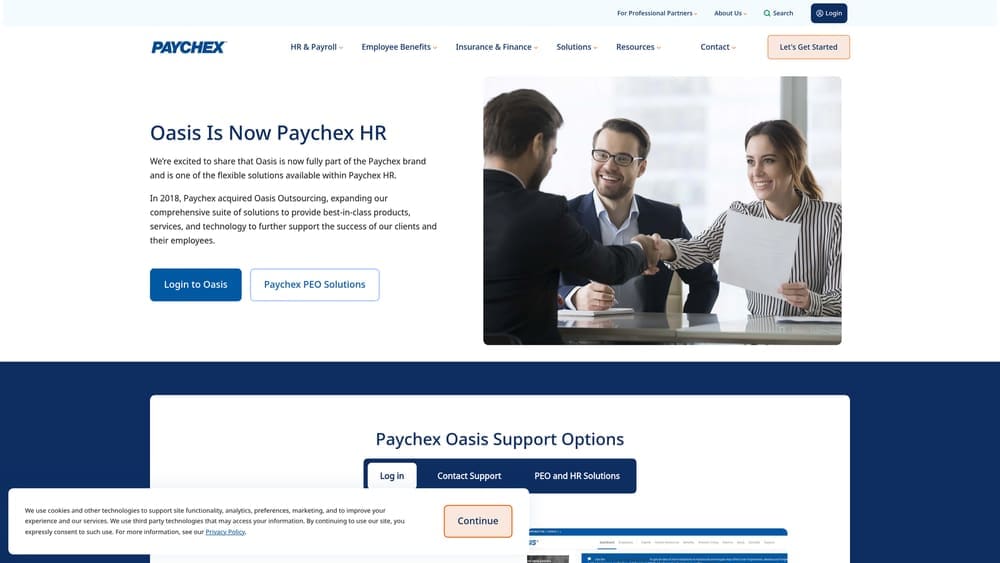
Oasis is Paychex’s mid-market PEO offering, providing streamlined workers’ comp administration and integrated HR services.
Where This Tool Shines
Oasis focuses on making workers’ comp administration straightforward, which matters when you’re managing multiple construction class codes and dealing with the claims that inevitably happen in residential construction. The integration between payroll and workers’ comp means accurate premium calculations without manual reconciliation.
The platform is less complex than enterprise PEOs but more capable than basic payroll providers. You get real HR infrastructure—benefits administration, compliance alerts, employee handbook templates—without paying for consulting services you might not need.
Key Features
Streamlined Workers’ Comp: Simplified administration with integrated premium calculation and claims management.
Integrated Payroll and HR: Single platform handling payroll processing, tax filing, and HR administration.
Benefits Administration: Enrollment management and carrier coordination for health insurance and ancillary benefits.
Compliance Alerts: Automated notifications for regulatory changes and filing deadlines.
Employee Self-Service: Portal access for pay stubs, tax documents, and benefits information.
Best For
Residential contractors with 10-50 employees who want workers’ comp and HR handled professionally without the complexity or cost of enterprise PEOs. Good fit if you need reliable infrastructure but don’t require intensive consulting.
Pricing
Mid-market pricing structure that’s more accessible than premium PEOs while providing more service than basic payroll providers. Transparent per-employee pricing model.
8. CoAdvantage
Best for: Contractors focused on workers’ comp cost control and proactive claims management
CoAdvantage is a PEO with particular strength in workers’ comp management and claims control for high-risk industries like construction.
Where This Tool Shines
CoAdvantage’s claims management approach is genuinely proactive. They get involved early when incidents occur, coordinate medical care to control costs, and work to get injured workers back to light duty rather than letting claims drag out. For residential construction where workers’ comp represents significant expense, this focus matters.
The service tier flexibility lets you choose how much support you need. If you have internal HR capability but want help specifically with workers’ comp and risk management, you can structure services accordingly.
Key Features
Proactive Claims Management: Early intervention and coordination to minimize workers’ comp claim costs and duration.
Workers’ Comp Cost Control: Focused programs including return-to-work coordination and medical provider networks.
Flexible Service Tiers: Scalable options from workers’ comp focus to full-service PEO depending on needs.
Risk Mitigation Programs: Safety training and loss control services designed to reduce incident frequency.
Industry Experience: Track record working with high-risk industries including construction trades.
Best For
Residential contractors with 15-100 employees who’ve struggled with workers’ comp costs or claim management. Makes sense if you want specialized expertise in risk control without necessarily needing comprehensive HR consulting.
Pricing
Flexible pricing with service tier options. Can be cost-effective if you’re primarily seeking workers’ comp expertise rather than full HR outsourcing.
Making the Right Choice
Choosing a PEO for your residential construction company comes down to three factors: how well they understand construction workers’ comp classifications, whether their safety programs actually reduce your exposure, and if their payroll system handles the complexity of construction accounting.
Start by comparing providers through PEO Metrics to see real pricing and coverage differences without committing to multiple sales cycles. For mid-sized contractors wanting enterprise benefits and strong risk management, TriNet and Insperity offer comprehensive packages with genuine construction industry expertise.
If certified payroll or prevailing wage is part of your work—even occasionally—Paychex PEO handles those requirements well without forcing you into specialized software. ADP TotalSource makes sense when you’re operating across multiple states and need compliance infrastructure that scales with geographic complexity.
Regional contractors often find BBSI’s hands-on, relationship-based approach more valuable than national PEO standardization. For straightforward workers’ comp management with solid HR infrastructure, Oasis provides mid-market capabilities without premium pricing. If workers’ comp cost control is your primary concern, CoAdvantage’s claims management focus delivers tangible results.
Whatever you choose, verify they have actual residential construction clients—not just commercial or industrial experience. Ask about their experience with your specific class codes, request references from similar-sized contractors, and understand exactly how workers’ comp premiums are calculated within their program.
Before you sign that PEO renewal, make sure you’re not leaving money on the table. Many businesses unknowingly overpay because of bundled fees, hidden administrative markups, and contracts designed to limit flexibility. We give you a clear, side-by-side breakdown of pricing, services, and contract terms—so you can see exactly what you’re paying for and choose the option that truly fits your business. Don’t auto-renew. Make an informed, confident decision.
