
You’re running an HVAC business, not an HR department. But between seasonal hiring surges, workers’ comp premiums that make your accountant wince, and compliance rules that change every time you cross a state line, you’re spending more time on paperwork than on actual installations.
That’s where PEOs enter the conversation. Professional Employer Organizations promise to handle the administrative headaches so you can focus on keeping customers comfortable. Sounds great in theory.
But like any major business decision, the reality is more nuanced. A PEO arrangement can genuinely solve specific problems for HVAC contractors—or it can create new friction points and eat into already-thin margins. The difference comes down to your specific situation: company size, growth plans, geographic footprint, and what actually keeps you up at night.
This isn’t a sales pitch. It’s a practical assessment of what works, what doesn’t, and how to figure out which category your business falls into.
What Drives HVAC Contractors to Look at PEOs
Most contractors don’t wake up thinking about co-employment models. They start researching PEOs because something specific is causing pain.
The workers’ comp situation tends to be the first trigger. HVAC work carries elevated risk classifications—you’re dealing with ladder work, electrical exposure, refrigerant handling, and rooftop installations. Those classification codes translate directly into higher base premiums compared to office work. When you’re a smaller contractor, you don’t have the claims history or volume to negotiate better rates on your own.
PEOs pool risk across multiple industries and employers. In theory, that larger risk pool can mean access to better workers’ comp rates than you’d get as a standalone HVAC shop. The experience modification rate that’s killing your insurance costs might improve under a master policy. Contractors dealing with high insurance mod rates often find this pooling arrangement particularly attractive.
Then there’s the seasonal workforce reality. You need more bodies during summer AC season and winter heating emergencies. Ramping up quickly means onboarding paperwork, tax withholding setup, benefits enrollment, and compliance documentation—all while you’re trying to keep install crews running and customers happy.
Doing that hiring surge manually creates bottlenecks. Your office manager is buried in I-9s and background checks when they should be scheduling service calls. A PEO handles the onboarding infrastructure, which sounds appealing when you’re hiring ten technicians in three weeks.
The multi-state compliance issue catches contractors off guard. You land a commercial project two states over, which sounds like good growth until you realize each state has different labor laws, unemployment insurance requirements, and tax withholding rules. Your payroll system isn’t set up for it. Your accountant gives you a quote that makes the project margin disappear.
PEOs operate across state lines as part of their core business model. They already have the infrastructure, compliance knowledge, and tax registrations in place. For contractors expanding geographically, that’s genuinely valuable.
Where PEOs Actually Deliver Value for HVAC Operations
The benefits aren’t hypothetical—they’re operational and financial, assuming you’re working with a provider who understands the trades.
Health insurance access matters more than most contractors expect. You’re competing for skilled technicians against larger commercial contractors and mechanical firms that offer full benefits packages. A three-person HVAC shop can’t negotiate group health rates that compete with a 200-employee general contractor.
PEOs aggregate employees across all their client companies, which gives them leverage with insurance carriers. You gain access to benefits pricing that would be impossible to secure independently. Understanding how PEO benefits administration works helps you evaluate whether this leverage translates to real savings for your situation.
The administrative load reduction is real if your current setup involves manual processes. Think about what happens when you hire someone: tax forms, background checks, workers’ comp documentation, benefits enrollment, payroll setup, compliance posters, safety training records. Then multiply that by seasonal hiring cycles.
A PEO consolidates that into a single platform. New hire fills out forms once. Payroll runs automatically. Tax filings happen without your involvement. For owners who’d rather spend time on estimates, customer relationships, and managing field crews, that shift in time allocation has tangible value.
The workers’ comp piece deserves specific attention because it’s often the biggest financial driver. Many HVAC contractors carry experience mod rates above 1.0 due to past claims or simply being in a high-risk classification. Under a PEO’s master policy, you’re essentially joining a larger risk pool with a different claims history.
That doesn’t guarantee savings—it depends on the PEO’s overall loss ratio and how they price risk—but contractors with poor mod rates often see meaningful reductions. The PEO also typically handles claims administration, which means less time dealing with insurance adjusters and more consistent documentation when incidents occur.
There’s also the compliance safety net. Labor law violations aren’t usually intentional—they happen because a contractor doesn’t know that a new city ordinance changed sick leave requirements or that a state updated their overtime calculation rules. PEOs monitor regulatory changes and update policies accordingly. Their HR compliance services help you stay current without dedicating internal resources to tracking regulatory changes.
The Trade-Offs That Actually Affect Daily Operations
The downsides aren’t deal-breakers for everyone, but they’re real friction points that some contractors underestimate until they’re in the relationship.
Loss of control shows up in HR decisions. Under a co-employment model, the PEO is technically the employer of record. That means termination decisions, disciplinary actions, and employment policies go through their process. For contractors used to making quick calls about underperforming employees, that added layer feels restrictive.
You can’t just let someone go on Friday afternoon because they showed up late three times this week. There’s documentation requirements, approval processes, and legal review to protect the PEO from wrongful termination exposure. That protects you too, legally speaking—but it slows down decisions and removes some autonomy. Understanding the full scope of PEO risks and drawbacks helps you anticipate these friction points before signing.
The cost structure creates margin pressure during slow periods. PEOs typically charge per employee per month, sometimes with additional percentage-based fees on payroll. When you’re running full crews during peak season, those fees might feel reasonable relative to the value delivered.
But HVAC work is seasonal. When you drop from 15 employees to 8 during the slow months, revenue falls but per-employee fees don’t. You’re paying the same administrative costs for a smaller team generating less revenue. That math can turn a profitable arrangement into a margin problem depending on how severe your seasonal swings are.
Industry-specific knowledge gaps cause operational friction. Not every PEO understands how HVAC licensing works, apprenticeship program documentation requirements, or regional union considerations. You end up explaining your industry to the people who are supposed to be the HR experts.
That creates situations where the PEO’s standard policies don’t align with how HVAC work actually happens. Their safety training modules are generic construction content, not specific to refrigerant handling or electrical work. Their onboarding process doesn’t capture EPA certifications or state-specific licensing. You’re still doing workarounds manually.
The exit terms matter more than contractors realize upfront. Most PEO contracts run annually with specific termination windows. If the relationship isn’t working, you can’t just leave mid-contract without penalties. And transitioning employees back to your own payroll or to a new PEO mid-year creates tax reporting complications and benefits coverage gaps. Reviewing a comprehensive guide on leaving a PEO before you sign helps you understand what you’re committing to.
Some contractors discover they’re essentially locked in for 12 months even when service quality deteriorates or costs increase more than expected. Reading those exit provisions before signing matters significantly.
Sizing Up Whether This Actually Fits Your Operation
The decision shouldn’t be philosophical—it should be mathematical and operational.
PEOs make the most sense for growing contractors in specific situations. If you’re scaling from 10 to 50 employees over the next two years, the administrative infrastructure you need changes dramatically. Hiring an internal HR person might not make financial sense yet, but managing everything manually is breaking down. A PEO for growing companies fills that gap effectively.
Geographic expansion creates a strong use case. Landing commercial work in three states means navigating different compliance requirements, tax obligations, and unemployment insurance systems. Building that infrastructure yourself is expensive and time-consuming. A PEO already has it in place.
High workers’ comp mod rates create clear financial motivation. If you’re paying 1.3 or higher on your experience mod and it’s killing your ability to bid competitively, joining a PEO’s master policy might genuinely reduce costs enough to justify the fees. Run the actual numbers with quotes in hand.
But there are situations where PEOs create more problems than they solve. Very small crews under five employees often don’t generate enough administrative complexity to justify the per-employee fees. You’re paying for infrastructure you don’t really need yet. A good payroll service and a broker for benefits might be the better fit.
Highly unionized shops face complications because union agreements dictate many HR policies, benefits structures, and employment terms. The PEO’s standard approach may conflict with collective bargaining agreements. Some PEOs won’t even take on unionized workforces.
Contractors who need maximum flexibility in workforce decisions struggle with the co-employment model. If your business model relies on being able to quickly adjust headcount based on project flow, the PEO’s documentation and approval processes slow you down. That operational friction might outweigh the administrative benefits.
The breakeven calculation is straightforward in concept but requires honest accounting. Add up what you currently spend on: payroll processing, workers’ comp premiums, health insurance, compliance support, HR software, and the time you or your office manager spend on administration. Then compare that total to the PEO’s all-in cost including fees. Understanding PEO pricing and cost structure helps you make accurate comparisons.
Don’t just look at the monthly fee—factor in setup costs, any per-transaction charges, and how the pricing scales if you grow or shrink seasonally. Many contractors discover the breakeven point is higher than expected, especially if they’re already running relatively lean operations.
What to Ask Before You Sign Anything
The sales process will be polished. Your job is to get past the pitch and understand operational realities.
Start with industry experience. Do they currently work with other HVAC contractors or construction trades? Can they name specific clients in similar situations? A PEO that mainly serves professional services firms or retail businesses won’t understand your risk profile, licensing requirements, or how field work actually operates.
Dig into the workers’ comp claims process specifically. When a technician gets injured on a job site, what actually happens? Who do you call? How quickly does someone respond? What documentation do they need? How do they handle the relationship with the injured employee and the return-to-work process? Understanding PEO workers compensation management helps you ask the right questions during evaluation.
Claims handling quality varies dramatically between PEOs. Some have dedicated safety teams and proactive incident management. Others outsource everything to a third-party administrator and you’re stuck navigating bureaucracy during what’s already a stressful situation.
Understand the exit terms in detail. What’s the contract length? What’s the termination notice period? Are there penalties for leaving early? How do they handle the transition of employee records, benefits coverage, and tax documentation if you decide to leave?
Some PEOs make exiting deliberately difficult to reduce churn. Others have clean 30-day termination clauses. That difference matters if the relationship doesn’t work out or your business needs change. Reviewing the PEO service agreement carefully before signing protects you from unpleasant surprises.
Ask about pricing transparency and what drives cost changes year over year. How much do fees typically increase at renewal? What factors affect your workers’ comp rates under their master policy? Are there additional charges for things like adding employees mid-year or processing off-cycle payroll?
The initial quote is just the starting point. Understanding what drives costs over time helps you model whether this arrangement remains financially viable as your business evolves.
Making the Call Based on Your Actual Situation
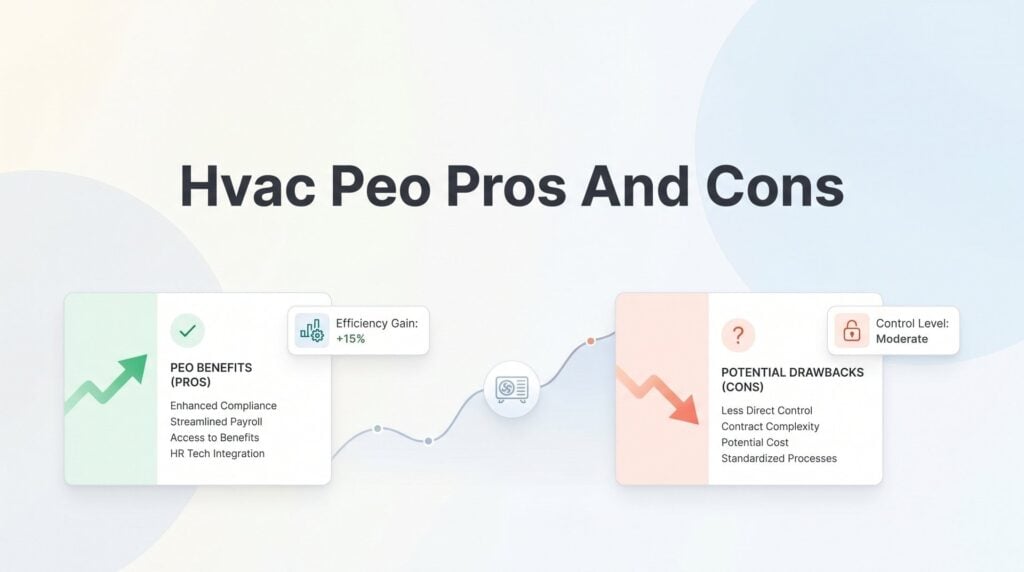
PEOs solve real problems for HVAC contractors. The administrative relief is genuine. The workers’ comp savings can be significant. Access to better benefits helps in a competitive labor market.
But they’re not a universal solution, and they’re definitely not cheap. The decision comes down to honest math and operational priorities specific to your business.
If you’re growing, expanding geographically, or drowning in compliance work, a PEO might genuinely improve how your business operates. If you’re running a small, stable crew in one state and your current mod rate is reasonable, you’re probably better off with simpler solutions.
The key is comparing providers who actually understand the trades, modeling out the true all-in costs including seasonal fluctuations, and reading the contract terms carefully before you commit. Don’t let a smooth sales pitch override the operational and financial realities of your specific situation.
Before you sign that PEO renewal, make sure you’re not leaving money on the table. Many businesses unknowingly overpay because of bundled fees, hidden administrative markups, and contracts designed to limit flexibility. We give you a clear, side-by-side breakdown of pricing, services, and contract terms—so you can see exactly what you’re paying for and choose the option that truly fits your business.
