

If you run quick service restaurants, whether one unit or a franchise group across several states, you already know most PEOs were not built around your payroll. Restaurants are often a harder class of business for PEOs to take on, so eligibility, workers’ comp underwriting, and per-employee cost matter more than any feature list. These providers were chosen for restaurant relevance, pricing transparency, workers’ comp and benefits fit for hourly staff, and handling of multi-location growth. Each entry also says who it does not suit. For a closer look at how PEOs price their services, see our PEO cost guide.
Quick Comparison of the PEOs for Restaurant Operators
- PEO Metrics: best for operators who need to shortlist PEOs before committing; pricing on its website; compares multiple PEOs on one scorecard instead of being a single provider.
- Justworks: best for small restaurant groups wanting pricing clarity; see website for pricing; publicly listed pricing with a self-serve experience.
- TriNet: best for growing multi-location operators wanting benefits depth; quote-based; industry-tailored package structure.
- Insperity: best for operators with frequent employee-relations issues; quote-based; dedicated HR representative model.
- ADP TotalSource: best for multi-state franchisees with complex payroll rules; quote-based; ties into ADP’s payroll and time-tracking infrastructure.
- Paychex PEO: best for operators who want one vendor for payroll and retirement; quote-based; bundled payroll, retirement and HR through a large local sales network.
- Vensure HR: best for operators seeking a custom-quoted arrangement; quote-based; flexible service structure across varied small-business types.
- Oasis Outsourcing: best for restaurant operators in its core regional markets; quote-based; risk management focus for physical-labor employers.
1. PEO Metrics
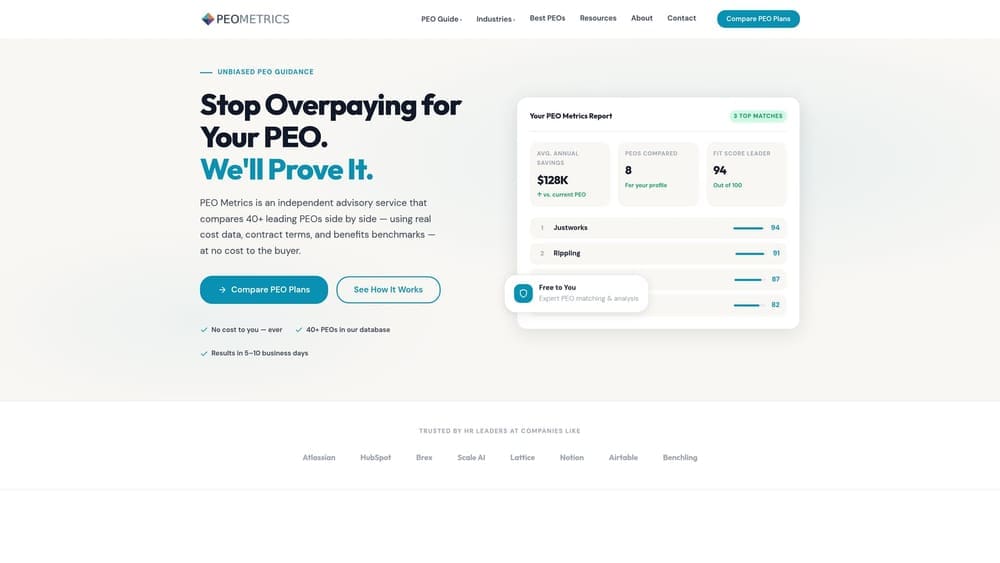
PEO Metrics is our own service, so read this entry with that in mind. It is not a PEO. It does not run payroll, hold workers’ comp, or administer benefits. It is an advisory service that compares PEO providers side by side, with metrics and pricing analysis, so a restaurant operator can evaluate options without relying on each vendor’s own pitch.
That distinction matters in this category. A PEO is a co-employment arrangement: the PEO becomes a co-employer for payroll, tax, benefits and compliance purposes, and you keep running the restaurant. A CPEO is a PEO certified by the IRS. An ASO provides HR and payroll services without co-employment, and payroll-only providers just process pay. Mixing these up is a common way to end up comparing quotes that are not like-for-like, and a comparison service helps you keep them straight.
What it does distinctively well is put several PEOs on one scorecard. When you are weighing per-employee cost, admin fees, workers’ comp treatment and contract terms across vendors that quote differently, a single frame is worth more than eight sales decks.
- Side-by-side PEO comparisons, so you see providers against each other rather than one at a time.
- Pricing analysis, which helps you see past a headline admin fee to the total cost.
- Detailed provider metrics, giving you more to judge than brochure claims.
- Guidance on selection, useful if you are unsure whether a PEO beats payroll-only or an ASO for your size.
There is nothing to integrate and nothing to implement. You use it before you sign, and your payroll and HR stay where they are until you choose a provider.
Limitations: it cannot process a paycheck or file a tax return, and it does not replace getting a binding quote from a PEO. PEO Metrics may receive vendor placement fees, which you should weigh when using any comparison service. Pricing and service details are on the website.
Best for: Operators who need to shortlist and compare PEOs before committing.
2. Justworks
Justworks is a PEO known for transparent pricing and a user-friendly employee platform. It tends to suit smaller restaurant groups that want to see what they will pay and handle most tasks themselves.
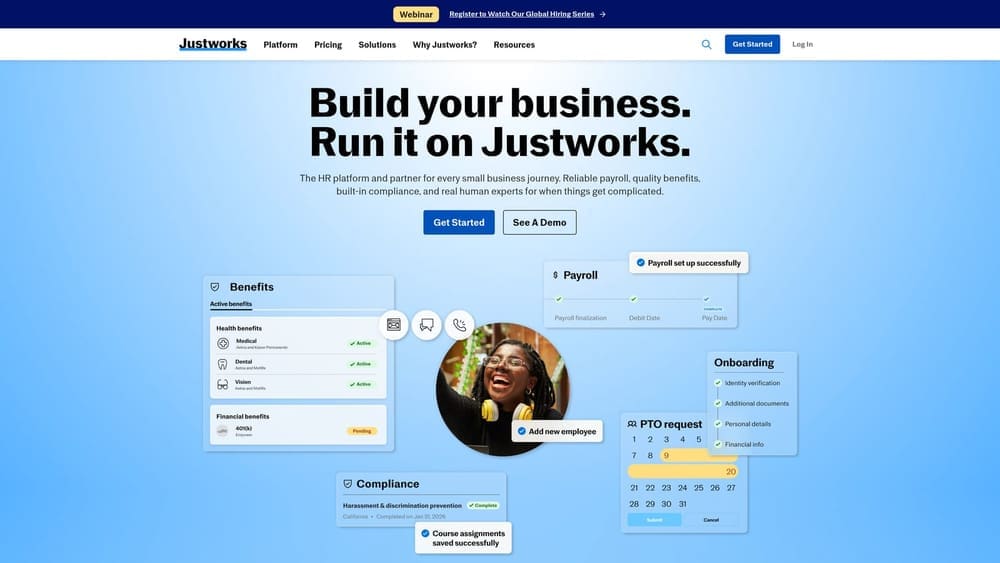
Its standout trait on this list is publicly listed pricing alongside a self-serve experience. Most others here are quote-based, so Justworks is the easiest to sanity-check before you ever talk to sales. For an owner who also works the line, that can save time.
- Payroll and tax filing, which takes recurring filings off your plate.
- Benefits administration, so enrollment and changes run through one system.
- An employee mobile experience, handy for hourly staff who rarely sit at a computer.
- Compliance support to help you keep up with employment rules across locations.
Setup is usually handled by the owner or an office manager rather than a dedicated HR department. Verify current integrations on the website, especially with your scheduling and point-of-sale tools, since those drive how smoothly hourly data reaches payroll.
Limitations: restaurant eligibility and workers’ comp availability must be confirmed by state. A restaurant is not guaranteed acceptance everywhere, and workers’ comp for fryer, slicer and slip-and-fall exposure is a large part of your cost, so ask directly before assuming the published pricing covers you. Self-serve also means less hand-holding if you have frequent employee-relations problems.
Pricing: see website. Cost typically moves with headcount, and benefits selections add to your total.
Best for: Small restaurant groups wanting pricing clarity.
3. TriNet
TriNet is a PEO with industry-oriented packages and broad benefits and compliance support for growing employers. For a multi-location operator, the draw is benefits depth and a package built around an industry rather than a one-size plan.
Its distinguishing feature here is that industry-tailored structure. Instead of starting from a generic offer and adjusting, you can ask how TriNet configures services for a business like yours, which helps you compare it to providers that sell the same bundle to everyone.
- Industry-specific PEO packages that you can match against your restaurant’s needs.
- Benefits options, useful when you want to offer hourly and salaried staff different tiers.
- HR compliance support, covering the wage-hour and employment rules that multiply as you add sites.
- Payroll, so pay and tax filing sit with the same provider as benefits.
Implementation is typically led by an HR lead or operations manager, and the work is heavier than a self-serve tool. Verify current integrations on the website, including time-tracking and scheduling connections.
Limitations: eligibility and minimums for small restaurant operators need confirmation. If you run one or two units, ask early whether you qualify before spending time on a full proposal.
Pricing: quote-based. Expect it to depend on headcount, benefits choices, and your workers’ comp profile.
Best for: Growing multi-location operators wanting benefits depth.
4. Insperity
Insperity is built around dedicated HR representatives, which suits operators who want a person to call. If your managers are fielding disputes, write-ups, terminations and scheduling complaints, that support model is the reason to consider it.
The high-touch approach is what separates it from the rest of this list. Self-serve platforms hand you tools; Insperity assigns someone to help you work through situations. For restaurants with frequent turnover and manager inexperience, that can matter more than a software interface.
- An assigned HR representative, so you have a consistent contact for employee issues.
- Payroll, which keeps pay processing with the same provider.
- Benefits, so you can offer coverage that helps with retention.
- Risk and compliance support to help limit exposure from wage-hour and safety issues.
Day-to-day, an owner or HR lead works with the representative rather than administering everything alone. Verify current integrations on the website.
Limitations: it may be more service than very lean single-unit operators need, and you should confirm minimums. If your problems are mostly payroll mechanics rather than people issues, you may be paying for support you will not use.
Pricing: quote-based, shaped by headcount, services, and benefits and workers’ comp selections.
Best for: Operators with frequent employee-relations issues.
5. ADP TotalSource
ADP TotalSource is ADP’s PEO offering, connected to ADP payroll and workforce management tools. For franchisees running several states, with different overtime, minimum wage and paid leave rules, that connection is the point.
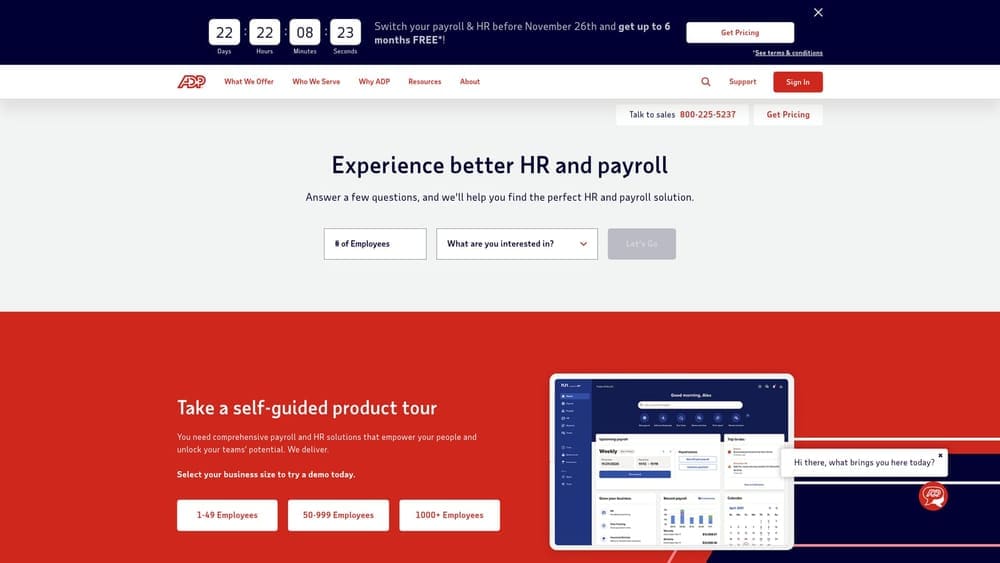
The distinctive piece is the tie to ADP’s payroll and time-tracking infrastructure. If hours from the schedule need to flow cleanly into pay across locations, being inside one ecosystem can reduce the manual cleanup that creates wage-hour mistakes.
- Payroll, handling multi-state pay and tax filing from one system.
- Time and attendance, so clocked hours support accurate pay.
- A benefits marketplace, giving staff coverage choices.
- Compliance support to help keep pace with state-by-state rules.
The ADP ecosystem is the natural fit; verify any other integrations you rely on. Setup is a larger project than a small-business tool and usually involves an HR lead or finance manager.
Limitations: restaurant class-code eligibility and underwriting need confirmation. Do not assume that your existing ADP relationship means automatic PEO acceptance for restaurant workers’ comp.
Pricing: quote-based, influenced by headcount, benefits and workers’ comp.
Best for: Multi-state franchisees with complex payroll rules.
6. Paychex PEO
Paychex PEO is Paychex’s PEO service, combining payroll, HR and retirement options. It appeals to operators who would rather deal with one vendor than stitch together separate providers.
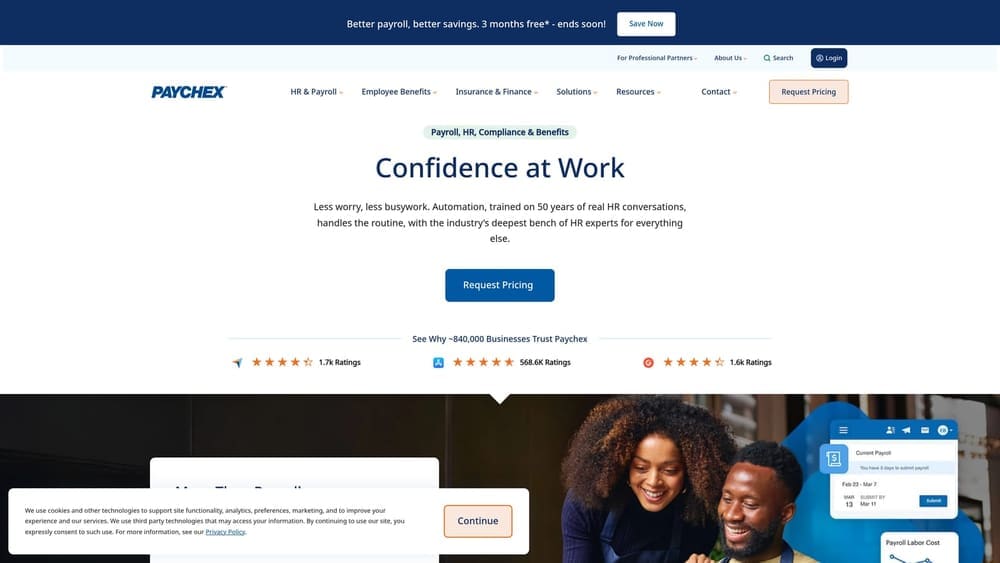
What stands out is the bundle: payroll, retirement and HR from a large local sales network. That network can matter if you want a nearby representative rather than a remote enrollment process.
- Payroll, so pay and filings sit with a familiar provider.
- Retirement plans, which can help you offer something to longer-tenured staff.
- HR support for day-to-day questions as you grow.
- Benefits to round out the package.
Verify current integrations on the website. Implementation typically involves an owner or HR lead working with a sales and onboarding team.
Limitations: Paychex also sells non-PEO products, so confirm you are being quoted a PEO and not payroll or an ASO-style service. The two can look similar on a proposal but differ in co-employment, workers’ comp and responsibility.
Pricing: quote-based, depending on headcount and the services bundled.
Best for: Operators who want one vendor for payroll and retirement.
7. Vensure HR
Vensure HR is a PEO and HR services provider serving a broad range of small and mid-size businesses. It is worth a look if standard packages do not fit and you want something custom-quoted.
Its distinguishing trait is a flexible service structure across varied small-business types. That can help an operator with an unusual mix, such as a franchise group with a catering arm, but it also means you should test how much restaurant-specific knowledge sits behind it.
- PEO services, giving you a co-employment option.
- Payroll, to keep pay and tax filing in one place.
- Benefits for hourly and salaried employees.
- HR compliance support as you add locations or states.
Verify current integrations on the website. Setup is usually run by an owner or HR lead working with an assigned team.
Limitations: restaurant-specific experience and the support model should be verified with references. Ask for restaurant clients of similar size and speak with them, not just the sales team.
Pricing: quote-based, shaped by headcount, benefits and workers’ comp.
Best for: Operators seeking a custom-quoted arrangement.
8. Oasis Outsourcing
Oasis Outsourcing is a long-established PEO with a strong presence in hospitality-heavy regions. If your restaurants sit in its home territory, that local familiarity can be a real advantage.
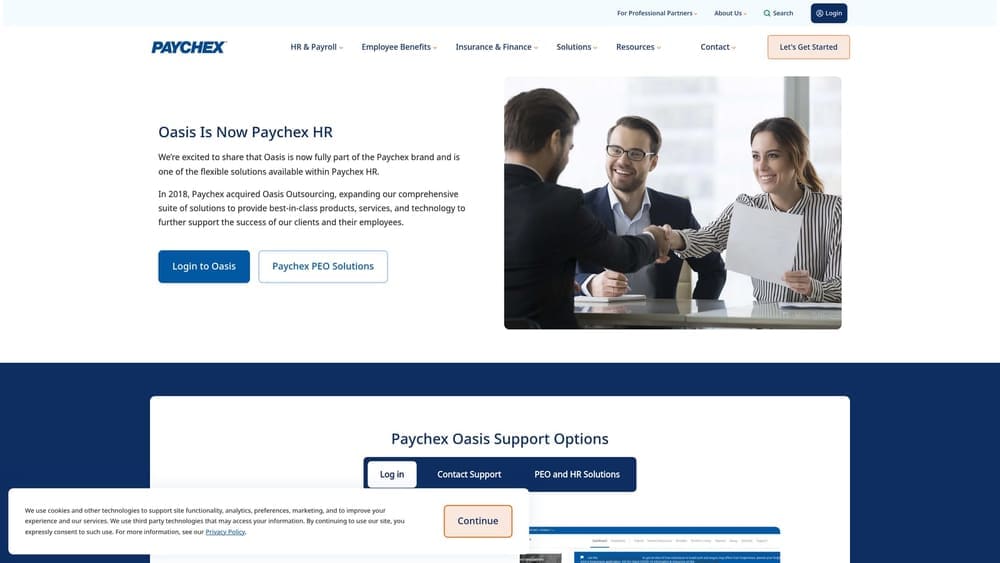
The distinguishing focus is risk management for physical-labor employers. Kitchens carry burns, cuts and falls, and a PEO that treats safety and claims management as central to its service speaks to a major cost driver for restaurants.
- PEO services, covering co-employment responsibilities.
- Workers’ comp and risk management, aimed at the injuries kitchens and floors produce.
- Benefits for your hourly workforce.
- Payroll to keep pay and filings in one place.
Verify current integrations on the website. Implementation is typically handled by an owner or HR lead with onboarding support.
Limitations: its strength is regional, so confirm coverage and service quality if you operate outside its core states. A franchisee spread across many states may find the fit weaker.
Pricing: quote-based, driven by headcount, workers’ comp classification and benefits.
Best for: Restaurant operators in its core regional markets.
Matching a PEO to Your Restaurant Situation
For a single-unit shopper, start with Justworks if it accepts your state and class code, since published pricing makes it easy to test your budget. For a growing multi-state franchisee, ADP TotalSource and TriNet are the strongest places to begin, depending on whether payroll and time-tracking integration or benefits depth matters more. If you are a high-turnover operator who needs HR help, Insperity’s dedicated representative is the most direct answer. If you are in Oasis’s core regions and worried about injury costs, put it on the list too.
If you are undecided between a PEO and payroll-only, do not assume either is better. A PEO adds co-employment, bundled benefits and workers’ comp, but it changes who handles what and can cost more per employee. A payroll-only or ASO arrangement keeps you more independent. Compare total cost, including workers’ comp, not just the admin fee, and see our workers’ comp in PEOs article for how coverage is handled.
Before you sign that PEO renewal, make sure you’re not leaving money on the table.
Many businesses unknowingly overpay because of bundled fees, hidden administrative markups, and contracts designed to limit flexibility. We give you a clear, side-by-side breakdown of pricing, services, and contract terms, so you can see exactly what you’re paying for and choose the option that truly fits your business. PEO Metrics may receive placement fees from vendors, and you can browse our PEO comparison hub to see how providers stack up.
