

If you run a hotel, resort, restaurant group or event venue, you already know a PEO built around an office team can feel mismatched with a front desk, housekeeping and F&B payroll. This list is for owners, general managers and HR leads deciding which providers deserve a quote request. Providers were chosen for hospitality fit, service model, benefits depth, state coverage and pricing transparency, based on each provider’s own published information as of November 2026.
Treat the descriptions as a starting point for questions, not a verdict. Minimums, state coverage, risk-class appetite and ownership structures change, so confirm current terms directly with each vendor before you commit.
Quick Comparison of Hospitality PEO Options
- PEO Metrics: best for hotel employers still choosing whom to shortlist; pricing on its website; compares multiple PEOs on detailed metrics before you commit.
- Insperity: best for larger operators wanting hands-on HR; quote-based; dedicated HR representative support model.
- Paychex PEO: best for existing Paychex customers moving into a PEO; quote-based; tight link to the Paychex payroll and time ecosystem.
- TriNet: best for mid-size hospitality groups wanting a defined industry plan; quote-based; industry-specific package approach.
- Justworks: best for small boutique hotels and restaurants; pricing on its website; the simplest, most transparent pricing presentation on this list.
- ADP TotalSource: best for large multi-location hotel groups; quote-based; enterprise-scale ADP technology for large hourly workforces.
- Vensure Employer Services: best for independent hotels and restaurants wanting flexible service; quote-based; flexible service options for small and mid-size employers across industries.
- Oasis Outsourcing: best for Florida and Southeast resort and restaurant operators; quote-based; regional strength in tourism-heavy Southeast markets.
- Barrett Business Services (BBSI): best for operators with physical roles in its served states; quote-based; local business partner model with a safety and risk emphasis.
1. PEO Metrics
PEO Metrics is not a PEO. It is a comparison and consulting service that helps hotel employers evaluate PEO providers side by side, with pricing and metrics analysis, before choosing one. That distinction matters: PEO Metrics does not run your payroll, share employer responsibilities with you or hold a co-employment relationship with your staff.
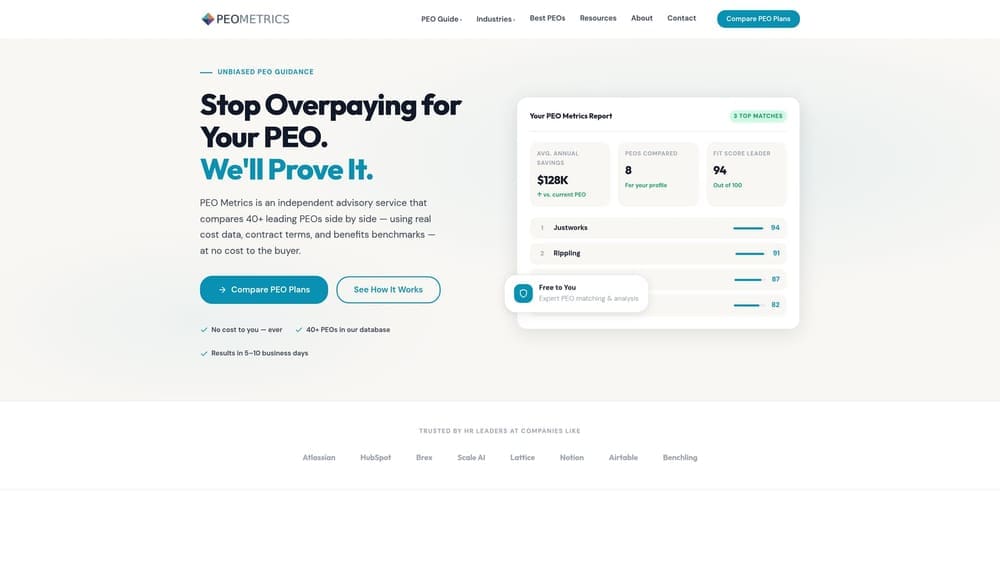
Its value on a list like this one is the step before the contract. A PEO is a co-employment arrangement, where the provider takes on some employer responsibilities such as payroll tax filing, benefits and workers’ comp administration. That differs from a CPEO (a PEO certified by the IRS), an ASO (which administers HR tasks without co-employment), an EOR (which legally employs workers on your behalf, often internationally) and payroll-only services. Sorting out which model you actually need is part of the guidance.
- Side-by-side PEO comparisons put providers next to each other on the same metrics, so you are not comparing one glossy proposal against another.
- Pricing analysis helps you see past a quoted admin fee toward the full cost of the arrangement.
- An unbiased guidance process is meant to keep the focus on fit for your workforce, not on any single brand.
- Provider shortlisting support narrows a crowded market to the few worth a formal quote.
Integrations do not apply, since this is an advisory service. Setup is a conversation, not an implementation, and it is usually run by an owner, GM or HR lead.
The limits are plain. You still need to buy a PEO from someone else, and you still need to verify each vendor’s terms. PEO Metrics may also receive vendor placement fees, so ask how the process works and judge the guidance accordingly. For pricing, see the PEO Metrics website.
Best for: Hotel employers still choosing which PEO to shortlist.
2. Insperity
Insperity is a full-service PEO known for assigning HR representatives to client companies, alongside broad payroll, benefits and HR services. It is designed for employers that want a person to call, not just a platform to log into.
For a hotel group, that model can matter when a general manager is handling a disciplinary issue in the middle of a holiday weekend. Having a named contact familiar with your business is the distinctive part compared with providers that lean more on self-service tools.
- Payroll processing handles hourly, overtime and multi-location pay runs through one provider.
- Benefits administration gives staff access to group health coverage that a single property may struggle to buy alone.
- Workers’ comp and risk services address one of the largest cost lines in hospitality.
- HR advisory support gives managers guidance on hiring, terminations and employee relations.
- A mobile app lets staff reach pay and benefits information without going through the front office.
Confirm integrations with your scheduling, POS and property management systems directly on the vendor’s site, since they were not verified for this list. Setup typically involves HR and finance leads, and the day-to-day contact is the assigned representative.
The cost model is quote-based, so you will not see a price until you request one. Eligibility minimums and acceptance of your specific hospitality risk classes should be verified as of November 2026. Very small single-property operators should ask early whether they qualify. Pricing generally moves with headcount, payroll size, benefit selections and risk class.
Best for: Larger operators wanting hands-on HR coverage.
3. Paychex PEO
Hotels already running payroll or scheduling through Paychex should look at Paychex PEO first. It pairs co-employment services with Paychex’s payroll and time technology, so the PEO layer sits on top of systems you may already use.
That link is its main differentiator. Moving from Paychex payroll into the PEO can mean less data migration than switching to a provider with a different platform, which matters when you have hundreds of hourly employees and constant turnover.
What You Get
- Payroll for hourly and salaried staff in one system.
- Benefits access that can give a smaller operator group-plan options.
- Workers’ comp coverage and administration.
- HR support for hiring, policy and compliance questions.
- Time and attendance options that tie clock-ins to payroll, useful for shift-based departments.
Where to Press Harder
Minimums and state or risk-class coverage should be verified directly. If you operate in several states, ask which of them the PEO serves and whether kitchen, housekeeping and maintenance roles are accepted at standard terms. Also ask which time products are included in the PEO price and which are add-ons.
Pricing is quote-based and typically depends on headcount, payroll, benefit choices and risk profile. Because the main strength is the Paychex ecosystem, it makes less sense for a business that has no interest in that stack.
Best for: Existing Paychex customers moving into a PEO.
4. TriNet
TriNet is a PEO that packages its offering around industries, with a benefits marketplace and compliance support. For hospitality buyers, the appeal is a more defined starting point than a fully custom build.
Its distinctive trait on this list is that industry-oriented approach. A mid-size hotel or restaurant group that does not want to design a plan from scratch may find a packaged structure easier to evaluate and compare against other quotes.
- A benefits marketplace gives employees choice among plan options, which can help with retention.
- Payroll covers recurring hourly pay cycles and tax filings.
- Compliance support helps with employment rules that vary across states and localities.
- Workers’ comp services address hospitality’s injury exposure in kitchens, housekeeping and maintenance.
Integrations were not verified for this list, so ask about scheduling, timekeeping and accounting connections. Setup usually involves HR and finance, with benefits enrollment being the heaviest lift.
The limitation is that minimums and plan structure should be confirmed as of November 2026, and packaged plans may not fit every operation. A group with unusual tip reporting, seasonal swings or several properties in different states should test whether the package bends to fit. Pricing is quote-based and tends to move with headcount, plan selection and risk class.
Best for: Mid-size hospitality groups wanting a defined industry plan.
5. Justworks
Justworks is a PEO focused on small businesses, with a simple interface and a pricing structure it presents openly. For a boutique hotel, a bed and breakfast or a single restaurant, it is among the easier options to understand at a glance.
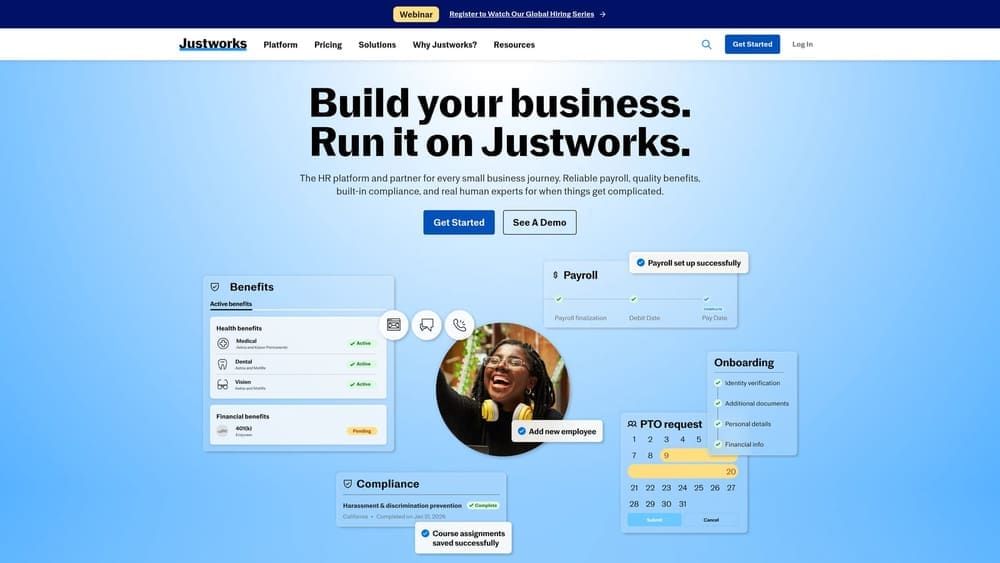
Its standout trait here is price transparency. Many PEOs hide behind quote forms, while Justworks lays out how it charges on its website, which makes early comparison easier. Check the current figures there, since they may change.
- Payroll runs recurring pay cycles with automated tax handling.
- Benefits give a small team access to group coverage.
- PTO tracking keeps time-off balances visible to staff and managers.
- HR tools cover onboarding documents and basic employee records.
- A mobile app puts pay stubs and benefits in employees’ hands.
Setup is generally lighter than at full-service providers, and an owner or office manager can often run it. Confirm integrations on the vendor site.
The caution is fit. Confirm how it handles tipped employees, multi-state seasonal workforces and any industry restrictions or ineligible risk classes before assuming it works for you. A busy resort with heavy turnover and many departments may outgrow a lightweight model. Pricing is published on the website, and what moves it is generally headcount and the benefits you choose.
Best for: Small boutique hotels and restaurants.
6. ADP TotalSource
ADP TotalSource is ADP’s PEO, built on the company’s payroll and time technology and aimed at larger workforces. Hotel groups with many hourly employees across locations are the natural audience.
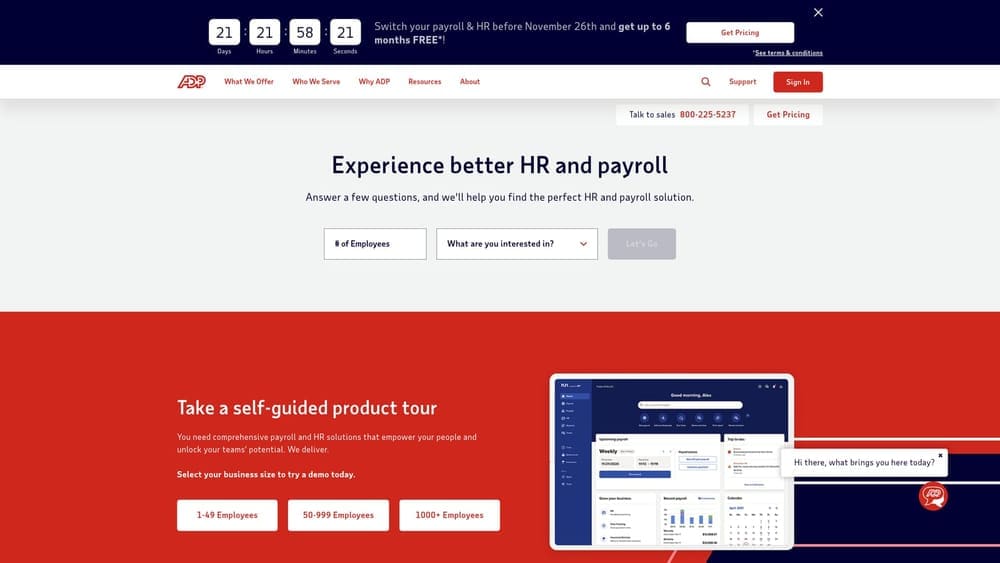
The differentiator is scale. ADP’s technology is designed for big, complex payrolls, which suits properties with several departments, shift differentials and large seasonal hiring waves.
- Benefits administration covers large and varied employee populations.
- Workers’ comp services help manage injury claims across many sites.
- Compliance support addresses differing rules across jurisdictions.
- Time and attendance integration ties clocked hours directly to payroll.
- Payroll handles large, frequent pay runs.
Integrations center on ADP’s own payroll and time products, so check how well it connects to your property management and scheduling tools. Implementation for a multi-location group is a real project, typically involving HR, payroll, finance and operations leaders.
It may exceed what a single small property needs, and minimums should be verified. A twenty-room inn would likely be paying for capability it does not use. Pricing is quote-based and typically depends on headcount, payroll, benefits and risk exposure.
Best for: Large multi-location hotel groups.
7. Vensure Employer Services
Vensure Employer Services provides PEO and payroll services to small and mid-size businesses across industries. Its pitch is flexibility, which can matter for independent operators that do not fit tidy templates.
Compared with others here, its distinction is service flexibility for smaller employers. An independent hotel or restaurant that wants to choose how much HR and payroll support to take on may find that appealing.
- Payroll covers hourly and salaried pay with tax filing.
- Benefits give smaller employers access to group-style coverage.
- Workers’ comp support helps with coverage and claims administration.
- HR compliance assistance helps owners keep up with employment rules.
Integrations were not verified for this list, so ask about timekeeping and scheduling connections. Setup effort will depend on which services you select, and day-to-day administration usually sits with an owner or HR generalist.
The key diligence item is the current service model and brand structure. Confirm exactly which entity you would contract with, what is included and how the agreement handles termination. Because it serves many industries, ask for specific evidence of how it handles hospitality risk classes. Pricing is quote-based, moved by headcount, payroll, benefits and risk class.
Best for: Independent hotels and restaurants wanting flexible service.
8. Oasis Outsourcing
Oasis Outsourcing is a PEO with Southeast roots offering HR outsourcing, benefits and payroll. For hotels, resorts and restaurants in tourism-heavy Southeast markets, regional familiarity can be a real advantage.
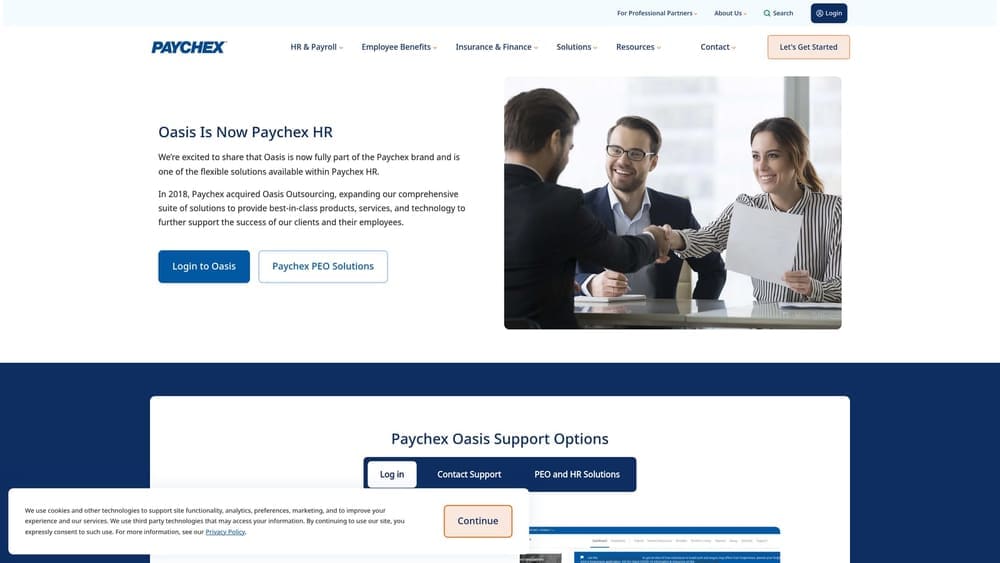
Its edge on this list is that regional focus, though you should verify current coverage. Local knowledge of seasonal patterns, hurricane-related disruptions and regional labor markets is hard to get from a national provider with a generic playbook.
- HR outsourcing takes administrative and compliance tasks off an owner’s plate.
- Benefits offer group coverage designed to help recruit and retain staff.
- Payroll handles hourly wages, overtime and tax filings.
- Workers’ comp services address injury risk across back-of-house and guest-facing roles.
Confirm integrations on the vendor site. Setup is typically handled by HR or ownership with the provider’s onboarding team.
Verify state coverage and current brand or ownership status before relying on any older information about the company. If you operate outside the Southeast, or plan to expand, confirm where it can actually serve you. Pricing is quote-based and generally moves with headcount, payroll, benefit choices and risk class.
Best for: Florida and Southeast resort and restaurant operators.
9. Barrett Business Services (BBSI)
Barrett Business Services (BBSI) is a business management and PEO-style provider built around a local, hands-on partner model, with a strong focus on workers’ comp and risk. It is a different flavor from the platform-led providers above.
The distinctive piece is the local business partner relationship paired with a safety emphasis. For physical, injury-prone roles such as housekeeping, kitchen and maintenance, that focus on prevention and claims handling speaks directly to a major hospitality cost driver.
- Payroll covers recurring pay and related tax administration.
- Workers’ comp support targets one of hospitality’s heaviest risk areas.
- Risk management services help identify and reduce workplace hazards.
- HR support gives managers someone to consult on employee issues.
Confirm integrations on the vendor site. Setup tends to be relationship-driven, with a local representative working alongside ownership or the GM.
Geography is the main limit. BBSI serves a limited set of areas, so multi-state operators should confirm whether it covers every property. It may also be less suited to employers who want a purely self-service platform. Pricing is quote-based, typically shaped by payroll, headcount, risk class and claims experience.
Best for: Operators with physical roles in BBSI’s served states.
Matching a Provider to Your Property
Three picks cover most situations. If you have not yet decided which providers to approach, start with PEO Metrics, since a side-by-side comparison of pricing and terms can save you from chasing quotes you did not need. If you run a large multi-location group, ADP TotalSource and Insperity are the natural candidates to price against each other, one for its technology scale and the other for its hands-on HR model. If you run a small boutique property, Justworks offers the clearest pricing to begin with.
Regional and risk-focused needs point elsewhere: Oasis Outsourcing for Southeast resorts and restaurants, and BBSI for operators in its served states who care most about workers’ comp and safety. Paychex PEO suits current Paychex customers, TriNet suits mid-size groups wanting a defined industry plan, and Vensure suits independents wanting flexibility.
Whatever you shortlist, verify minimums, state coverage, hospitality risk-class acceptance, ownership and contract terms with each vendor as of today. A PEO does not always lower costs, not every PEO accepts every hospitality class, and a quoted admin fee is rarely the full price. This article is informational, not legal, tax or benefits advice.
Before you sign that PEO renewal, make sure you’re not leaving money on the table. Many businesses unknowingly overpay because of bundled fees, hidden administrative markups, and contracts designed to limit flexibility. We give you a clear, side-by-side breakdown of pricing, services, and contract terms, so you can see exactly what you’re paying for and choose the option that truly fits your business.
