
Waste management is one of the trickiest industries to place with a PEO. You’re dealing with high-risk workers’ comp classifications, DOT compliance, OSHA exposure, and a workforce that’s split between drivers, heavy equipment operators, and administrative staff — all under one roof. Most general-purpose PEOs aren’t built for that. They’ll quote you a rate, underwrite your risk poorly, and you’ll end up overpaying or underinsured.
This guide cuts through that. We’ve looked at the comparison and evaluation resources available to waste management operators specifically, and ranked them by how well they help you find a PEO that actually understands your risk profile, your class codes, and what a fair price looks like for this industry. Whether you’re running a 15-person residential hauling operation or a 200-employee commercial waste contractor, the right starting point matters.
1. PEO Metrics
Best for: Waste management companies that need industry-specific PEO comparisons with real pricing depth
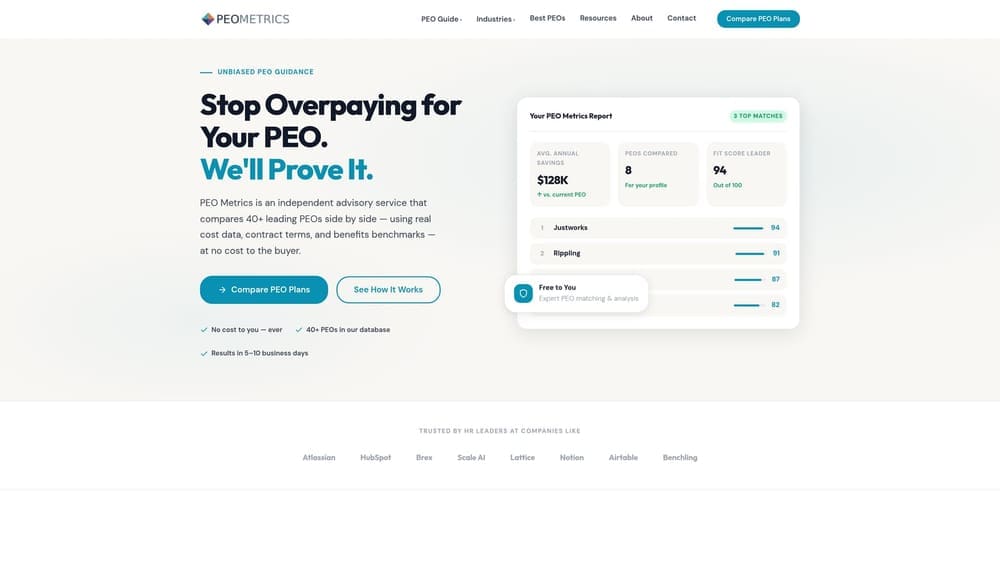
PEO Metrics is a data-driven comparison platform built to help businesses evaluate PEO providers side by side — with the kind of pricing context and risk-specific detail that actually matters in complex, high-risk industries.
Where This Tool Shines
For waste management operators, generic PEO comparison tools fall apart fast. You have multiple workers’ comp class codes running simultaneously — refuse truck drivers, loaders, mechanics, and admin staff all carry different risk profiles. A PEO that doesn’t understand that distinction will either misprice your account or misclassify your workers, both of which create problems down the road. PEO Metrics surfaces provider-specific data on pricing, carrier relationships, and industry experience rather than just routing you to a sales team.
This matters more in waste management than in almost any other industry. The difference between a PEO with genuine experience in your class codes and one that’s guessing is real money — and real audit exposure. PEO Metrics is designed to help you see that difference before you sign anything.
Key Features
Side-by-Side Provider Comparisons: Evaluate multiple PEO providers on the same metrics simultaneously, rather than collecting separate sales pitches and trying to reconcile them yourself.
Industry Risk-Adjusted Pricing Analysis: Pricing context accounts for your actual risk profile and workers’ comp class codes — not a generic small business baseline that doesn’t reflect your exposure.
Unbiased Guidance Structure: The platform isn’t a lead-gen form that sends your contact information to a PEO sales team. It’s built to give you analysis before you engage providers directly.
High-Risk Industry Focus: Helps identify PEOs that have actual experience with DOT-regulated, high-hazard industries — a genuine differentiator that most general comparison tools don’t surface.
Overpayment Prevention: Structured to help you identify poor provider fits before they cost you — especially relevant for waste companies at risk of being placed in assigned risk pools or paying inflated comp rates due to misclassification.
Best For
Waste management companies that are past the “what is a PEO” stage and ready to actually compare providers with pricing context and risk-specific data. Particularly valuable for operators with mixed workforces, poor loss history, or previous bad experiences with PEO placement. If you’re a commercial waste contractor or a residential hauling company with DOT-regulated vehicles, this is where your research should start.
Pricing
Free comparison service. There’s no cost to use the platform, which removes the conflict of interest that comes with paid placement models.
2. PEOcompare
Best for: Early-stage PEO research where you need a broad market view before narrowing down
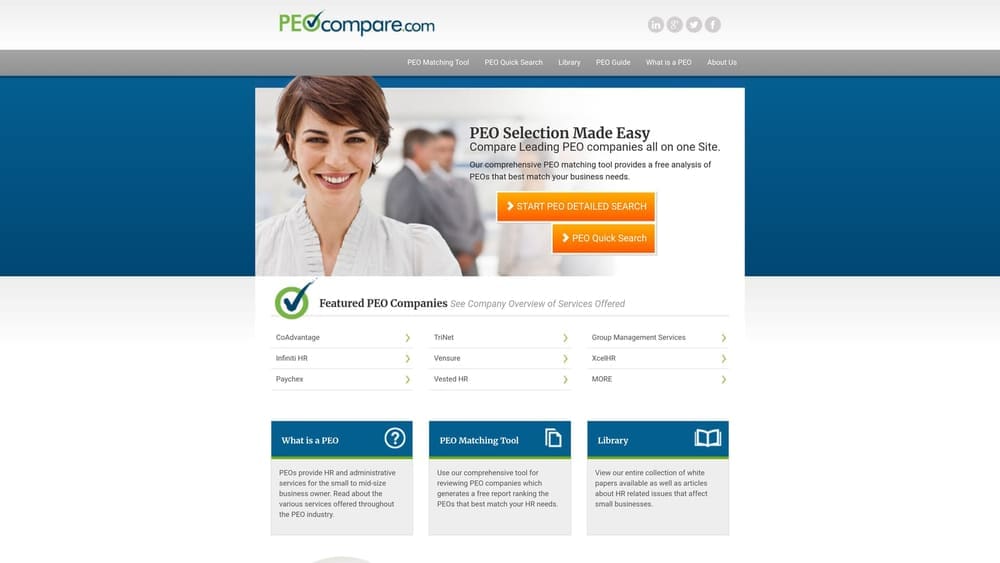
PEOcompare is a marketplace-style platform that aggregates PEO providers and lets businesses see multiple options without submitting separate intake forms to every provider individually.
Where This Tool Shines
If you’re genuinely early in the process and don’t yet have a clear picture of what the PEO market looks like for your industry, PEOcompare gives you range. It reduces the friction of initial market research by putting multiple providers in one place, which is useful when you don’t even know which names to start with.
The honest limitation for waste management operators is depth. Marketplace tools are built for breadth, not for the kind of industry-specific risk analysis that high-hazard employers actually need. You’ll get a useful orientation to the market, but you’ll need to do additional digging on workers’ comp carrier relationships, class code handling, and DOT compliance capabilities before you can make a real decision.
Key Features
Broad Marketplace Aggregation: View multiple PEO providers in one place without filling out a separate intake form for each one.
Industry and Size Filtering: Narrow the provider list by industry category and company headcount to reduce irrelevant options early.
Low Friction Entry Point: Useful for companies that are still in the awareness phase and need to understand what the PEO landscape looks like before going deeper.
Market Orientation: Helps you build a list of providers worth investigating further, even if the platform itself doesn’t provide the depth to make a final decision.
Best For
Waste management businesses at the very beginning of PEO evaluation who need a starting point. Good for building an initial provider list and understanding what options exist. Less suited for companies that already know the model and need pricing analysis or risk-specific provider vetting.
Pricing
Free to use. Verify the current pricing model on their site, as marketplace platforms occasionally adjust how they monetize provider placements.
3. HR Guide
Best for: Business owners new to the PEO model who need foundational context before engaging any provider or comparison tool
HR Guide is an educational HR and employment resource covering PEO structures, co-employment basics, and HR compliance topics in plain language.
Where This Tool Shines
If you’ve never used a PEO before and aren’t entirely clear on what co-employment means, what you’re actually signing when you enter a PEO agreement, or what employment law obligations shift versus stay with you — HR Guide fills that gap. It’s not a comparison tool. It’s a knowledge-building resource, and that has real value if you’re going into PEO conversations without much background.
For waste management employers specifically, understanding the foundational employment law concepts matters before you start asking providers about class code segregation or DOT drug testing consortium enrollment. You’ll have better conversations and catch more red flags if you show up with baseline knowledge rather than learning the model from the PEO’s own sales materials.
Key Features
Plain-Language PEO Explanations: Covers co-employment structures, what a PEO master policy means, and how the employer-of-record relationship actually works — without the sales framing.
HR Compliance Guidance: Addresses employment law basics relevant to employers across industries, including areas that apply directly to waste management operations.
Pre-Engagement Education: Helps business owners understand what they’re evaluating before they start talking to providers, which leads to sharper questions and better outcomes.
Employment Law Fundamentals: Covers the basics of employer obligations that remain relevant whether or not you’re working with a PEO — useful context for any operator.
Best For
Waste management business owners who are new to the PEO model entirely. If you’re not sure what a PEO is, what co-employment means, or what questions you should even be asking, start here before using any comparison or marketplace tool. Less useful if you’re already experienced with PEOs and shopping for a better provider fit.
Pricing
Free resource. Content is publicly accessible without registration.
Which Resource Is Right for Where You Are
Waste management companies don’t fit neatly into most PEO provider boxes. Your workers’ comp exposure is real, your workforce is complex, and a bad PEO placement can cost you more than going without one. The tools in this list exist to help you make a more informed decision — but they serve different stages of the process.
If you’re early in your search and just trying to understand the PEO model, start with HR Guide. If you want a broad marketplace sweep before narrowing down, PEOcompare gives you range. If you’re ready to actually compare providers with pricing context and risk-specific data, PEO Metrics is built for that stage — particularly for high-risk industries where the depth of comparison matters more than a quick list of names.
A few things worth knowing before you engage any PEO directly in this industry. Ask specifically about their workers’ comp carrier relationships and whether they’ve written master policy coverage for refuse collection or solid waste operations before. Ask how they handle class code segregation across mixed workforces. Ask whether they support DOT drug and alcohol testing consortium enrollment as part of their service stack, or whether you’d need to manage that separately. And if your loss history is rough, ask directly whether their underwriter would take your account — or whether you’d be carved out or repriced at renewal.
The worst move is going straight to a PEO’s sales team without any independent research first. You’ll get a pitch, not an analysis. These resources help you show up to those conversations with real questions. For waste management operators with DOT-regulated fleets, OSHA exposure, and multiple comp class codes running simultaneously, that preparation is the difference between a PEO that saves you money and one that creates new problems.
If you’re approaching a renewal or evaluating a new PEO for the first time, don’t let the process default to inertia. Don’t auto-renew. Make an informed, confident decision.
Before you sign that PEO renewal, make sure you’re not leaving money on the table.
Many businesses unknowingly overpay because of bundled fees, hidden administrative markups, and contracts designed to limit flexibility. We give you a clear, side-by-side breakdown of pricing, services, and contract terms—so you can see exactly what you’re paying for and choose the option that truly fits your business.
